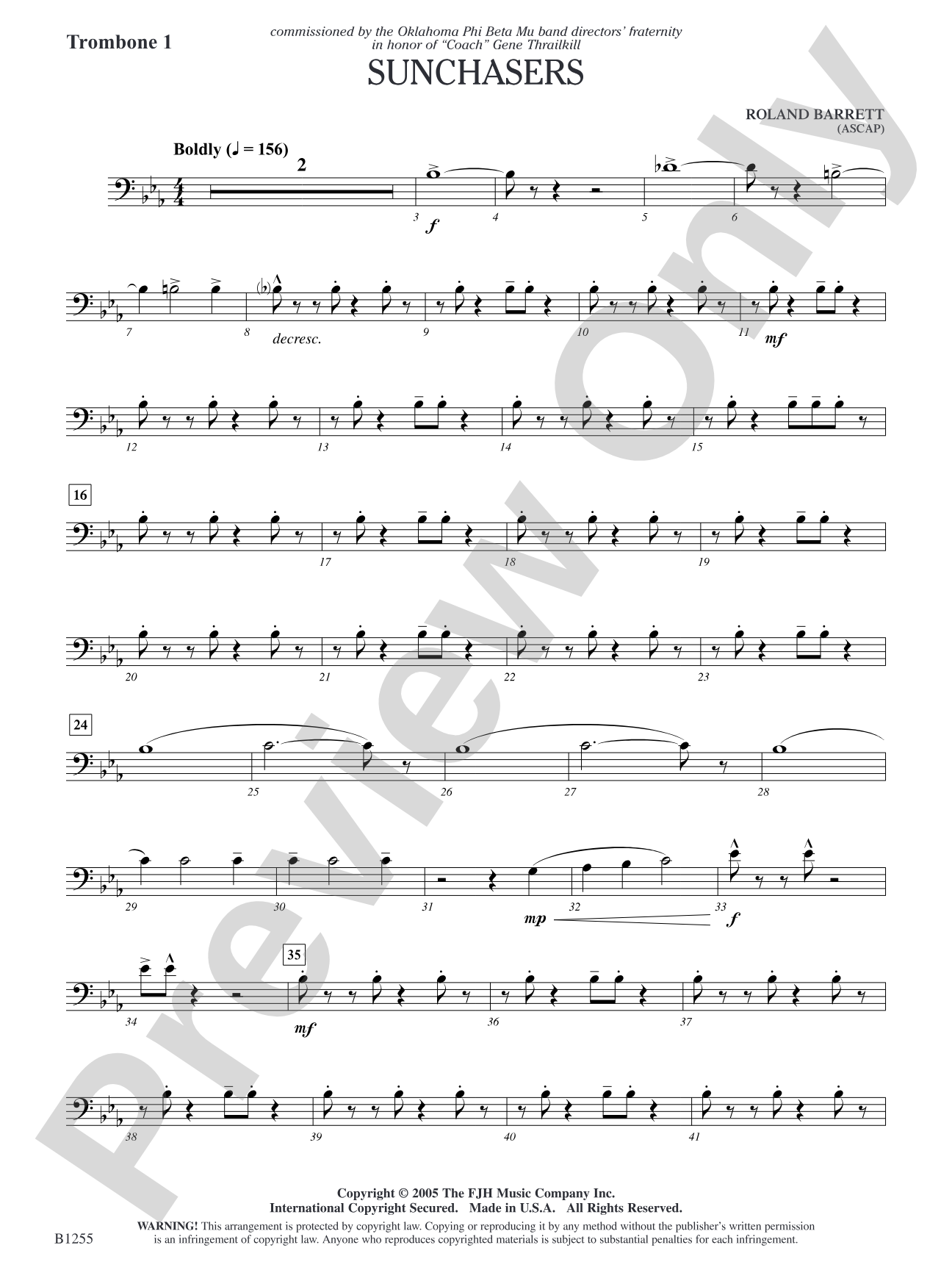
Take your band above and beyond in pursuit of a fantastic vision with this new lively overture! The perfect description of a sunchaser, the piece pays homage to this common term used in Native American cultures. Rhythmic energy, a soaring melody, and a gorgeous lyrical section make this an excellent choice for festival or contest. Also consider dedicating a performance to your own sunchaser, whether it be an active member of the community, teacher, or administrator.
Discover MakeMusic Cloud: thousands of interactive titles your students can play along with today.
Roland Barrett has shaped multiple generations of student musicians through his work at the University of Oklahoma, where he joined the composition and music theory faculty in 2001. Prior to that appointment, he spent fifteen years as Assistant Director of Bands, giving him deep experience in the practical demands of ensemble direction and student development.
Barrett's output spans over two hundred published works for symphonic band, chamber groups, and marching ensembles. His compositions have reached audiences through performances by the Dallas Wind Symphony, countless All-State and All-Region honor bands, NPR broadcasts, and major convention showcases. He continues to arrange for the Pride of Oklahoma marching band and has received multiple ASCAPlus awards for his contributions to American music.
Why we love this
Barrett writes for the ensemble with genuine understanding of what works on the podium and in the concert hall. Sunchasers delivers immediate energy and accessible melodic writing without sacrificing musical substance, making it genuinely rewarding to teach and perform at Grade 3 level. The combination of rhythmic drive, a memorable main theme, and a contrasting lyrical section gives directors real material to shape and gives students multiple expressive challenges within a single piece.
What to expect
Sunchasers captures the spirit of purposeful pursuit with bright, energetic rhythmic writing that propels forward. A soaring melody emerges as the emotional heart, supported by a gorgeous lyrical section that invites deeper musical expression and reflection.
Who it's for
This overture works beautifully for Grade 3 concert bands preparing festival or contest repertoire. It suits programs that want a piece combining drive and lyricism, or any ensemble looking for music with cultural significance and immediate audience appeal.
How to get the most out of it
Establish the rhythmic foundation early in sectional rehearsals. The energy of this piece depends on precise ensemble articulation, so lock in the pulse through repeated work on rhythmic unisons before layering harmonic voices.
Shape the lyrical section by encouraging sustained tone and supported line singing from winds. This contrasts powerfully with the energetic outer sections and gives audiences a moment to connect emotionally with the music.
Balance the soaring melody against the harmonic accompaniment. The main theme needs to project clearly without the supporting voices receding; this requires careful dynamic shaping and awareness of register.
Bring clarity to the text and imagery. If you frame the piece around the sunchaser concept or dedicate it to someone meaningful in your school community, students will invest in the storytelling and lift their performance energy accordingly.
How to use it
Program this as a festival or contest selection where it can stand against other Grade 3 repertoire and showcase your ensemble's musicality across contrasting sections. Its narrative quality also makes it an excellent centerpiece for a concert where you introduce the sunchaser concept to your audience, whether that person is a community member, teacher, or administrator you wish to honor.
Skills your students will build
Ensemble articulation and rhythmic precision under tempo
Sustained lyrical playing with phrase shaping and dynamic control
Balance and blend between melodic and accompanying voices
Stylistic contrast between energetic and lyrical sections
Cultural awareness of Native American traditions and terminology
You May Also Like
Scan to Complete Your Purchase
Use your phone's camera to scan the code below
You'll log in on your phone and the order will be added to your account