
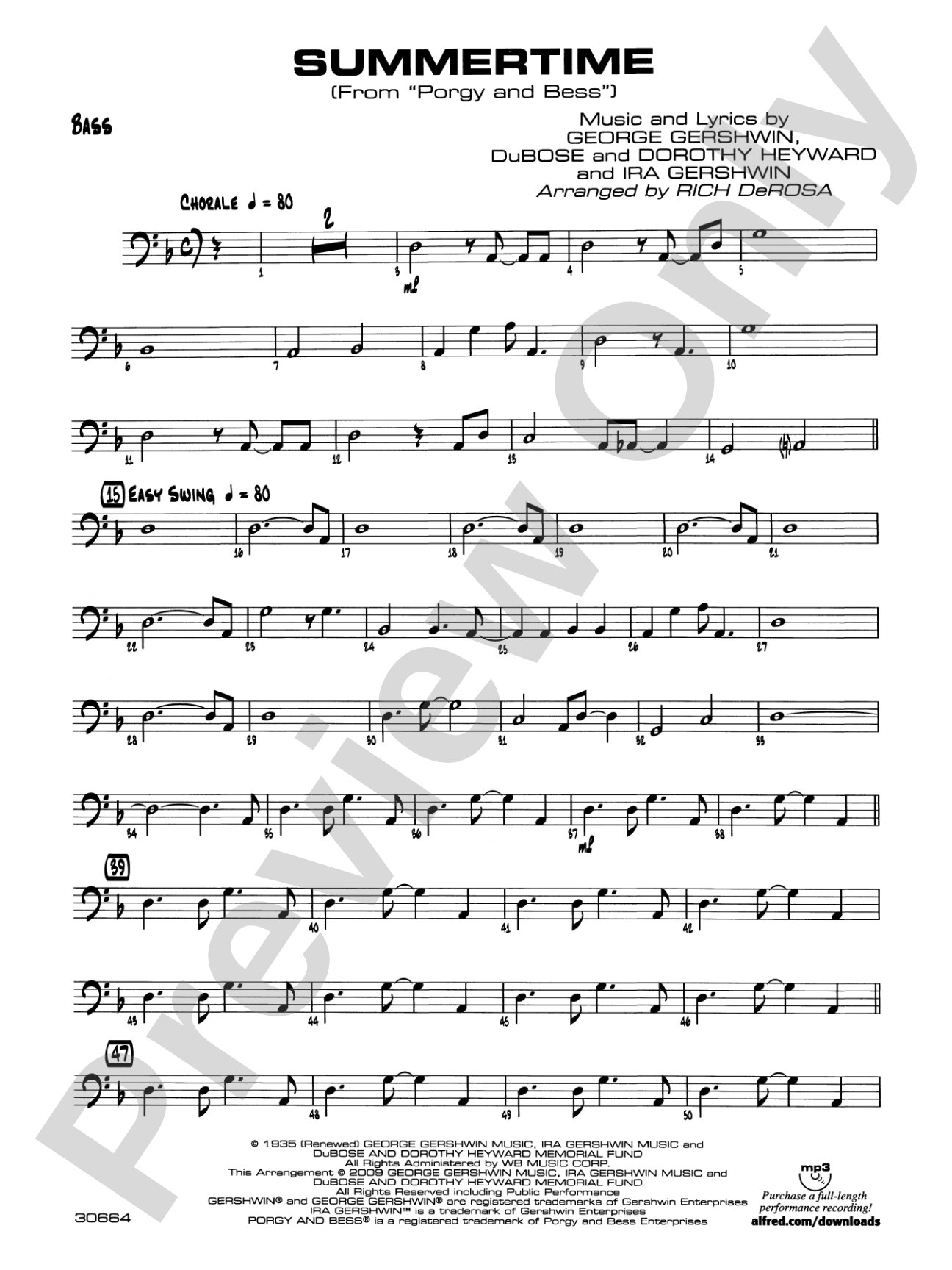

Summertime: String Bass
Music and lyrics by George Gershwin, DuBose and Dorothy Heyward, and Ira Gershwin / arr. Rich DeRosa
Grade: 1 (Easy)
Item: 00-PC-0015290_SB
$3.00
Pickup currently not available
Description
This Gershwin classic has a refreshing sound, as the chorale intro slips into a slow swing feel reminiscent of the legendary Miles Davis/Gil Evans arrangement. Arranger Rich DeRosa brings a big sound to the young jazz band. This one includes easy written solos for trombone, trumpet, tenor sax and alto sax with backgrounds behind each, a simple but very effective shout chorus and easy brass ranges. Give a listen and you will enjoy! (4:40) This title is available in MakeMusic Cloud.


Don't just read it, hear it, play along with it, and watch your students grow with it. In MakeMusic Cloud, Summertime: String Bass comes alive with professional accompaniment, adjustable tempo, and built-in practice tools that turn solo practice into real progress.
Open in the Player
Jump straight in and assign it today.
Start Your Free Trial
Open this title and explore the full library in minutes.
Sample Audio
1
Audio File
--:--
0:00
0:00
Sample Video
No sample videos found.
Additional Details
Series:
First Year Charts for Jazz Ensemble
Publisher:
Alfred Music
Page Count:
78
SKU:
00-PC-0015290_SB
More about this title
About the Composer: George Gershwin
George Gershwin (1898-1937) bridged classical and popular music with uncommon fluency, creating works that still define American musical identity. His melodies are instantly recognizable and his harmonies remain fresh; "Summertime" from the opera Porgy and Bess (1935) stands as one of the most recorded songs in American music, recorded by everyone from Billie Holiday to John Coltrane.
For music educators, Gershwin matters because his music demonstrates how sophisticated harmony and memorable melody work together. His arrangements have become standards in the jazz repertoire, and conductors return to them repeatedly because they engage students while teaching genuine musical concepts. The piece rewards careful listening and preparation.
Why we love this
Rich DeRosa's arrangement captures what makes "Summertime" enduring without overwhelming young players. The chorale opening establishes the tune's inherent beauty, then the swing feel kicks in with enough energy to keep students engaged while the written solos give every section a chance to shine. You get full participation, strong ensemble moments, and individual spotlight opportunities all in one accessible package.
What to expect
Warm and unhurried at first, like sitting on a porch on a humid evening. The swing section brings gentle motion and subtle swagger, with soloists trading stories over steady support from their sections. The shout chorus lifts the energy without losing the tune's essential ease.
Who it's for
This arrangement serves first-year jazz ensembles and developing young bands looking for material that builds confidence without sacrificing musicality. Directors need pieces where every student gets something meaningful to do, and this one delivers solos, backgrounds, and ensemble writing that keeps the whole group invested.
How to get the most out of it
- Balance the opening chorale carefully; the melody needs to sing above the harmonies without the ensemble becoming thick or drowsy. Think of it as a gentle introduction rather than a proclamation.
- When the swing section begins, lock the tempo with your rhythm section first. The transition from chorale to swing should feel organic, not jarring.
- Coach your soloists to listen to the background figures behind them. These aren't filler; they're conversation. Encourage dialogue rather than solo spotlighting.
- Keep the shout chorus tight and rhythmically clean. Easy doesn't mean sloppy; the effectiveness comes from precision and ensemble unity.
How to use it
Program this early in the season when your ensemble is still finding its footing; its accessibility builds morale while the Gershwin pedigree signals to audiences that first-year charts don't mean first-year musicality. It also pairs naturally with other standards, making it a solid opening number for a jazz concert or a bridge into deeper exploration of American songbook jazz.
Skills your students will build
- Swing rhythm and shuffle feel phrasing
- Solo and background section coordination
- Navigating easy but exposed brass ranges
- Listening to ensemble sound while playing a written part
- Stylistic interpretation of a jazz standard