
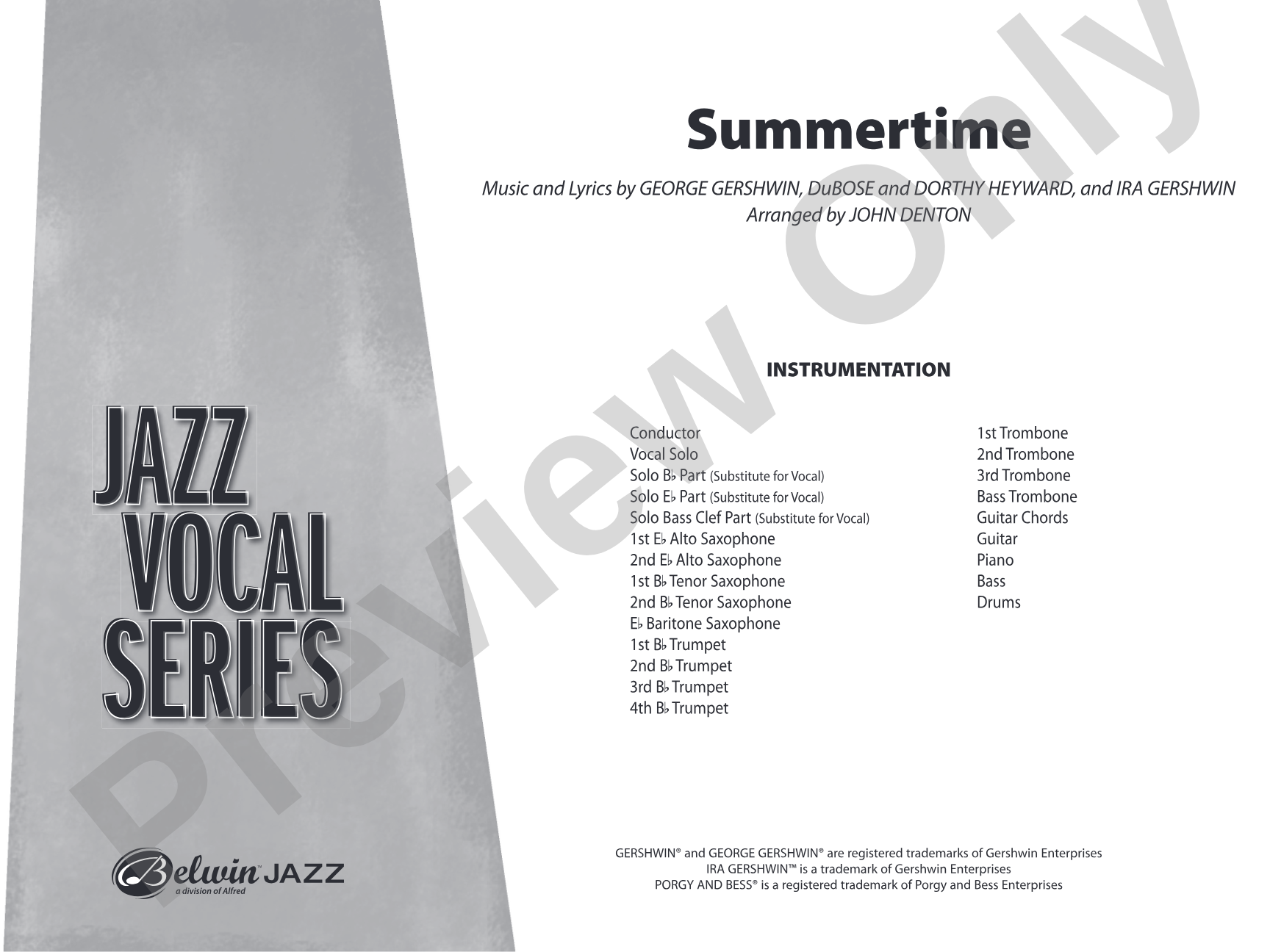
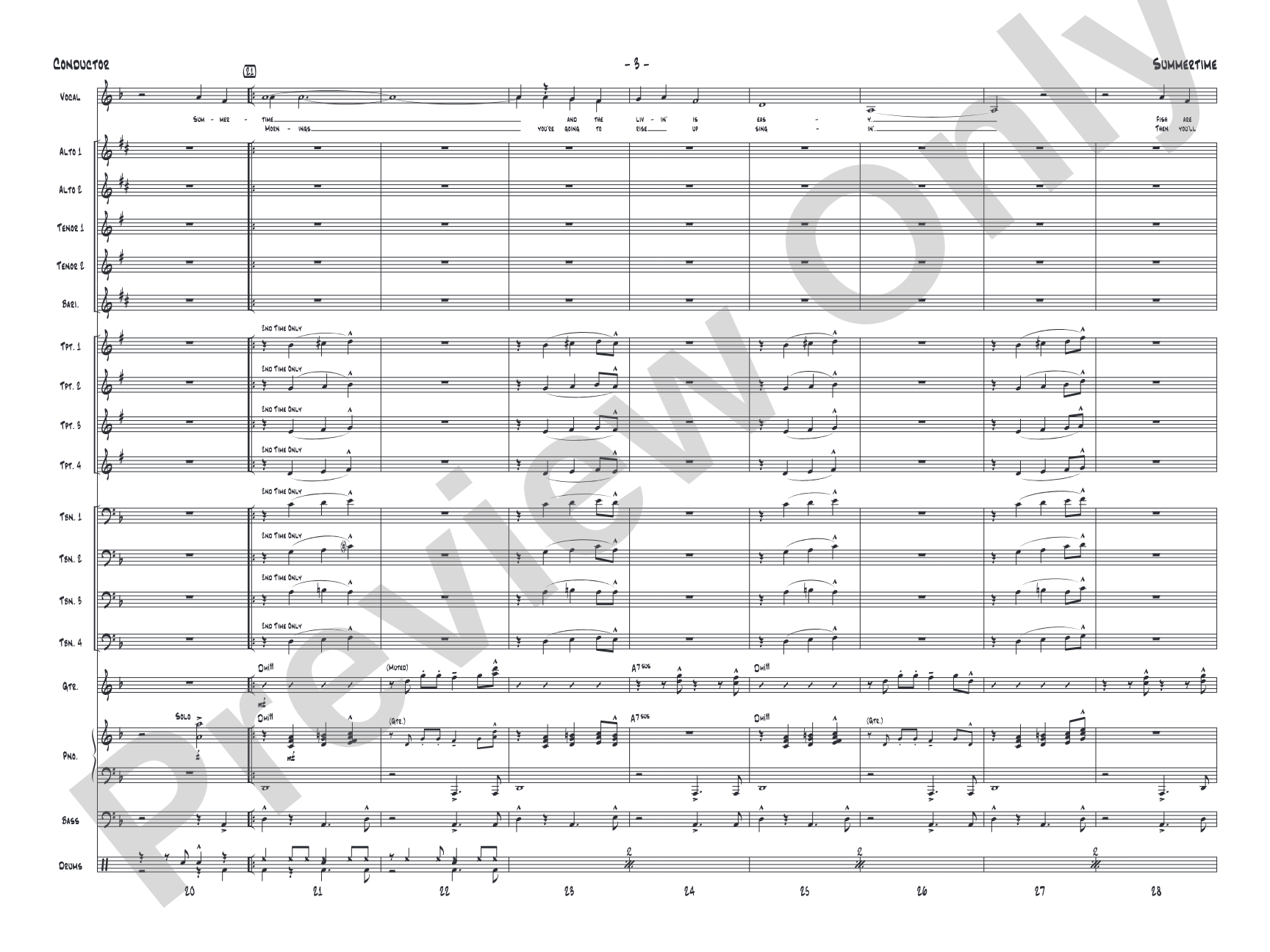
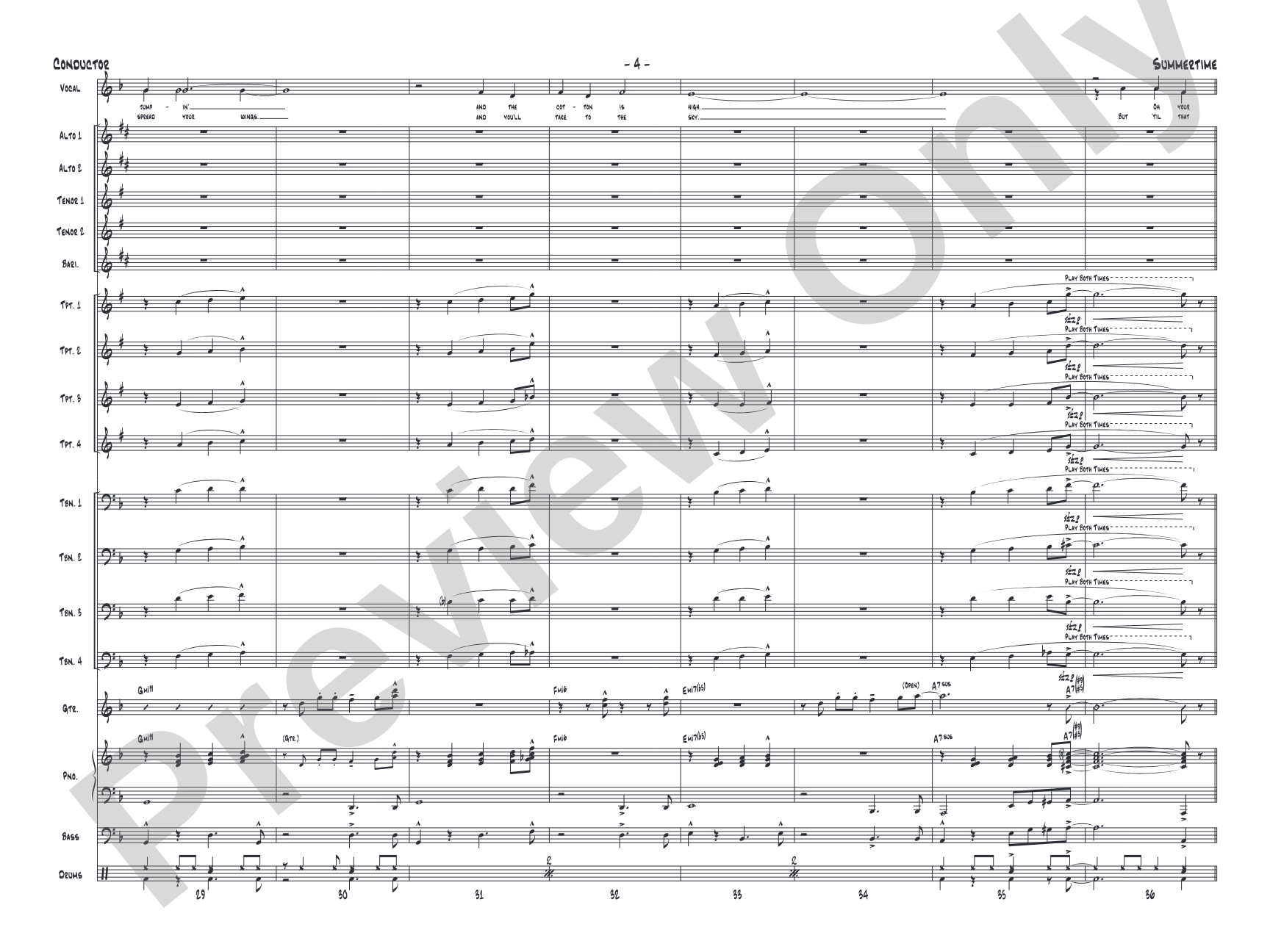
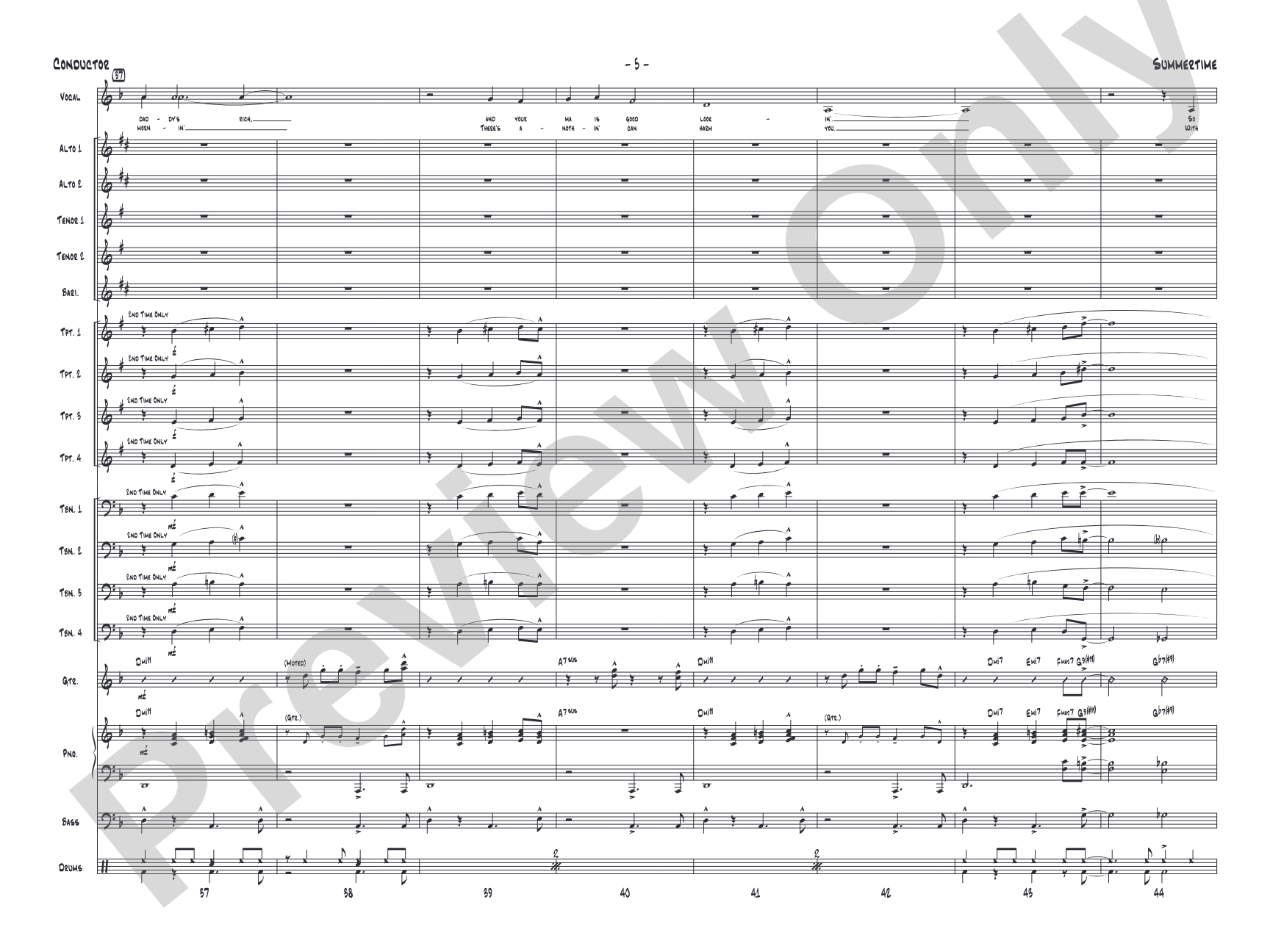
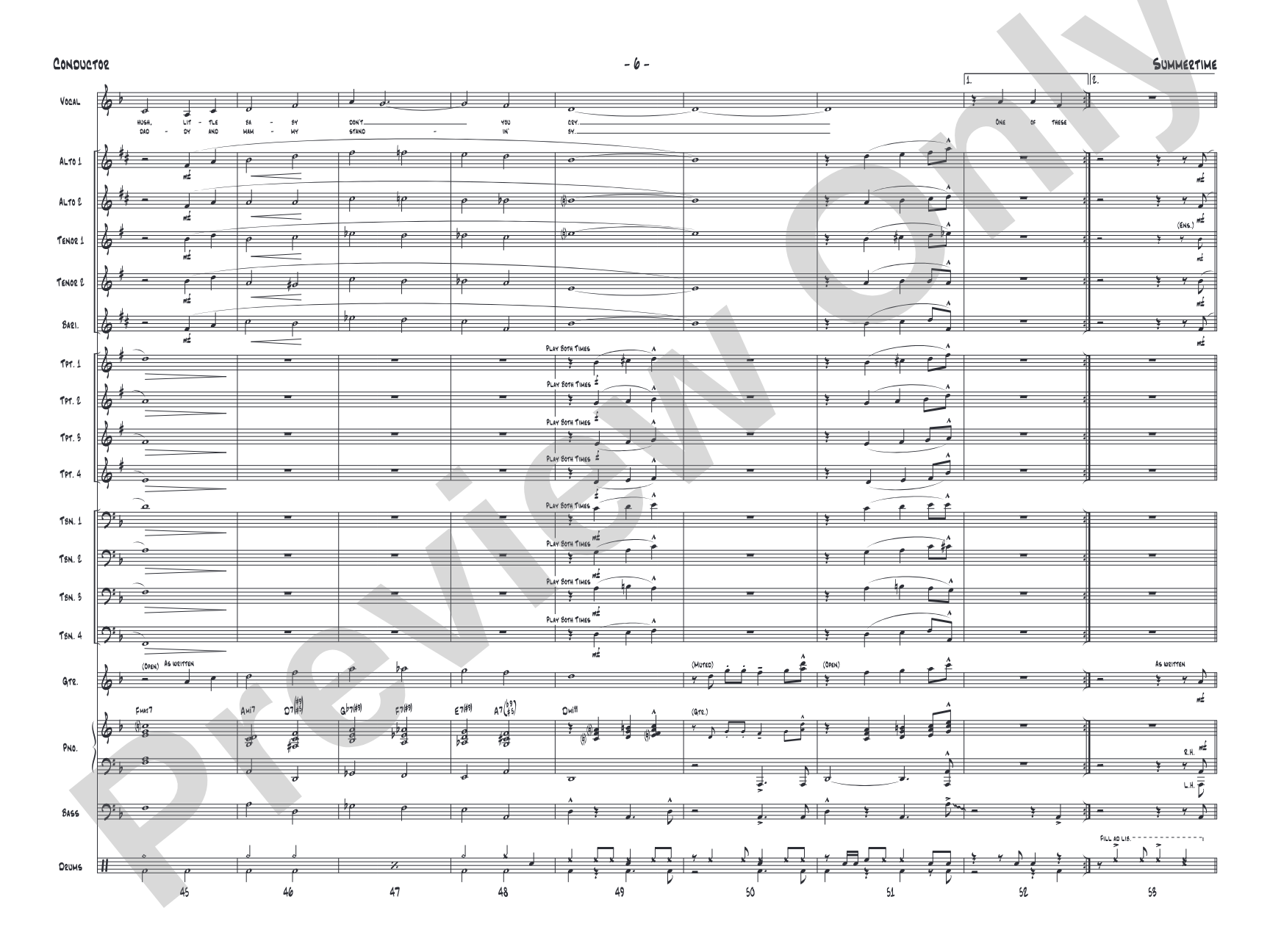
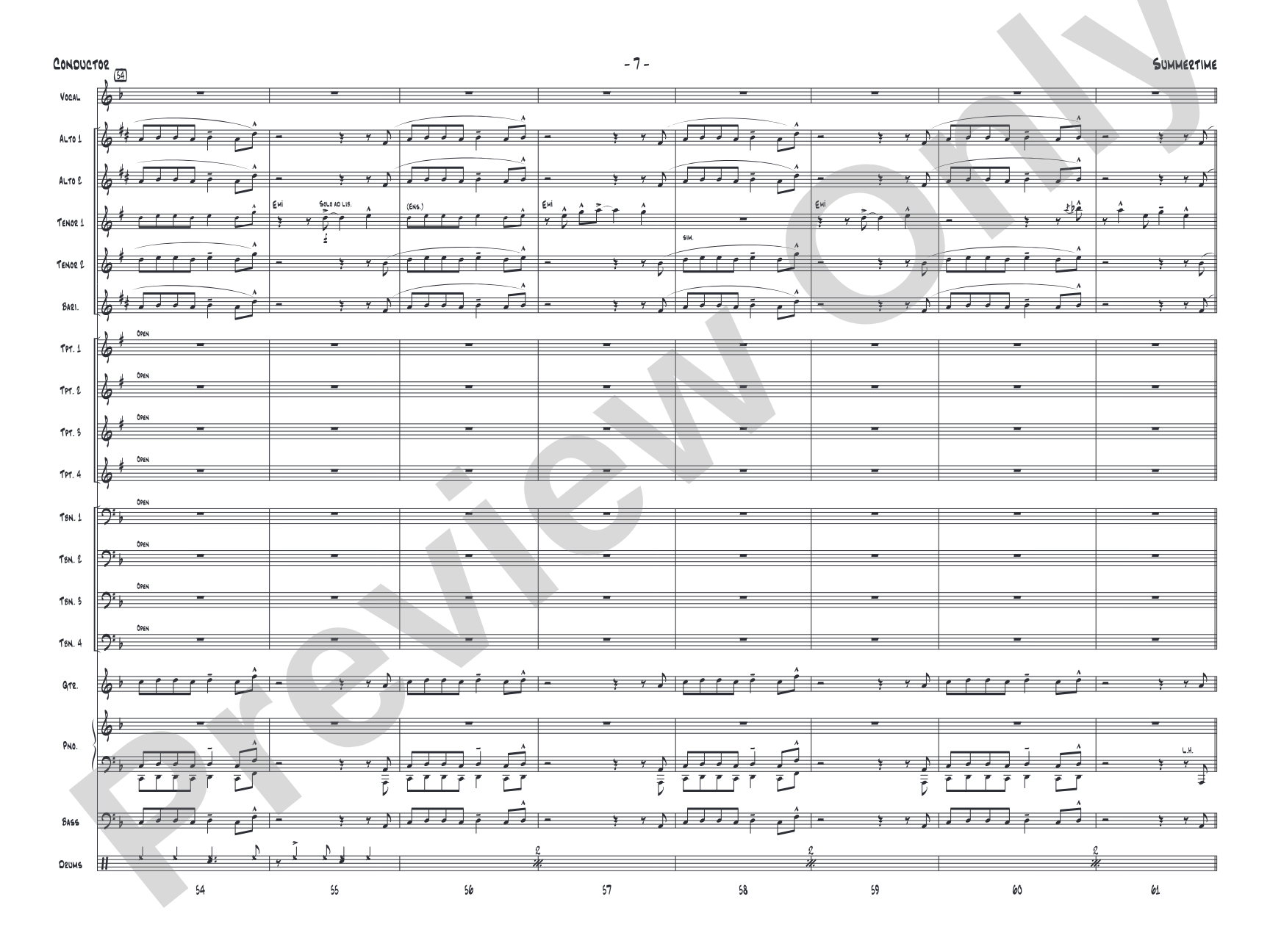
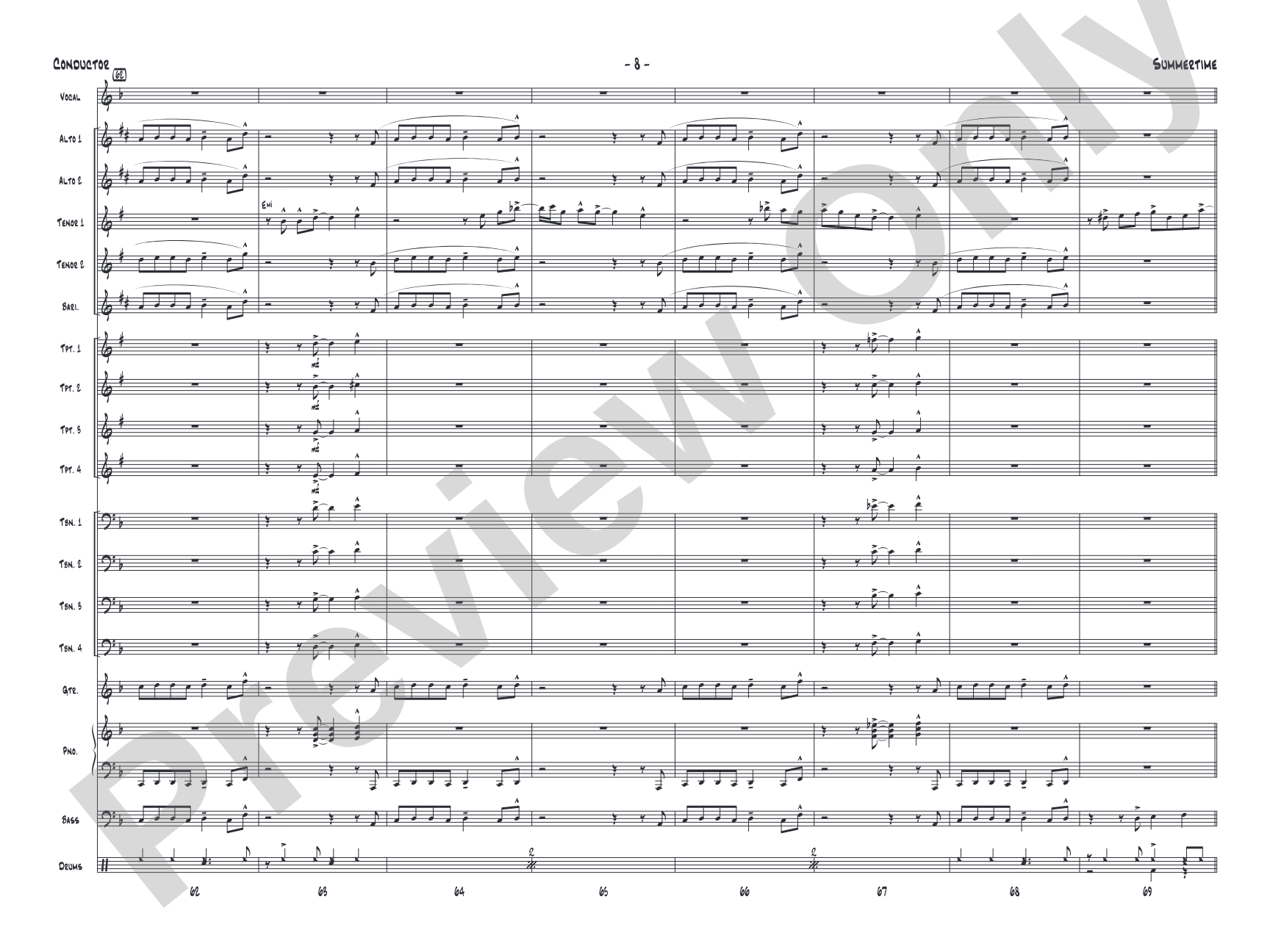
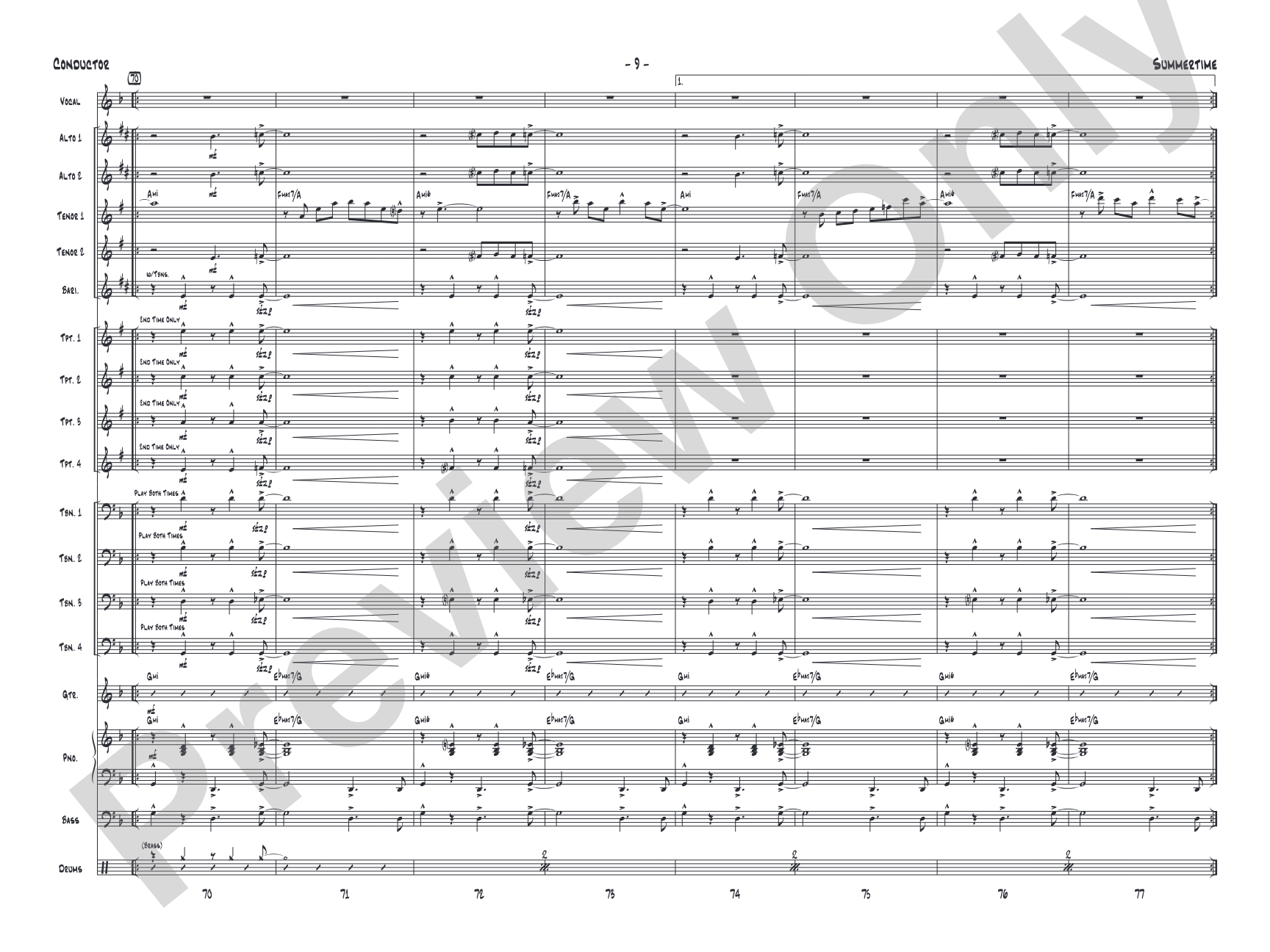
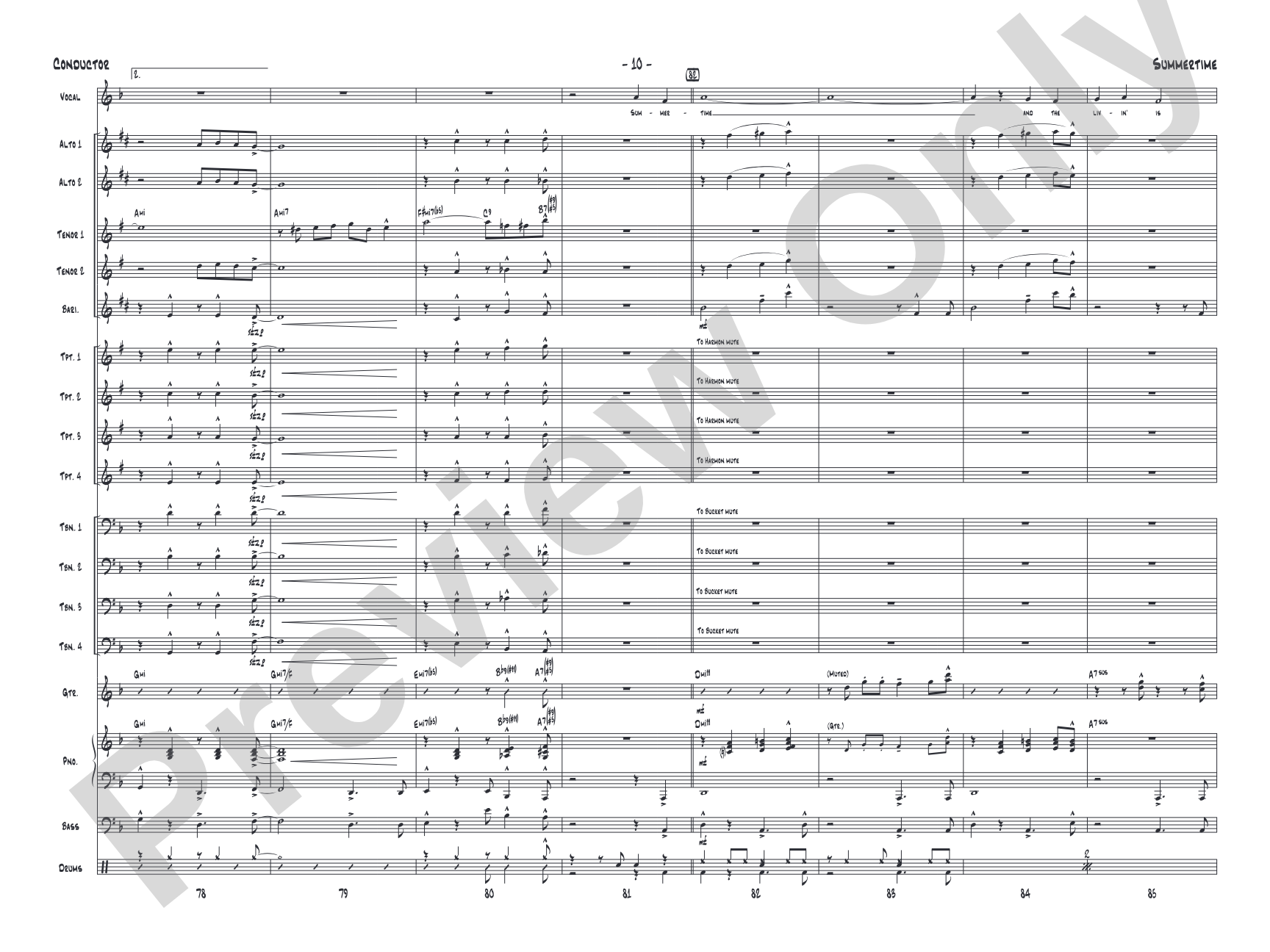
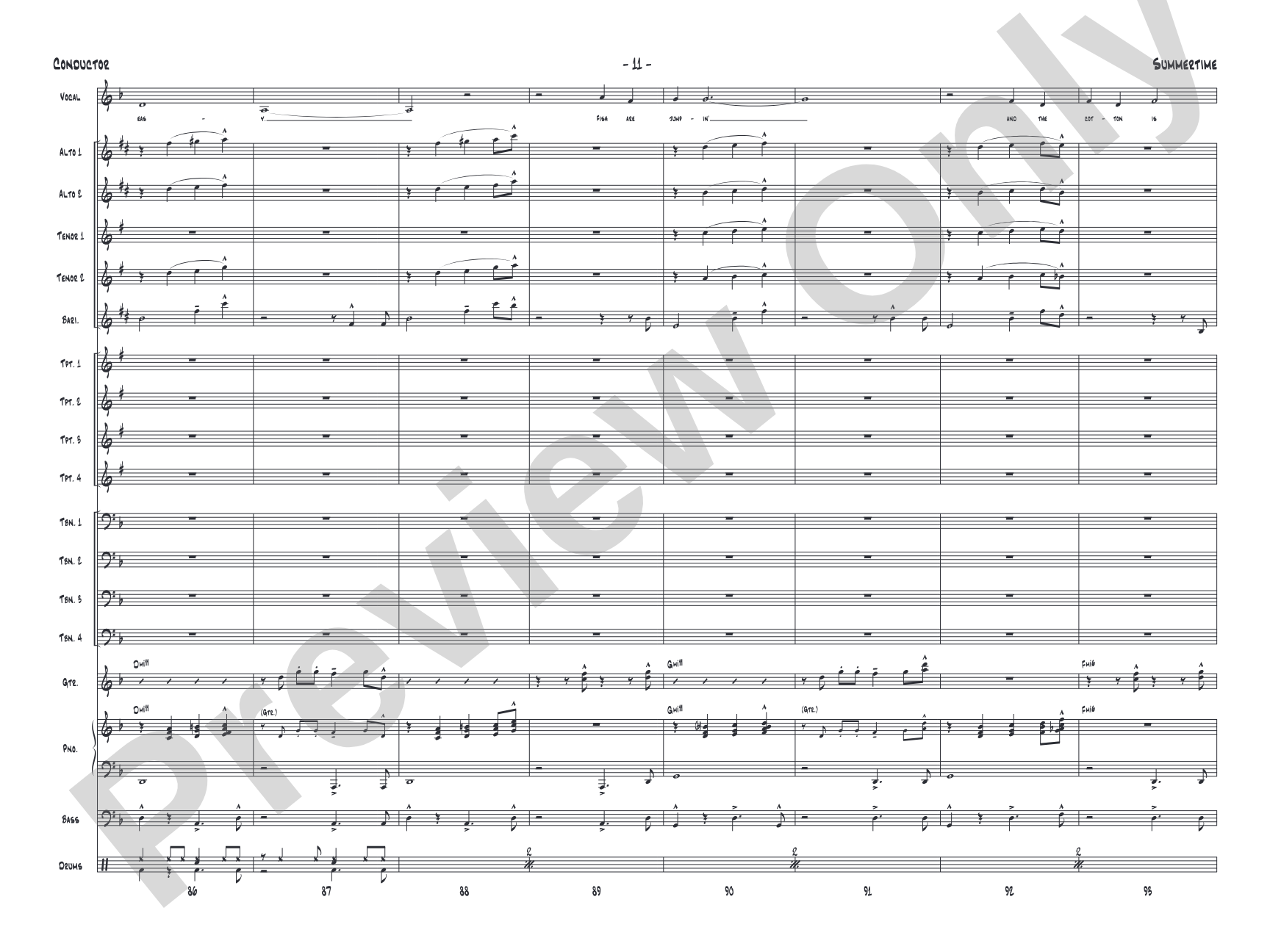
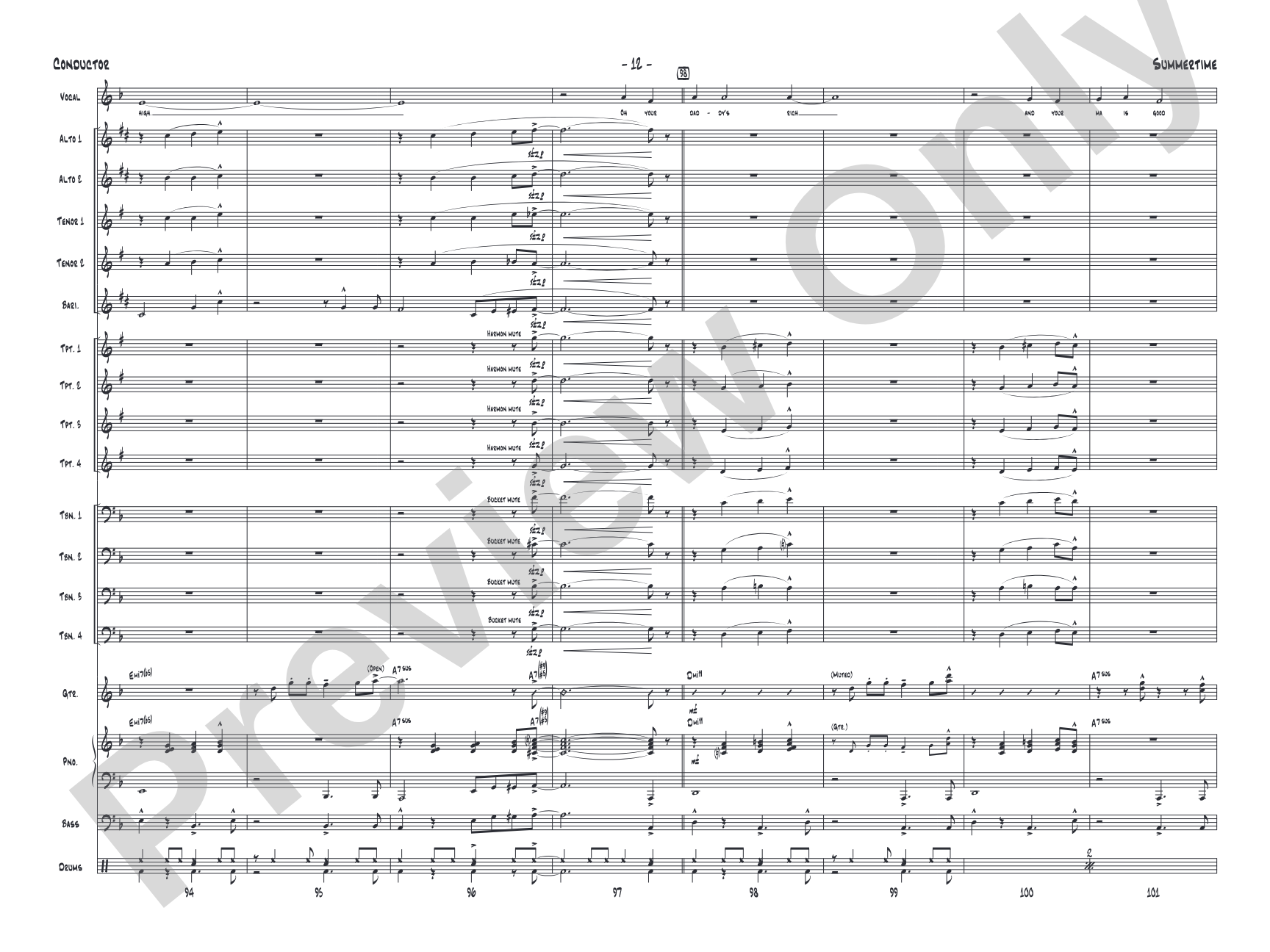
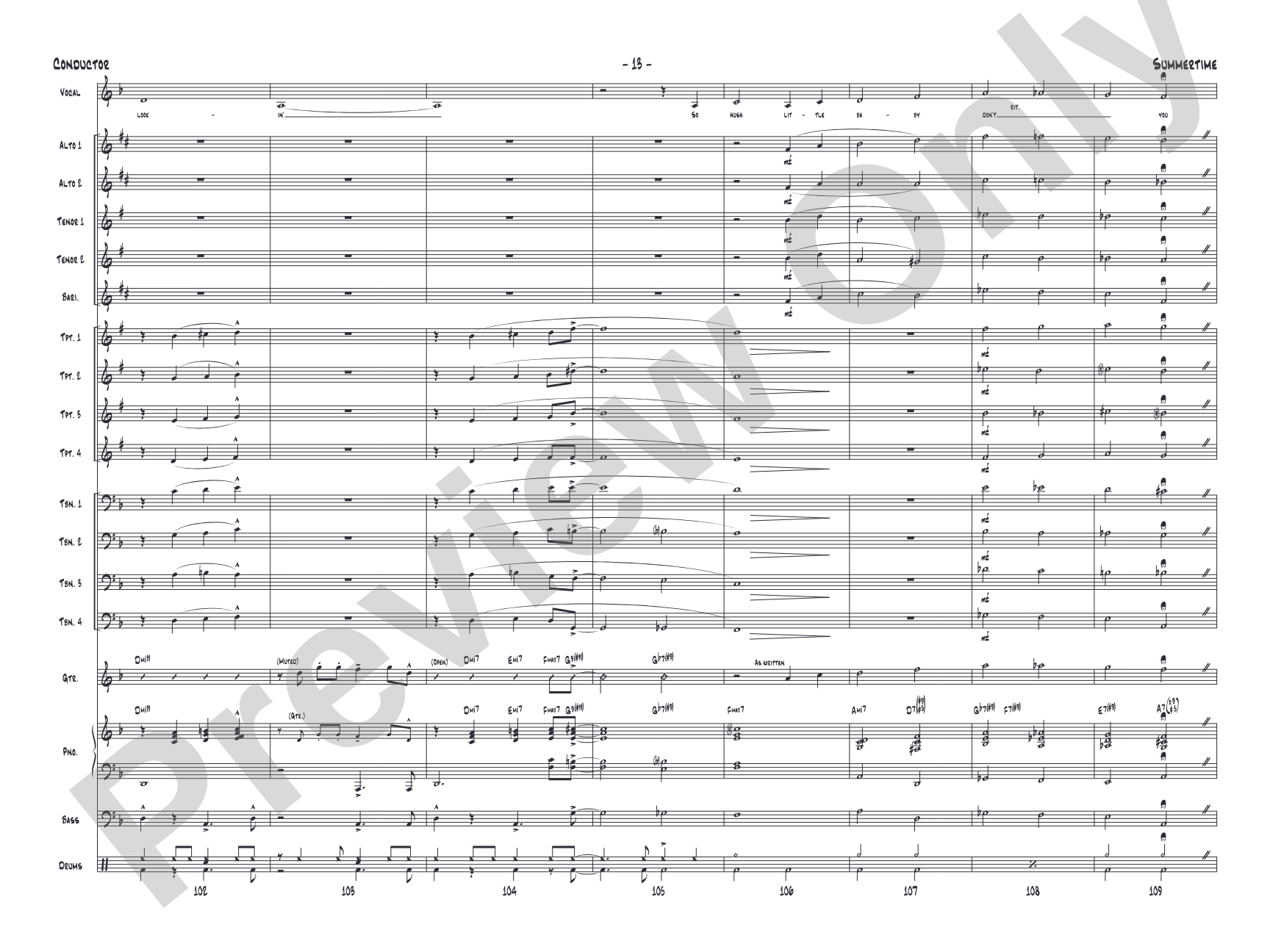
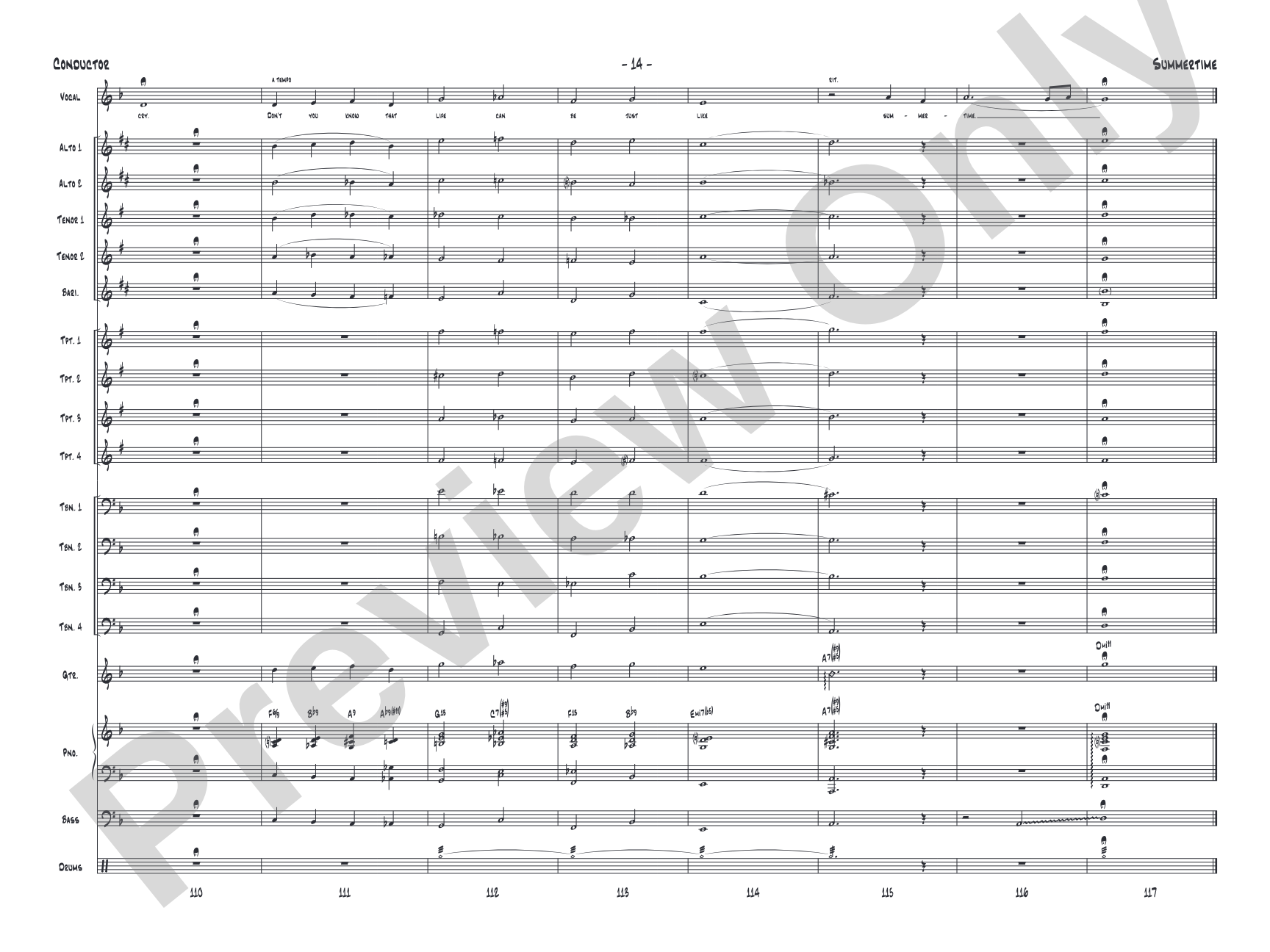

Summertime: Score
Music and lyrics by George Gershwin, DuBose and Dorothy Heyward, and Ira Gershwin / arr. John Denton
Grade: 3 (Medium)
Item: 00-PR-0005518
$11.00
Pickup currently not available
Description
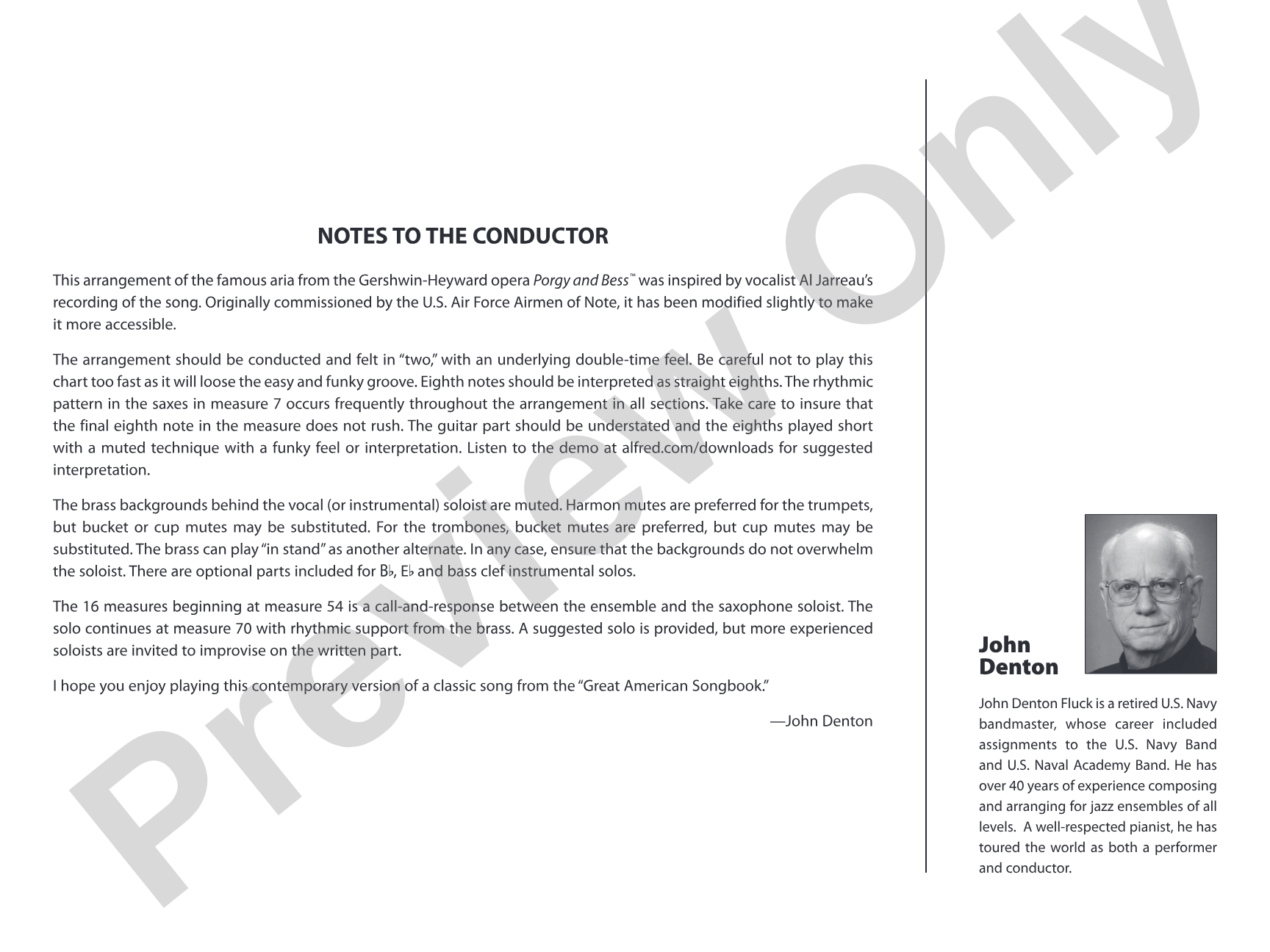
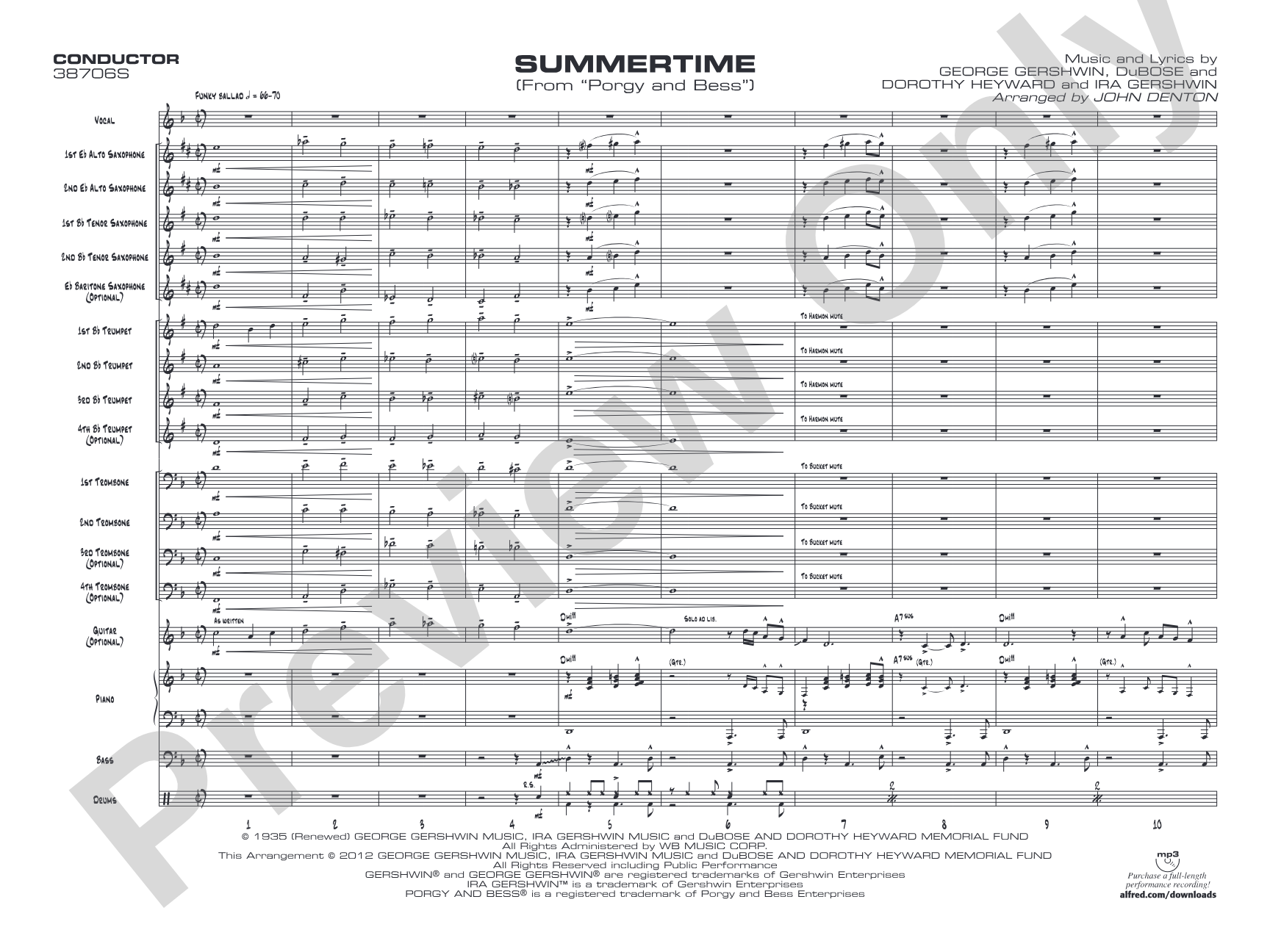
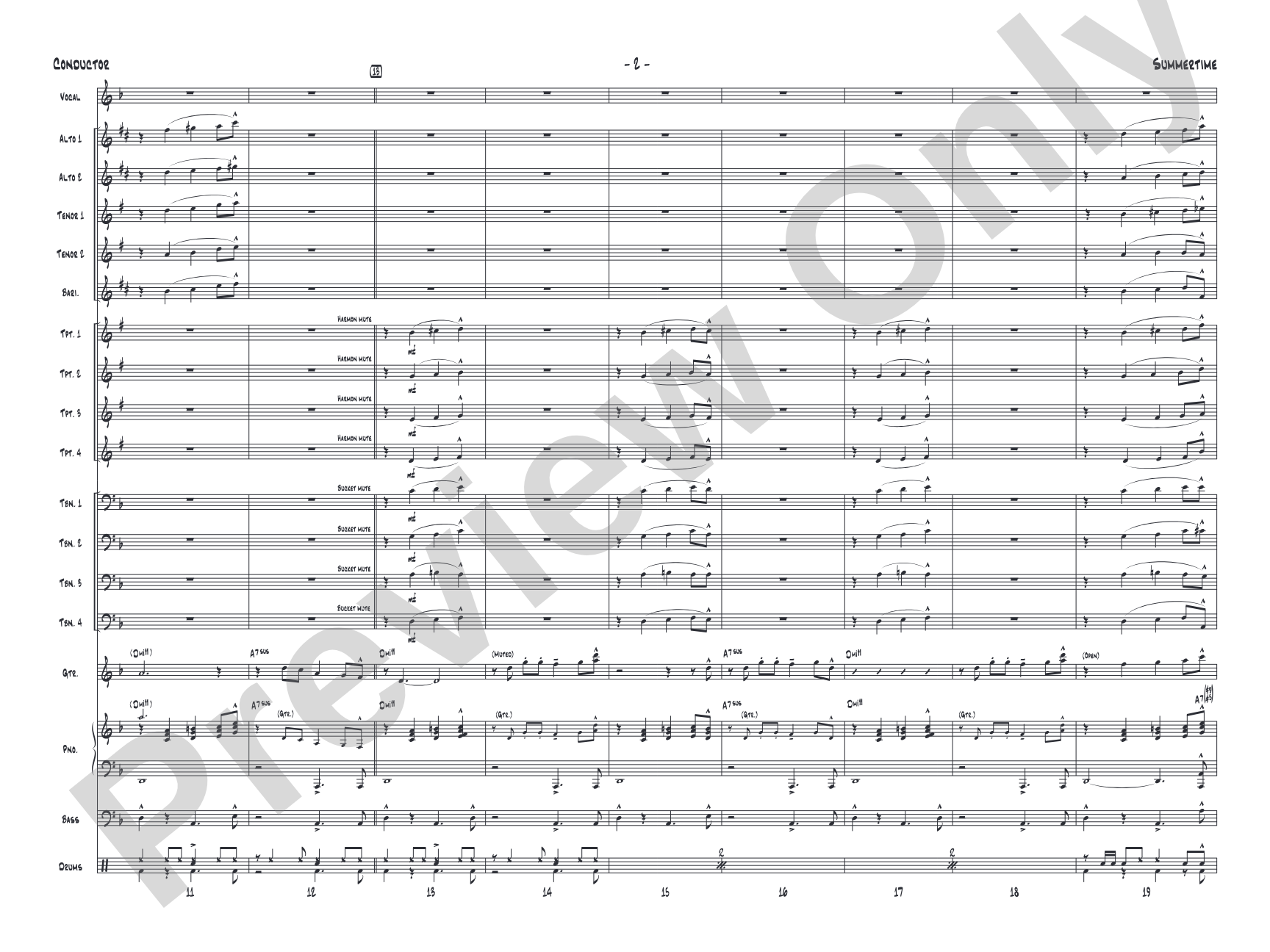
This is a contemporary and funky-ballad treatment of this classic vocal. The key is D minor, the vocal range is A below middle C to 2nd space A. The instrumental parts are very reachable with lead trumpet range to written A above the staff, featuring a written-out tenor solo.


Don't just read it, hear it, play along with it, and watch your students grow with it. In MakeMusic Cloud, Summertime: Score comes alive with professional accompaniment, adjustable tempo, and built-in practice tools that turn solo practice into real progress.
Open in the Player
Jump straight in and assign it today.
Start Your Free Trial
Open this title and explore the full library in minutes.
Sample Audio
1
Audio File
--:--
0:00
0:00
Sample Video
Additional Details
Series:
Jazz Vocal Series
Publisher:
Alfred Music
Page Count:
90
SKU:
00-PR-0005518
More about this title
About the Composer: George Gershwin
George Gershwin (1898-1937) bridged classical music and jazz with a compositional voice that felt entirely new. His scores blend sophisticated harmonic language with the rhythmic energy and blues-inflected melodies of American popular music, making him one of the most influential composers of the twentieth century.
Gershwin's operatic works, particularly Porgy and Bess, remain central to music education curricula. "Summertime," one of the opera's most performed arias, showcases his gift for melody that carries emotional depth while remaining accessible to performers and audiences alike. His influence extends far beyond opera into jazz, musical theater, and concert music.
Why we love this
John Denton's arrangement captures the sophistication of Gershwin's original while grounding it in contemporary jazz idiom. The funky-ballad treatment keeps the vocal line's lyrical beauty intact while giving your ensemble something rhythmically engaging to play, and the written-out tenor solo provides a genuine jazz conversation rather than a passive accompaniment.
What to expect
Sultry and relaxed yet undeniably contemporary. The minor key and slow tempo allow the vocal to breathe, while the funky rhythmic undercarriage keeps the piece grounded and modern rather than nostalgic. It's the sound of sitting in a jazz club on a summer evening.
Who it's for
Jazz ensemble directors programming a vocal feature, whether for a concert or festival. The Grade 3 difficulty makes it accessible to intermediate high school ensembles or college groups, and the reachable trumpet and saxophone parts mean you won't need a specialized lead player to make this work.
How to get the most out of it
- Balance the vocal melody against the jazz ensemble so the singer's line sits clearly on top without the band pulling back to a whisper; the arrangement has enough space built in to support rather than overshadow.
- Shape the tenor solo section as a true musical dialogue with the vocalist, cueing the soloist so both musicians listen and respond to each other's phrasing.
- Lock the rhythm section into the swing feel before rehearsing the full ensemble; a solid groove from piano, bass, and drums will anchor the trumpet parts and make the overall sound cohere.
How to use it
Program this as a stand-alone set piece within a longer jazz concert, or use it to transition between uptempo numbers and ballads. The arrangement's sophistication means it reads well beside big-band standards and newer jazz compositions alike, giving your program both classic Americana and contemporary polish.
Skills your students will build
- Reading and playing written-out jazz solo sections
- Swing feel and jazz rhythm section groove
- Balancing melody and accompaniment in ensemble texture
- Listening and responding to a vocal soloist during performance
- Lead trumpet range and articulation (written A above staff)
- Jazz phrasing and expression distinct from classical articulation