Summertime (From "Porgy And Bess") Sheet Music Preview

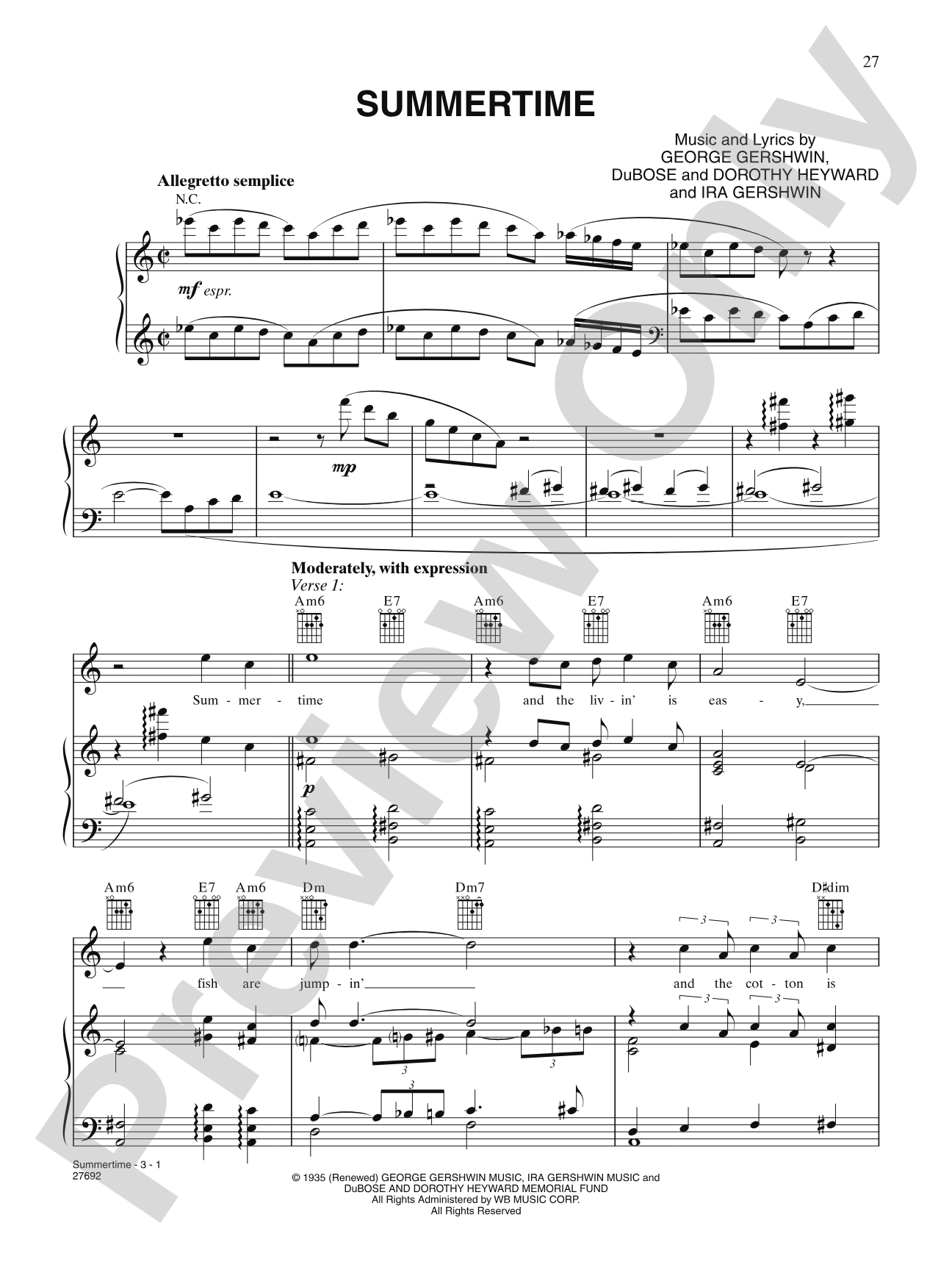
Summertime (From "Porgy And Bess"): Piano/Vocal/Chords

Sam Cooke

Item: 00-PSP-000300

Digital Download
$3.99

One moment…

Description
Sam Cooke was the most important soul singer in history and the inventor of soul music. Even today, his music endures with cover recordings by artists from all genres of the recording industry. His legacy continues with this album-matching folio containing songs spanning more than a decade. Titles include: Another Saturday Night * Bring It on Home to Me * Chain Gang * Cupid * Everybody Loves to Cha Cha Cha * (Ain't That) Good News * Having a Party * Jesus Gave Me Water * Meet Me at Mary's Place * Only Sixteen * Twisting the Night Away * (What A) Wonderful World * You Send Me * You're Nobody 'Til Somebody Loves You.

Summertime (From "Porgy And Bess"): Piano/Vocal/Chords isn't in MakeMusic Cloud just yet...but it could be. Let us know you'd like to see it, and you'll help shape what comes next. In the meantime, start a free trial and dive into thousands of interactive titles your students can play along with today.

Sample Audio
No sample audio found.
Sample Video
Additional Details
Publisher: Alfred Music
Page Count: 208
SKU: 00-PSP-000300

More about this title

About the Composer: George Gershwin

George Gershwin (1898-1937) bridged classical concert music and American popular song with uncommon sophistication. His instrumental works, symphonic poems, and operatic ambitions earned him a place in the concert hall, but his gift for melody and rhythmic vitality made him equally essential to Broadway and the jazz-inflected popular music of the 1920s and 1930s.

Gershwin's collaboration with lyricist DuBose Heyward on "Porgy and Bess" (1935) produced one of American opera's most performed works. "Summertime," the opera's famous lullaby, distills Gershwin's ability to write music that feels both timeless and rooted in a specific cultural moment. The piece remains a standard across genres: concert singers, jazz musicians, soul artists, and pop performers continue to find new interpretations in its elegant, economical melody.

Why we love this

This folio captures Sam Cooke's definitive interpretations of soul and early R&B classics, and "Summertime" sits naturally within that repertoire. The piano/vocal/chords format gives singers immediate access to Cooke's phrasing and interpretation while allowing pianists to comp from the chords or play the written arrangement. Cooke's reading of this Gershwin standard demonstrates how a great vocalist can claim material across genres and make it their own.

What to expect

The song settles into a gentle, unhurried space. Its melody has the quality of something remembered rather than newly minted, and there's warmth in its minor-key simplicity. Cooke's reading honors the lullaby's origins while infusing it with a soulful ease that feels earned rather than affected.

Who it's for

Singers preparing a soul or standards repertoire, pianists learning to comp from chord charts in popular and jazz idioms, and music students examining how American popular music draws from operatic sources. The folio works equally well for recital preparation or informal performance settings.

How to get the most out of it

  • Study Cooke's vocal phrasing on the original recording to understand his approach to rubato and breath placement, then decide which elements serve your own interpretation.
  • Keep the piano accompaniment minimal in the verses; the voice should float over sparse support, building gradually through repetition and dynamic shape rather than harmonic complexity.
  • Balance the lullaby's intimacy with clear articulation of the lyric; "Summertime" must feel conversational, never precious or overly arranged.
  • Use the chord symbols to explore comping options that match the soul and R&B sensibility of Cooke's era rather than defaulting to classical-style voicings.

How to use it

Program this as a solo recital piece that bridges classical song traditions and contemporary soul repertoire, or pair it with other standards interpreted through a soul or R&B lens to demonstrate genre-crossing in American music. It also works as a teaching piece for singers learning to navigate swing, rubato, and stylistic authenticity in popular contexts.

Skills your students will build

  • Vocal phrasing and interpretation of lyrical material across genre traditions
  • Comping and chord-based accompaniment in soul and R&B styles
  • Navigating minor-key melodies with emotional clarity
  • Understanding historical context and vocal performance practices from the soul era

You May Also Like