
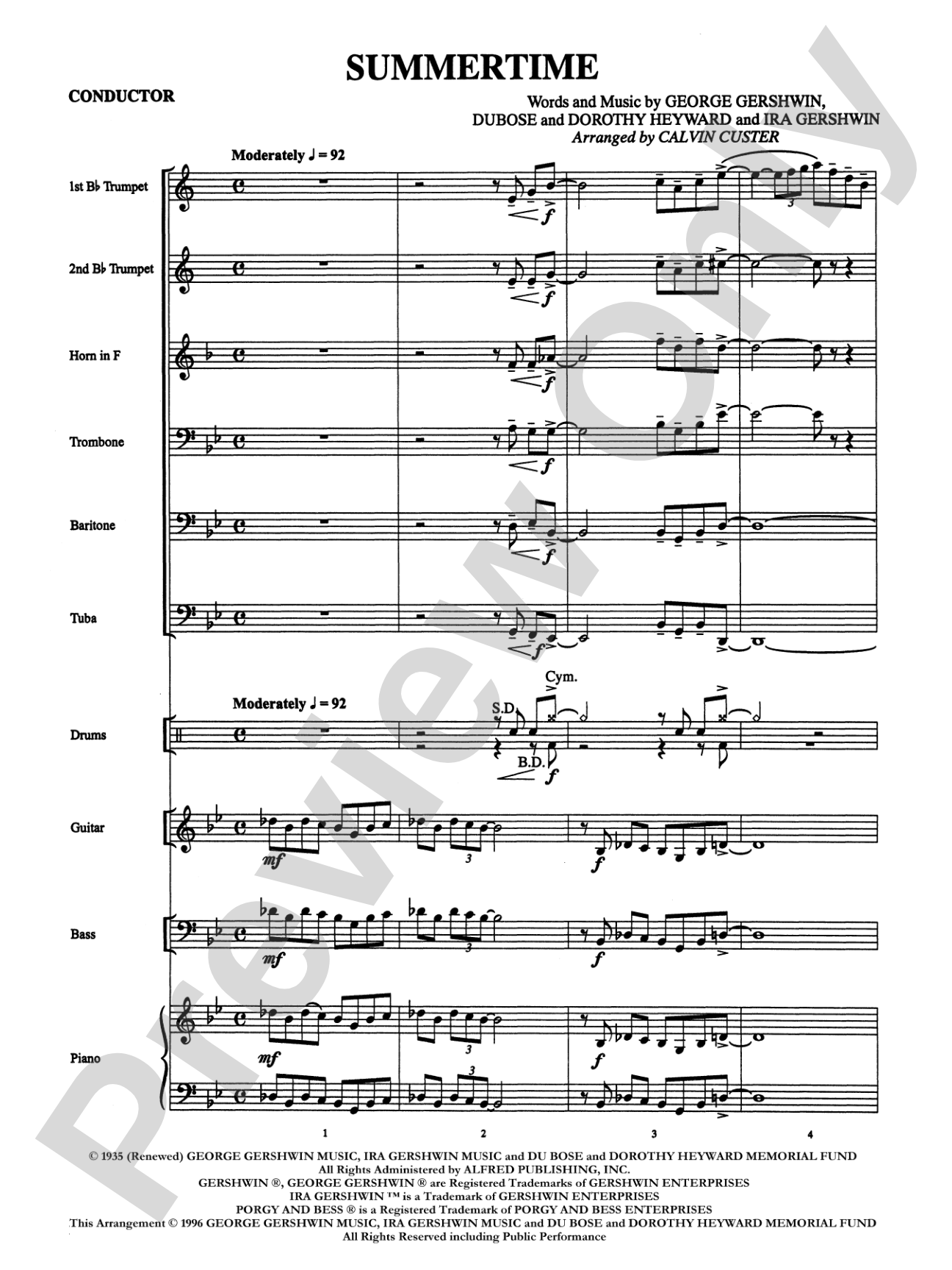
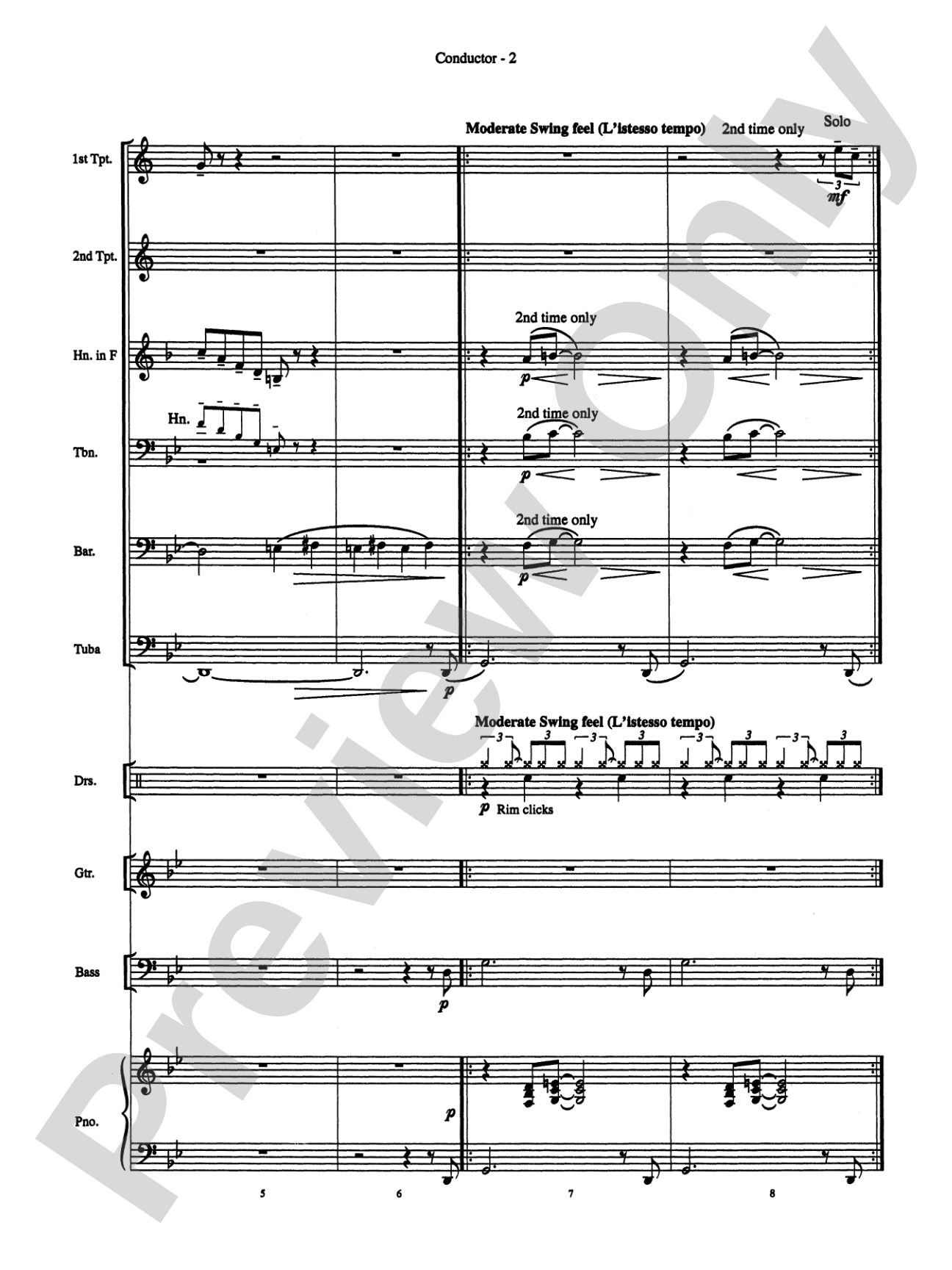
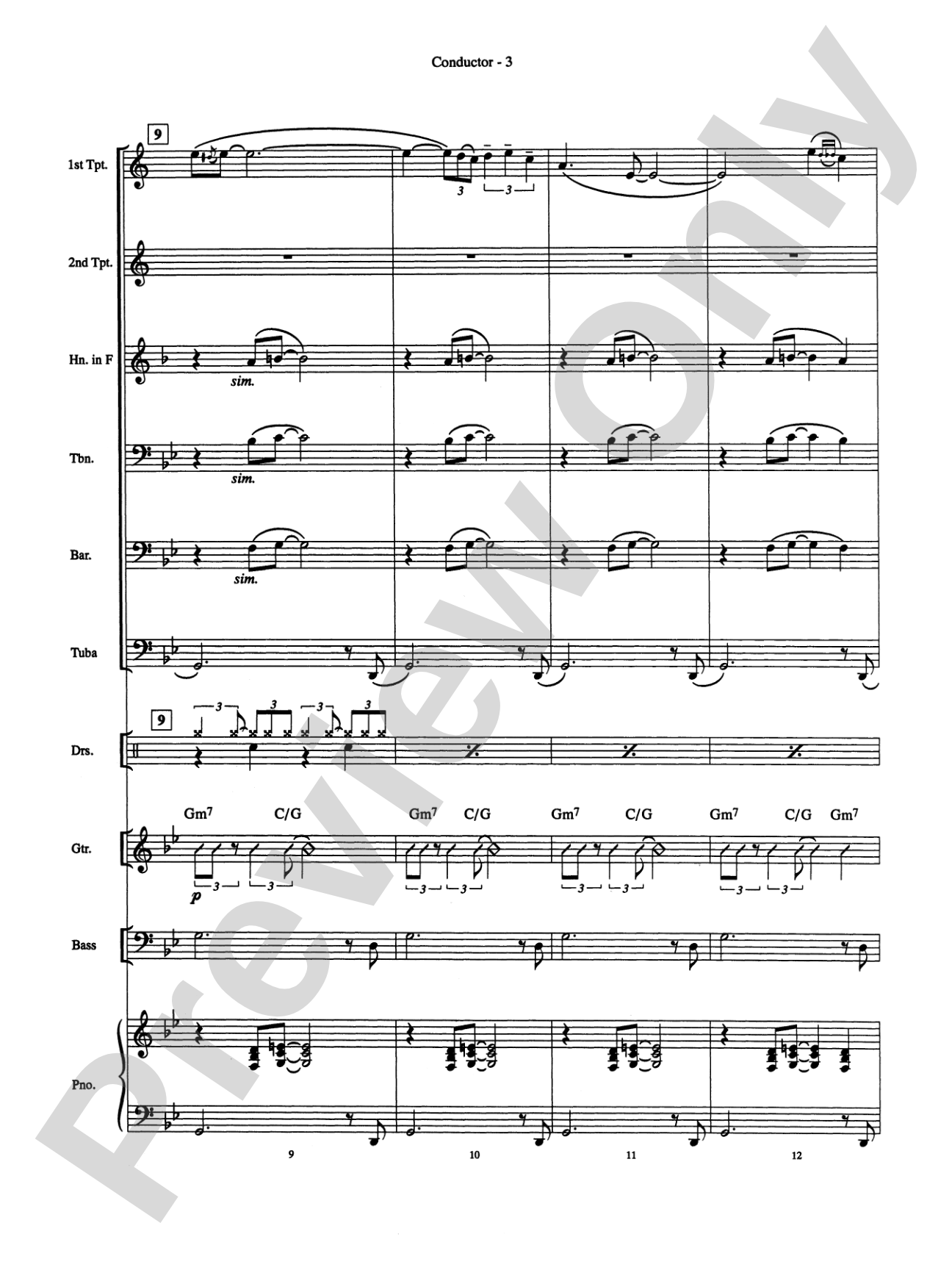
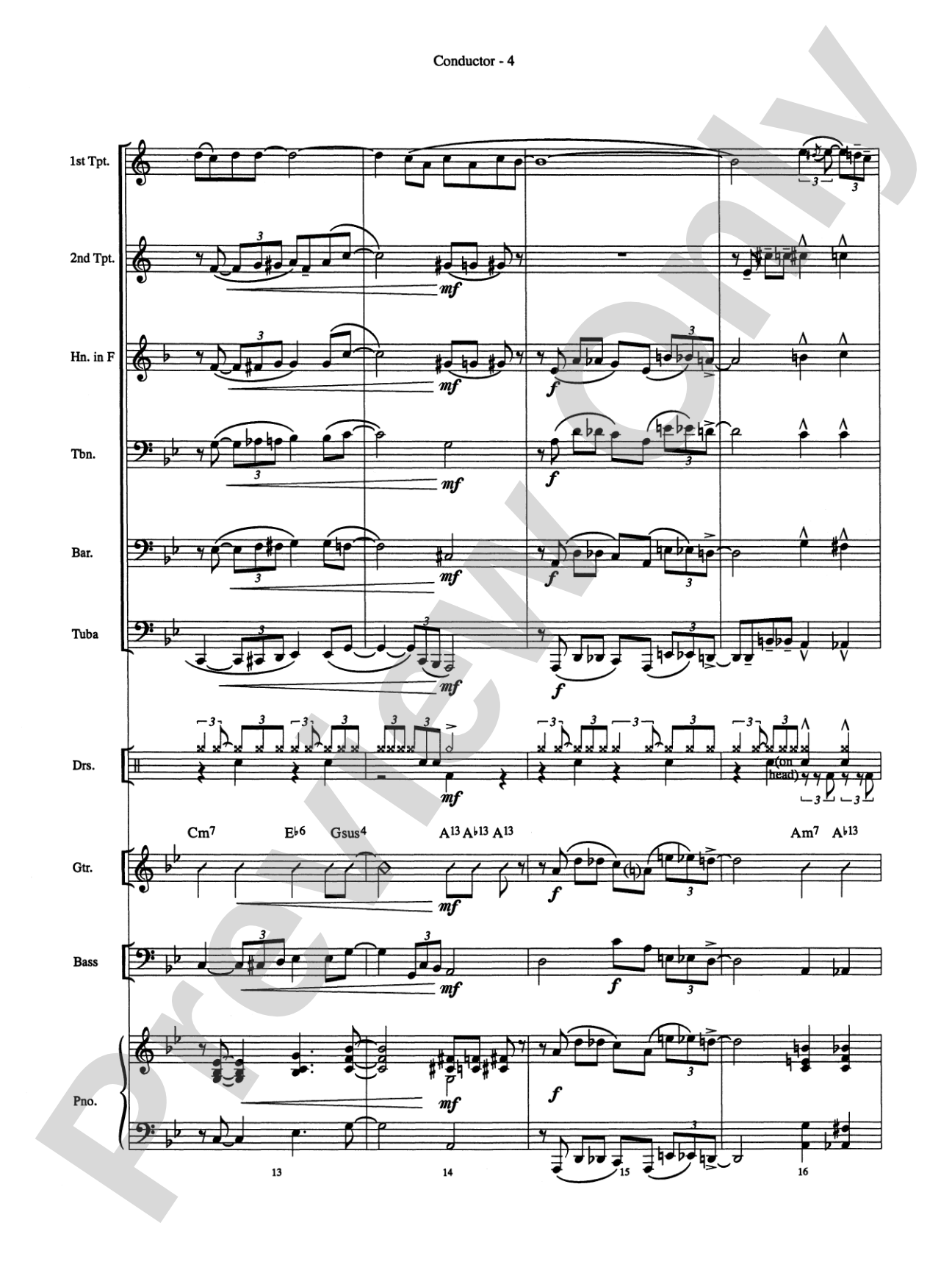
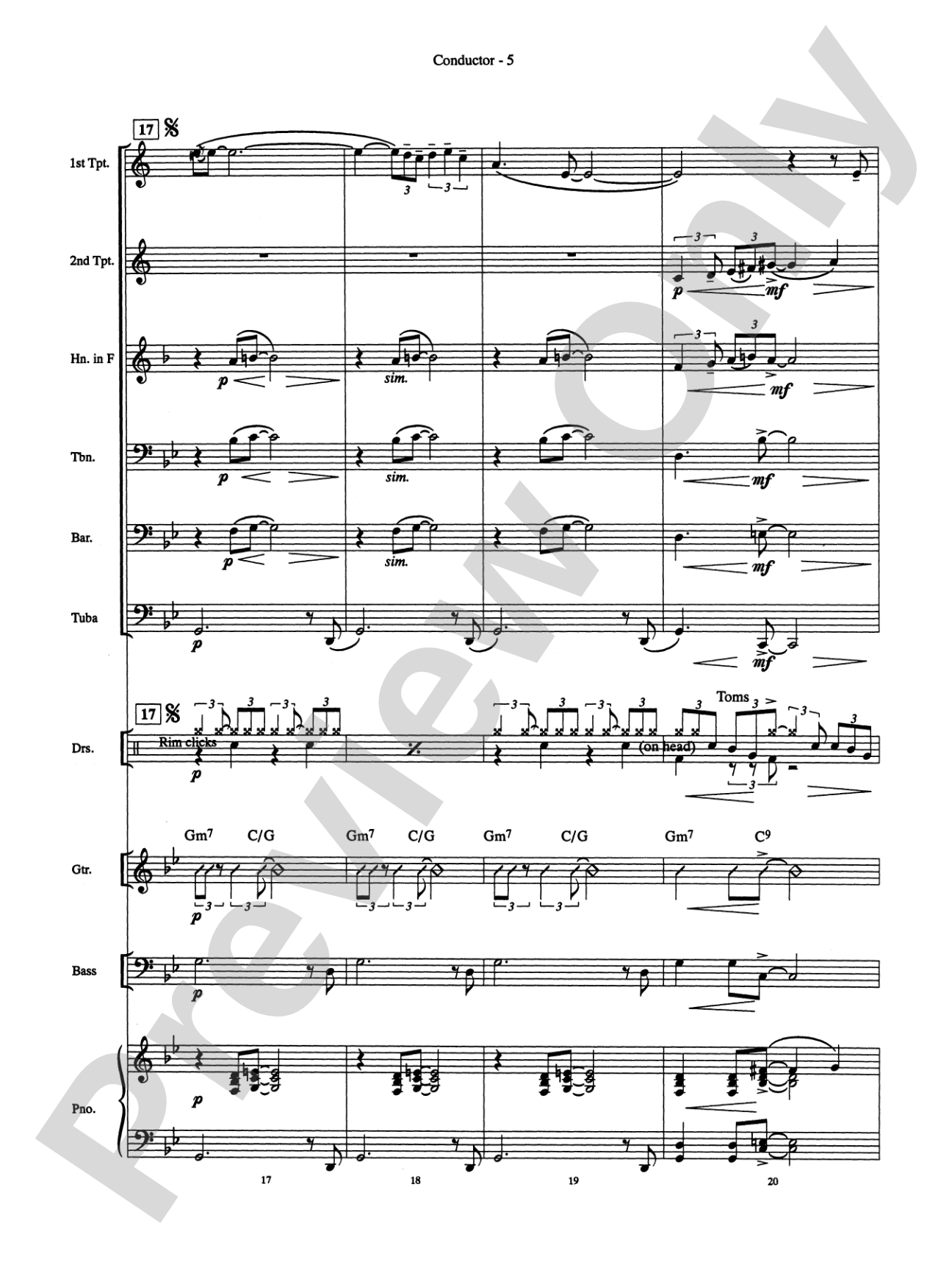
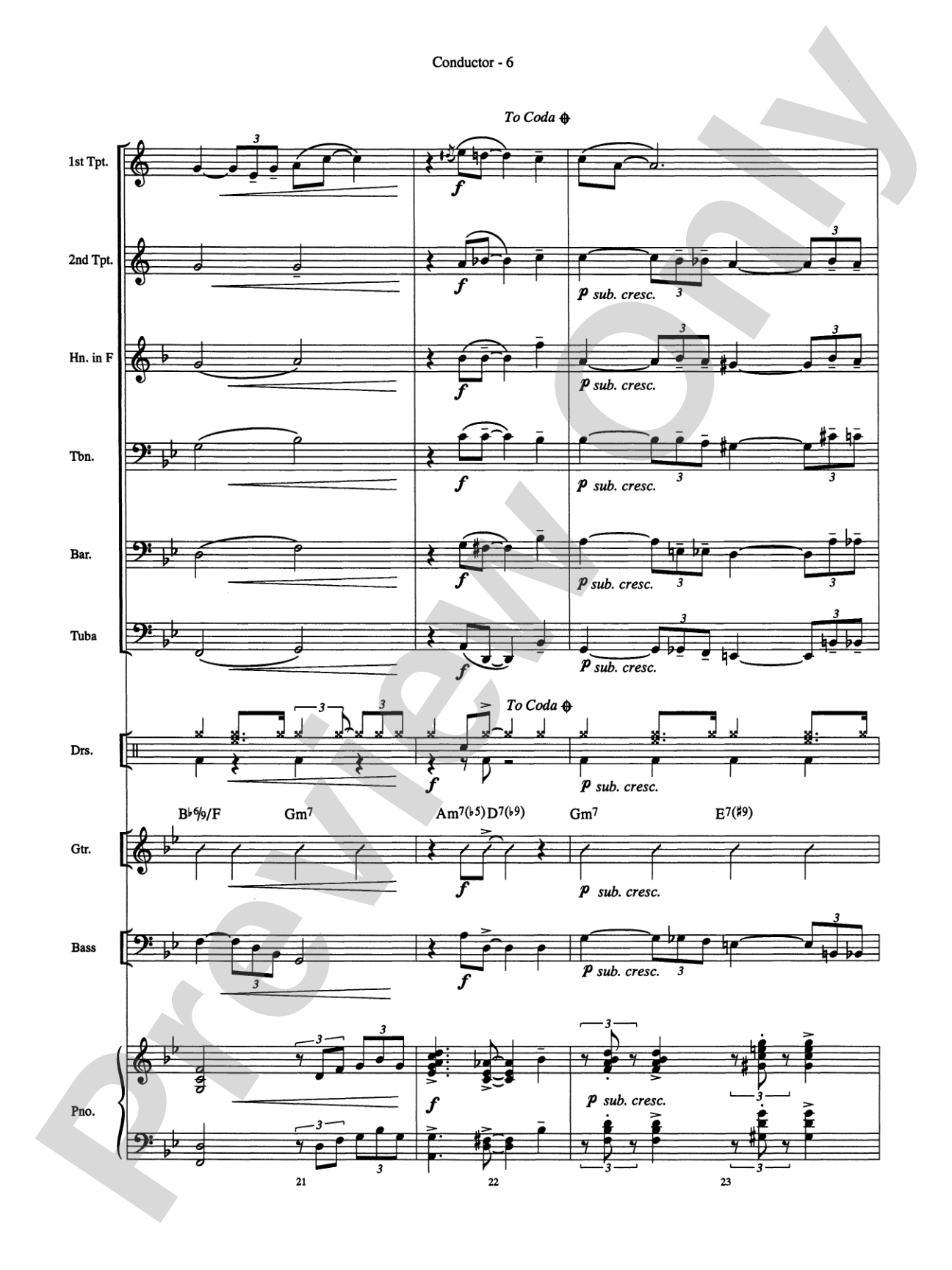
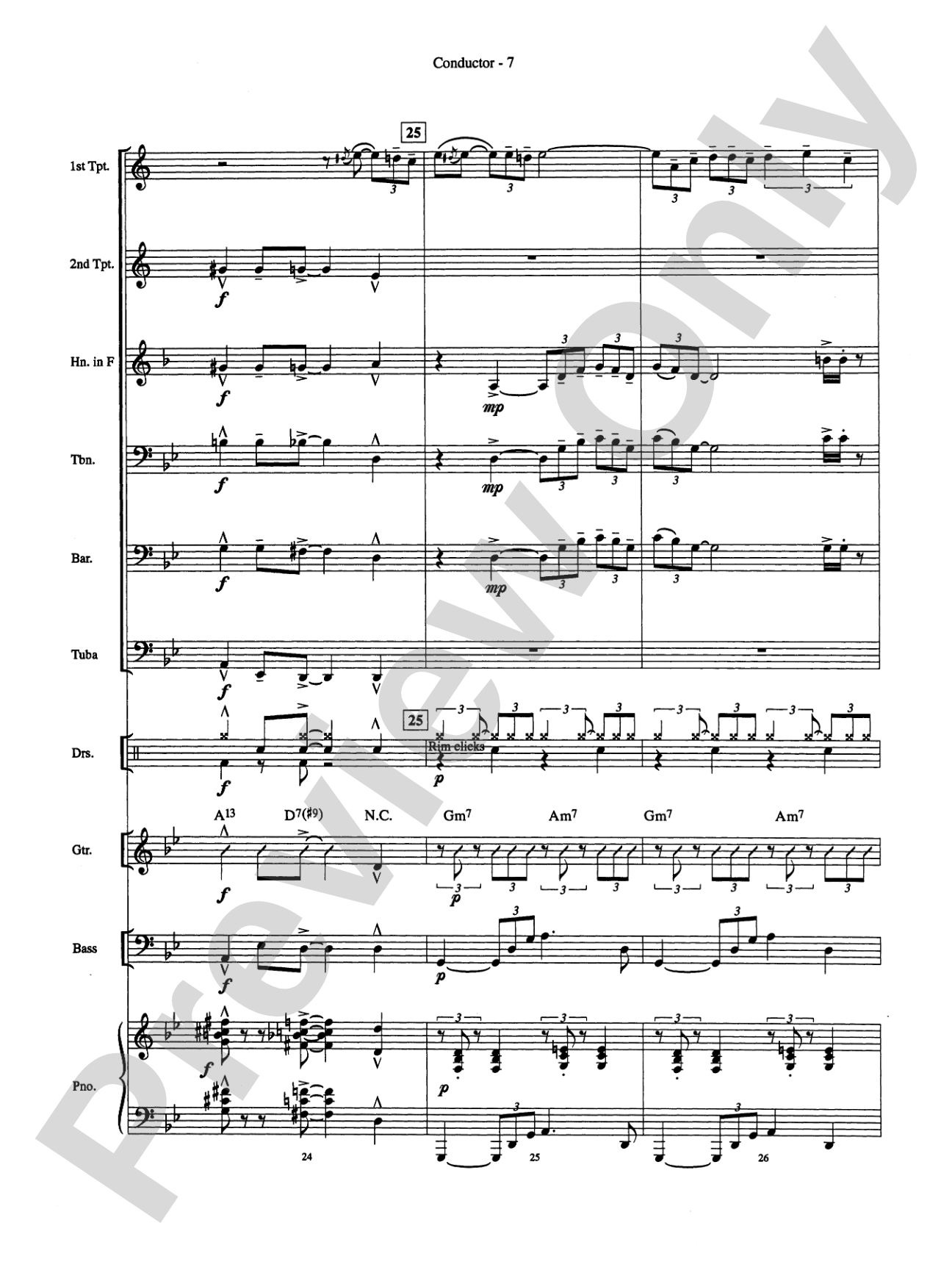
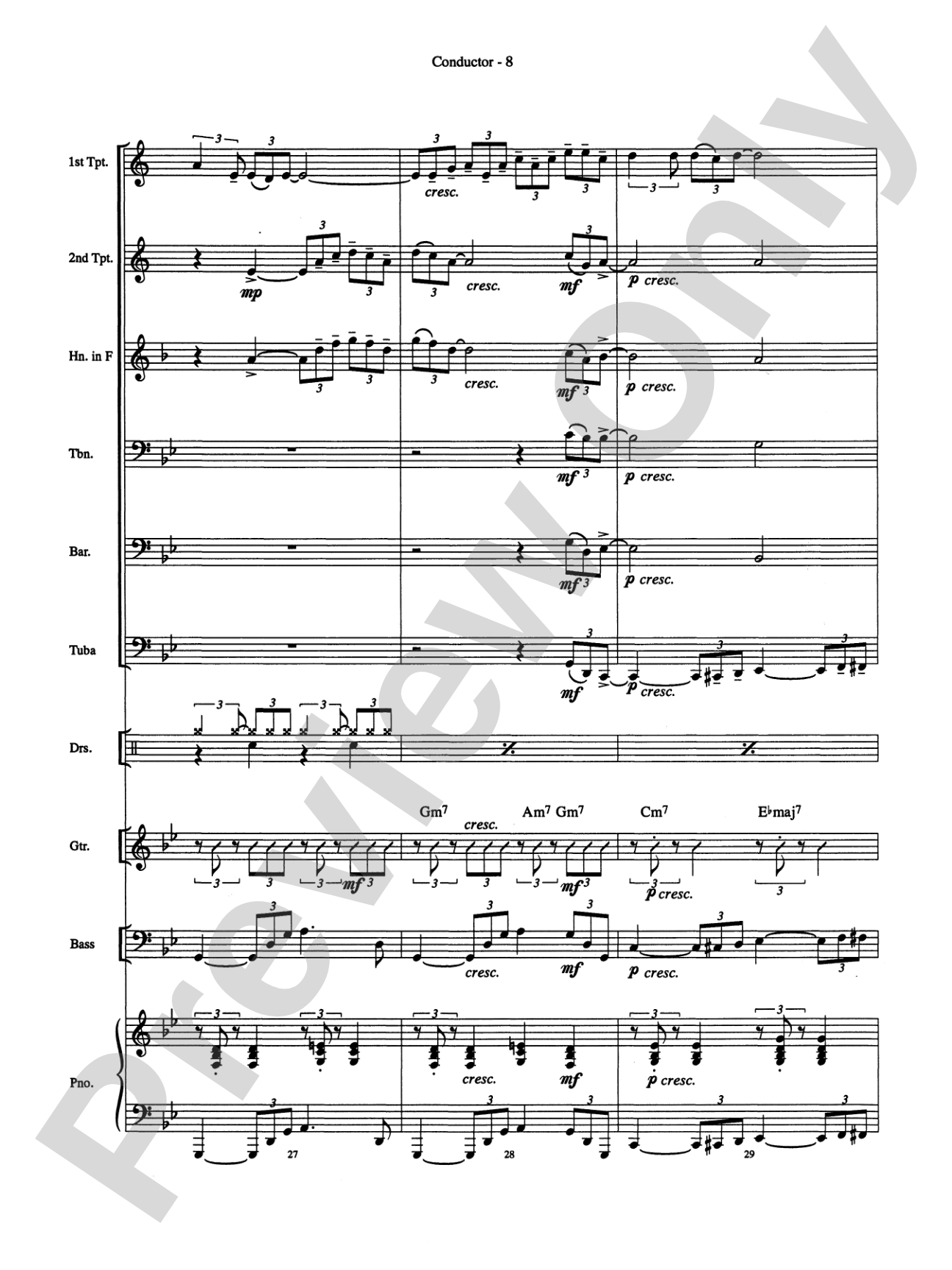
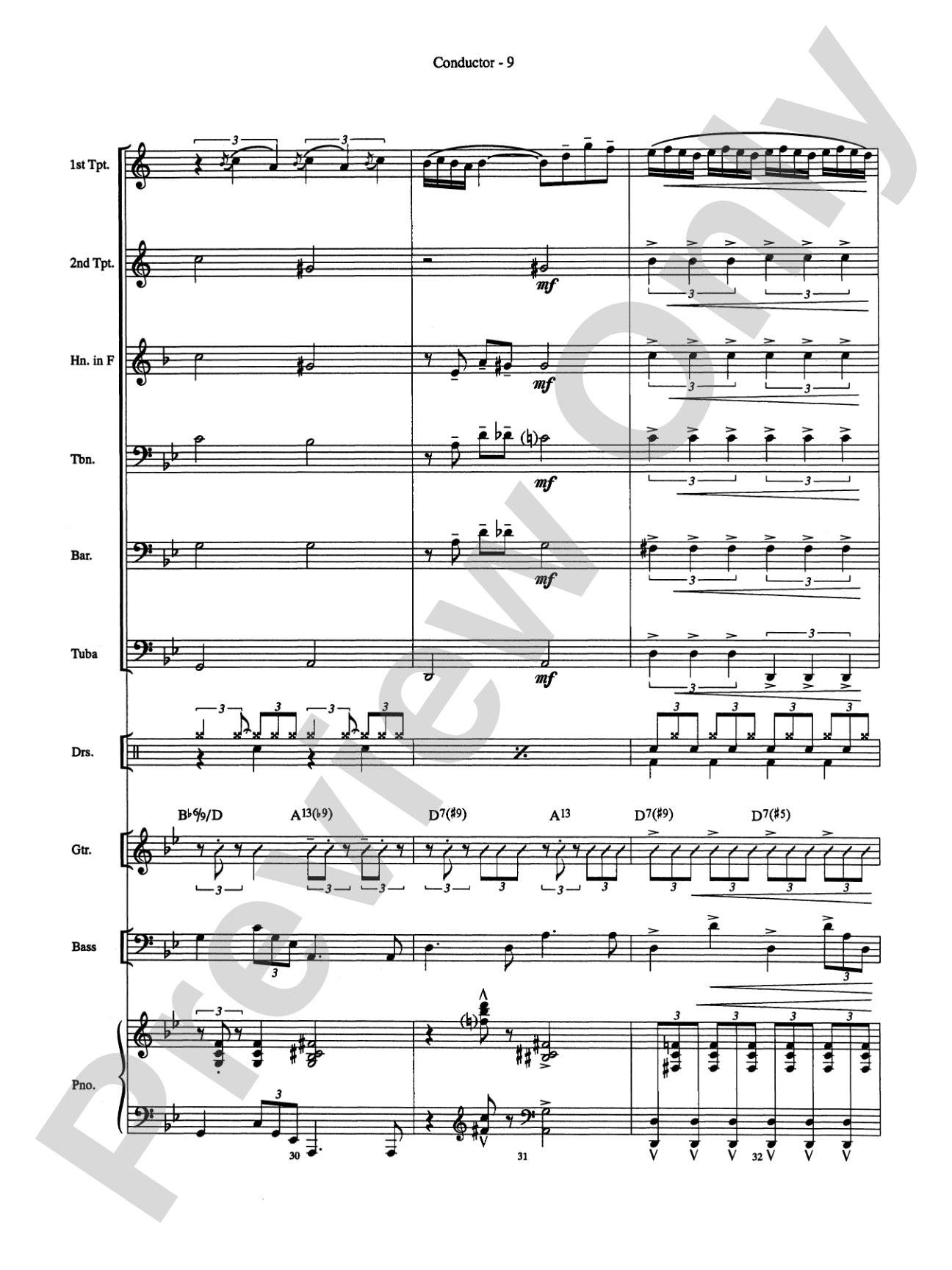
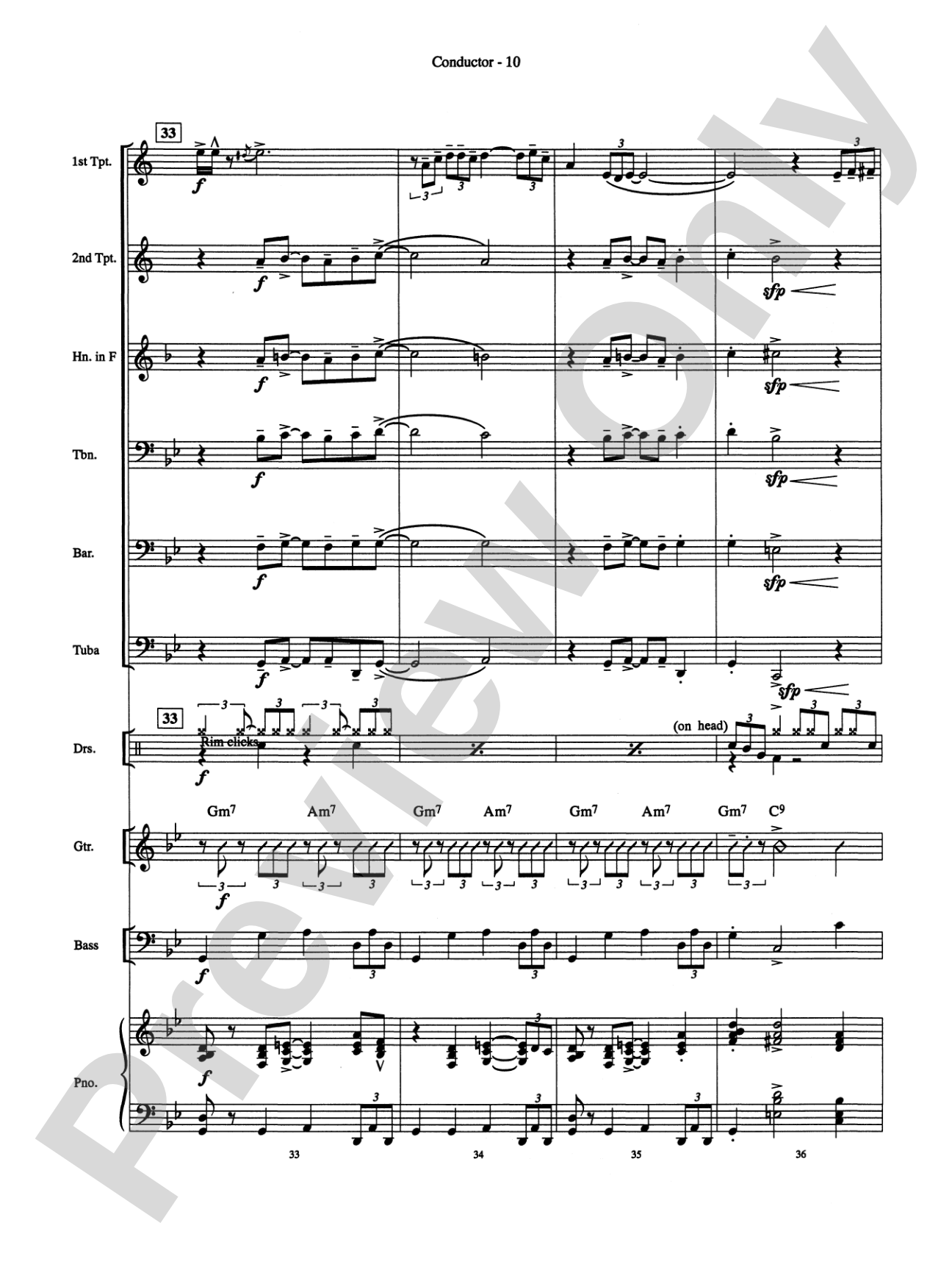
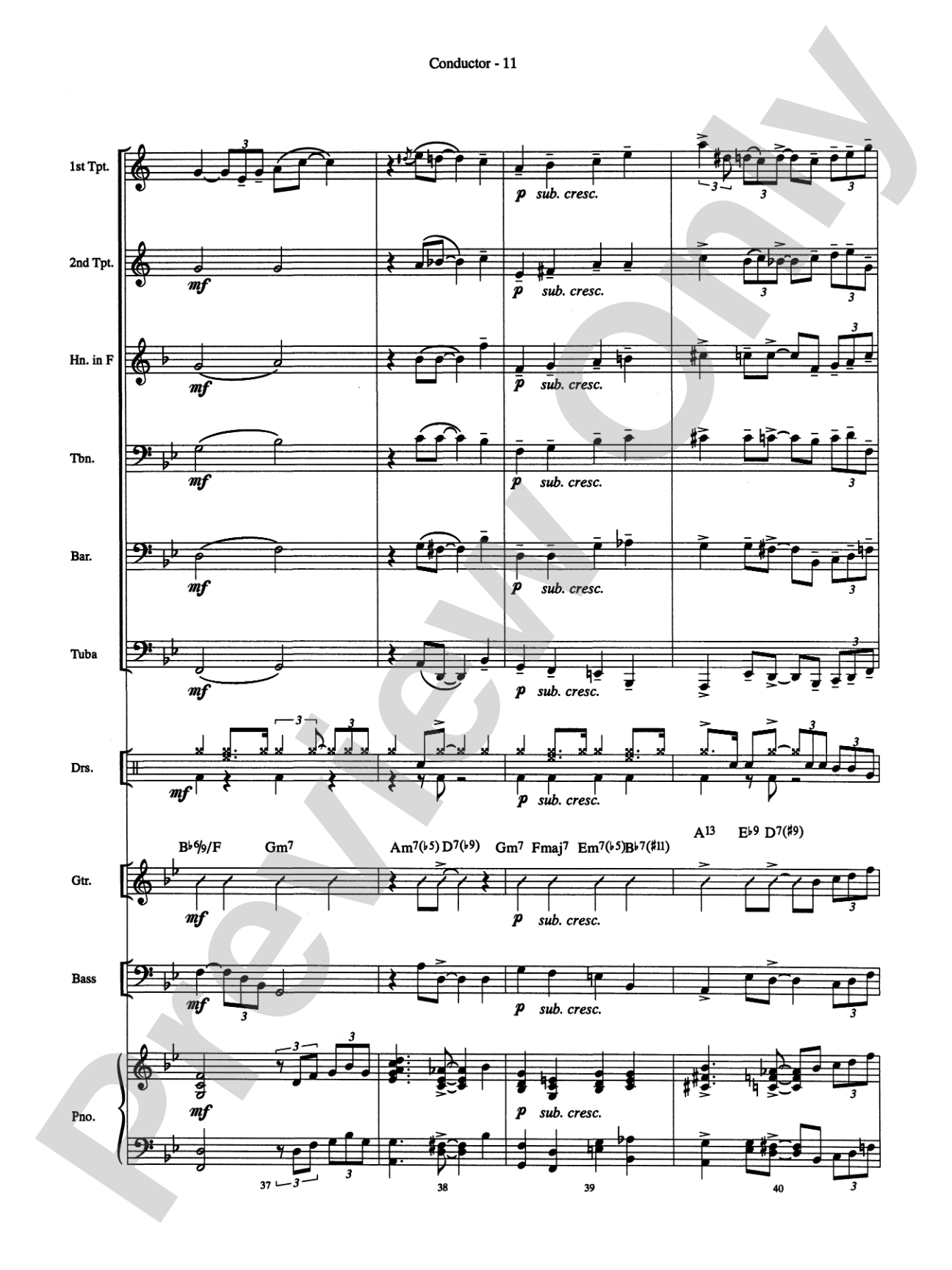
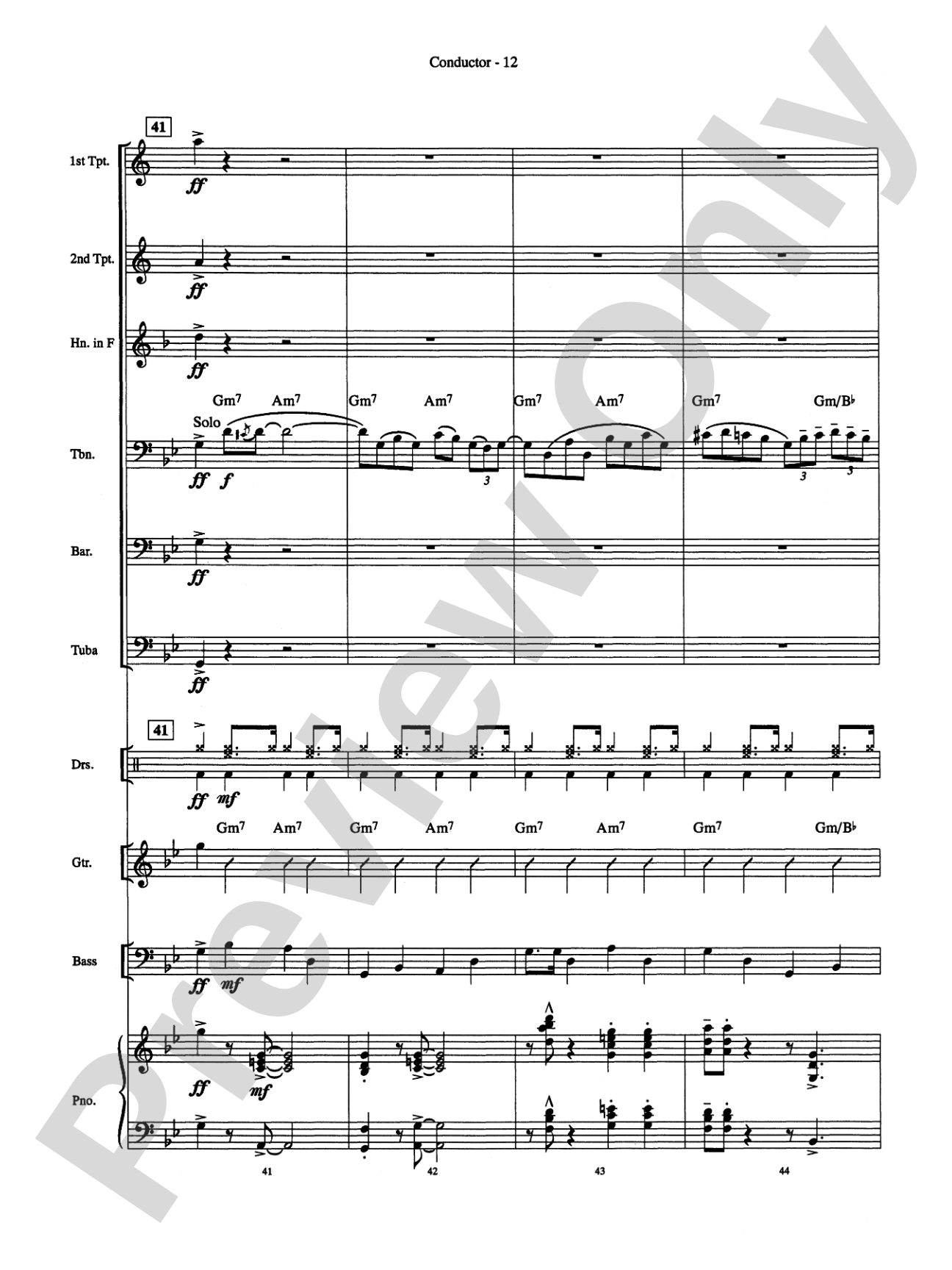
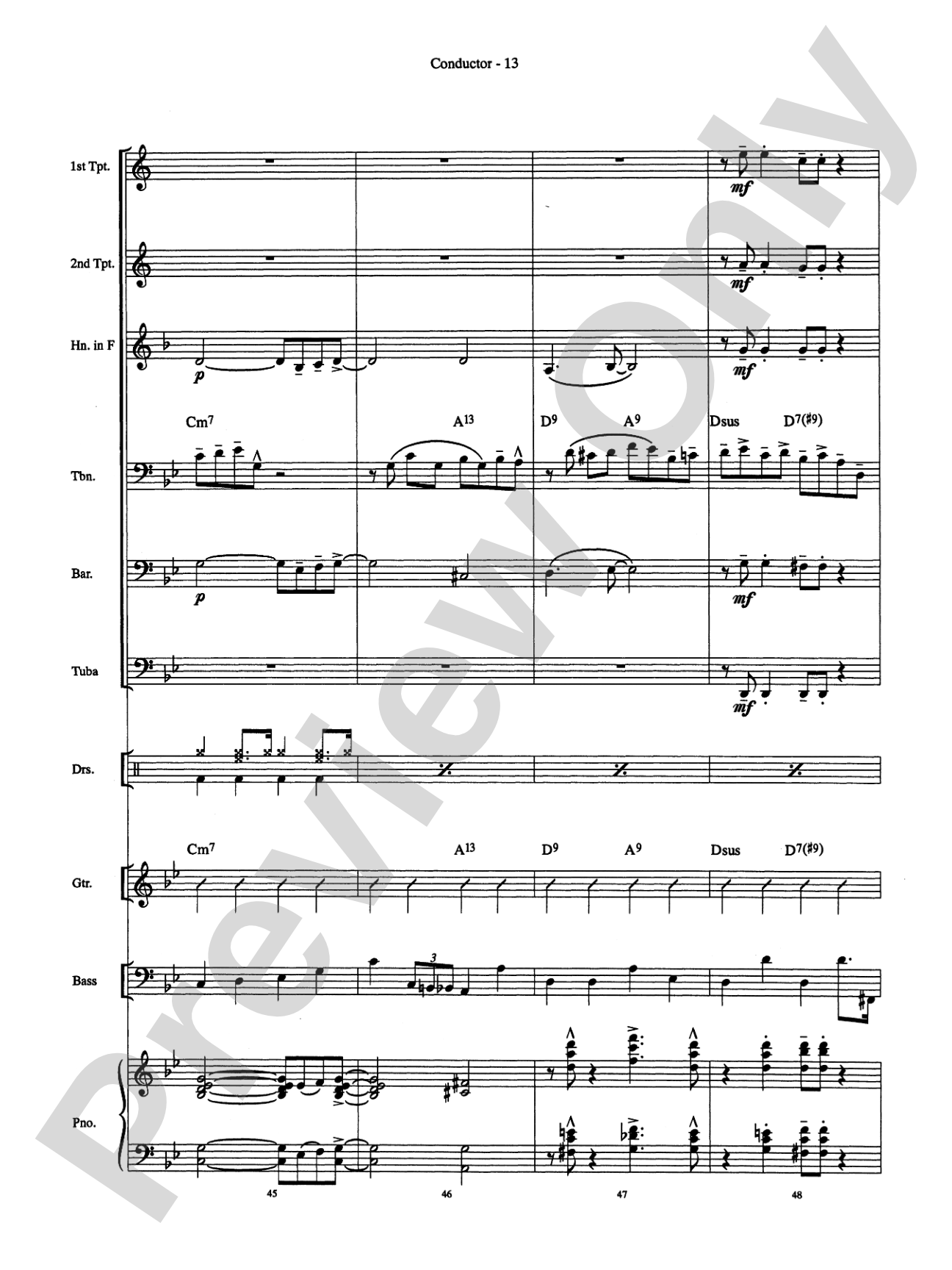
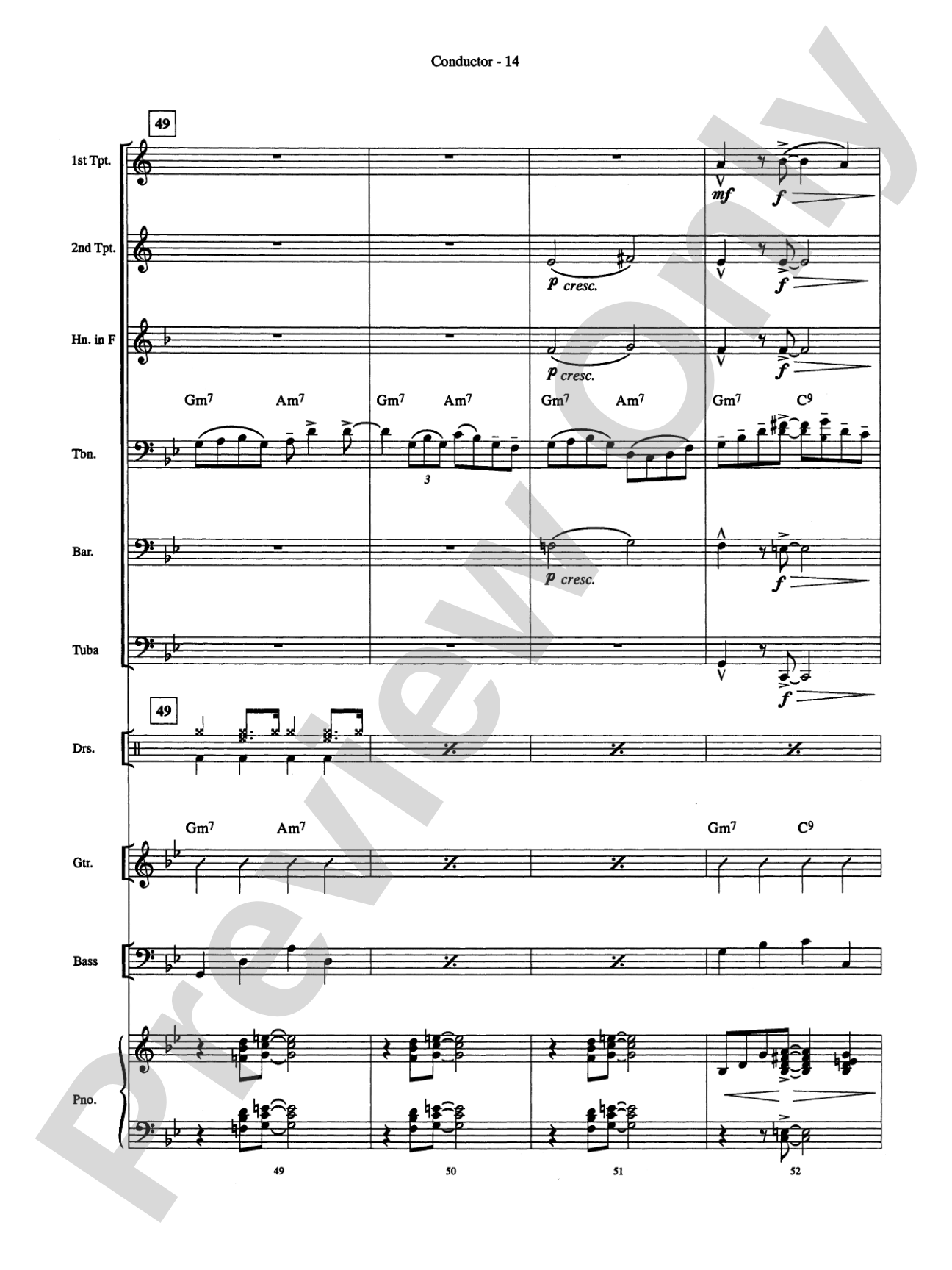
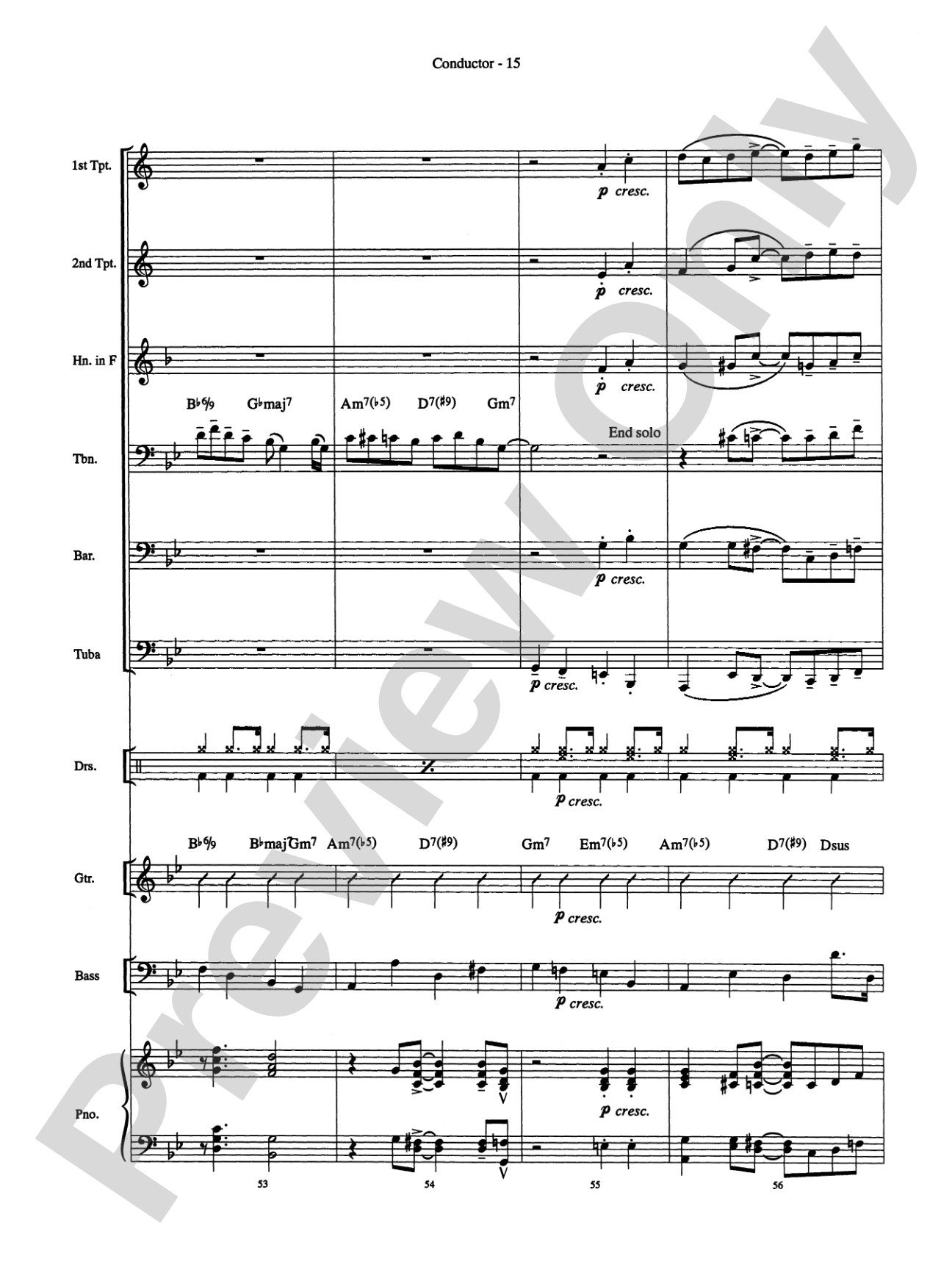
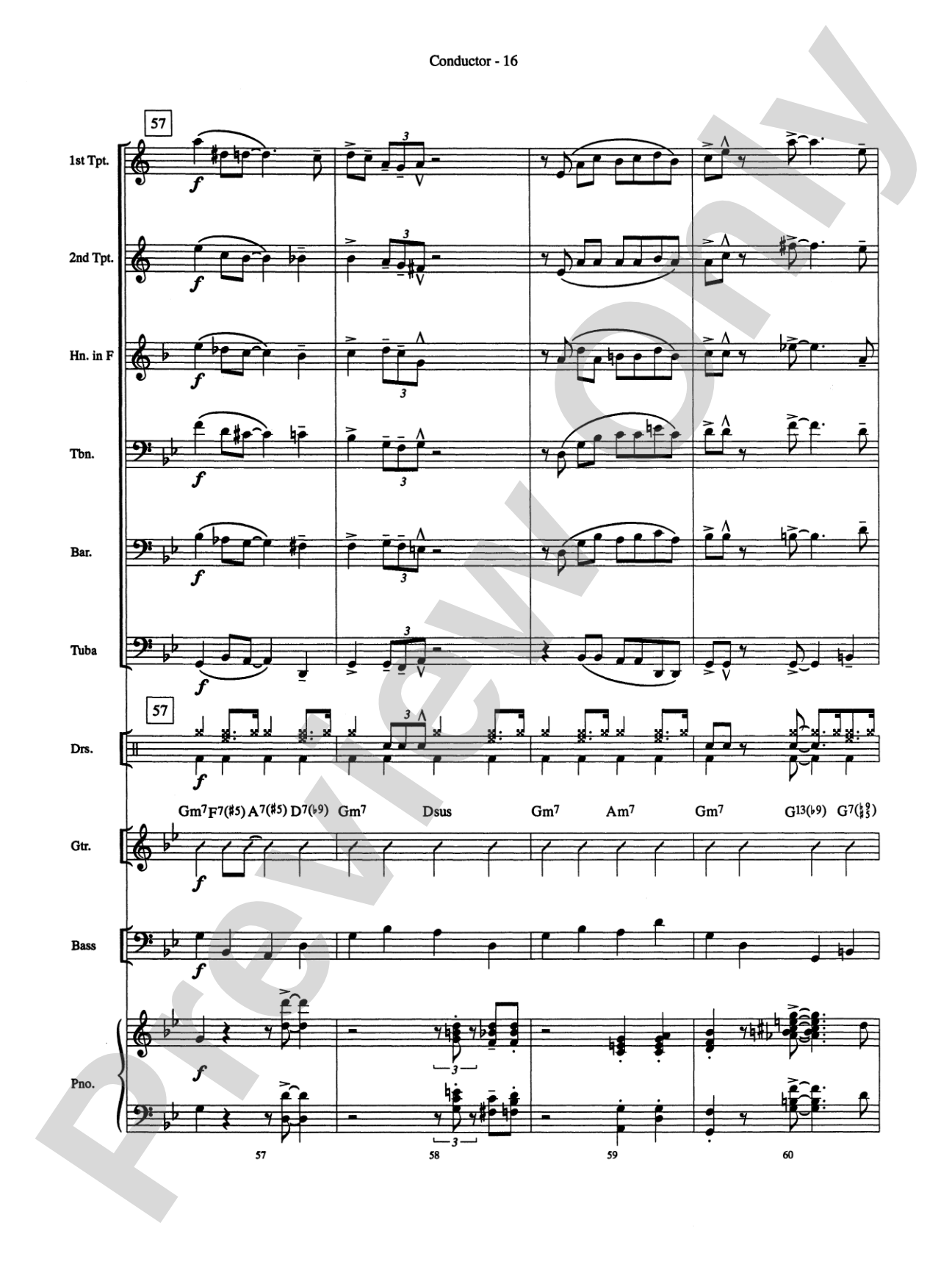
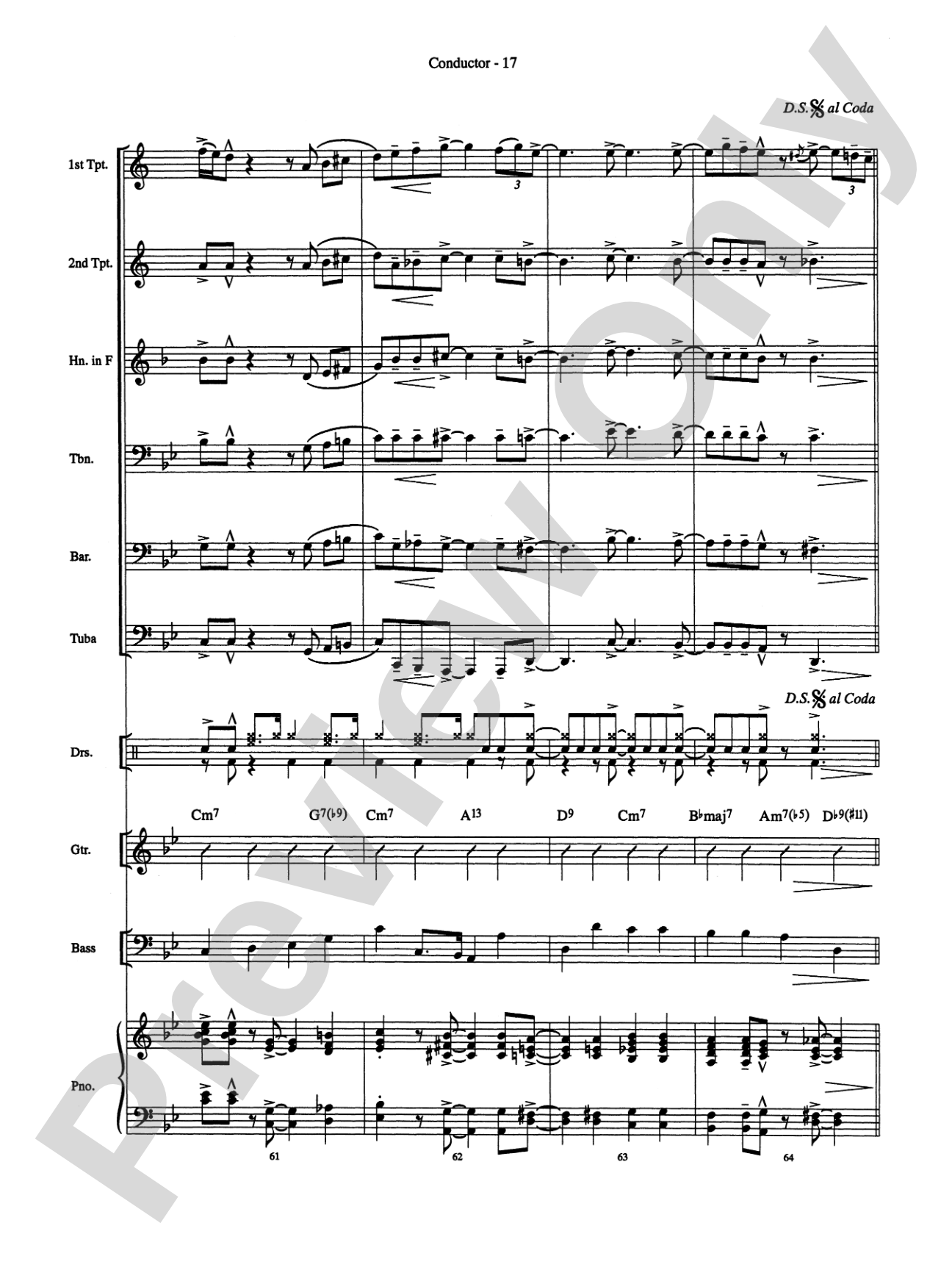
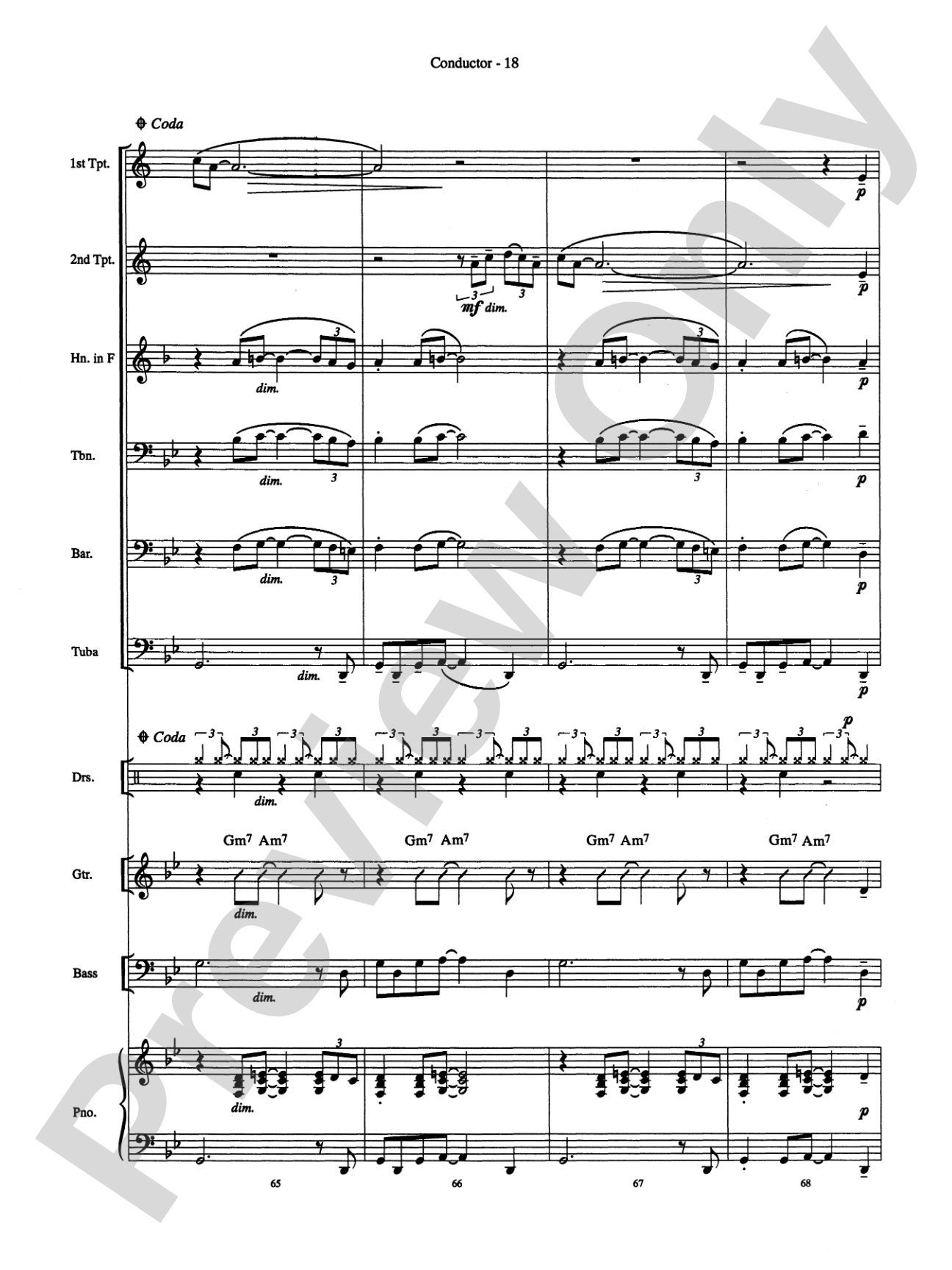
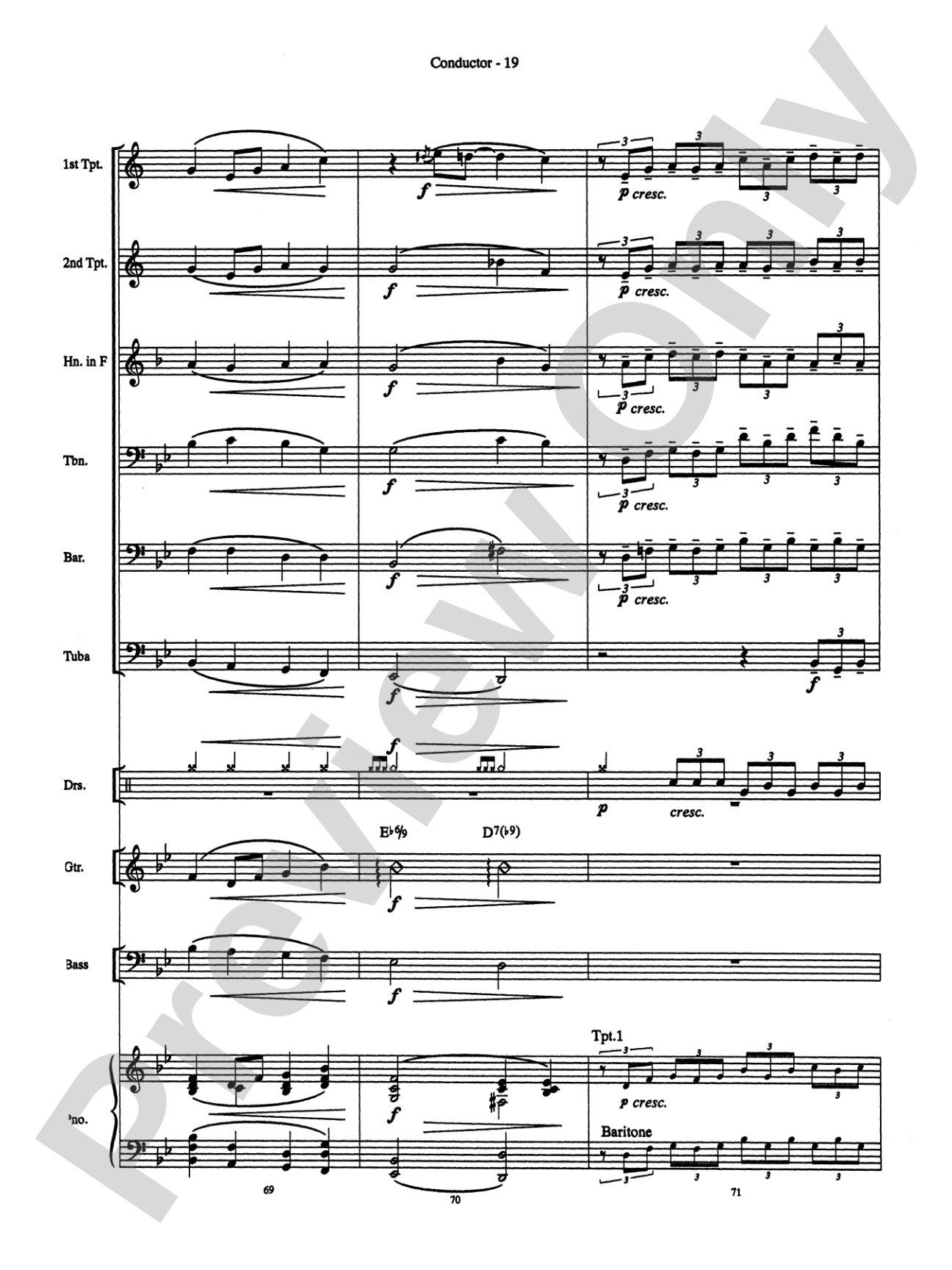
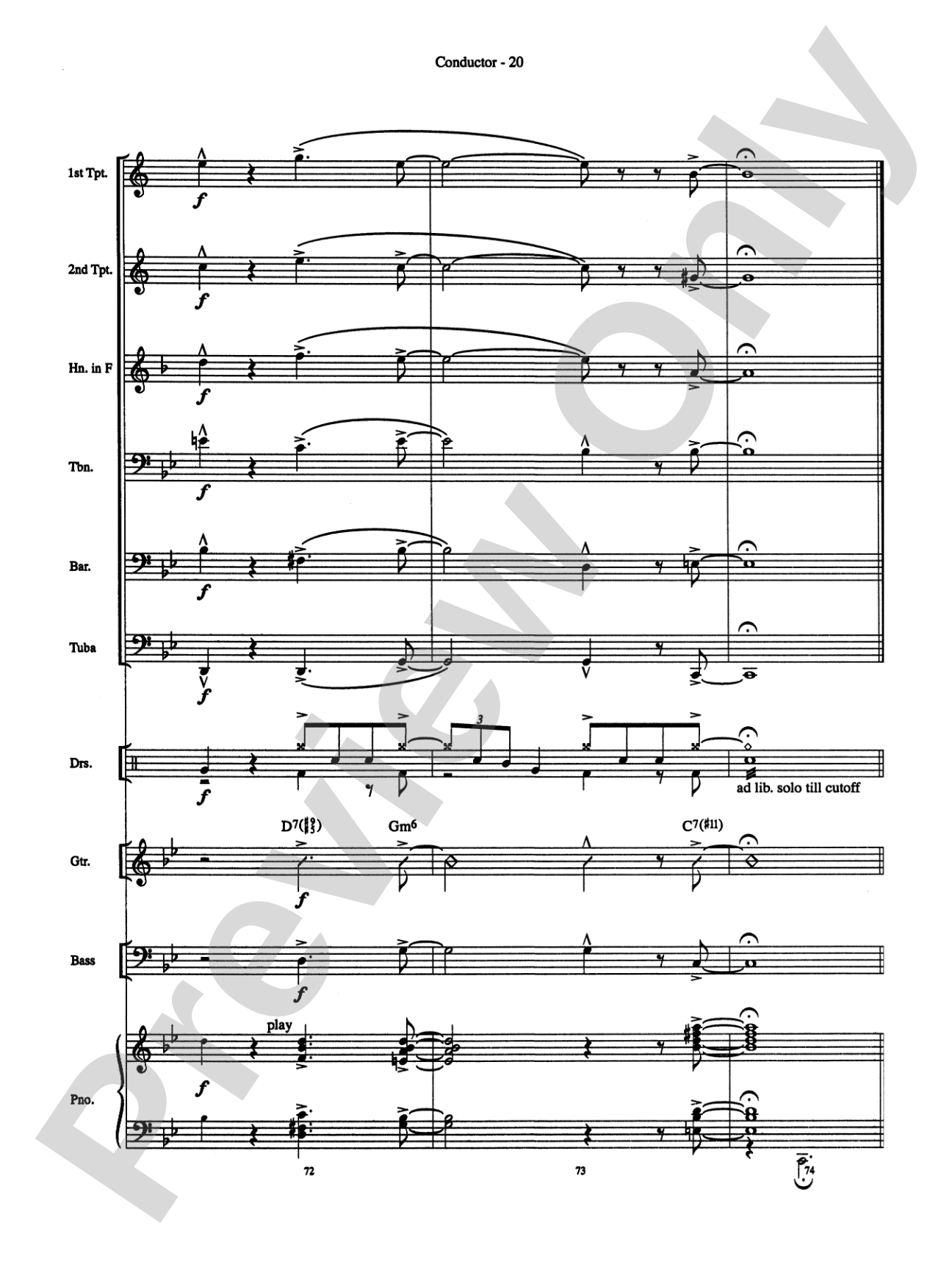

Summertime (from Porgy and Bess): Brass Choir
Music and lyrics by George Gershwin, DuBose and Dorothy Heyward, and Ira Gershwin / arr. Calvin Custer
Item: 00-PK-0001708

$15.99
One moment…
Related Items
Summertime (from Porgy and Bess): Brass Choir |
$15.99
|
View |
Description
Swing into jazz with masterful arrangements by Calvin Custer. Provide fun and exciting small ensemble music for school events, community concerts, church ensembles, parties, and many other settings. Flute, clarinet, saxophone, and brass choirs can play jazz and popular standards along with a rhythm section of piano, guitar, bass, and drums.
Arrangements include written-out solos with chord changes---perfect for the classically trained player or the experienced jazz soloist. The written-out solos are also included in the full-performance recordings and serve as models for proper style.
Download free full-performance and accompaniment recordings. Play along with the music and learn the correct style with the full-performance track. The accompaniment track includes only piano, guitar, bass, and drums, so if you don't have a rhythm section, you can play along with this track in rehearsal and performance.
Free Recording Downloads:
Full Performance Track
Accompaniment Track


Arrangements include written-out solos with chord changes---perfect for the classically trained player or the experienced jazz soloist. The written-out solos are also included in the full-performance recordings and serve as models for proper style.
Download free full-performance and accompaniment recordings. Play along with the music and learn the correct style with the full-performance track. The accompaniment track includes only piano, guitar, bass, and drums, so if you don't have a rhythm section, you can play along with this track in rehearsal and performance.
Free Recording Downloads:
Full Performance Track
Accompaniment Track
Don't just read it, hear it, play along with it, and watch your students grow with it. In MakeMusic Cloud, Summertime (from Porgy and Bess): Brass Choir comes alive with professional accompaniment, adjustable tempo, and built-in practice tools that turn solo practice into real progress.
Open in the Player
Jump straight in and assign it today.
Start Your Free Trial
Open this title and explore the full library in minutes.
Sample Audio
1
Audio File
--:--
0:00
0:00
Sample Video
No sample videos found.
Additional Details
Series:
Ensembles That Swing
Publisher:
Alfred Music
Page Count:
44
SKU:
00-PK-0001708
Instrumentation:
Brass Choir
More about this title
About the Composer: George Gershwin
George Gershwin (1898–1937) was an American composer who bridged classical music and popular song with remarkable fluency. His works for the concert hall—Rhapsody in Blue, An American in Paris, and the opera Porgy and Bess—remain cornerstones of American musical theater and orchestral repertoire, studied and performed by musicians across all traditions.
Gershwin's gift for melody, his integration of jazz idioms into sophisticated harmonic language, and his ability to write for voices and instruments with equal clarity made him a favorite of music educators. His scores reward both classically trained musicians and jazz players, making them ideal for educational ensembles exploring the intersection of art music and American vernacular styles.
Why we love this
Custer's arrangement captures the sultry, unhurried character of this beloved standard while keeping the ensemble writing clear and playable. The written-out solos give brass players a chance to inhabit a jazz idiom without improvisation pressure, and the free accompaniment track makes it possible to rehearse and perform this without a full rhythm section.
What to expect
A warm, sultry evening captured in sound. The melody floats above gentle harmonic support, full of bluesy inflections and unexpected chromatic turns that feel natural and intimate rather than academic. There is room to breathe, to linger, and to let the richness of the harmony settle.
Who it's for
Brass choirs in schools, universities, and community settings looking to program accessible jazz and popular standards. Musicians need moderate fluency with swing style and jazz articulation, but the written-out solos remove the barrier of improvisation, making this appropriate for ensembles with limited jazz experience.
How to get the most out of it
- Listen to the full-performance recording first to absorb the swing feel and rubato; the piano and rhythm section establish a laid-back groove that shapes everything the brass plays.
- Balance the solo voice against the ensemble carefully. Soloists should sit slightly forward, but the supporting voices must never disappear into the texture.
- Shape phrases with vocal fluency. Breathe where a singer would breathe, even if the written line extends comfortably on a single breath for your instrument.
- Let the blues inflections and chromaticism in the harmony breathe. Avoid overly precise articulation; a slight swing to the eighth-note subdivisions keeps the style authentic.
How to use it
Pair this with other Gershwin standards or American popular classics to create a cohesive set that showcases the brass choir's versatility. It works beautifully in community concerts, church performances, or school events where a lighter, more accessible repertoire fits the occasion. The moderate length and mood make it an ideal opener or closer that leaves audiences satisfied without exhaustion.
Skills your students will build
- swing rhythm and jazz articulation
- soloist-and-ensemble balance in jazz contexts
- reading and interpreting chord symbols and jazz harmonies
- phrasing with rubato and lyrical style across brass instruments
- ensemble blend and balance in a jazz texture