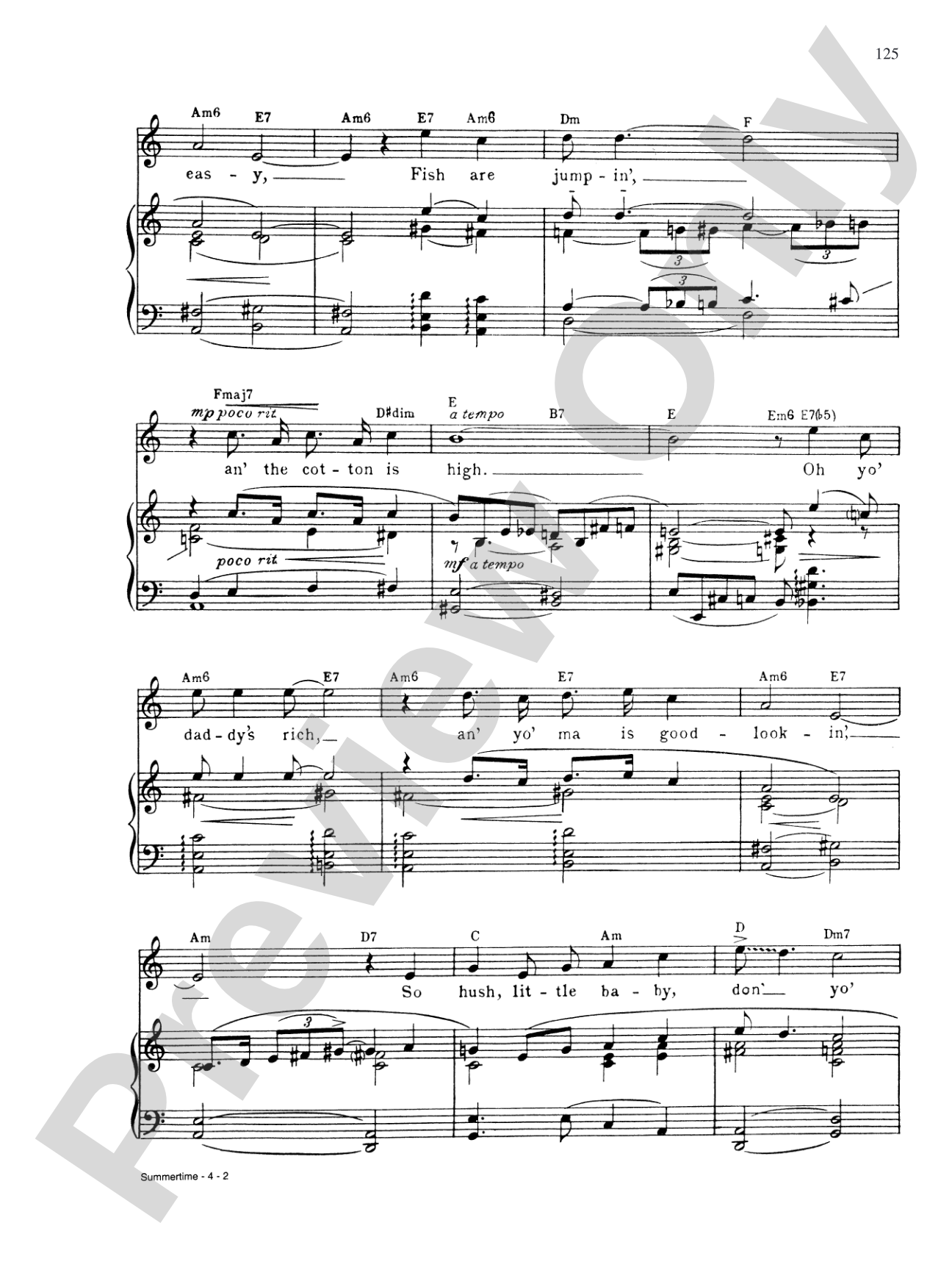
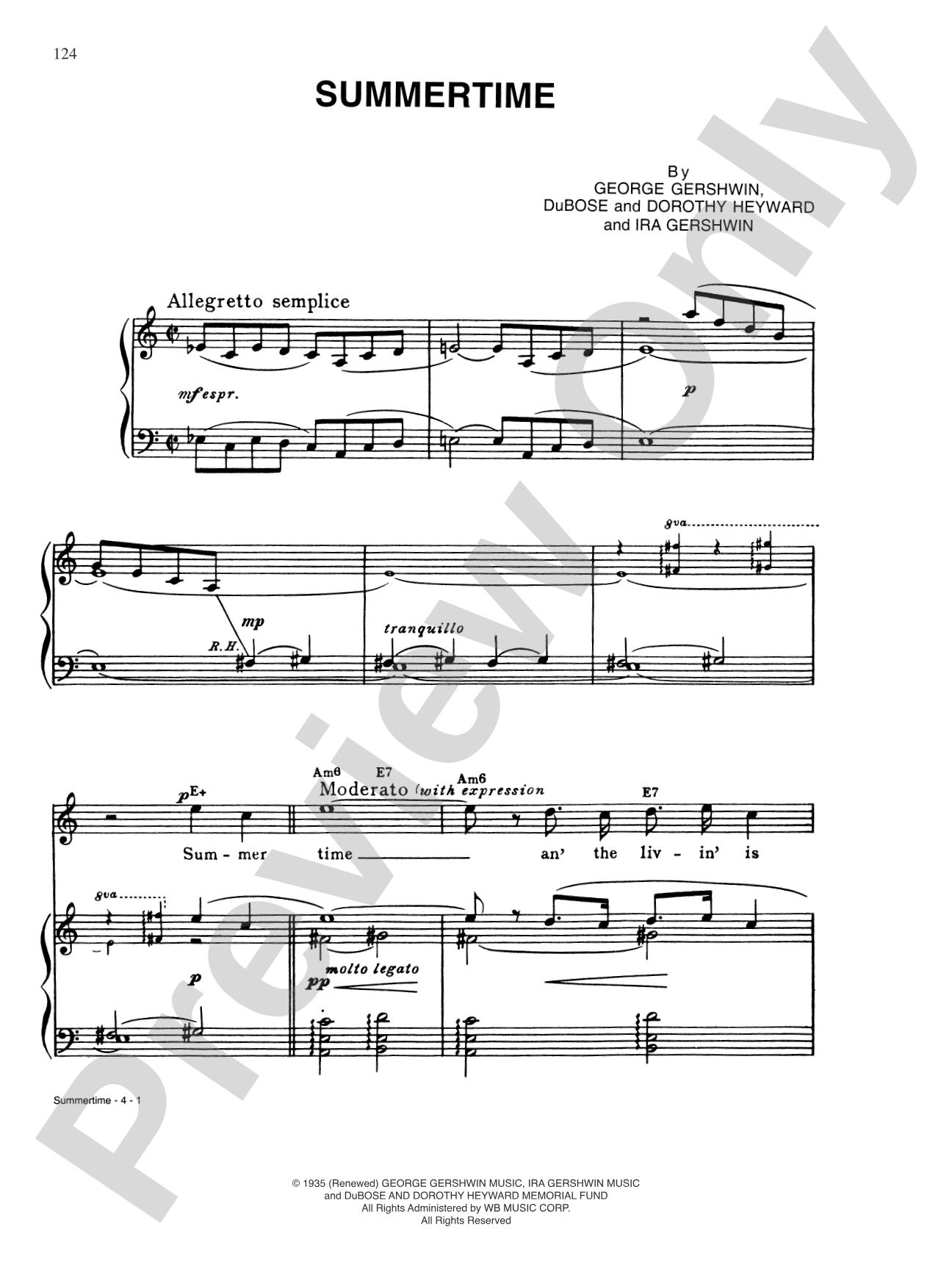
Summertime (from Porgy and Bess) Sheet Music Preview

Summertime (from Porgy and Bess): Piano/Vocal/Chords

Words and music by George Gershwin, DuBose and Dorothy Heyward, and Ira Gershwin

Item: 00-PIP-000168

Digital Download
$3.99

One moment…

Description

Summertime (from Porgy and Bess): Piano/Vocal/Chords isn't in MakeMusic Cloud just yet...but it could be. Let us know you'd like to see it, and you'll help shape what comes next. In the meantime, start a free trial and dive into thousands of interactive titles your students can play along with today.

Sample Audio
No sample audio found.
Sample Video
Additional Details
Publisher: Alfred Music
Page Count: 6
SKU: 00-PIP-000168

More about this title

About the Composer: George Gershwin

George Gershwin (1898–1937) bridged classical music and American popular song with an ease no composer before him achieved. His symphonic works, concertos, and opera demonstrated that vernacular idioms could sustain large-scale forms without losing their vitality or authenticity. Gershwin's gift for melody, his instinct for orchestration, and his fluency across genres made him one of the most influential American composers of the twentieth century.

Why we love this

Gershwin's melody is so naturally singable and harmonically rich that this arrangement works equally well for solo voice with accompaniment or as a standalone piano piece. The piano writing balances accessibility with sophistication—a student pianist can voice the chords convincingly while a skilled player finds real interpretive depth in the texture and phrasing. It's a masterwork that teaches something about itself every time you play it.

What to expect

A lullaby with melancholy undertones, sung from within a dream. The opening piano establishes a gentle rocking motion that never quite loses a hint of yearning, even as the familiar melody soothes and reassures. There's wisdom in this simplicity, the feeling of something timeless being shared as an intimate secret.

Who it's for

Pianists and vocalists at the intermediate to advanced level who want to explore American musical theater repertoire with historical weight. Music teachers introducing students to the connection between blues, jazz, and classical song will find this score invaluable for demonstrating how Gershwin synthesized these traditions. Voice students seeking art song alternatives that sit comfortably in the middle-to-lower range benefit from both the melody and the harmonic language here.

How to get the most out of it

  • Find the unhurried pulse of the blues beneath the surface. This is not a light novelty song; the lullaby character asks for patience and warmth in tempo.
  • Voice the left-hand chords with care. Gershwin's voicings are deliberate; shifting them around changes the harmonic flavor and the color of the piece.
  • If singing, use the piano line as a conversational partner rather than mere accompaniment. The instrumental phrases respond to and frame the vocal melody.
  • Resist the urge to rush the short phrases and breathing space. The silences are part of the song's lullaby quality.

How to use it

Program this on a recital that explores American song in concert with art songs or other standards, where it will sit naturally alongside folk song arrangements or early twentieth-century vocal works. It also works as a bridge piece in a program mixing classical and popular repertoire, giving singers a chance to demonstrate their ability to shape a well-known melody with fresh musicality. Consider it for a collaboration between voice and piano students, where both get equal musical weight.

Skills your students will build

  • Reading chord symbols and realizing functional harmony on keyboard
  • Interpreting a vocal melody line within a jazz-influenced harmonic context
  • Balance between melody and accompaniment in ensemble playing
  • Understanding blues form and its influence on American song
  • Shaping long phrases with appropriate rubato and breath in lyrical music

You May Also Like