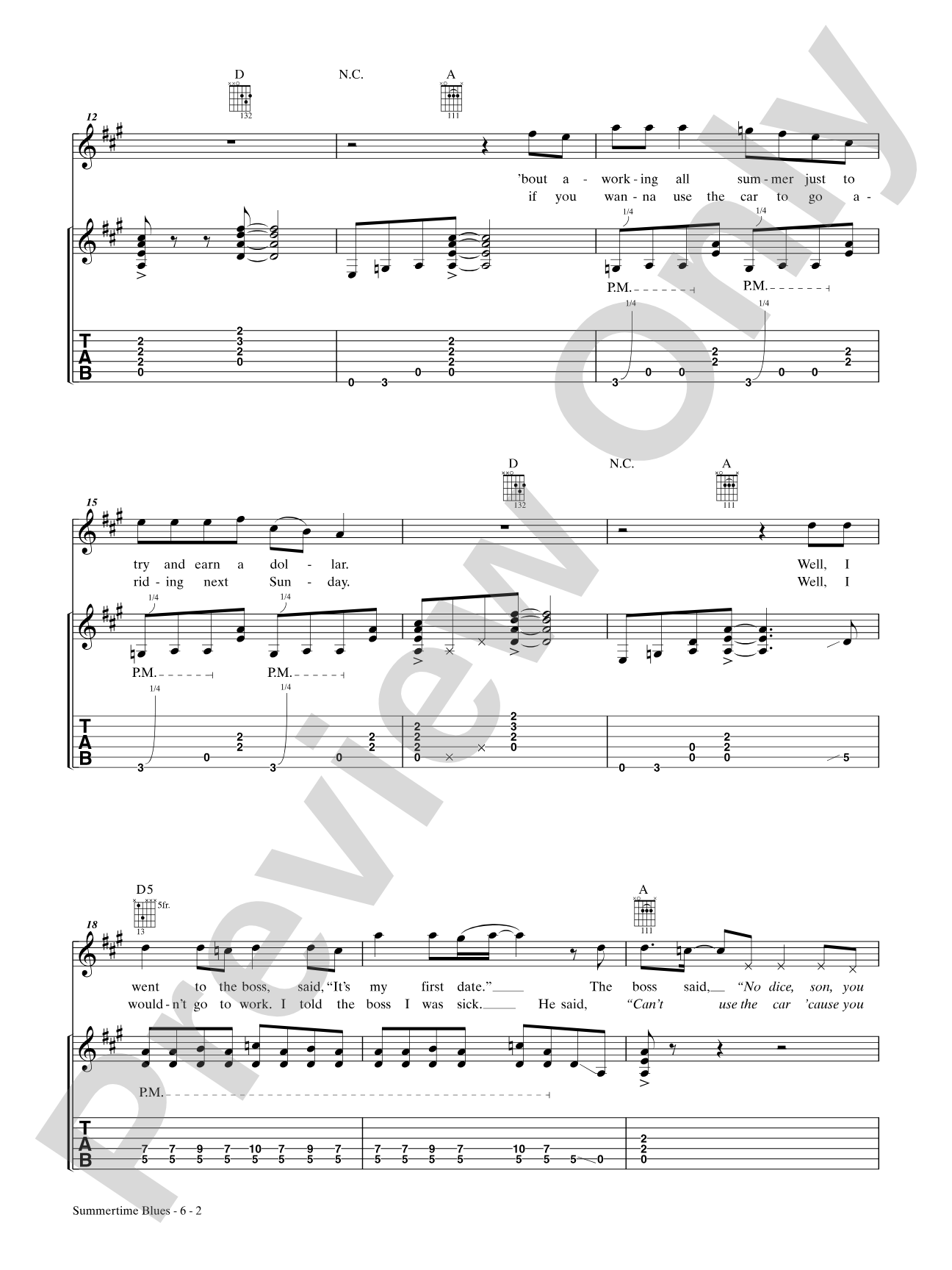
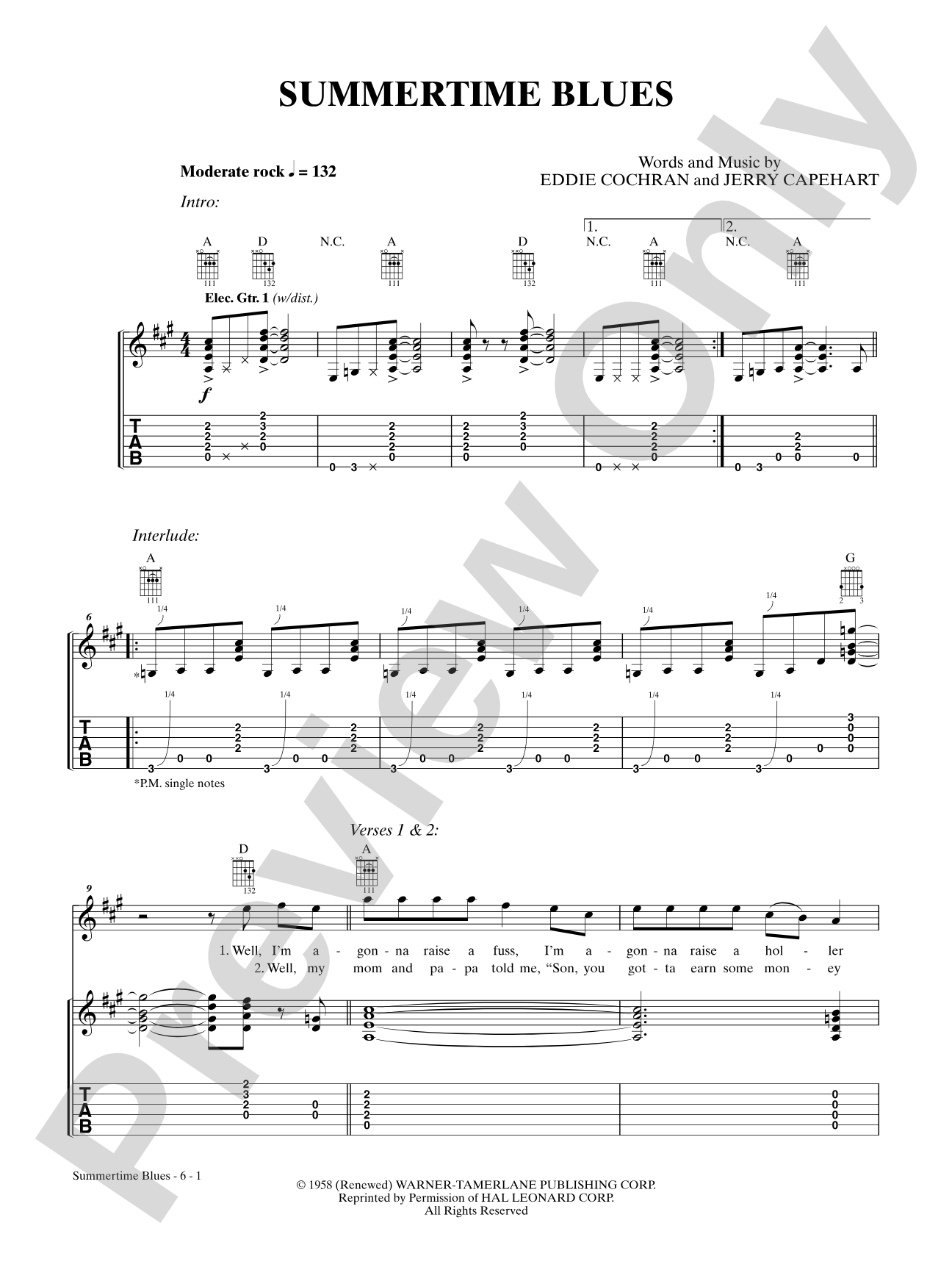
Summertime Blues Sheet Music Preview

Summertime Blues: Guitar Tab

The Who

Item: 00-PS-0015055

Digital Download
$2.99

One moment…

Description
The Who is hands-down one of the greatest English rock bands ever---a band whose only comparable peers are The Beatles and The Rolling Stones. As they progressed in their career, they grew from a simple rock band singing catchy tunes into conceptual artists creating sprawling musical statements. This book contains guitar TAB transcriptions of all the best songs from The Who's storied catalog. Titles: 5:15 * Baba O'Riley * Bargain * Behind Blue Eyes * Eminence Front * Happy Jack * I Can See for Miles * I Can't Explain * I'm Free * Join Together * The Kids Are Alright * Long Live Rock * Love, Reign O'er Me * Magic Bus * My Generation * Pictures of Lily * Pinball Wizard * The Real Me * See Me, Feel Me * The Seeker * Slip Kid * Squeeze Box * Substitute * Summertime Blues * Who Are You * Won't Get Fooled Again * You Better You Bet.

Summertime Blues: Guitar Tab isn't in MakeMusic Cloud just yet...but it could be. Let us know you'd like to see it, and you'll help shape what comes next. In the meantime, start a free trial and dive into thousands of interactive titles your students can play along with today.

Sample Audio
No sample audio found.
Sample Video
Additional Details
Series: Guitar TAB Anthology
Publisher: Alfred Music
Page Count: 240
SKU: 00-PS-0015055

More about this title

About the Composer: Eddie Cochran

Eddie Cochran (1938-1960) was a pioneering guitarist and singer who helped shape the sound of early rock and roll. His innovative approach to electric guitar technique and his knack for writing infectious, rebellious rock songs influenced countless musicians who followed. Though his career was cut short by a tragic car accident at age 21, his output remains essential listening for anyone studying the foundations of rock music.

Why we love this

This collection captures The Who's full artistic arc through authentic TAB transcriptions, letting guitarists unlock the riffs and textures that defined stadium rock, mod culture, and rock opera. The band's catalog spans everything from three-minute bursts of youthful energy to intricate ensemble arrangements, so there's genuine pedagogical value in studying how these songs evolved from simple rock and roll foundations into more complex compositional statements. For a player chasing both technical growth and rock history, this is indispensable.

What to expect

Raw energy meeting artistic ambition. The Who's guitar work swings between stripped-down, maximalist three-chord assaults and intricate arrangements that layer texture and dynamics. You'll feel the swagger of early mod rock, the sculptural precision of Pete Townshend's rhythm parts, and the freedom of a band willing to reinvent itself album after album.

Who it's for

Intermediate to advanced guitarists who want to understand The Who's fingerprint on rock music and build proficiency with the band's signature techniques. This works equally well for solo transcription study, band rehearsal preparation, or building a setlist for a rock ensemble or tribute project.

How to get the most out of it

  • Study the original recordings alongside the TAB to capture the tone and articulation choices, especially the aggressive palm-muting on power chords that defines The Who's rhythm guitar sound.
  • Work through the rhythm parts first if you're tackling ensemble pieces like "Won't Get Fooled Again" or "Baba O'Riley"; locking the pocket with the band is more important than nailing every lead detail.
  • Pay attention to alternate tunings and dropped-D voicings on tracks like "My Generation" and "Pinball Wizard"; these shifts are essential to the sonic identity.
  • Break up the catalog by era: start with the 1960s hits ("I Can't Explain," "Substitute") before moving into the more layered Tommy and Quadrophenia material.

How to use it

Program individual tracks across a rock history course or guitar ensemble series, pairing early singles with later conceptual work to show artistic growth. These songs also anchor a "British Invasion and Beyond" retrospective or form the backbone of a band-specific deep dive for guitarists studying influential songwriting and arrangement.

Skills your students will build

  • Reading authentic guitar TAB and translating it to fretboard navigation
  • Playing power chords and barre chord voicings with precision and dynamics
  • Recognizing and executing alternate tunings (drop-D, open tunings)
  • Articulating rhythm guitar parts that sit in an ensemble mix
  • Understanding the evolution of rock guitar style from 1960s to 1970s approaches

You May Also Like