George Gershwin (1898-1937) bridged classical composition and American popular music with a fluency few composers have matched. His early training in piano and harmony equipped him to write for the concert hall, but his ear for jazz idioms, blues inflections, and vernacular melody made him a natural voice for the emerging sound of twentieth-century America. Works like Rhapsody in Blue and An American in Paris remain cornerstones of the modern repertoire because they treat jazz vocabulary not as decoration but as genuine musical substance.
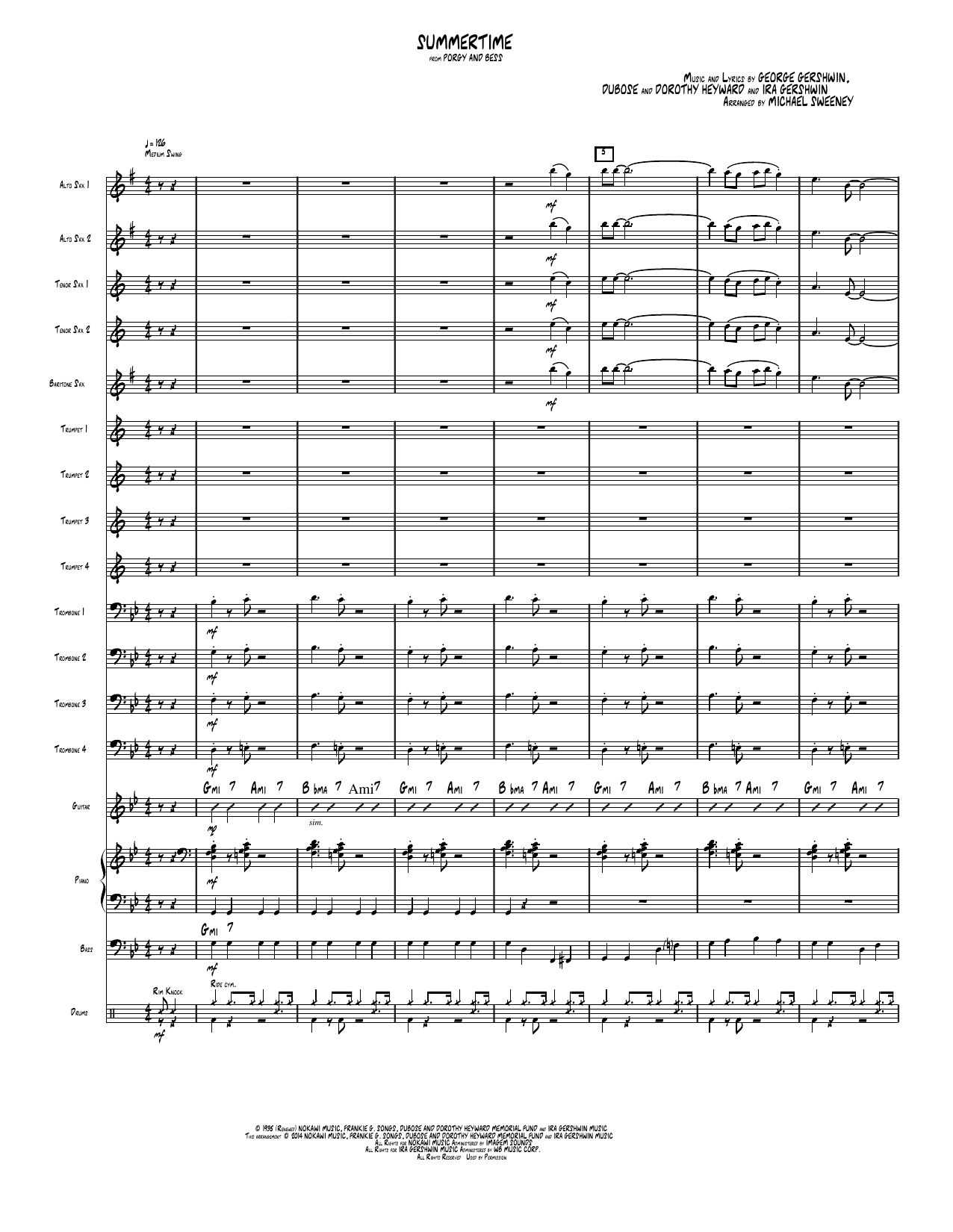
Gershwin's gift for melody served him equally well in theater and concert settings. Summertime, composed for the opera Porgy and Bess (1935), is a case study in how a simple, singable tune can carry harmonic and emotional depth. The song's longevity in jazz ensembles and as a standard owes everything to Gershwin's instinct for writing music that sounds both sophisticated and immediately human.