
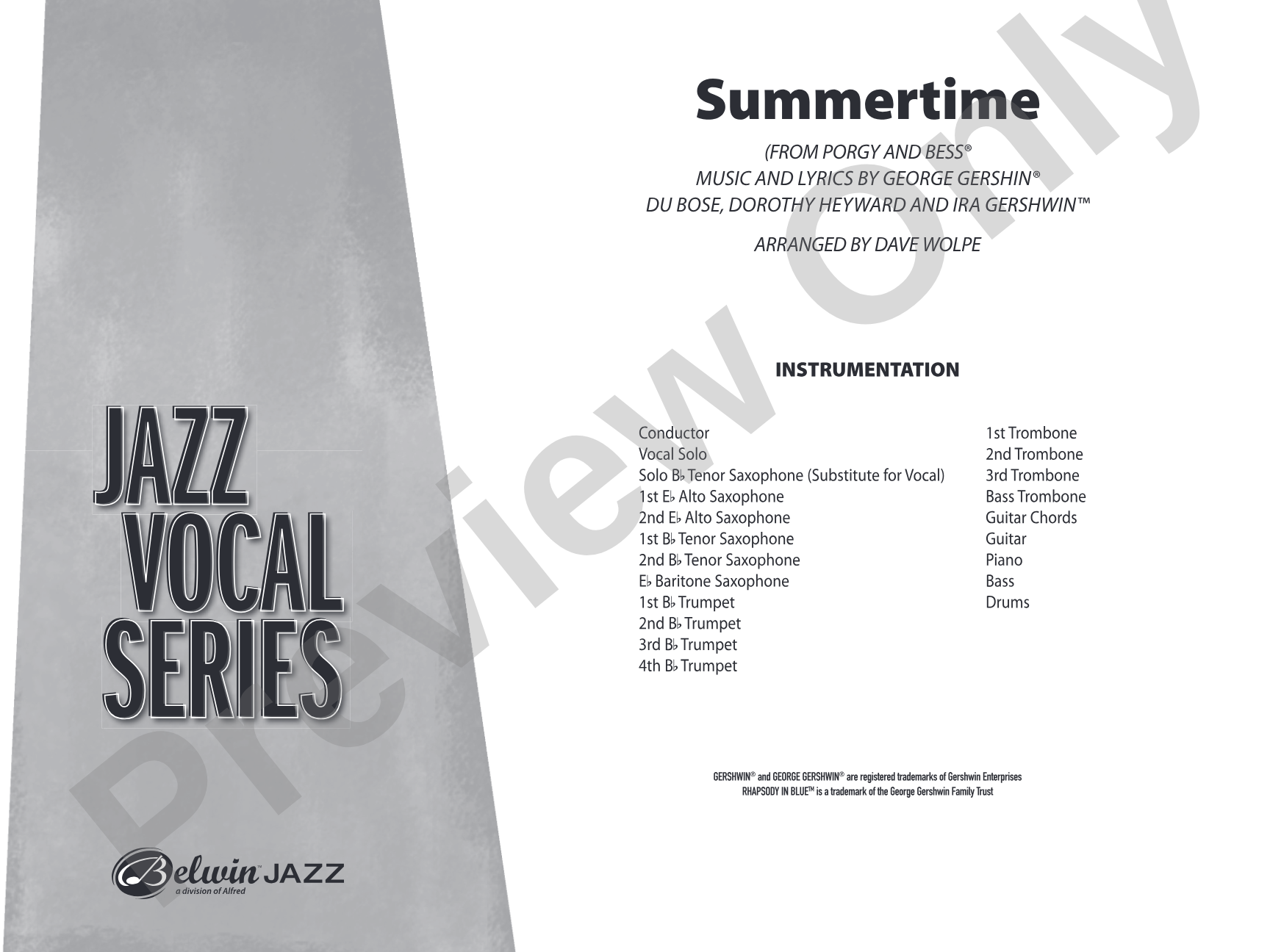
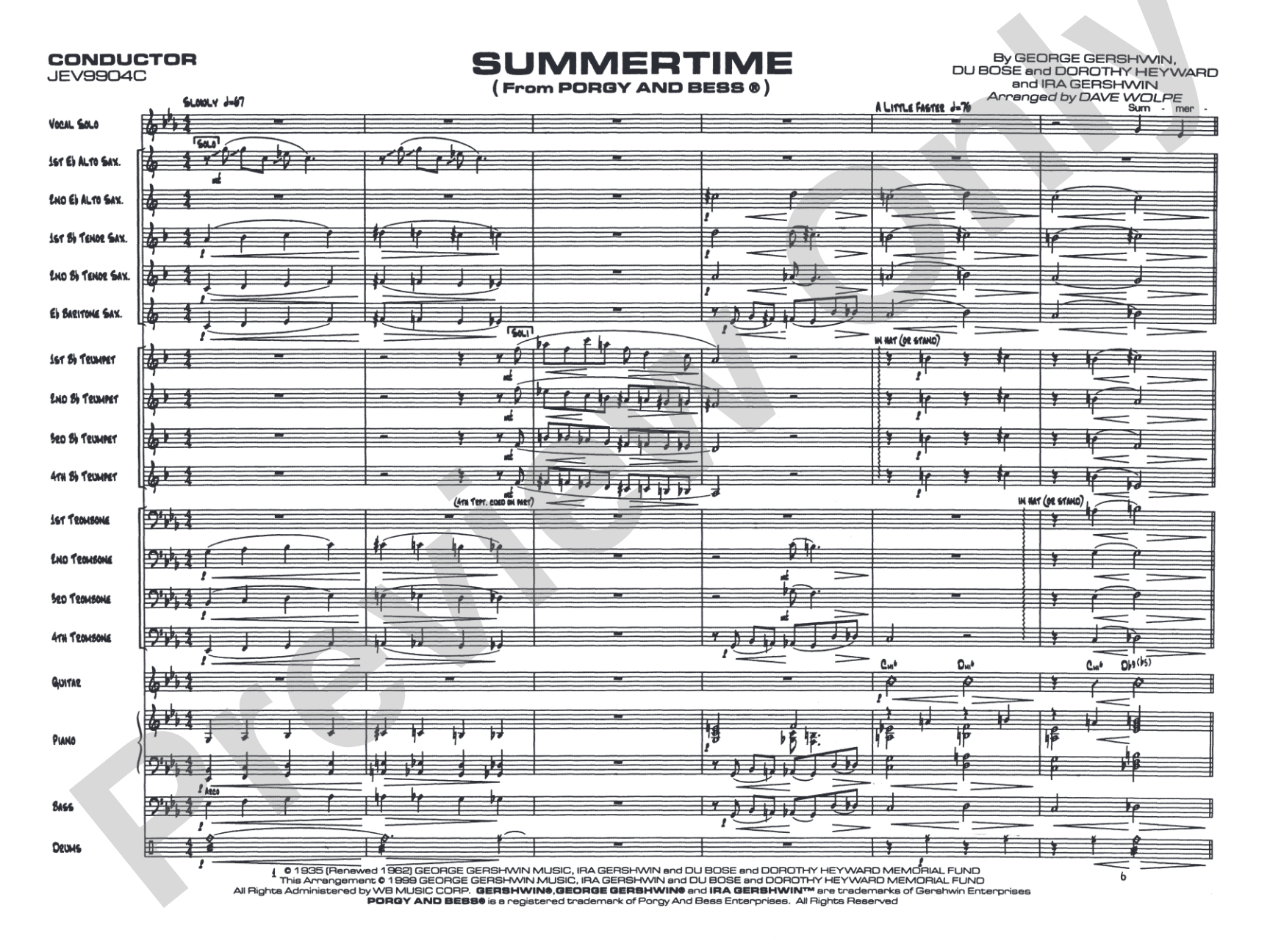
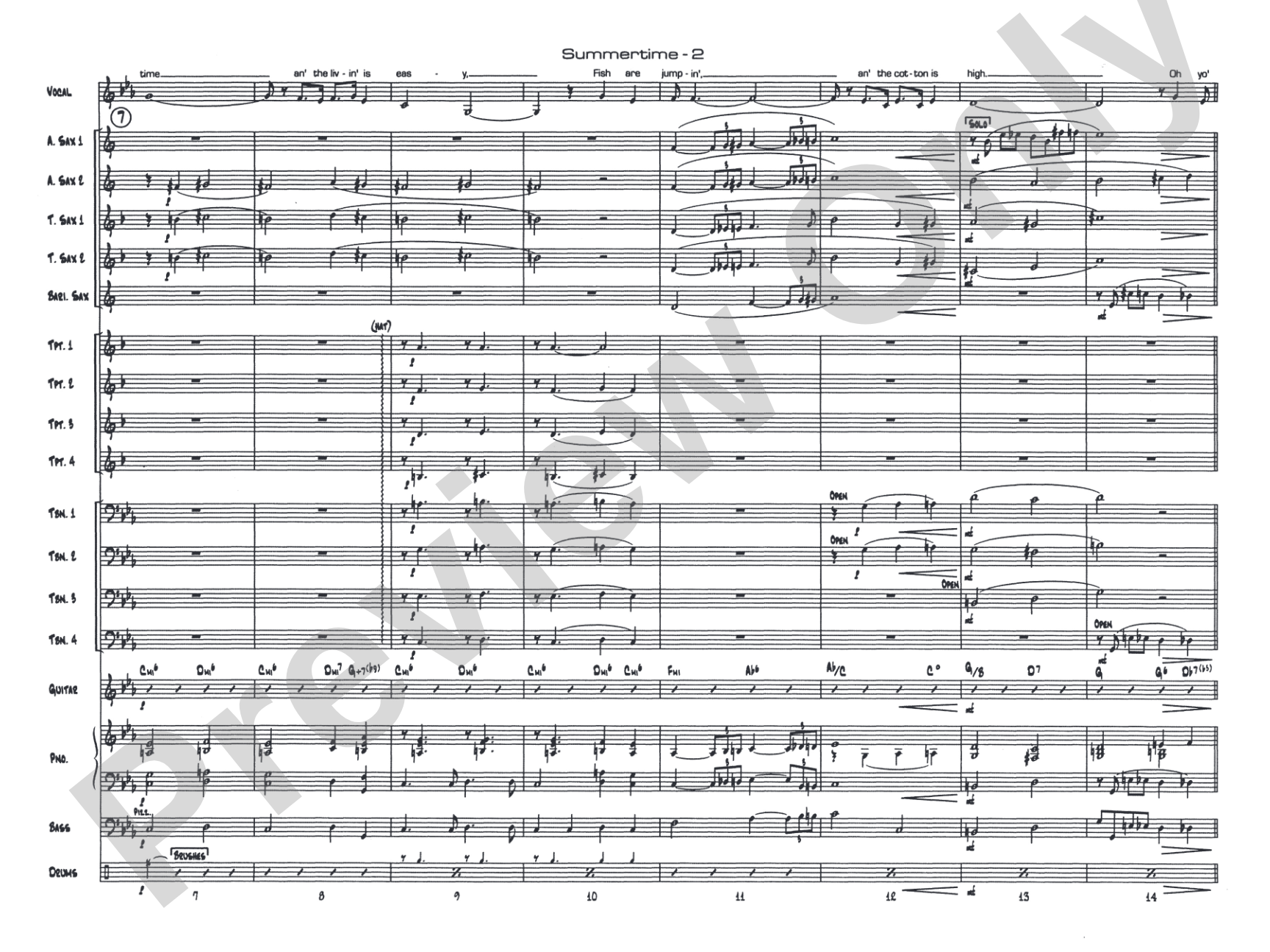
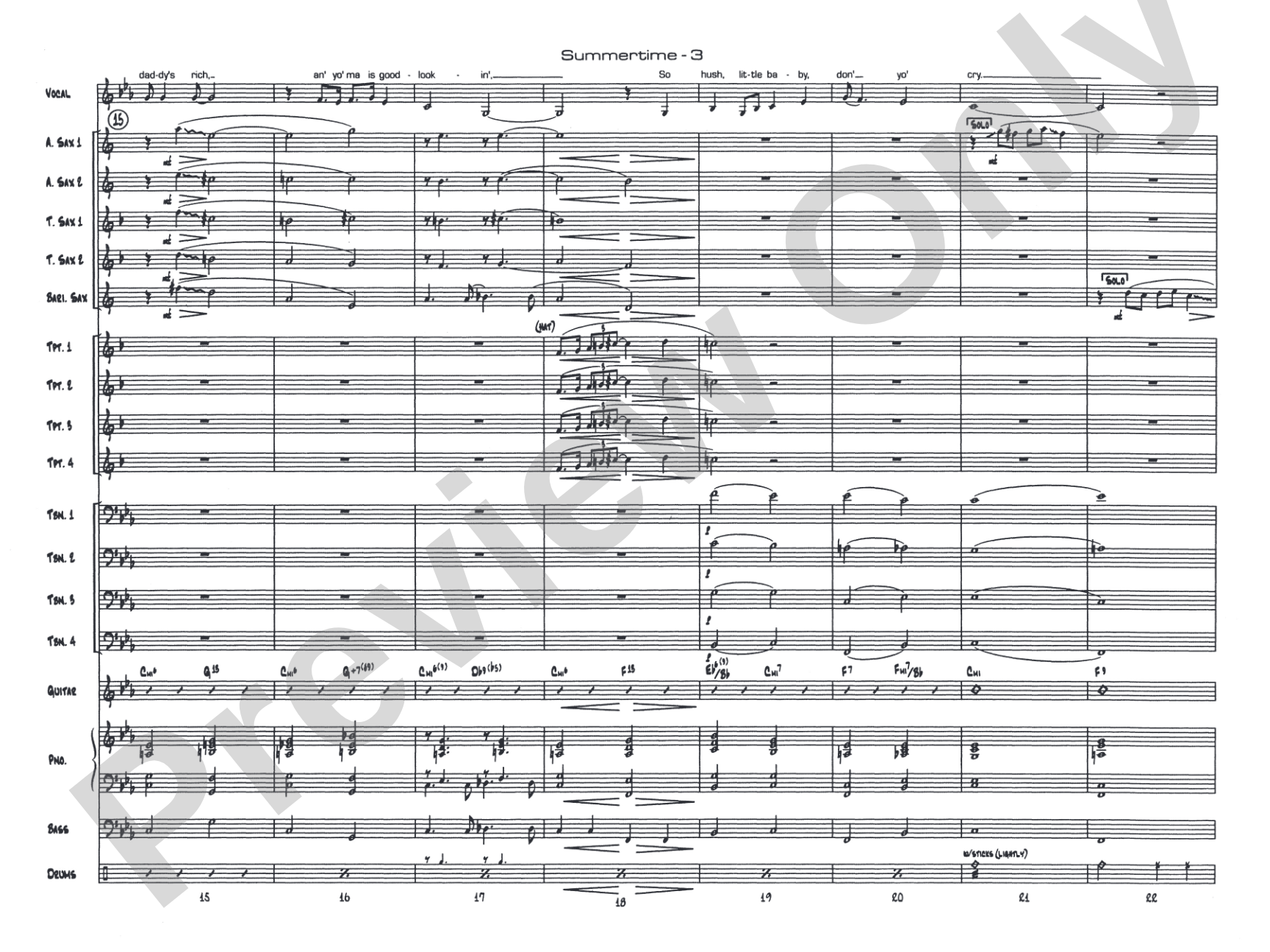
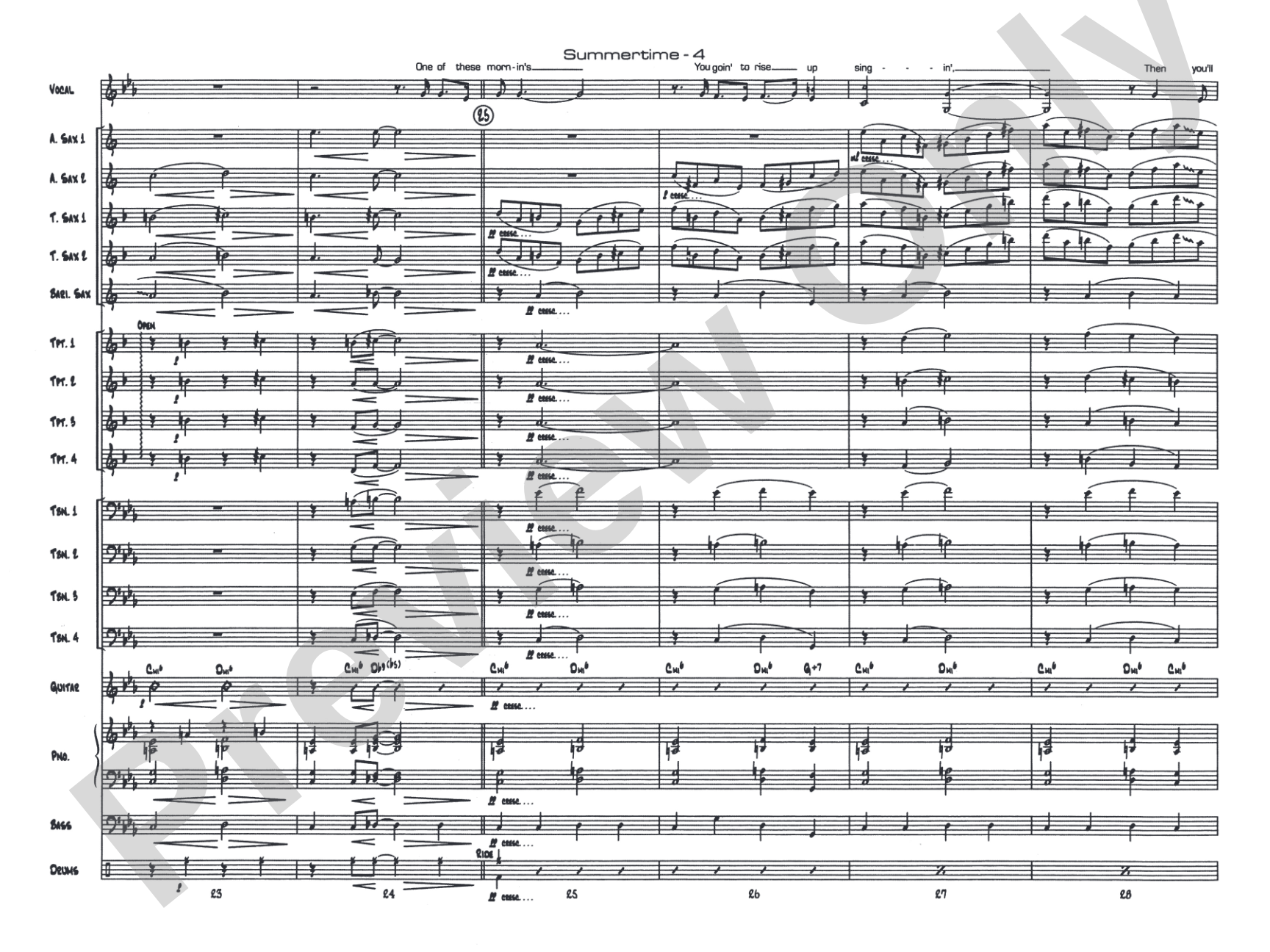
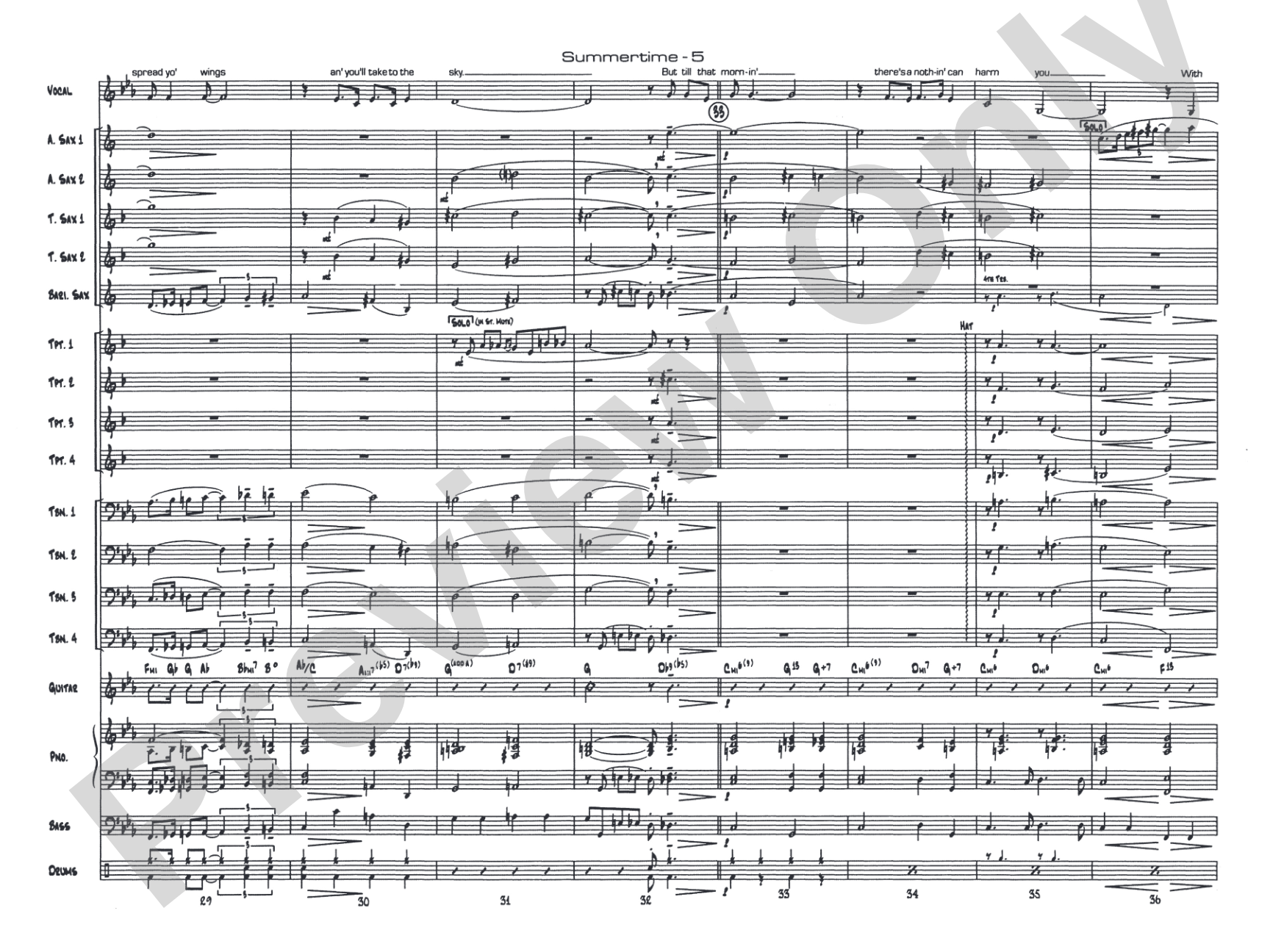
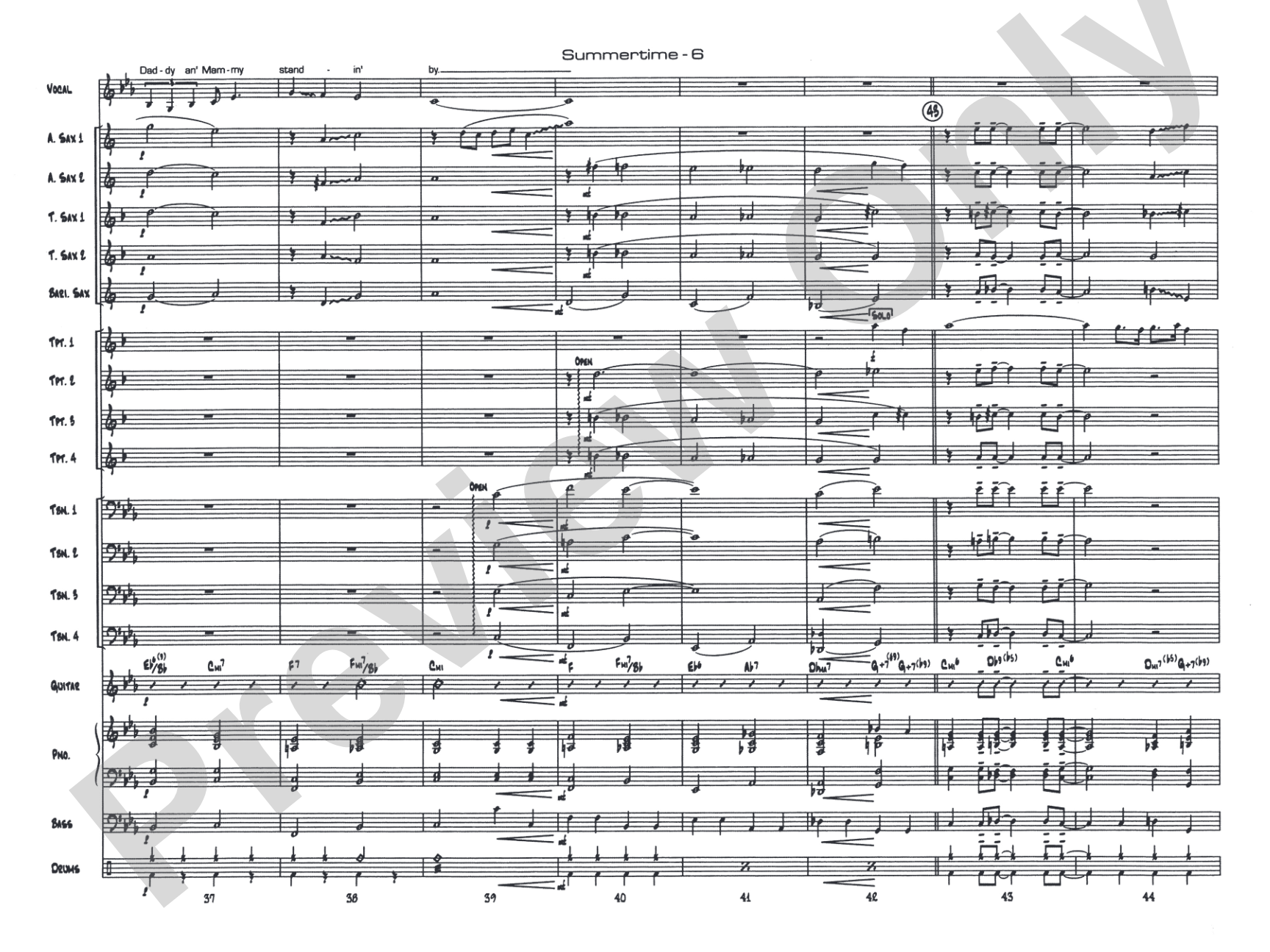
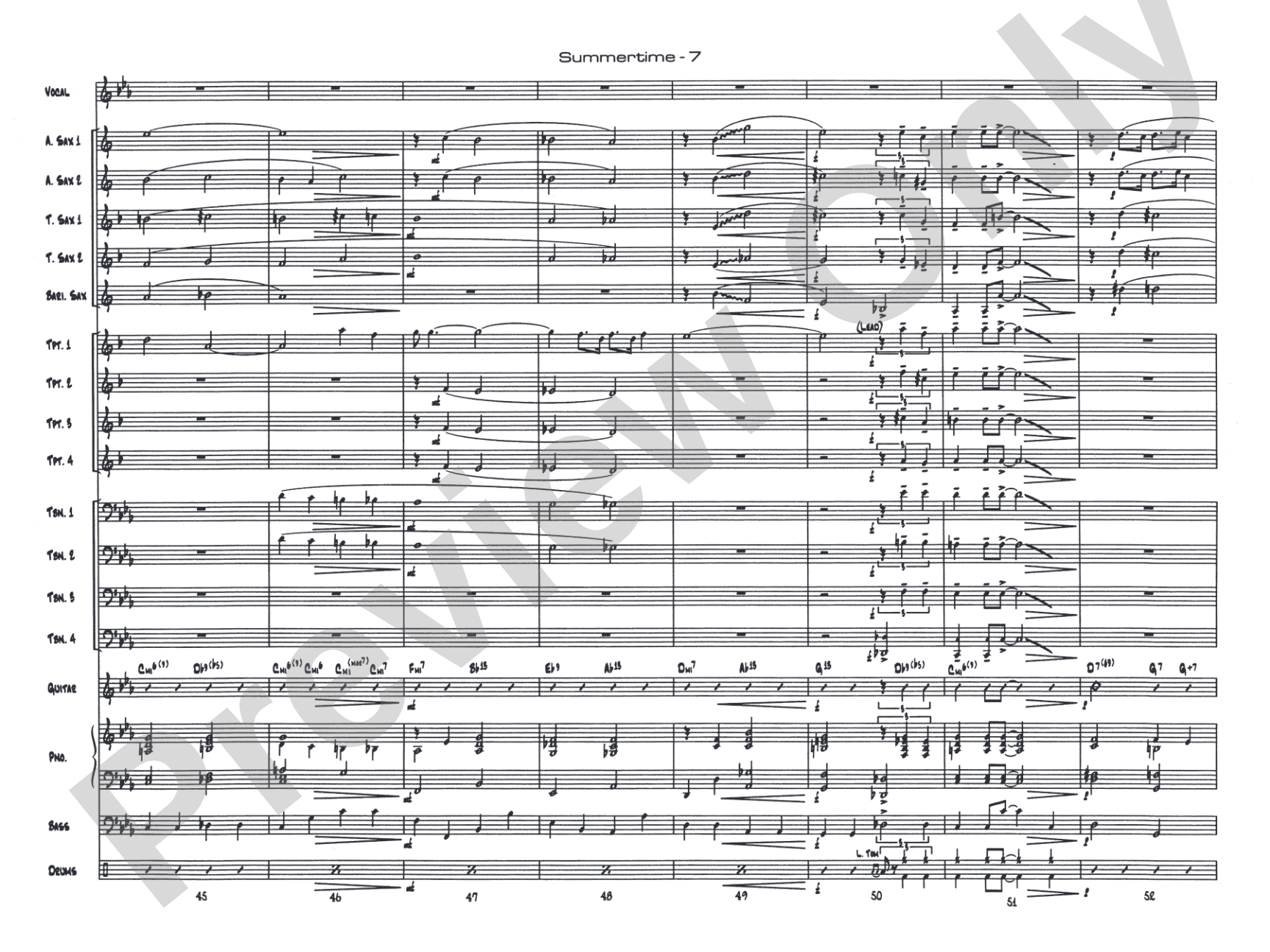
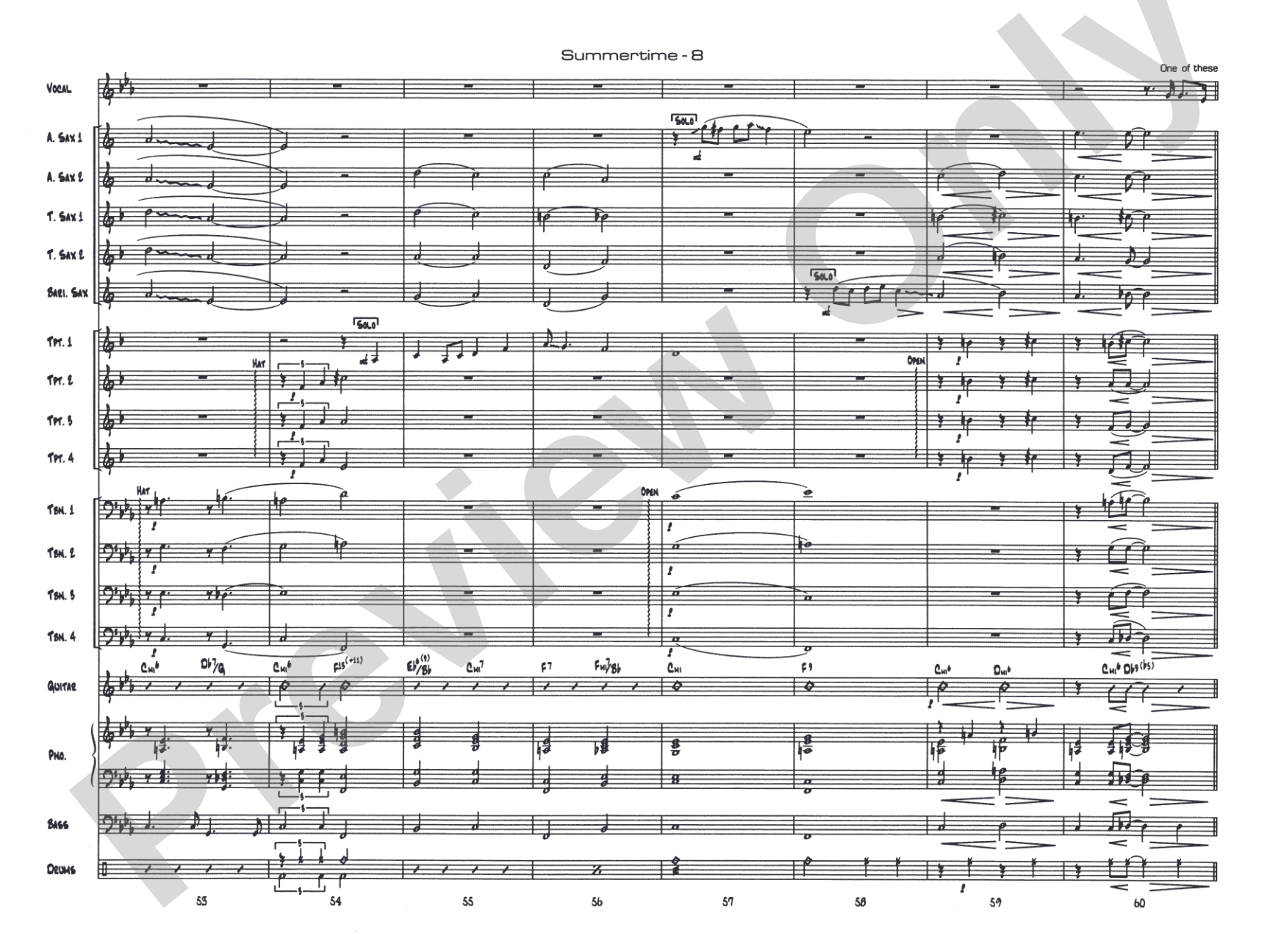
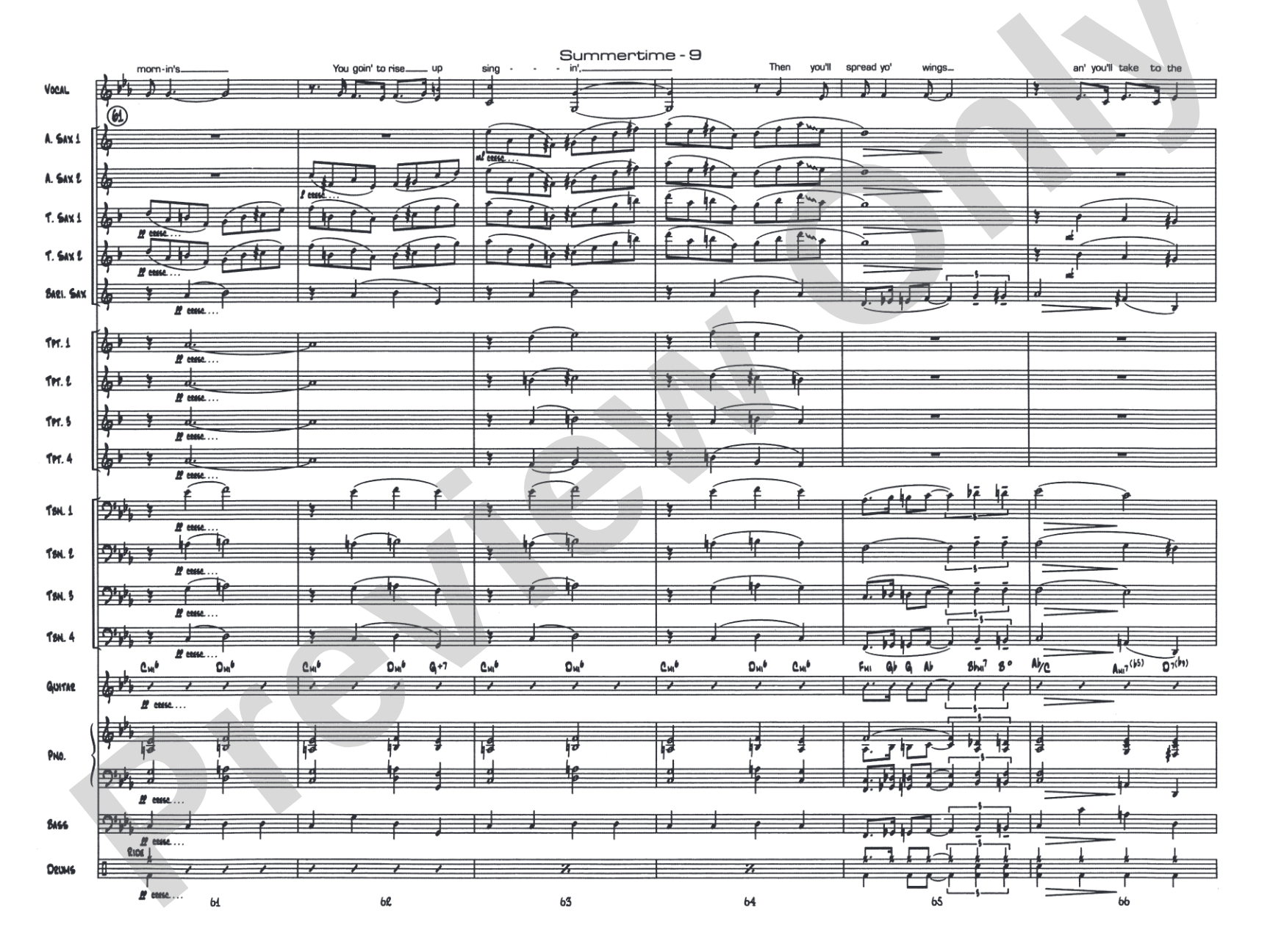
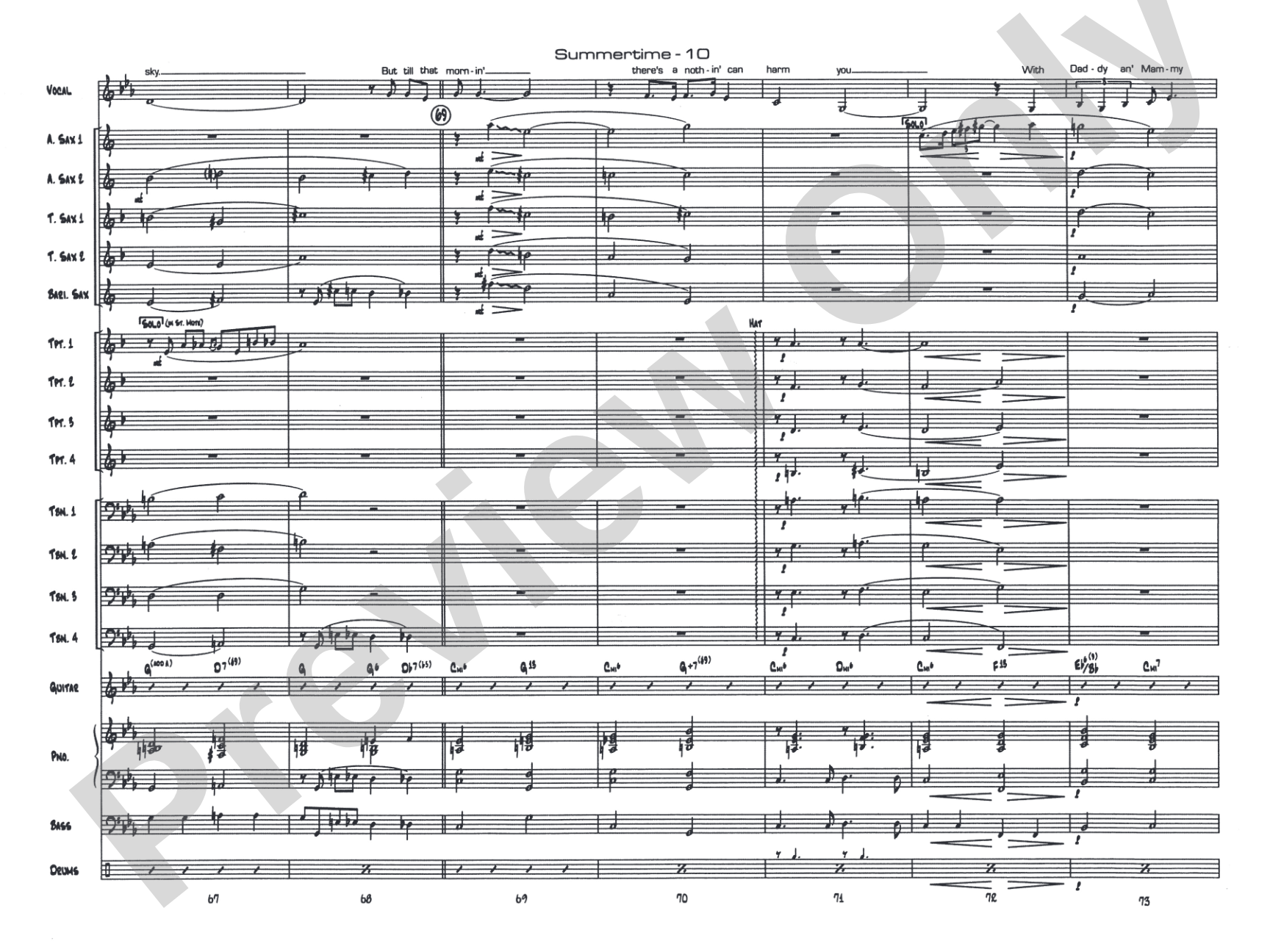
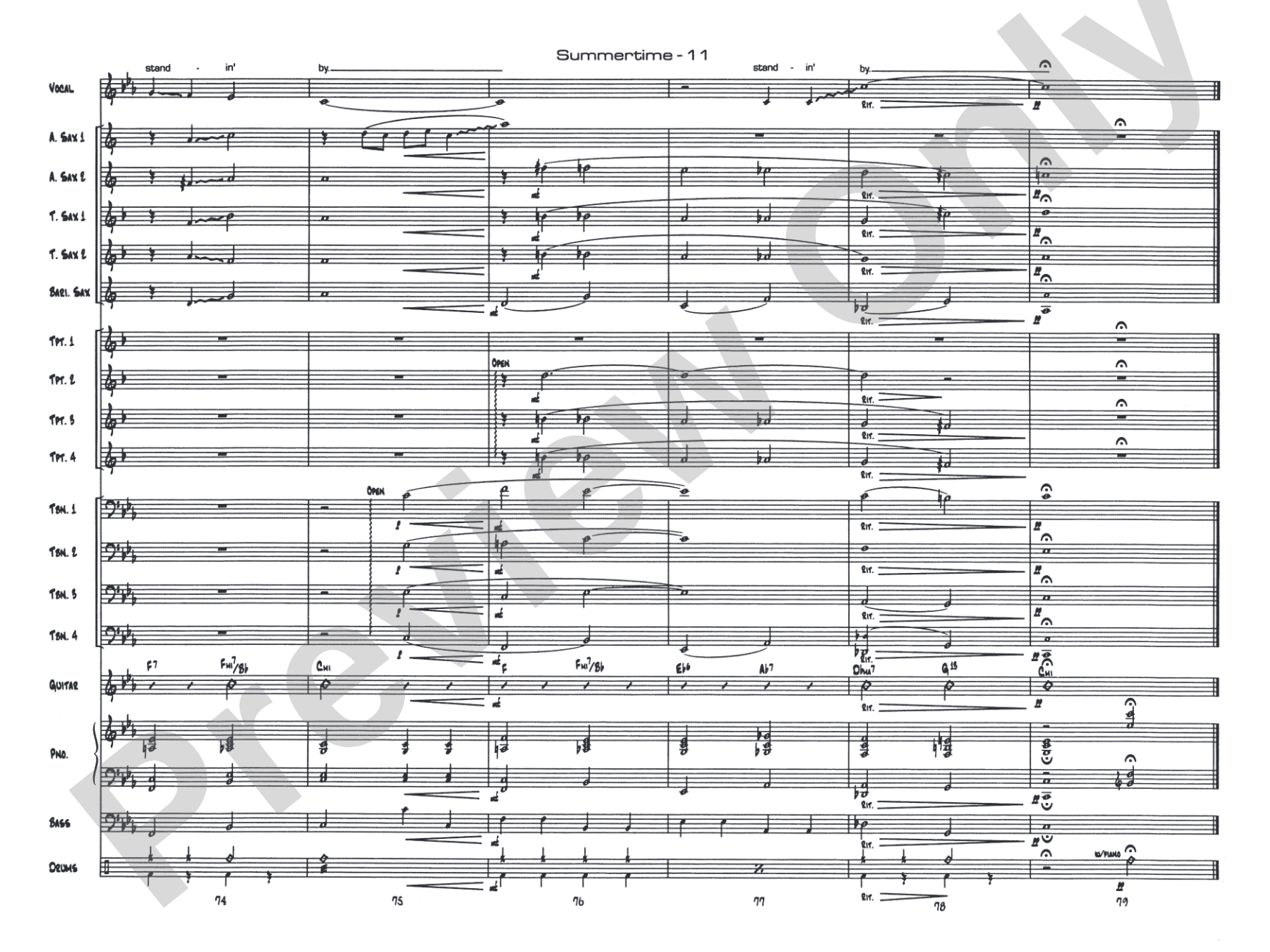

Summertime: Vocal Solo with Jazz Ensemble Conductor Score & Parts
Vocal Feature
Words and music by George Gershwin, DuBose and Dorothy Heyward, and Ira Gershwin / arr. Dave Wolpe
Grade: 3 (Medium)
Item: 00-PK-0007030

$52.00
Pickup currently not available
Buy Extra Parts (Digital PDF Download)
| Product | Price | Quantity |
|---|---|---|
| Summertime: Score | $8.00 | |
| Summertime: Vocal Solo | $3.00 | |
| Summertime: Solo Bb Part (Substitute for Vocal) | $3.00 | |
| Summertime: E-flat Alto Saxophone | $3.00 | |
| Summertime: 2nd E-flat Alto Saxophone | $3.00 | |
| Summertime: B-flat Tenor Saxophone | $3.00 | |
| Summertime: 2nd B-flat Tenor Saxophone | $3.00 | |
| Summertime: E-flat Baritone Saxophone | $3.00 | |
| Summertime: 1st B-flat Trumpet | $3.00 | |
| Summertime: 2nd B-flat Trumpet | $3.00 | |
| Summertime: 3rd B-flat Trumpet | $3.00 | |
| Summertime: 4th B-flat Trumpet | $3.00 | |
| Summertime: 1st Trombone | $3.00 | |
| Summertime: 2nd Trombone | $3.00 | |
| Summertime: 3rd Trombone | $3.00 | |
| Summertime: Bass Trombone | $3.00 | |
| Summertime: Guitar Chords | $3.00 | |
| Summertime: Guitar | $3.00 | |
| Summertime: Piano Accompaniment | $3.00 | |
| Summertime: String Bass | $3.00 | |
| Summertime: Drums | $3.00 |
Parts Added to Cart!
Description
The beautiful Gershwin ballad shines in this strong Dave Wolpe arrangement for jazz ensemble with solo vocalist. We were surprised that Dave had not scored this tune before, but it was worth the wait. It is really smooth. To make the chart more flexible, you can also feature a tenor sax solo in place of the vocalist. Jazz Ensemble with Solo Vocalist - Medium Easy (4:16)


Don't just read it, hear it, play along with it, and watch your students grow with it. In MakeMusic Cloud, Summertime: Vocal Solo with Jazz Ensemble Conductor Score & Parts comes alive with professional accompaniment, adjustable tempo, and built-in practice tools that turn solo practice into real progress.
Open in the Player
Jump straight in and assign it today.
Start Your Free Trial
Open this title and explore the full library in minutes.
Sample Audio
No sample audio found.
Sample Video
No sample videos found.
Additional Details
Series:
Jazz Vocal Series
Publisher:
Alfred Music
Page Count:
82
SKU:
00-PK-0007030
More about this title
About the Composer: George Gershwin
George Gershwin (1898-1937) bridged classical and popular music with an ease that still defines American composition. His gift for melody and harmonic sophistication made standards like "Summertime" endure across genres and generations, earning him a place in both concert halls and jazz clubs.
Gershwin's collaborative relationship with lyricists and librettists shaped his most significant works. "Summertime" emerged from the 1935 opera "Porgy and Bess" (with text by DuBose Heyward, Dorothy Heyward, and Ira Gershwin), a work that remains central to repertoire conversations in music education and performance.
Why we love this
Dave Wolpe's arrangement strips away nothing essential while adding sophistication that serves both the vocalist and the ensemble. The flexibility to feature a tenor sax in place of vocals gives your program genuine variety without sacrificing the tune's lyrical warmth. This is the kind of arrangement that sounds effortless to audiences but teaches your students what real musicianship in jazz writing looks like.
What to expect
Warm, introspective, and anchored in swing. The arrangement honors Gershwin's gift for long, singing lines while the jazz ensemble context brings ease and sophistication. It's a ballad that never feels precious or overstated, just deeply musical.
Who it's for
Jazz ensembles with a capable vocalist or strong tenor saxophonist looking for accessible but mature repertoire. The Grade 3 level sits comfortably for high school jazz bands and college ensembles still building ensemble cohesion.
How to get the most out of it
- Balance the vocalist's legit tone against the ensemble's swing feel. The melody should float above the rhythm section without fighting it; work for conversational interplay rather than spotlight-versus-accompaniment.
- If you swap in a tenor sax solo, use that performance to model phrasing and breath control for your singers. The saxophone can teach articulation and ballad sensibilities that transfer directly to vocal interpretation.
- Let the rhythm section breathe with space. Wolpe's arrangement supports rubato and expressive playing; lock the groove but leave room for the soloist to shape phrases naturally.
- Address tuning in the ensemble voicings, especially the sustained chords that frame the soloist. Close harmonies demand precision and blend that won't happen by accident.
How to use it
Program this as the emotional centerpiece of a jazz concert, especially when pairing it with more uptempo ensemble pieces. The 4:16 length gives you breathing room in a setlist and demonstrates your ensemble's range beyond funk and bebop. It works equally well in a cabaret or coffeehouse setting where the intimacy of the arrangement can shine.
Skills your students will build
- Singing or playing swing style with legit tone quality
- Accompanying a solo vocalist while maintaining ensemble groove
- Balancing jazz idiom with ballad sensibility
- Interpreting Gershwin's harmonic language in a jazz context
- Managing space and dynamics to support a featured soloist