

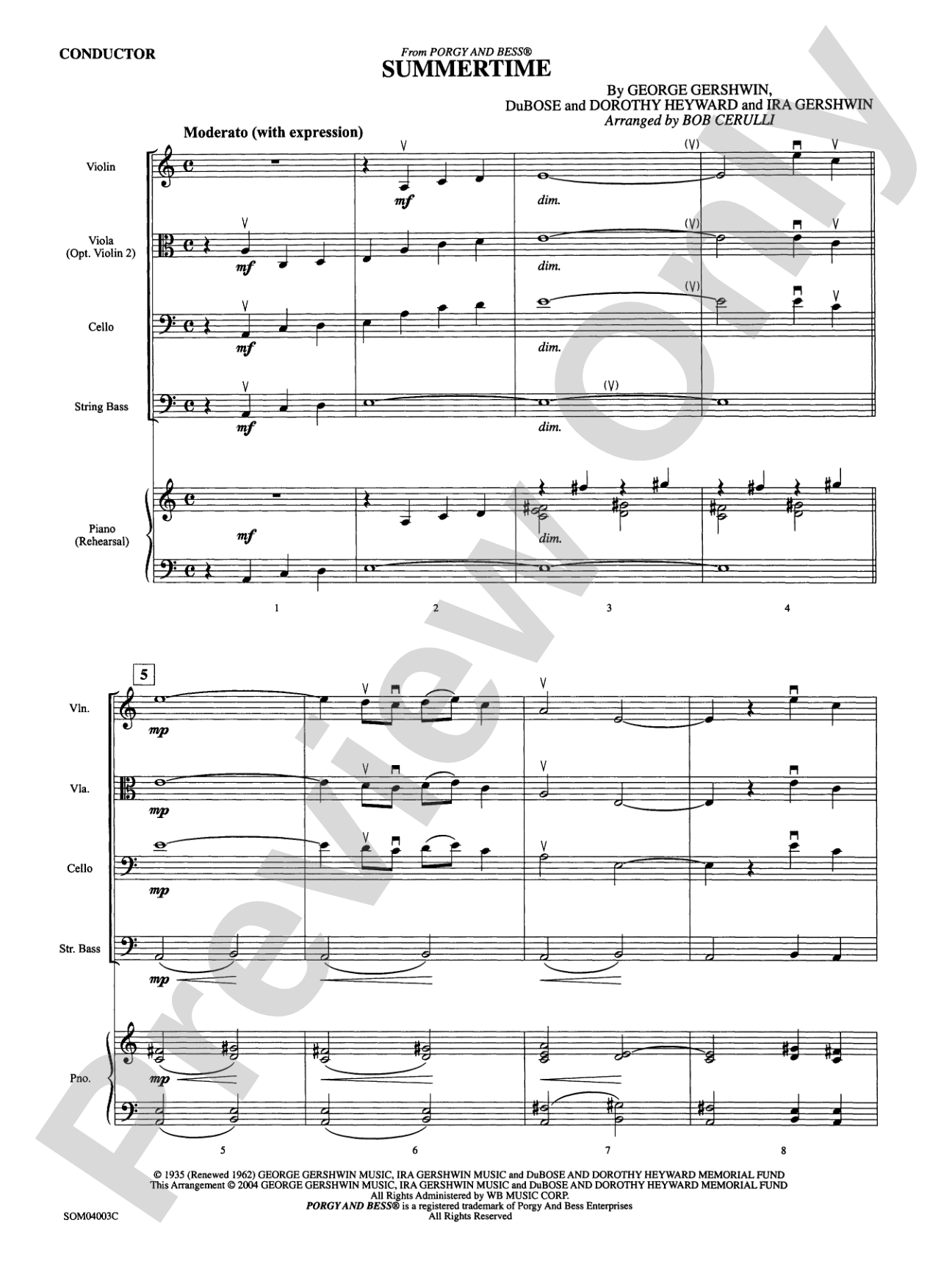
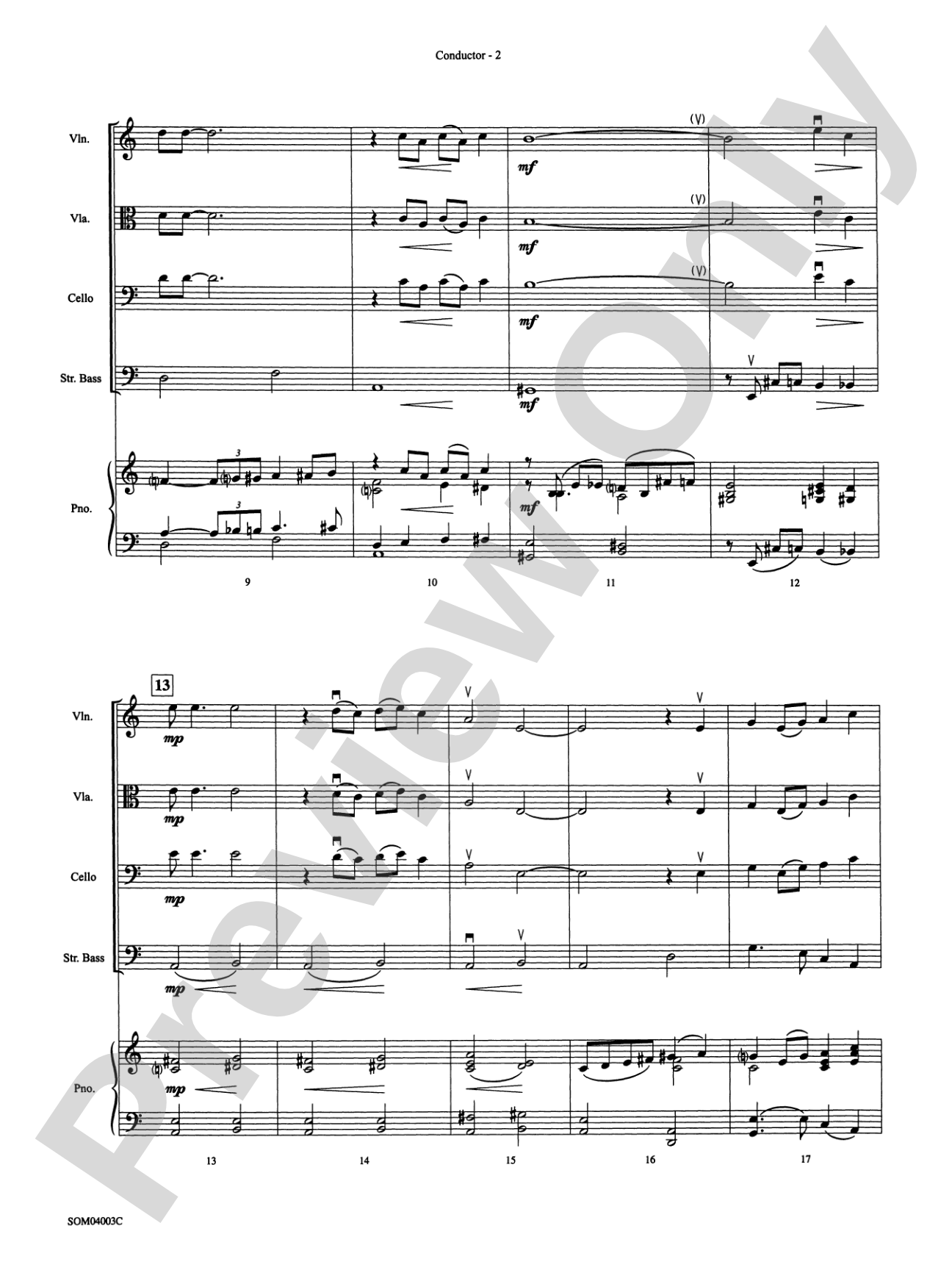
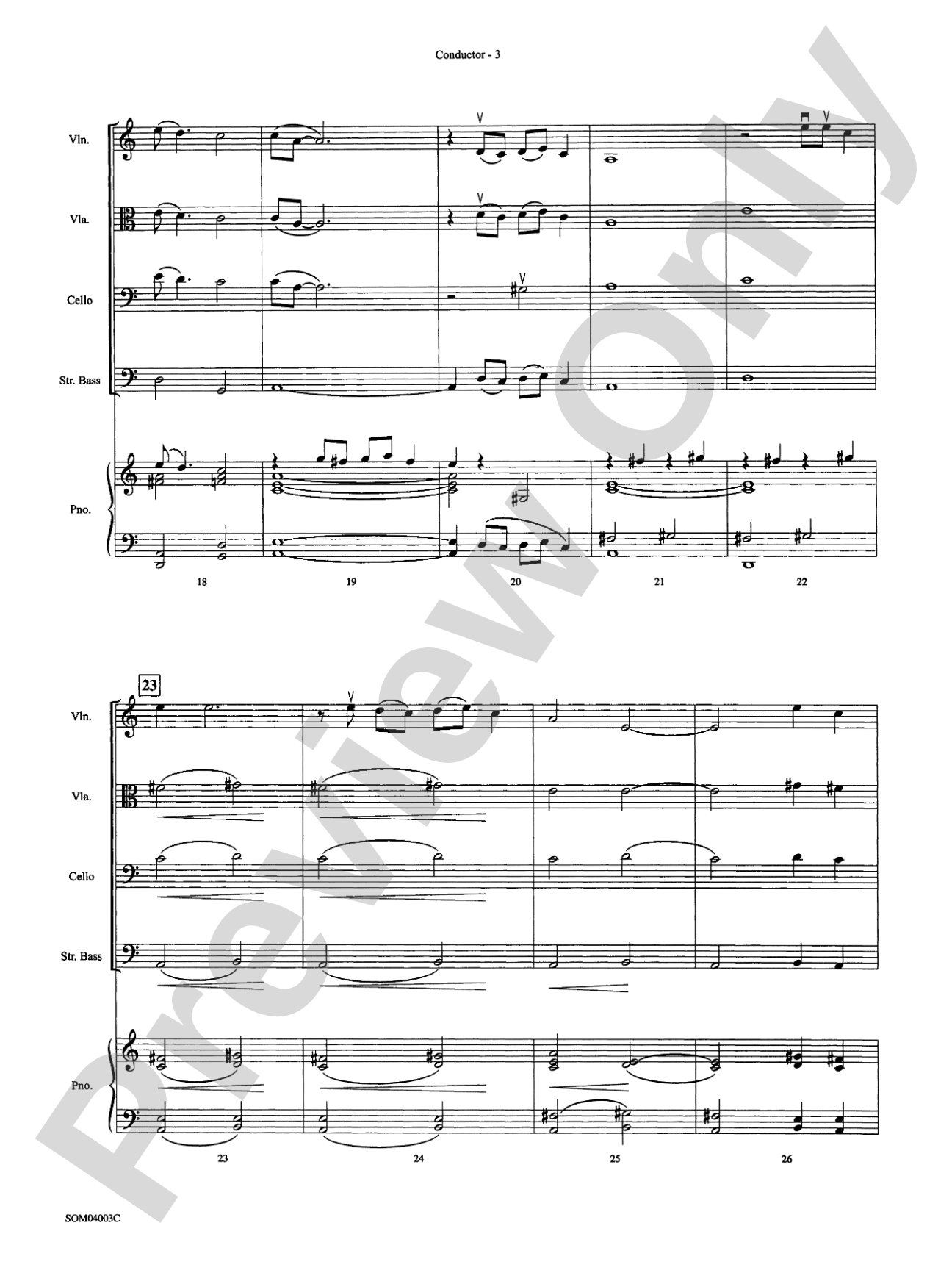
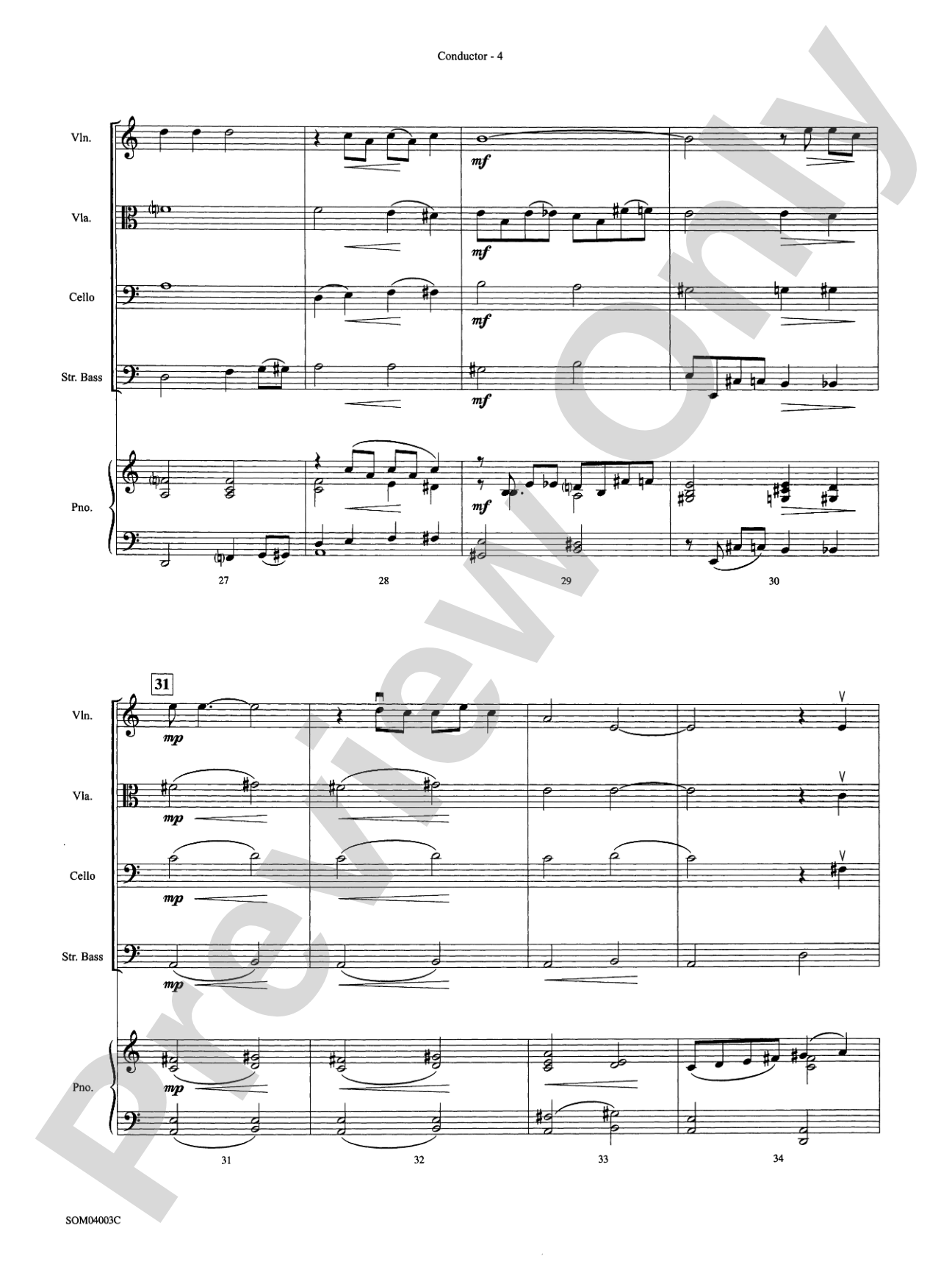
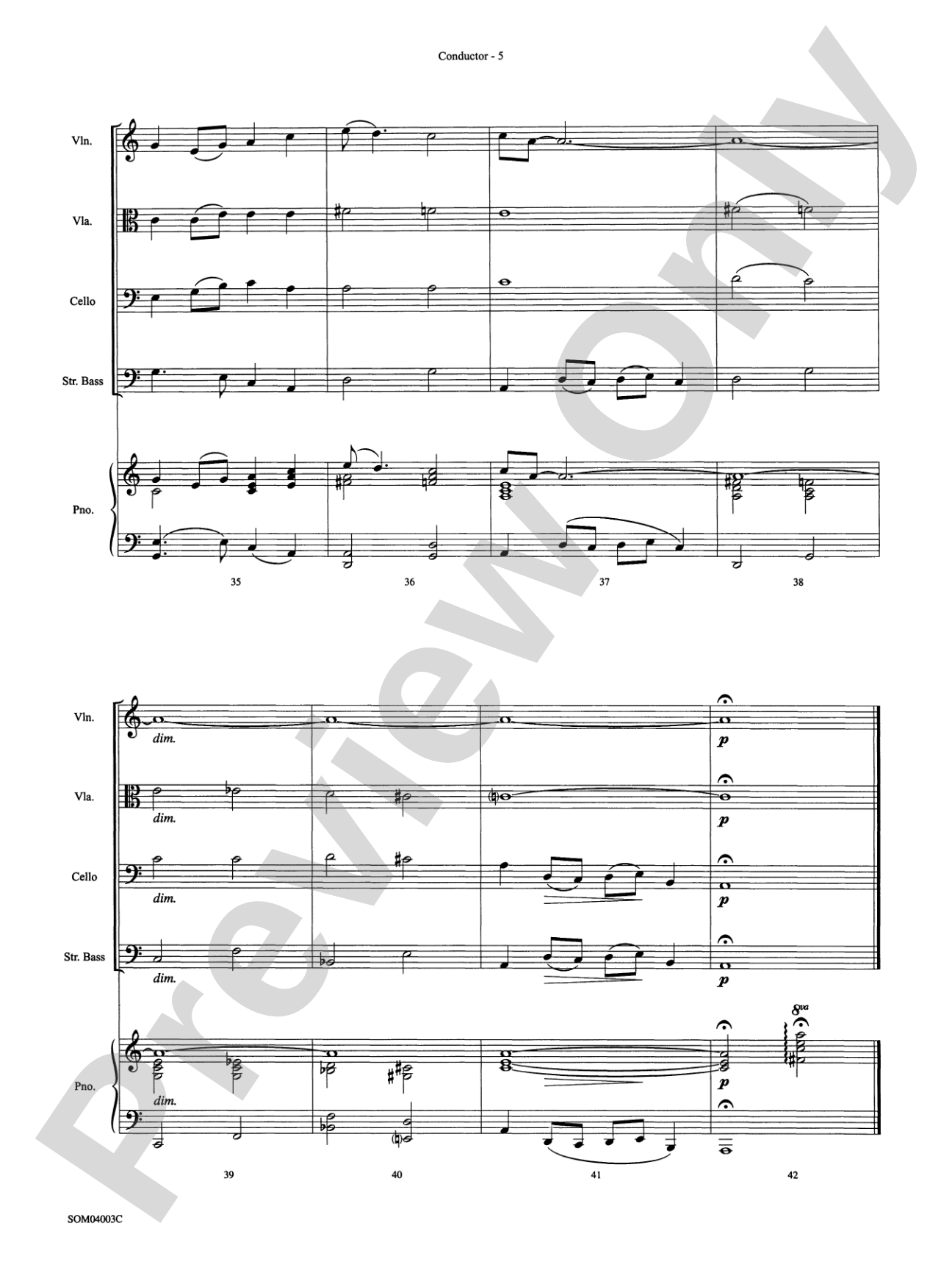


Summertime: String Orchestra Conductor Score & Parts
By George Gershwin, DuBose and Dorothy Heyward, and Ira Gershwin / arr. Bob Cerulli
Grade: 1
Item: 00-PK-0004999

$51.00
Pickup currently not available
Buy Extra Parts (Digital PDF Download)
| Product | Price | Quantity |
|---|---|---|
| Summertime: Score | $7.00 | |
| Summertime: 1st Violin | $5.99 | |
| Summertime: 2nd Violin | $5.99 | |
| Summertime: Viola | $5.99 | |
| Summertime: Cello | $5.99 | |
| Summertime: String Bass | $5.99 | |
| Summertime: Piano Accompaniment | $5.99 |
Parts Added to Cart!
Description
You won't believe how full the ensemble will sound performing Gershwin's endeared classic. This fabled melody is now accessible for your beginning strings by Bob Cerulli. (2:13)


Don't just read it, hear it, play along with it, and watch your students grow with it. In MakeMusic Cloud, Summertime: String Orchestra Conductor Score & Parts comes alive with professional accompaniment, adjustable tempo, and built-in practice tools that turn solo practice into real progress.
Open in the Player
Jump straight in and assign it today.
Start Your Free Trial
Open this title and explore the full library in minutes.
Sample Audio
1
Audio File
--:--
0:00
0:00
Sample Video
No sample videos found.
Additional Details
Series:
Pop Beginning String Orchestra
Publisher:
Alfred Music
Page Count:
64
SKU:
00-PK-0004999
More about this title
About the Composer: George Gershwin
George Gershwin (1898–1937) bridged classical and popular music in ways that few composers have matched. His gift for melody and his instinct for orchestration shaped the sound of American music in the 1920s and 1930s, and his works remain central to concert programs and musical theater alike.
Gershwin's ability to write music that feels both sophisticated and immediately accessible makes his pieces ideal teaching tools. Young musicians encounter genuine artistry when they perform his work, not simplified versions of something greater. Summertime, from the opera Porgy and Bess, exemplifies this quality: a melody so natural it seems inevitable, yet harmonically rich enough to reward careful listening.
Why we love this
Bob Cerulli's arrangement respects the integrity of Gershwin's melody while genuinely opening this celebrated work to beginning string orchestras. Grade 1 parts don't mean thin sound or hollow orchestration here; the arrangement distributes the harmony intelligently across the ensemble so that even young players create that full, warm texture Gershwin intended. It's a masterwork that doesn't feel simplified.
What to expect
Summertime unfolds with the unhurried warmth of a summer afternoon. The melody drifts gently above soft harmonic support, creating space and air rather than rushing forward. There's a quiet intimacy here, even when the full ensemble plays; the mood invites listening and reflection rather than virtuosic display.
Who it's for
Beginning string orchestras and young musicians encountering Gershwin for the first time. Directors looking for repertoire that builds genuine musicianship while keeping technical demands reasonable will find this a natural fit for early-year programming.
How to get the most out of it
- Shape the melody phrase by phrase rather than note by note. Young string players often focus on individual pitches; this piece sings best when violins think in three-to-four measure arcs.
- Balance the inner voices carefully during tutti sections. With accessible part-writing for all players, the accompaniment can easily obscure the melody if the lead line doesn't sit slightly forward.
- Establish a warm, song-like tone early in rehearsal. The character of Summertime requires legato bow work and attention to tone quality, not speed or technical display.
- Let the ensemble breathe where singers would breathe. This is vocal music transcribed for strings; natural phrasing points matter more than strict metric precision.
How to use it
This works beautifully as a concert opener or closer, lending sophistication to a program of lighter fare. Place it alongside other accessible American classics to give young musicians a sense of repertoire continuity, or pair it with contrasting pieces that highlight different colors in the string section.
Skills your students will build
- Sustaining legato tone and phrase shape across four or more measures
- Balancing melody and accompaniment within an ensemble texture
- Reading and responding to dynamic and tempo markings that shape musical character
- Intonation and blend in diatonic harmonic progressions