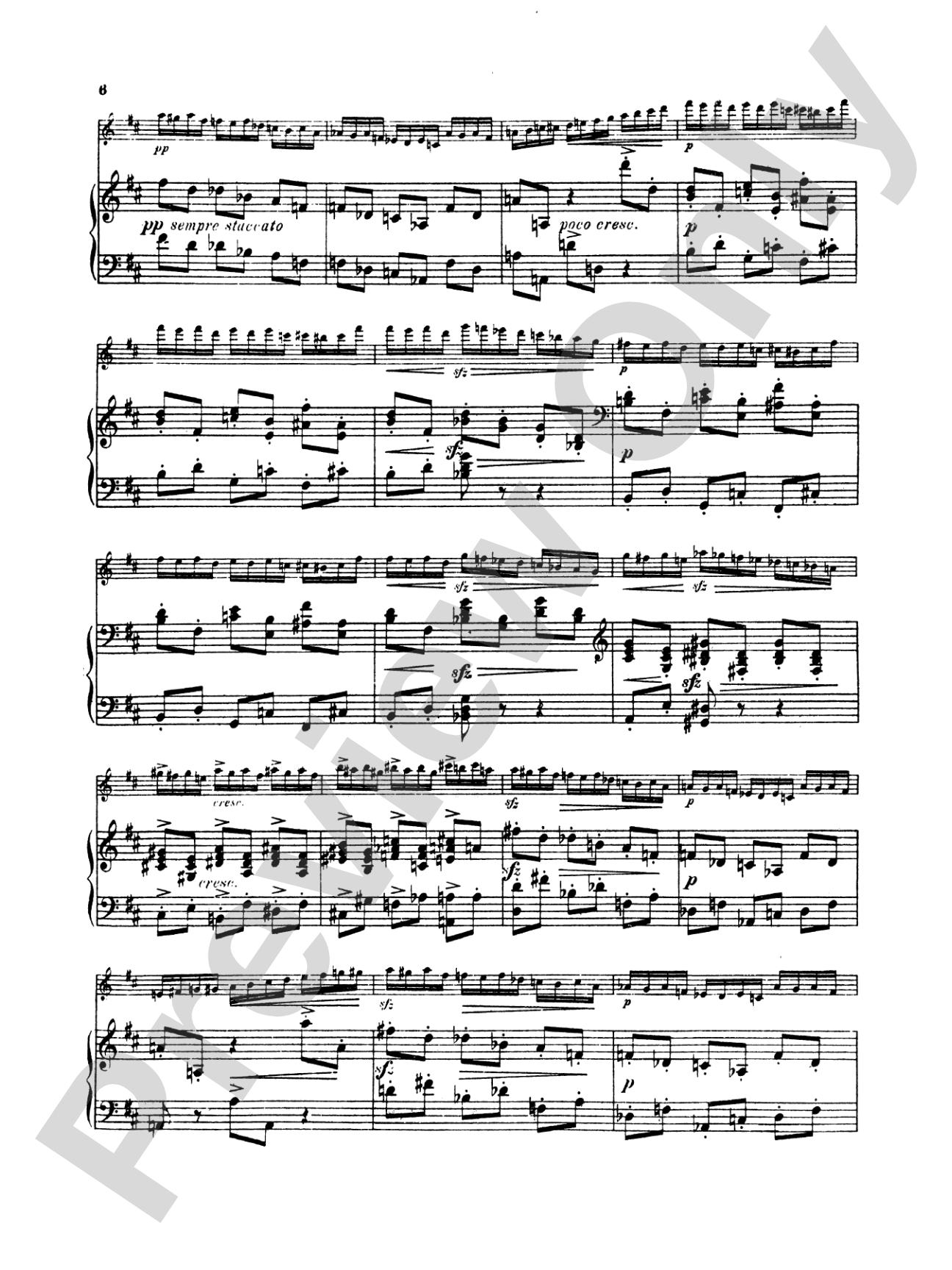
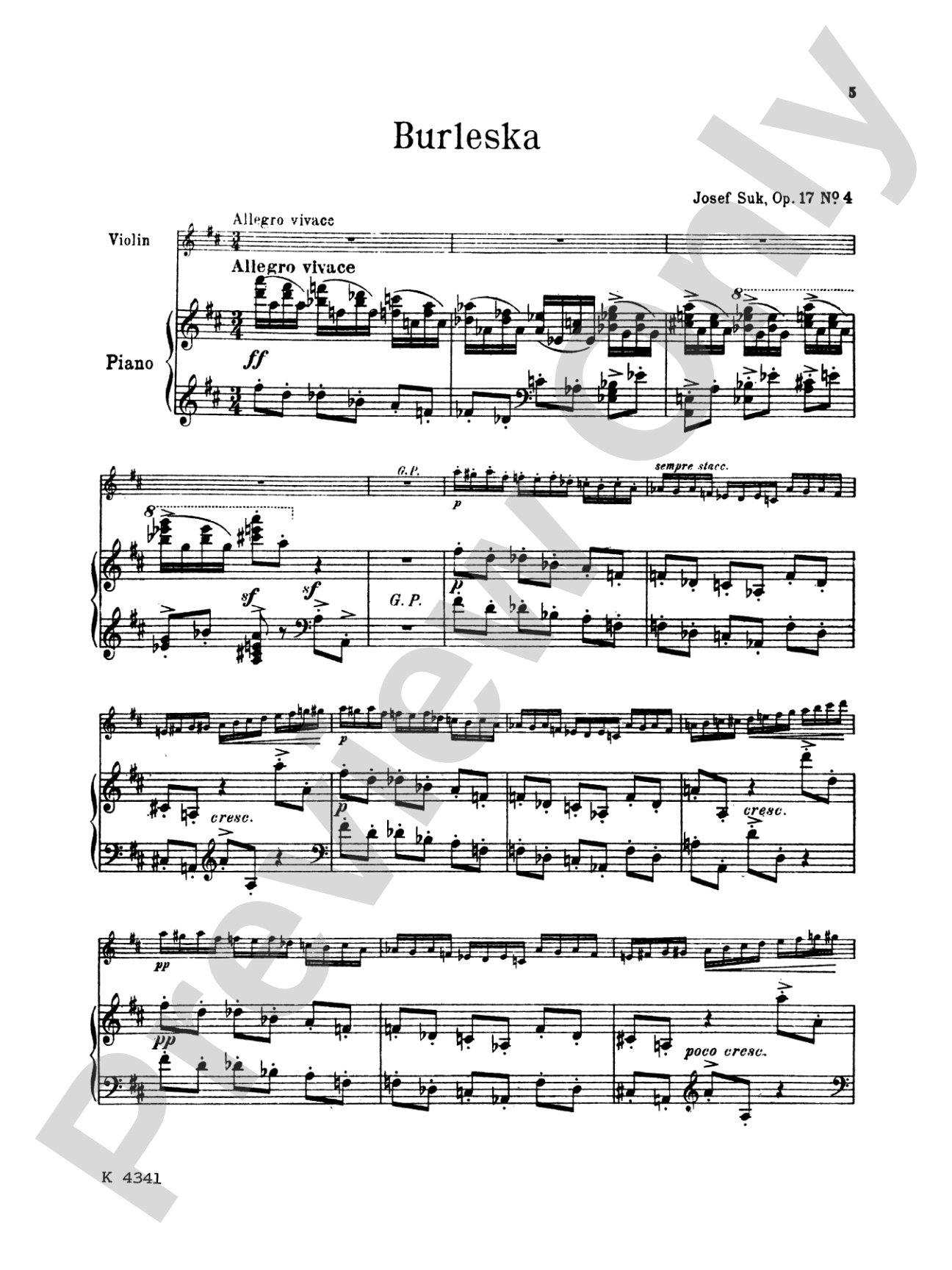
Suk: Four Pieces, Op. 17 (Volume II) Sheet Music Preview

Suk: Four Pieces, Op. 17 (Volume II)

By Josef Suk

Item: 00-PC-0010254

Digital Download
$1.99
Description
Expertly arranged Violin with Piano Accompaniment music by Josef Suk from the Kalmus Edition series. This is from the 20th Century and Romantic eras.

Don't just read it, hear it, play along with it, and watch your students grow with it. In MakeMusic Cloud, Suk: Four Pieces, Op. 17 (Volume II) comes alive with professional accompaniment, adjustable tempo, and built-in practice tools that turn solo practice into real progress.

Sample Audio
No sample audio found.
Sample Video
Additional Details
Series: Kalmus Edition
Publisher: Alfred Music
Page Count: 20
SKU: 00-PC-0010254

More about this title

About the Composer: Josef Suk

Josef Suk (1874-1935) was a Czech composer and violinist who studied under Antonín Dvořák and became one of the most significant voices in early twentieth-century Central European music. His chamber works and violin compositions blend the lyrical warmth of the Romantic tradition with increasingly chromatic harmony and structural innovation, establishing him as a bridge between the nineteenth century and modernism.

Suk's own mastery of the violin deeply shaped his writing for the instrument. His works for violin demonstrate an intimate understanding of technical possibility and expressive capability, making them central to the repertoire for advancing violinists. His influence on Czech musical culture and his contributions to the violin's art song literature remain vital to concert halls and serious teaching studios today.

Why we love this

These four pieces showcase Suk's gift for lyrical invention at a scale that rewards both performer and listener without overwhelming either. The pairing of violin with piano accompaniment creates genuine dialogue rather than mere support, inviting collaborative musicianship from both players. The collection spans varied emotional terrain, offering violinists opportunity to explore both the introspective and outward-reaching sides of the Romantic-to-modern transition.

What to expect

Suk's voice here is contemplative and finely wrought, blending the songful quality of the Romantic era with harmonies that stretch and occasionally surprise. There is an intimate, chamber-like quality to these pieces even as they demand full expressive engagement from the soloist. The overall mood moves between lyrical tenderness and moments of quiet intensity, never strident or showy.

Who it's for

Intermediate to advanced violinists seeking substantial material beyond the standard recital repertoire. These pieces suit students preparing for competitions, auditions, or recitals who want to demonstrate musicianship and command of early twentieth-century idiom. Duet partnerships looking for meaningful collaborative repertoire will find this collection rewarding.

How to get the most out of it

  • Balance the melodic line against the piano part through careful listening during rehearsal; Suk's accompaniments often contain contrapuntal interest that supports rather than obscures the violin.
  • Approach the chromatic passages and harmonic shifts with secure intonation in first position before exploring expressive vibrato; the harmonic language benefits from clarity.
  • Pay close attention to dynamic markings and rubato indications in the score, as they shape the character of each piece distinctly.
  • Work with your accompanist on breath points and phrase architecture early in preparation; the violin line often suggests where subtle give-and-take enhances the musical arc.

How to use it

Feature one or more of these pieces in a recital program alongside other Central European masters of the era such as Dvořák or Vítezslav Novák to create regional and stylistic coherence. Alternatively, select individual pieces to anchor a thematic program exploring violin and piano partnership across eras. The collection's modest length makes it accessible for community concert series or salon-style performance settings.

Skills your students will build

  • Secure intonation across extended harmonic language
  • Collaboration with pianist through contrapuntal listening
  • Romantic-era vibrato and tonal color control
  • Navigation of chromatic passages in early twentieth-century idiom
  • Stylistically informed interpretation of Suk's compositional voice

You May Also Like