
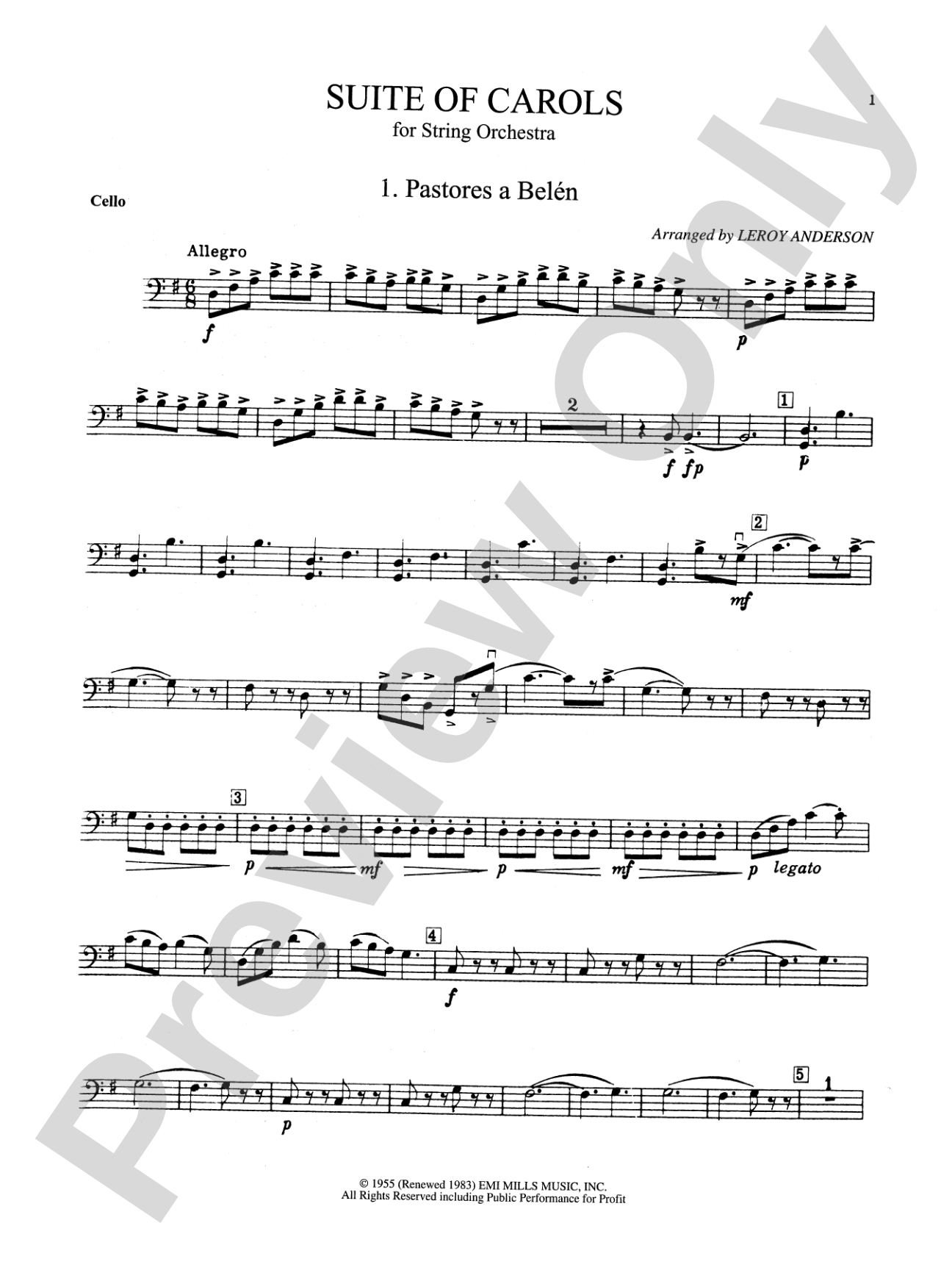
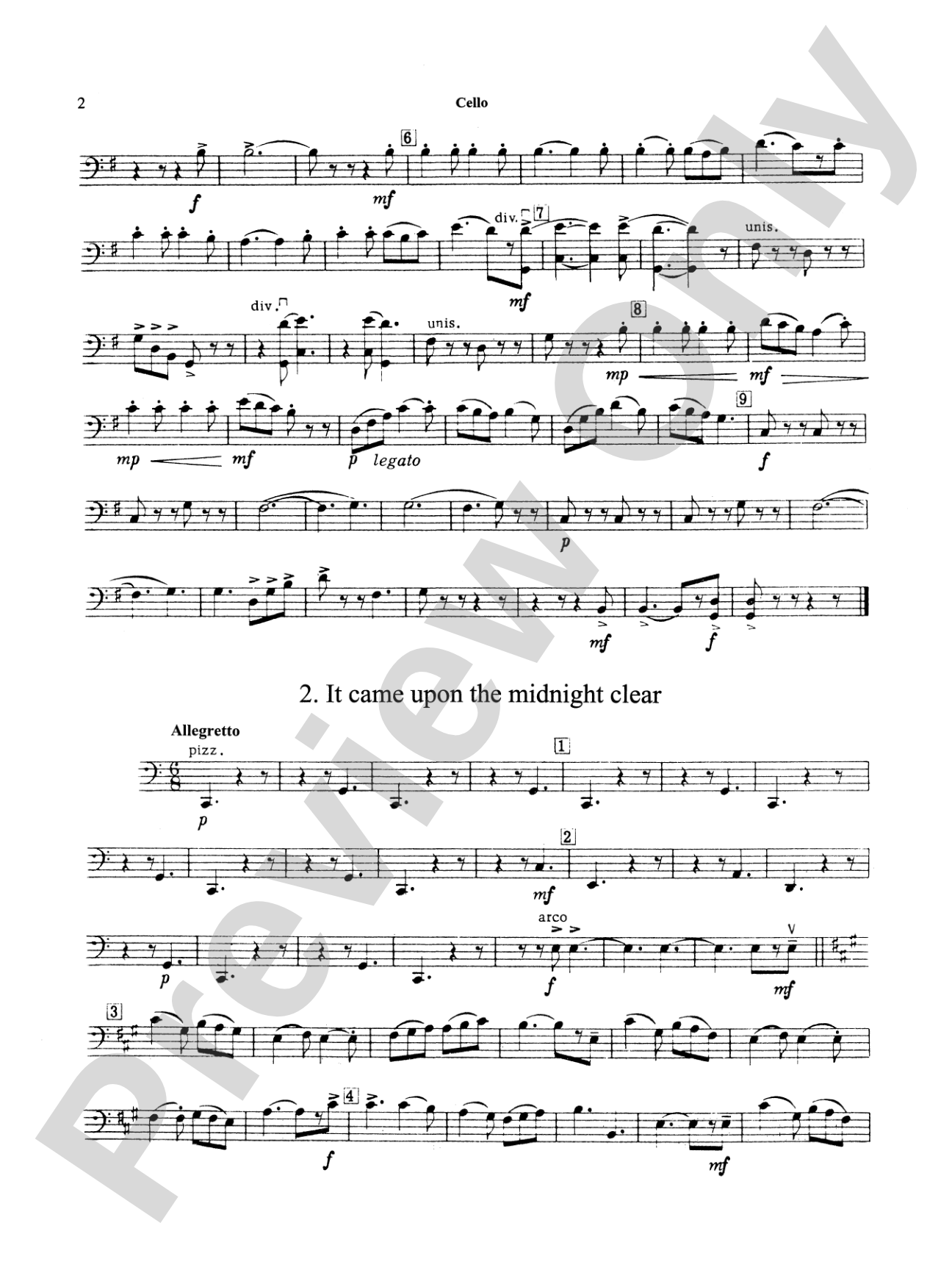

Suite of Carols: Cello
By Leroy Anderson
Grade: 3.5
Item: 00-PC-0001949_VC1
$7.99
Pickup currently not available
Description
Audiences who come to hear your holiday concerts enjoy listening to those melodies that have surrounded them during all of the seasons of their lifetimes. No one has been better able to grasp that comforting need and supply these time-honored scorings than Leroy Anderson. In his Suite of Carols, Mr. Anderson lovingly sets the carols "Pastores a Belen," "It Came Upon a Midnight Clear," "O Little Town of Bethlehem," "Bring a Torch, Jeanette, Isabella," "Away in a Manger," and "Wassail Song." (12:21)


Don't just read it, hear it, play along with it, and watch your students grow with it. In MakeMusic Cloud, Suite of Carols: Cello comes alive with professional accompaniment, adjustable tempo, and built-in practice tools that turn solo practice into real progress.
Open in the Player
Jump straight in and assign it today.
Start Your Free Trial
Open this title and explore the full library in minutes.
Sample Audio
1
Audio File
--:--
0:00
0:00
Sample Video
Additional Details
Series:
Belwin Concert String Orchestra
Publisher:
Alfred Music
Page Count:
142
SKU:
00-PC-0001949_VC1
More about this title
About the Composer: Leroy Anderson
Leroy Anderson (1908-1975) was an American composer and conductor who became synonymous with accessible, charming orchestral music that audiences loved hearing year after year. His gift lay in taking familiar melodies and folk tunes, then wrapping them in sophisticated yet transparent orchestrations that never condescended to the listener. Anderson composed for concert band, orchestra, and ballet with equal facility, and his works remain staples of holiday programming because they balance genuine musicality with the warmth that makes seasonal concerts feel like homecomings.
Anderson's approach to the carol suite genre reflected his philosophy that great arranging means honoring the melody while letting the ensemble shine. Rather than obscuring familiar tunes with complex counterpoint, he provided elegant harmonic support and clever instrumental scoring that kept singers and players engaged while audiences connected instantly to the music they already knew and loved.
Why we love this
Anderson's gift for melody and orchestration shines through in every carol, and this suite gives your string players exactly the right balance of technical challenge and musical satisfaction at Grade 3.5. The scoring never overwhelms the tune, so your audience hears the carols they cherish while your orchestra sounds polished and confident. Combined with a reasonable runtime just over 12 minutes, this works as either a concert anchor or a graceful interlude in a larger holiday program.
What to expect
Each carol unfolds with the intimacy of a music box and the warmth of candlelight. The string writing preserves the tenderness and familiarity of these melodies while adding elegant harmonic color and subtle orchestral textures that make you hear them freshly, even after many seasons of listening.
Who it's for
This suite belongs in the hands of high school string orchestras and advanced middle school ensembles ready for a concert-quality holiday offering. Conductors looking for repertoire that challenges technically without overwhelming musically will find six complete, satisfying arrangements in one package.
How to get the most out of it
- Shape each carol as a miniature musical journey rather than six separate pieces. Vary vibrato and bow pressure between selections to keep the listener's ear fresh; a fuller, warmer tone suits 'Away in a Manger,' while a lighter touch works beautifully for 'It Came Upon a Midnight Clear.'
- Balance the divisi passages carefully during rehearsal. Anderson uses internal string divisions frequently to create harmonic richness without requiring a massive ensemble, so make sure every player understands whether they're on first or second violin and which viola or cello line carries the moment.
- Pay special attention to fermatas and breath points; they're marked where audiences expect the natural phrasing of each carol. Respect those stopping points as genuine musical punctuation, not obstacles to rush through.
How to use it
Program the entire suite as your holiday concert anchor, allowing the consecutive carols to build emotional depth without a break, or select individual pieces as elegant transitions between more substantial works. The suite's modest time requirement and immediate accessibility make it ideal for opening a concert with a gentle, joyful gesture that sets a welcoming tone.
Skills your students will build
- Balancing divisi writing across violin and viola sections
- Maintaining consistent vibrato and tone color across a suite of contrasting melodic settings
- Interpreting fermatas and phrase endings as musical punctuation rather than technical markers
- Reading and executing multiple layers of inner harmony in string writing
- Ensemble tuning under sustained chords with competing harmonic movement