Suite of Appalachian Folk Songs: 1st Percussion Sheet Music Preview

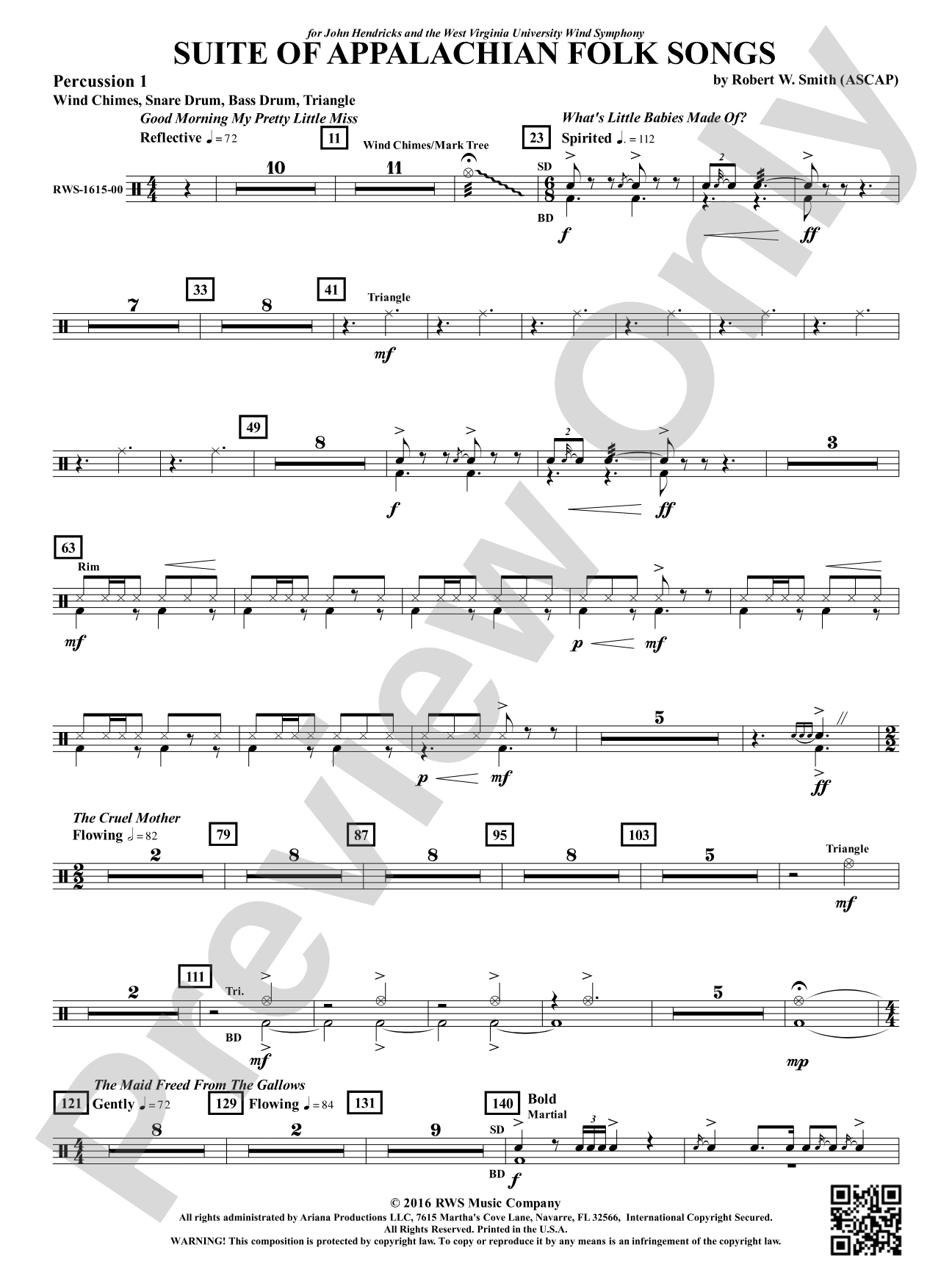
Suite of Appalachian Folk Songs: 1st Percussion

By Robert W. Smith

Grade: 4

Item: 98-PC-RWS1615_PC1

Digital Download
$3.99
Description
This collection of folk songs was inspired by the musicologist Cecil Sharpe and his journeys through the Appalachian Mountain range in the early 1900s. Mr. Sharpe collected traditional British folk songs that had been passed down from generation to generation in this culturally rich area of the United States. Short, tight movements, each with their own unique musical identity, lead to an exciting reel as the conclusion. A significant addition to the concert band repertoire suitable for programming at any concert or festival performance.

Original Item#: RWS-1615-00

Suite of Appalachian Folk Songs: 1st Percussion isn't in MakeMusic Cloud just yet...but it could be. Let us know you'd like to see it, and you'll help shape what comes next. In the meantime, start a free trial and dive into thousands of interactive titles your students can play along with today.

Sample Audio
0:00
0:00
Sample Video
Additional Details
Series: RWS - Symphony Band
Publisher: RWS Music Company
SKU: 98-PC-RWS1615_PC1

More about this title

About the Composer: Robert W. Smith

Robert W. Smith

Robert W. Smith stands among the most frequently performed American composers for concert band and orchestra, with over 400 published works to his credit. Educated at Troy State University (AL) and the University of Miami (FL), Smith has built a distinguished career as both composer and conductor, conducting ensembles across North America, Europe, Australia, Asia, and beyond.

His concert band works have become repertoire standards; symphonies like The Divine Comedy and The Odyssey and works for developing ensembles such as The Tempest have earned international recognition. Beyond the concert hall, Smith's music has been featured in major television broadcasts, Olympic ceremonies, and cultural events including the Macy's Thanksgiving Day Parade and opening day at Dodger Stadium.

Why we love this

Smith captures the essence of Appalachian folk tradition without sacrificing the architectural clarity that makes concert band writing rewarding to conduct. Each movement stands complete in itself, yet the arc toward a driving final reel gives the piece momentum and payoff, making it equally effective as a festival selection or concert centerpiece.

What to expect

Rooted, authentic, and luminous. Smith's orchestration honors the modal simplicity and modal character of Appalachian song while allowing the band's full color palette to emerge. There is warmth in these movements and genuine joy in the final reel, shaped by genuine source material rather than invented folk pastiche.

Who it's for

Concert bands at the Grade 4 level with solid fundamentals in ensemble blend and musicality. Directors preparing festival entries, pops concerts, or standalone folk-themed programs will find this collection accessible yet musically substantial enough to respect the ensemble's capabilities.

How to get the most out of it

  • Establish clear character contrast between movements; each one earns its own tempo and articulation identity even within the folk idiom.
  • Balance the melody between upper woodwinds and brass across different sections; the folk material passes between choirs and should sing through seamlessly.
  • Build the energy gradually into the final reel; this is not a sprint from the start but a natural accumulation toward the conclusion.

How to use it

Program this as a complete suite to anchor a concert section themed around American roots music, or select individual movements to pair with contemporary works that contrast in style and era. Its Grade 4 accessibility makes it ideal for building the second half of a festival program without sacrificing musical integrity.

Skills your students will build

  • Sustained legato phrasing across folk melodies in both lyrical and rhythmic contexts
  • Balancing solo and tutti textures within a single ensemble voice
  • Ensemble tuning in open-fifth and modal harmonic language
  • Stylistic understanding of Appalachian folk idiom and its harmonic language

You May Also Like