
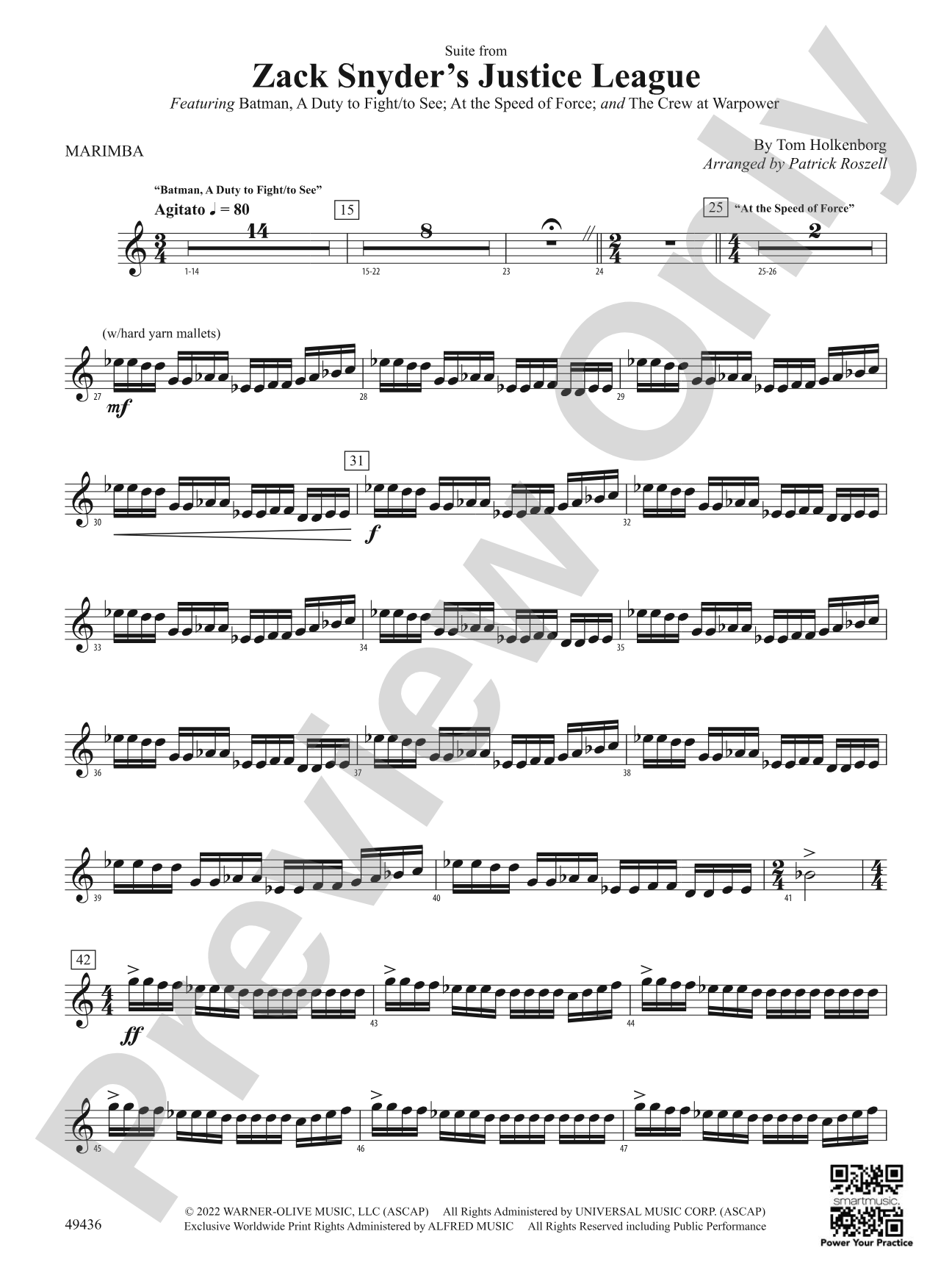

Suite from Zack Snyder's Justice League: Mallets
Featuring: Batman, A Duty to Fight / to See; At the Speed of Force; and The Crew at Warpower
By Tom Holkenborg / arr. Patrick Roszell
Grade: 3.5
Item: 00-PC-0018762_M1
$3.00
Pickup currently not available
Description
From the blockbuster film Zack Snyder's Justice League comes this intense arrangement of themes that are both dramatic and ominous. Featuring dark sonorities and driving rhythms, this work brings all the thrilling action to life. This stunning arrangement by Patrick Roszell features a reduced number of wind parts, making it even more accessible. (5:30) This title is available in MakeMusic Cloud.


Suite from Zack Snyder's Justice League: Mallets isn't in MakeMusic Cloud just yet...but it could be. Let us know you'd like to see it, and you'll help shape what comes next. In the meantime, start a free trial and dive into thousands of interactive titles your students can play along with today.
Request This Title
Tell us you want it.
Start Your Free Trial
Explore everything that's ready to play right now.
Sample Audio
1
Audio File
--:--
0:00
0:00
Sample Video
Additional Details
Series:
Pop Concert Full Orchestra
Publisher:
Alfred Music
SKU:
00-PC-0018762_M1
More about this title
About the Composer: Tom Holkenborg
Tom Holkenborg, known professionally as Junkie XL, is a Dutch film composer and electronic music producer whose work spans blockbuster action films, intimate dramas, and experimental soundscapes. His approach to orchestral scoring emphasizes visceral rhythmic energy and layered sonority, making his music particularly effective for ensemble performance and educational settings.
Why we love this
Patrick Roszell's orchestration captures the propulsive intensity of Holkenborg's original score while respecting the capabilities of school orchestras through thoughtful wind part reduction. The result is a concert arrangement that delivers genuine dramatic impact without compromising accessibility, making it an ideal choice for programs seeking contemporary film music with real teeth.
What to expect
Dark, muscular, and relentlessly forward-moving. The orchestration creates a sense of looming tension punctuated by moments of explosive action, with low brass and strings providing a foundation of ominous weight while upper woodwinds and brass cut through with sharp, urgent material. The 5:30 duration sustains this energy without exhaustion, building a narrative arc that feels cinematic and complete.
Who it's for
Orchestras at the intermediate level seeking contemporary concert repertoire with film music appeal and strong engagement potential for audiences. This arrangement works equally well for advanced middle school ensembles or developing high school programs looking to expand beyond traditional classical and pops fare.
How to get the most out of it
- Maintain rhythmic precision in the driving sections; these themes rely on locked ensemble pulse rather than expressive rubato. Use a clear conducting beat and consider rehearsing with a metronome to establish confidence in the foundation.
- Balance the dark orchestral colors by clarifying the dynamic layers. Strings often carry harmonic support while brass and woodwinds trade thematic material; resist letting either section overwhelm the other.
- Emphasize the ominous character through controlled dynamics rather than exaggerated contrasts. Sustained low register writing benefits from steady, supported playing across the entire ensemble.
- Shape the phrases around the natural harmonic movement rather than forcing artificial phrasing. Let the music breathe at logical structural points while maintaining forward momentum.
How to use it
Program this as a concert centerpiece that bridges the gap between traditional pops and film music programming, or pair it with other contemporary action-oriented works to create a thematic evening. The Grade 3.5 level makes it suitable for a mixed-level concert where you want to showcase orchestral color and contemporary sensibility without requiring advanced technical facility.
Skills your students will build
- Reading compound meters and syncopated rhythmic figures
- Balancing overlapping instrumental lines in thick orchestrations
- Sustaining focus through sustained, low-register harmonic writing
- Responding to dynamic contrast and sudden textural shifts
- Ensemble blend and intonation in dissonant harmonic contexts