Suite from Zack Snyder's Justice League: 2nd E-flat Alto Saxophone Sheet Music Preview

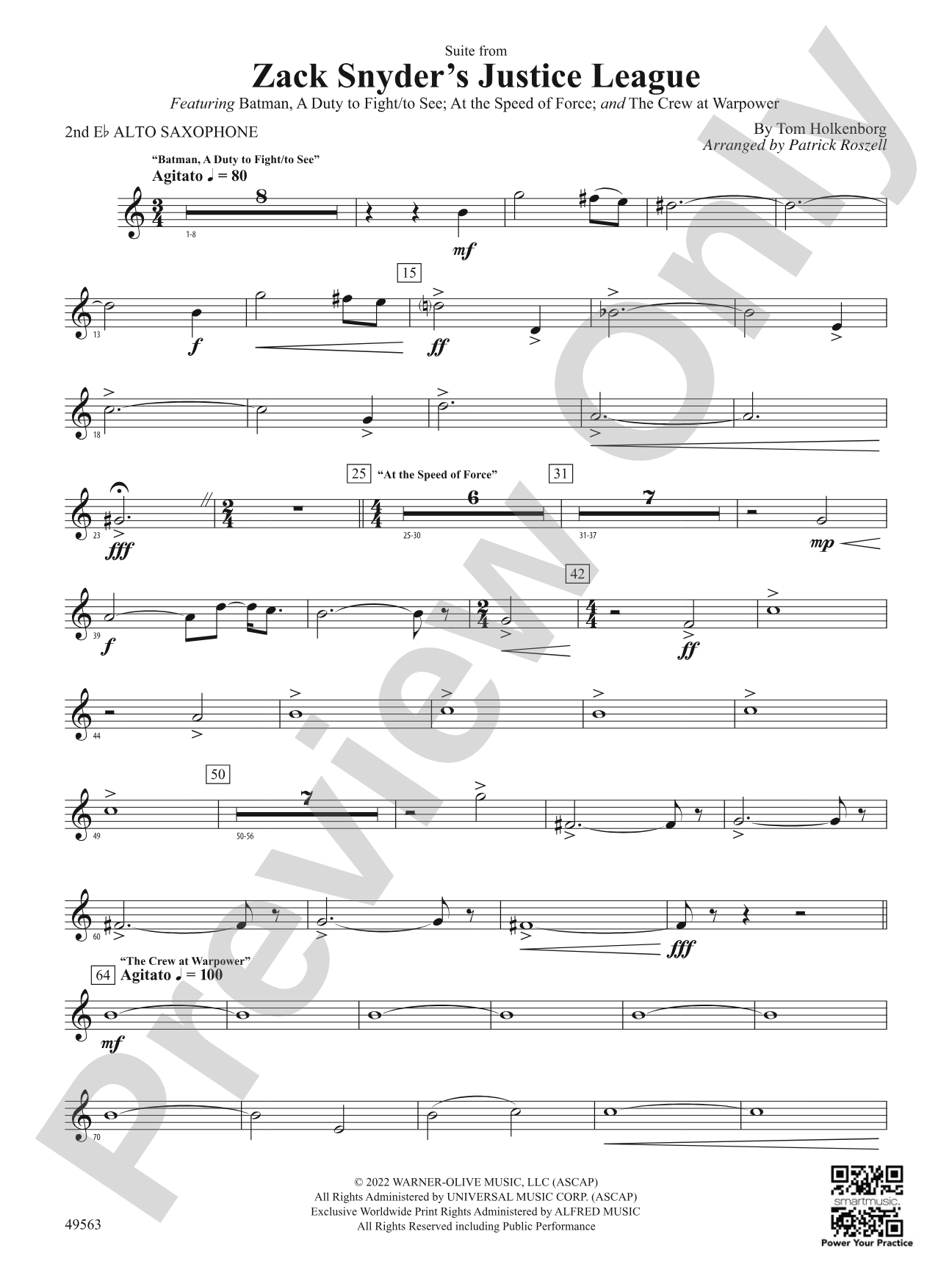
Suite from Zack Snyder's Justice League: 2nd E-flat Alto Saxophone

Featuring: Batman, A Duty to Fight / to See; At the Speed of Force; and The Crew at Warpower

By Tom Holkenborg / arr. Patrick Roszell

Grade: 3.5

Item: 00-PC-0018835_AX2

Digital Download
$3.00
Description
From the blockbuster film Zack Snyder's Justice League comes this intense arrangement by Patrick Roszell featuring themes that are both dramatic and ominous. Featuring dark sonorities and driving rhythms, this work brings all the thrilling action to life. (5:42) This title is available in MakeMusic Cloud.

Suite from Zack Snyder's Justice League: 2nd E-flat Alto Saxophone isn't in MakeMusic Cloud just yet...but it could be. Let us know you'd like to see it, and you'll help shape what comes next. In the meantime, start a free trial and dive into thousands of interactive titles your students can play along with today.

Sample Audio
0:00
0:00
Sample Video
Additional Details
Series: Pop Concert Band
Publisher: Alfred Music
SKU: 00-PC-0018835_AX2

More about this title

About the Composer: Tom Holkenborg

Tom Holkenborg, known professionally as Junkie XL, is a Dutch film composer and music producer whose work spans blockbuster action films, dramatic scores, and electronic music. His film scores for projects like Mad Max: Fury Road, Batman v Superman: Dawn of Justice, and Zack Snyder's Justice League demonstrate his gift for creating propulsive, orchestrally dense music that drives narrative momentum and emotional intensity.

Holkenborg's approach to scoring blends traditional orchestral writing with modern production techniques, creating soundworlds that feel both cinematic and visceral. His work has earned him recognition in Hollywood while maintaining his roots in electronic and experimental music production.

Why we love this

Roszell's arrangement captures the relentless energy and dark orchestral palette of Holkenborg's original score without requiring a full orchestra. The Grade 3.5 scoring makes this accessible to strong high school and developing college bands while preserving the dramatic impact and driving rhythms that make the source material so compelling in the film.

What to expect

Ominous and relentless. The suite moves with the momentum of a superhero action sequence, building tension through layered orchestration and driving rhythms. Dark harmonic colors and propulsive percussion create an atmosphere that feels cinematic and immersive without becoming bombastic.

Who it's for

Concert bands at the Grade 3.5 level seeking contemporary repertoire with genuine dramatic weight. Directors programming film music, action-driven works, or pieces that engage student musicians with modern source material will find this arrangement both accessible and rehearsal-efficient.

How to get the most out of it

  • Balance the dark sonorities between woodwinds and brass carefully; these colors define the suite's character, so resist the urge to let either section overpower the other despite the driving rhythms.
  • Lock the rhythm section into a unified groove from the first rehearsal. The propulsive energy depends on percussion and low brass moving as a single unit, not competing for the tempo.
  • Shape the ominous sections with dynamic restraint in your forte passages. The arrangement gains impact when you save your biggest dynamics for climactic moments rather than playing loudly throughout.

How to use it

Program this alongside other contemporary or film-based works for a concert that speaks to student interests and general audiences. Its 5-minute 42-second duration makes it an ideal anchor piece for a thematic program, or slot it as a high-energy second-half opener to sustain audience engagement.

Skills your students will build

  • Sustaining driving rhythmic figures across an entire ensemble
  • Balancing multiple instrumental colors to create modern orchestral sonority
  • Executing sudden dynamic shifts and accent patterns that support narrative tension
  • Reading articulation markings and style indications specific to film scoring
  • Maintaining focus during extended passages with repetitive rhythmic motifs

You May Also Like