
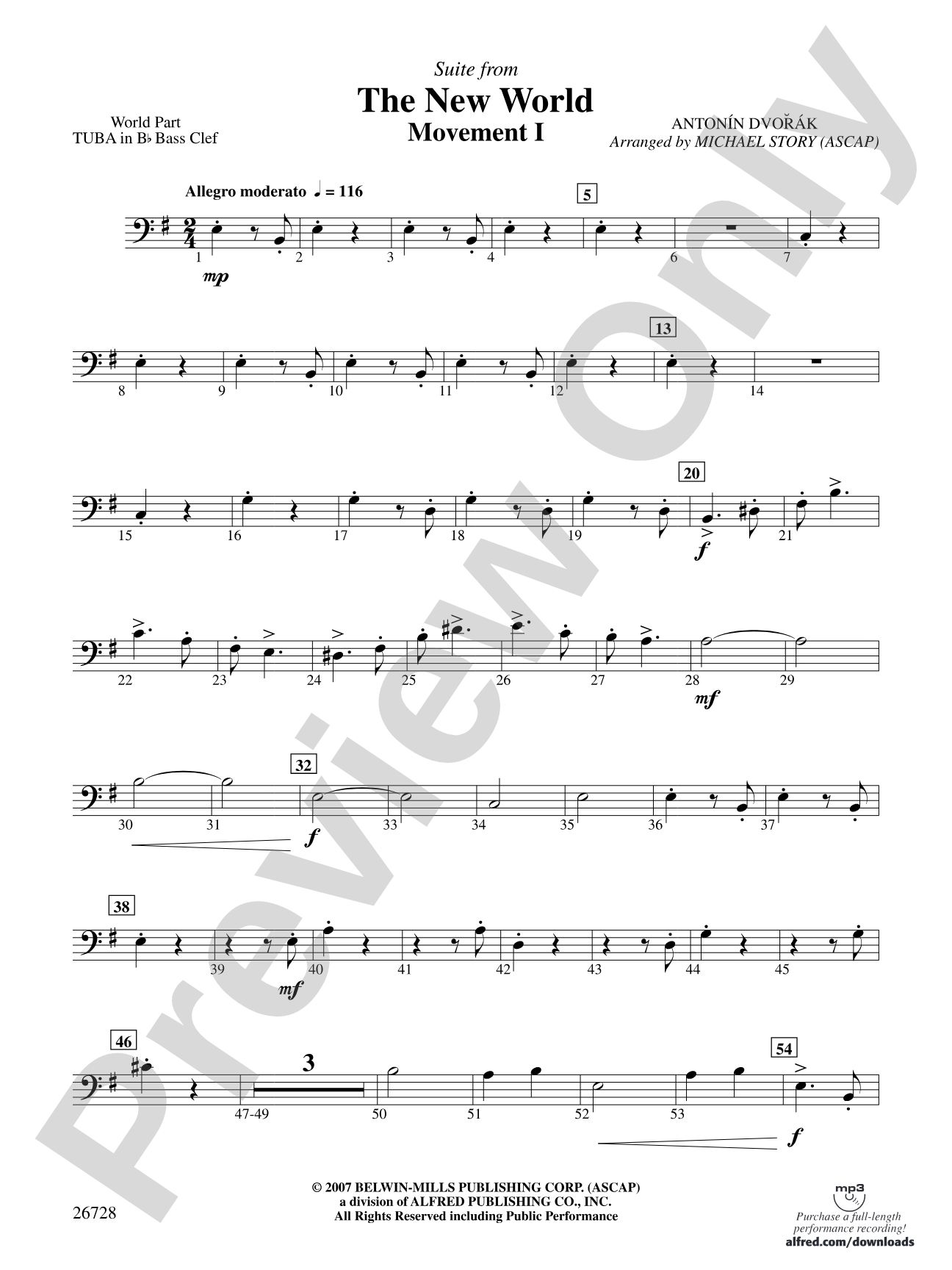
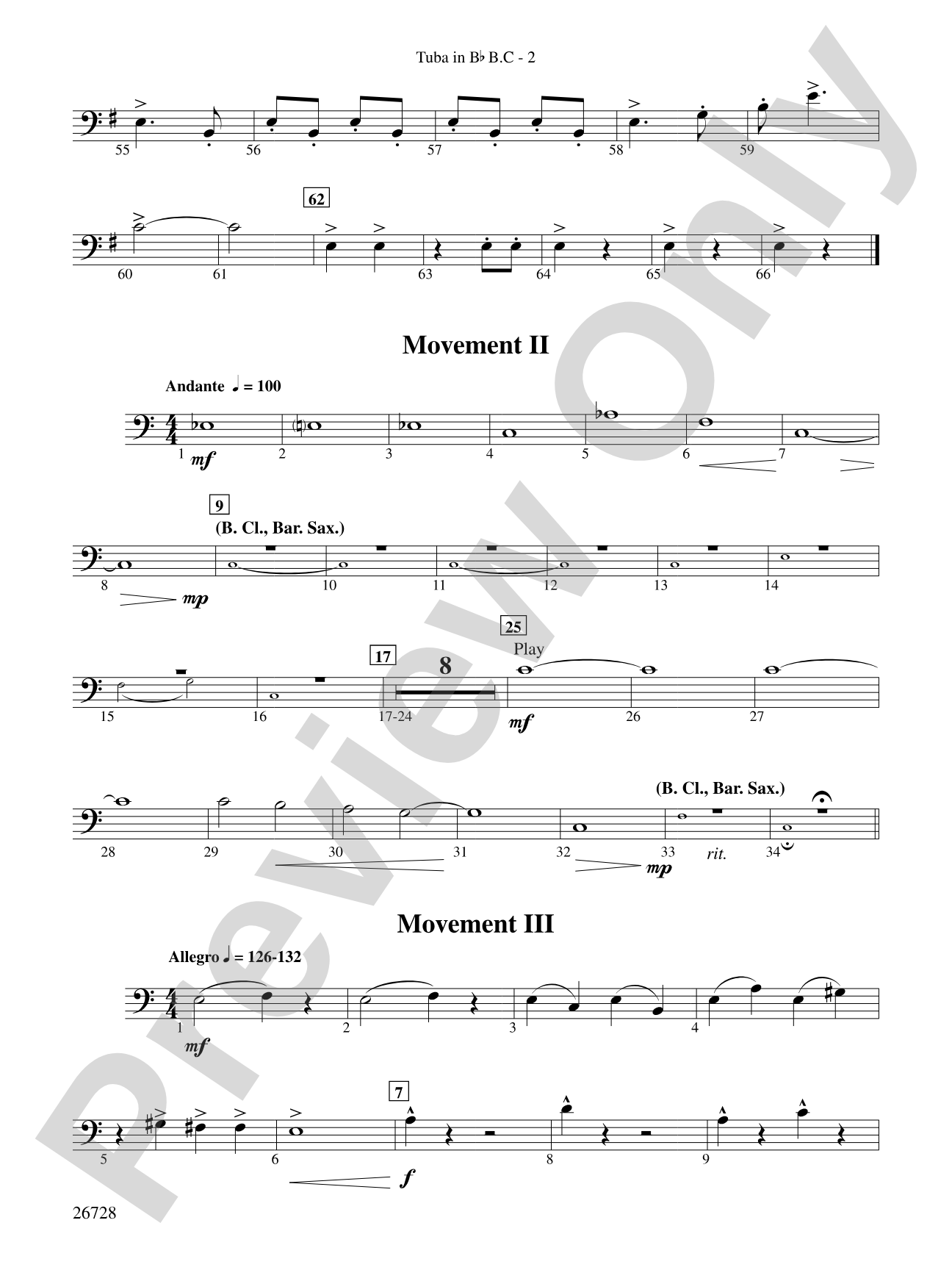
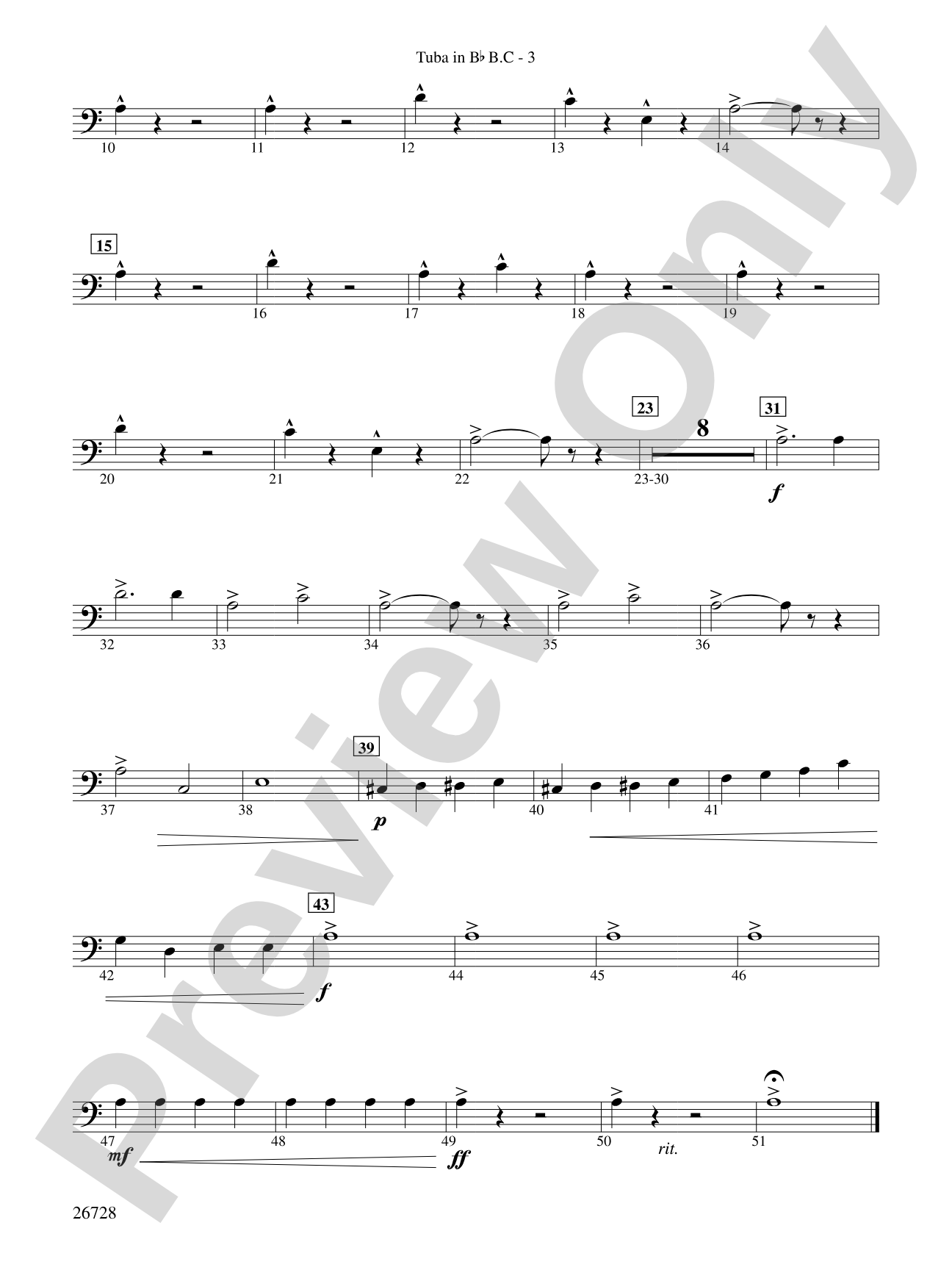

Suite from The New World: (wp) B-flat Tuba B.C.
By Antonín Dvorák / arr. Michael Story
Grade: 2 (Easy)
Item: 00-PC-0001197_wpTBBBC
$3.00
Pickup currently not available
Description
Antonín Dvorák's Symphony No. 9 (from The New World) was composed in the late 1800s and is based on his research about the tonality of Indian and African-American music of the time. Michael Story has scored a suite of three brief movements for young band, encapsulating this major symphony. Suite from The New World will be an epic contribution to developing band literature. This title is available in MakeMusic Cloud.


Don't just read it, hear it, play along with it, and watch your students grow with it. In MakeMusic Cloud, Suite from The New World: (wp) B-flat Tuba B.C. comes alive with professional accompaniment, adjustable tempo, and built-in practice tools that turn solo practice into real progress.
Open in the Player
Jump straight in and assign it today.
Start Your Free Trial
Open this title and explore the full library in minutes.
Sample Audio
1
Audio File
--:--
0:00
0:00
Sample Video
No sample videos found.
Additional Details
Series:
Belwin Young Band
Publisher:
Alfred Music
Page Count:
234
SKU:
00-PC-0001197_wpTBBBC
More about this title
About the Composer: Antonin Dvorák
Antonín Dvořák (1841-1904) stands as one of the most important symphonists of the Romantic era, and his influence on American music runs deeper than most composers realize. Born in Bohemia, Dvořák spent three years in the United States (1892-1895) as director of the National Conservatory of Music in New York, where he immersed himself in the musical traditions he encountered: spirituals, folk melodies, and the emerging American sound. This experience transformed his compositional voice and produced some of his most enduring works, including Symphony No. 9 "From the New World," which synthesized European symphonic structure with the rhythmic and melodic colors of American music.
Dvořák's ability to write idiomatically for different ensembles and skill levels made his music accessible across concert halls and school rehearsal rooms alike. His orchestrations reveal a composer who understood every instrument and valued clarity of texture. For young musicians, his work offers something rare: masterworks that don't condescend, melodies that resonate immediately, and harmonic language sophisticated enough to hold interest across repeated rehearsals.
Why we love this
Michael Story has distilled the symphonic grandeur of Dvořák's New World into three movements that fit comfortably in a young band's hands without sacrificing the work's emotional arc or musical integrity. Grade 2 bands often struggle to find repertoire that feels genuinely important rather than merely educational; this suite delivers both. The arrangement preserves the signature melodies that make this symphony unforgettable while distributing the musical material generously across the ensemble, so every section owns a moment.
What to expect
The suite sweeps across emotional terrain: opening with stately, searching phrases that evoke Dvořák's first impressions of America; moving into the achingly beautiful adagio for which the symphony is famous; and closing with energetic, dance-like rhythms that celebrate the musical traditions Dvořák encountered. Even in condensed form, these movements build a complete musical journey.
Who it's for
Grade 2 concert bands seeking substantive repertoire that introduces students to masterwork symphonic literature. Directors programming concert series, festival competitions, or year-end performances will find this suite both musically rewarding and technically manageable for developing ensembles.
How to get the most out of it
- Shape the famous largo melody (second movement) with subtle dynamic shading rather than dramatic shifts; this tune requires singers, not bombast, even at this grade level.
- Balance inner voices carefully in the faster sections. The energy comes from rhythmic clarity and ensemble cohesion, not from one part overpowering the rest.
- Give yourself and the band time to hear how the American musical influences color Dvořák's harmonic progressions; these moments are the heart of the arrangement and deserve rehearsal focus.
- Use the digital score to spot-check voicings before rehearsal. Story's orchestration is transparent, but visual preparation helps conductors identify where to listen.
How to use it
Program this as a concert anchor that honors the classical repertoire tradition while introducing students to a composer whose work genuinely shaped American musical identity. It works equally well as the centerpiece of a pops concert (pairing nicely with American folk-inspired works) or as the serious core of a formal spring concert balanced with lighter fare.
Skills your students will build
- Sustaining long melodic lines with consistent tone and phrasing
- Balancing harmony across multiple voices without losing clarity
- Recognizing and responding to stylistic markers of the Romantic era
- Reading and interpreting dynamic and articulation markings that shape musical character
- Ensemble listening and adjustment in homophonic and polyphonic textures