
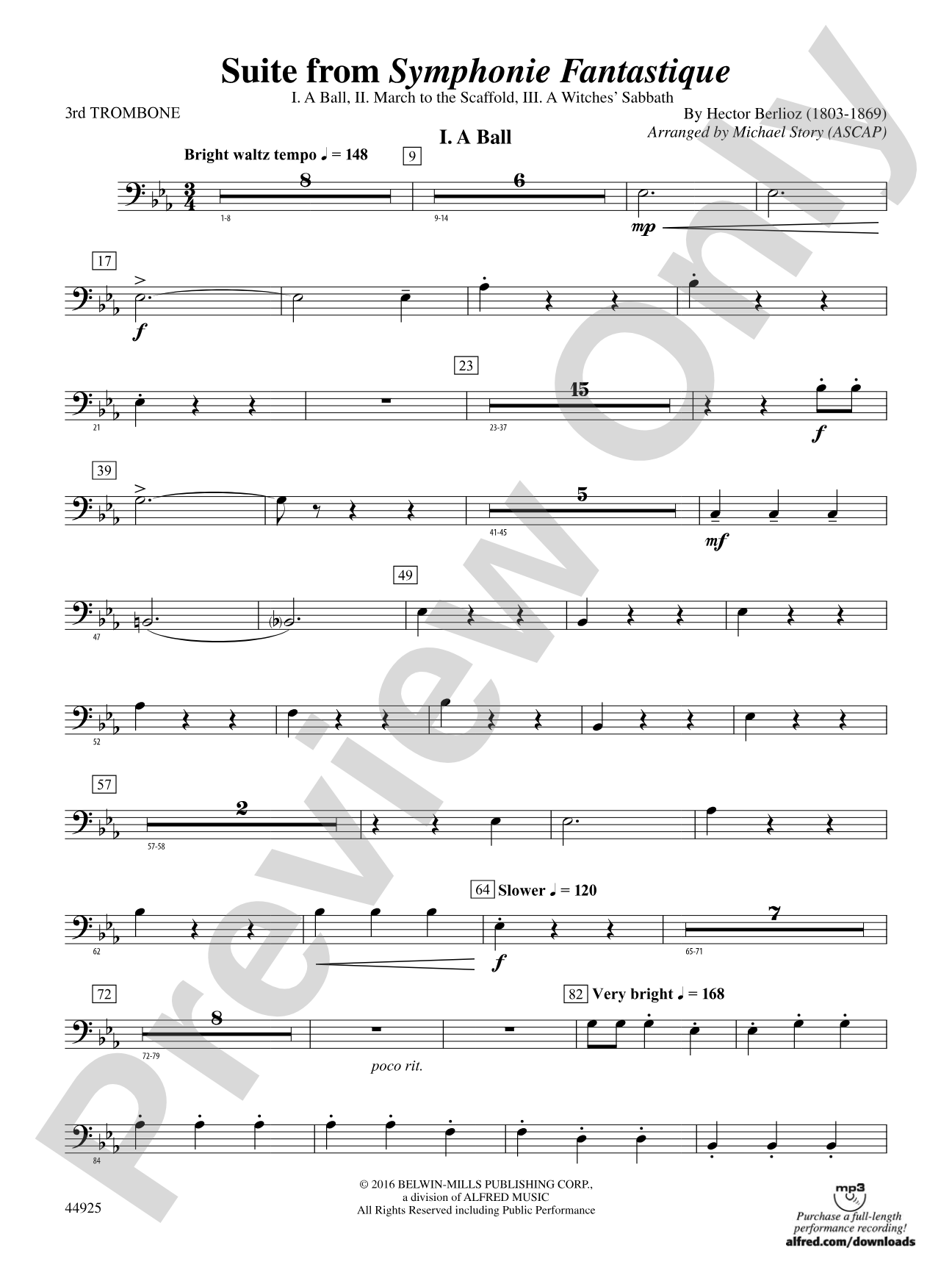

Suite from Symphonie Fantastique: 3rd Trombone
I. A Ball, II. March to the Scaffold, III. A Witches' Sabbath
By Hector Berlioz / arr. Michael Story
Grade: 3 (Medium Easy)
Item: 00-PC-0017415_TN3
$3.00
Pickup currently not available
Description
Including three movements from Berlioz's five-movement Symphonie Fantastique, originally composed in 1830---"A Ball," "March to the Scaffold," and "A Witches' Sabbath"---this masterwork is revered as one of the most vivid program pieces in classical music, and remains to this day one of the most popular works of the Romantic period. Carefully scored for the contemporary concert band. (6:45)


Don't just read it, hear it, play along with it, and watch your students grow with it. In MakeMusic Cloud, Suite from Symphonie Fantastique: 3rd Trombone comes alive with professional accompaniment, adjustable tempo, and built-in practice tools that turn solo practice into real progress.
Open in the Player
Jump straight in and assign it today.
Start Your Free Trial
Open this title and explore the full library in minutes.
Sample Audio
1
Audio File
--:--
0:00
0:00
Sample Video
Additional Details
Series:
Belwin Concert Band
Publisher:
Alfred Music
Page Count:
244
SKU:
00-PC-0017415_TN3
More about this title
About the Composer: Hector Berlioz
Hector Berlioz (1803-1869) was a French composer whose orchestral imagination fundamentally expanded what symphonic writing could express. A pioneer of program music, he used the orchestra as a narrative instrument, assigning musical themes to characters and emotions with unprecedented clarity and dramatic force. His innovations in orchestration influenced generations of composers and remain central to the conductor's toolkit.
Berlioz brought Romantic ideals into instrumental music at a time when many composers still treated the orchestra as a backdrop for voices. His willingness to break classical forms, double unconventional instruments, and write virtuosic passages for every section raised the technical and artistic demands on ensembles. Symphonie Fantastique stands as his masterpiece and one of the nineteenth century's most consequential musical statements.
Why we love this
Michael Story's scoring captures the theatrical brilliance of Berlioz's original without overwhelming a developing band. The three movements selected span the symphony's emotional arc, from elegant ball to grim procession to demonic chaos, giving students a complete dramatic arc within a single work. At Grade 3, this arrangement opens the door to genuine Romantic orchestral literature for bands that might otherwise encounter only simplified versions.
What to expect
The three movements sweep through opulence, dread, and phantasmagoria. "A Ball" sparkles with waltz rhythms and courtly charm; "March to the Scaffold" marches relentlessly toward its grim conclusion with hypnotic inevitability; "A Witches' Sabbath" unleashes orchestral chaos and grotesque joy. The writing crackles with character and color.
Who it's for
Band directors working with solid Grade 3 ensembles who want to program a work with genuine artistic substance and historical significance. Students benefit from encountering a canonical Romantic masterpiece written at their technical level, building familiarity with program music and the narrative possibilities of orchestration.
How to get the most out of it
- Lock the idée fixe (recurring theme representing the beloved) into muscle memory across all sections so it projects consistently across its many appearances and transformations throughout the movements.
- Balance the woodwind soloists in "A Ball" against the full ensemble; these melodies need to sing without drowning out the harmonic support beneath them.
- Shape the march rhythm in "March to the Scaffold" with subtle weight on beat one, allowing the inevitability of the progression to build naturally rather than forcing the drama.
- Treat the percussion section in "A Witches' Sabbath" as active ensemble members, not timekeepers. The bells, chimes, and drums carry melodic weight and atmospheric color essential to the movement's visceral impact.
How to use it
Program this as the centerpiece of a concert exploring how composers tell stories through instruments. It pairs well with shorter contemporary works bookending the program or with other program music from the Romantic era. The dramatic arc and concert appeal make it equally effective for festival adjudication.
Skills your students will build
- Tracking recurring themes and motifs through multiple transformations
- Balancing soloists and principal voices against harmonic accompaniment
- Reading and executing the extended percussion requirements of Romantic orchestration
- Shaping long musical phrases with direction and narrative intention
- Understanding program music and the relationship between musical gesture and dramatic meaning