
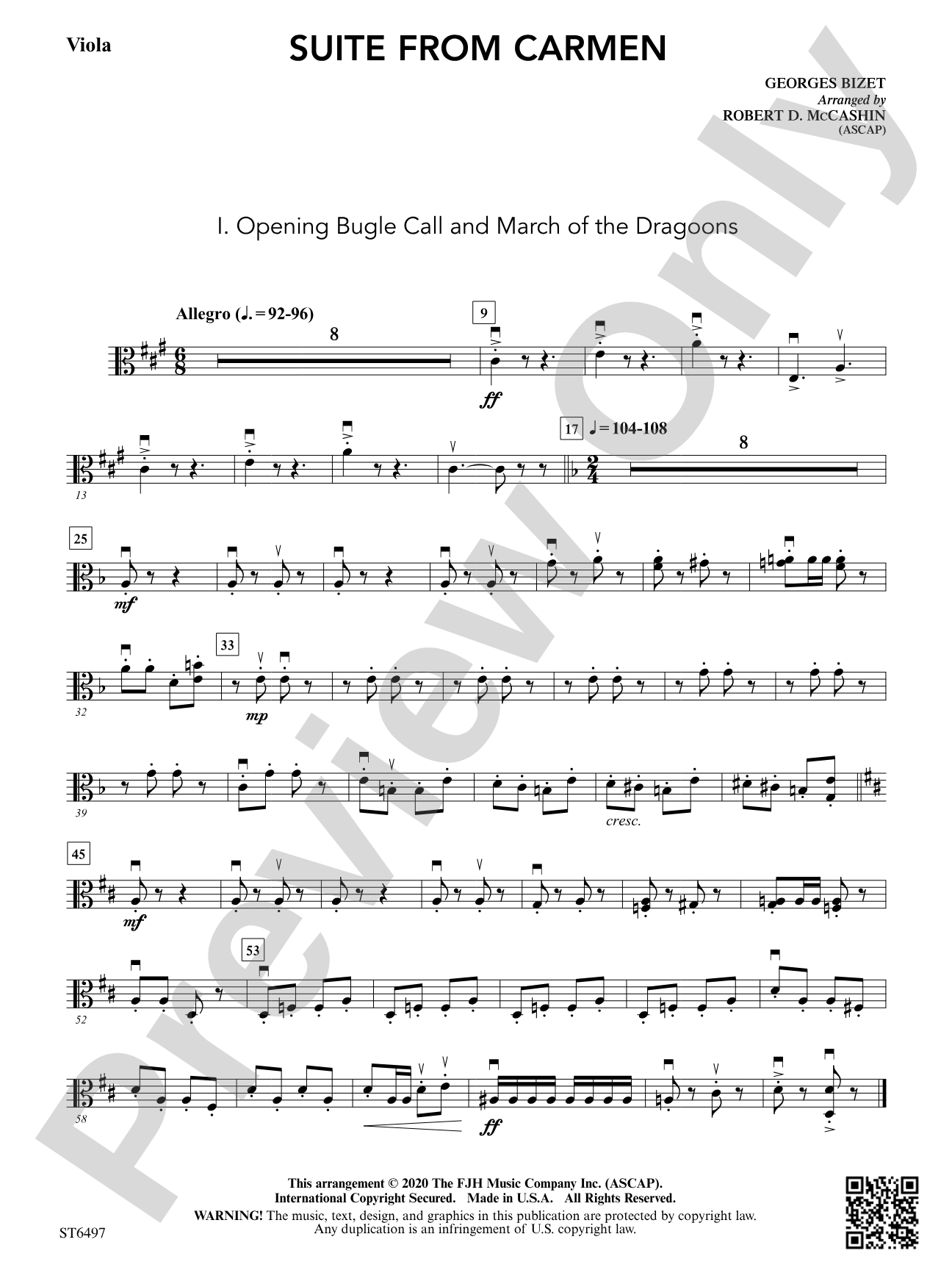

Suite from Carmen: Viola
By George Bizet / arr. Robert D. McCashin
Grade: 3.5
Item: 98-PC-DST6497_VA1
$7.00
Pickup currently not available
Description
This fantastic and playable suite of themes from the popular opera Carmen includes the Opening Bugle Call and March of the Dragoons, the famous Habanera, the beautiful Entr'acte to Act III - Intermezzo, and the soaring, spirited music of the Final Act. A great way to showcase your students playing some of the most famous and enjoyable opera music in the repertoire!


Suite from Carmen: Viola isn't in MakeMusic Cloud just yet...but it could be. Let us know you'd like to see it, and you'll help shape what comes next. In the meantime, start a free trial and dive into thousands of interactive titles your students can play along with today.
Request This Title
Tell us you want it.
Start Your Free Trial
Explore everything that's ready to play right now.
Sample Audio
1
Audio File
--:--
0:00
0:00
Sample Video
Additional Details
Series:
FJH String Orchestra
Publisher:
The FJH Music Company, Inc.
SKU:
98-PC-DST6497_VA1
More about this title
About the Composer: George Bizet
George Bizet (1838-1875) composed Carmen in 1875, creating one of the most performed operas in the world. His gift for memorable melody and orchestral color transformed opera composition, and Carmen remains a cornerstone of string orchestra repertoire because its themes are instantly recognizable, dramatically rich, and genuinely enjoyable for young musicians to play.
Bizet's career was brief but consequential. He won the prestigious Prix de Rome and composed across multiple genres, yet Carmen overshadows all other works in the public imagination. The opera's enduring appeal lies in its accessibility: the music feels direct, the themes sing naturally on any instrument, and the dramatic tension translates to the concert stage without requiring singers or staging.
Why we love this
This suite captures the essential identity of Carmen without requiring the full four-act commitment. Students grasp why this music matters immediately because every excerpt is musically substantive and dramatically coherent on its own. The arrangement respects Bizet's orchestration while sitting comfortably in the intermediate string orchestra range, making it an ideal choice for building confidence in musicians ready to tackle genuine operatic material.
What to expect
Stepping into Carmen feels like entering a world of Mediterranean passion and dramatic certainty. The music swings between pageantry and intimacy, from the ceremonial swagger of the dragoons to the sultry pull of the Habanera. Each excerpt breathes with personality and cultural flavor, making the orchestra feel like it has stumbled into an actual operatic moment.
Who it's for
This suite works for advanced intermediate string orchestras (grades 3 to 4) with competent intonation and rhythmic independence. Players should read comfortably in multiple keys and navigate the occasional position shift without extensive rehearsal; the music prioritizes melody over technical display.
How to get the most out of it
- Shape the Opening Bugle Call with clarity and restraint; let the famous melody emerge as the center of attention rather than overshadowing it with aggressive string tone.
- Approach the Habanera with rhythmic precision and a steady pulse. The Latin rhythm is the harmonic and emotional anchor of this section, so lock the ensemble's sense of timing before adding expressive nuance.
- Balance the dialogue between melodic and accompaniment voices in the Entr'acte. Conductors often spotlight the principal voice, but ensemble texture suffers if accompanying parts play too quietly; audibility creates musical coherence.
- In the Final Act music, resist the urge to rush. The spirited character does not require tempo inflation; rhythmic accuracy and clean articulation convey energy more effectively than speed.
How to use it
Program this suite for a concert that celebrates familiar masterworks or as a bridge between purely orchestral repertoire and full opera experiences. It pairs well with lighter classical works and sits naturally on a pops or family concert. The collected excerpts create a satisfying narrative arc, so the suite functions as a complete concert-length selection rather than a single movement.
Skills your students will build
- Intonation across multiple keys and harmonic progressions
- Rhythmic precision in Latin idioms (habanera rhythm)
- Melodic phrasing and long-line playing across multiple sections
- Ensemble balance between principal voices and accompaniment
- Dynamic control and expressive communication of contrasting character within a single work