
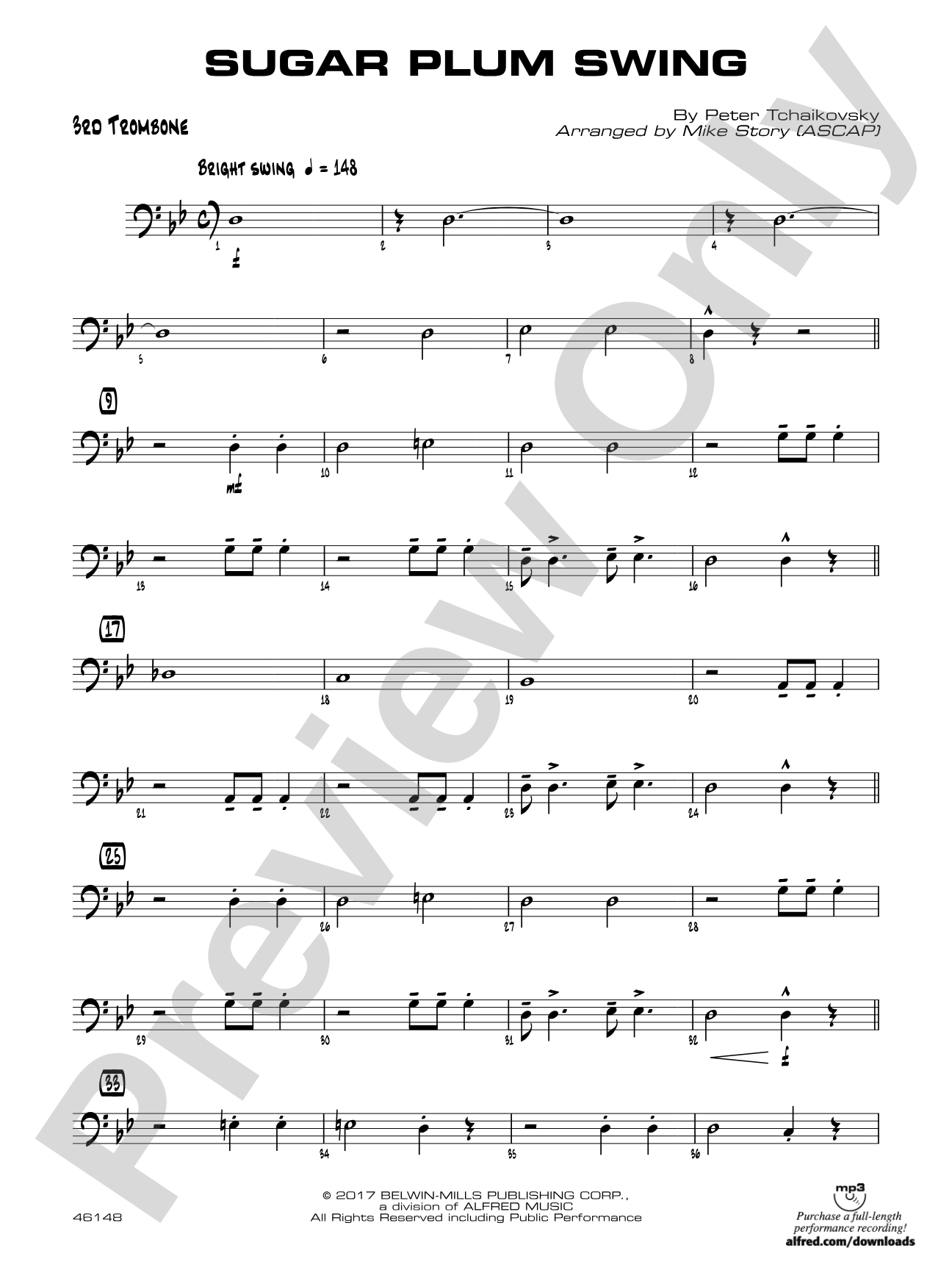

Sugar Plum Swing: 3rd Trombone
By Peter Tchaikovsky / arr. Mike Story
Grade: 1 (Easy)
Item: 00-PC-0017740_TN3
$3.00
Pickup currently not available
Description
Tchaikovsky's holiday classic made very accessible for young players. Easy success with this wonderful swing chart played around 148 BPM that includes a written tenor sax solo, well-notated rhythm section parts, easy ranges, and all sections are involved. Simply an excellent holiday arrangement! (3:00)


Don't just read it, hear it, play along with it, and watch your students grow with it. In MakeMusic Cloud, Sugar Plum Swing: 3rd Trombone comes alive with professional accompaniment, adjustable tempo, and built-in practice tools that turn solo practice into real progress.
Open in the Player
Jump straight in and assign it today.
Start Your Free Trial
Open this title and explore the full library in minutes.
Sample Audio
1
Audio File
--:--
0:00
0:00
Sample Video
Additional Details
Series:
First Year Charts for Jazz Ensemble
Publisher:
Alfred Music
Page Count:
86
SKU:
00-PC-0017740_TN3
More about this title
About the Composer: Peter Tchaikovsky
Peter Ilyich Tchaikovsky (1840-1893) was a Russian composer whose gift for melody and orchestration made him one of the most performed classical composers worldwide. His ballets, symphonies, and concertos are foundational to the classical canon, and his work remains central to music education because of its emotional directness and structural clarity.
Tchaikovsky's "The Nutcracker" ballet, from which "Dance of the Sugar Plum Fairy" originates, premiered in 1892 and has become inseparable from winter holidays in concert halls everywhere. The piece's elegant simplicity and instantly recognizable theme make it ideal for educational arrangements across all levels and ensembles.
Why we love this
This chart delivers genuine Tchaikovsky magic without compromising musicality for accessibility. Grade 1 jazz arrangements often feel like training wheels, but Mike Story's writing keeps the harmonic sophistication and rhythmic vitality intact while keeping ranges comfortable and parts equally rewarding across the ensemble.
What to expect
Elegant and bright, with a playful bounce that respects Tchaikovsky's original grace while embracing the easy-going charm of swing. The familiar melody gives students something to hold onto, while the rhythm section and harmony around it create a sense of ensemble participation that makes everyone feel part of something refined.
Who it's for
This is built for jazz ensembles in their first year of jazz study, whether that's middle school beginners or high school students new to the idiom. Directors looking for a holiday piece that teaches swing feel, section cohesion, and swing style phrasing without overwhelming young players will find this instantly useful.
How to get the most out of it
- Establish the swing feel early in sectionals by locking the rhythm section into a relaxed shuffle. The 148 BPM is brisk enough that rushing will blur the groove, so anchor the hi-hat and bass before rehearsing the front line.
- Feature the written tenor solo generously in sound checks and run-throughs so the soloist has ownership of that moment. Even at Grade 1, soloists benefit from knowing they're heard as the centerpiece, not just another voice.
- Balance the horns to let the melody breathe. Tchaikovsky's tune is strong enough to carry the piece, so resist the instinct to swell unnecessarily. Let the arrangement do the work.
- Layer in the rhythm section gradually during ensemble rehearsals. Start with melody and comping chords, then add walking bass, then drums last. This builds clarity and prevents the rhythm section from overpowering younger players.
How to use it
Program this on a winter concert or holiday assembly where you need a crowd-pleasing classical reference that your newer jazz students can execute with confidence. It pairs well after a straight-ahead jazz standard and before a heavier Grade 2 chart, allowing you to show growth and versatility in a single set.
Skills your students will build
- Swing feel and articulation in a jazz context
- Reading and executing lead sheets with written melody and chord symbols
- Balancing ensemble sound with individualized section responsibility
- Interpreting a well-known classical theme through a jazz lens
- Solo phrasing and improvisation (tenor saxophone)
- Rhythm section coordination (walking bass, comping, drum groove)