
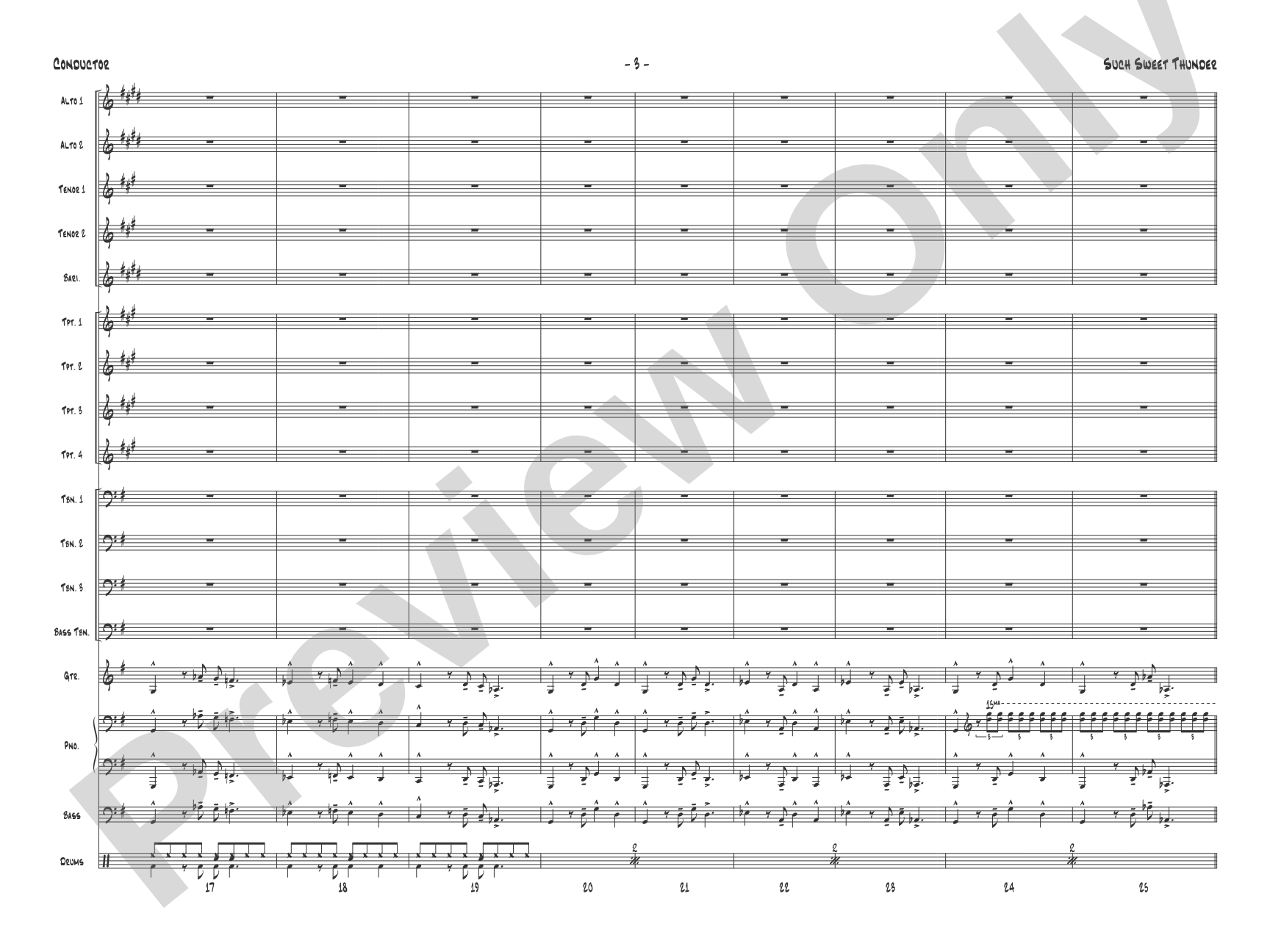
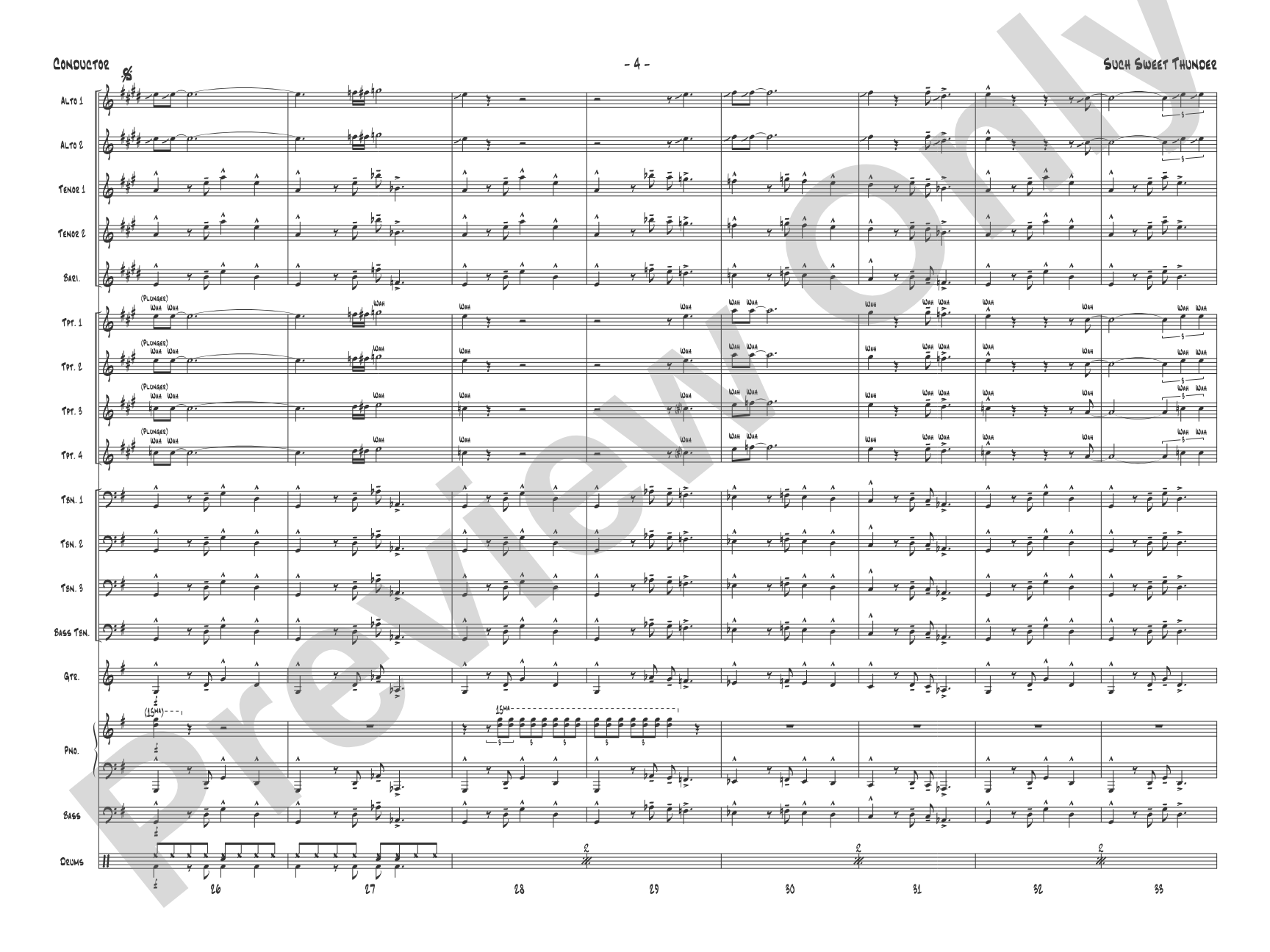
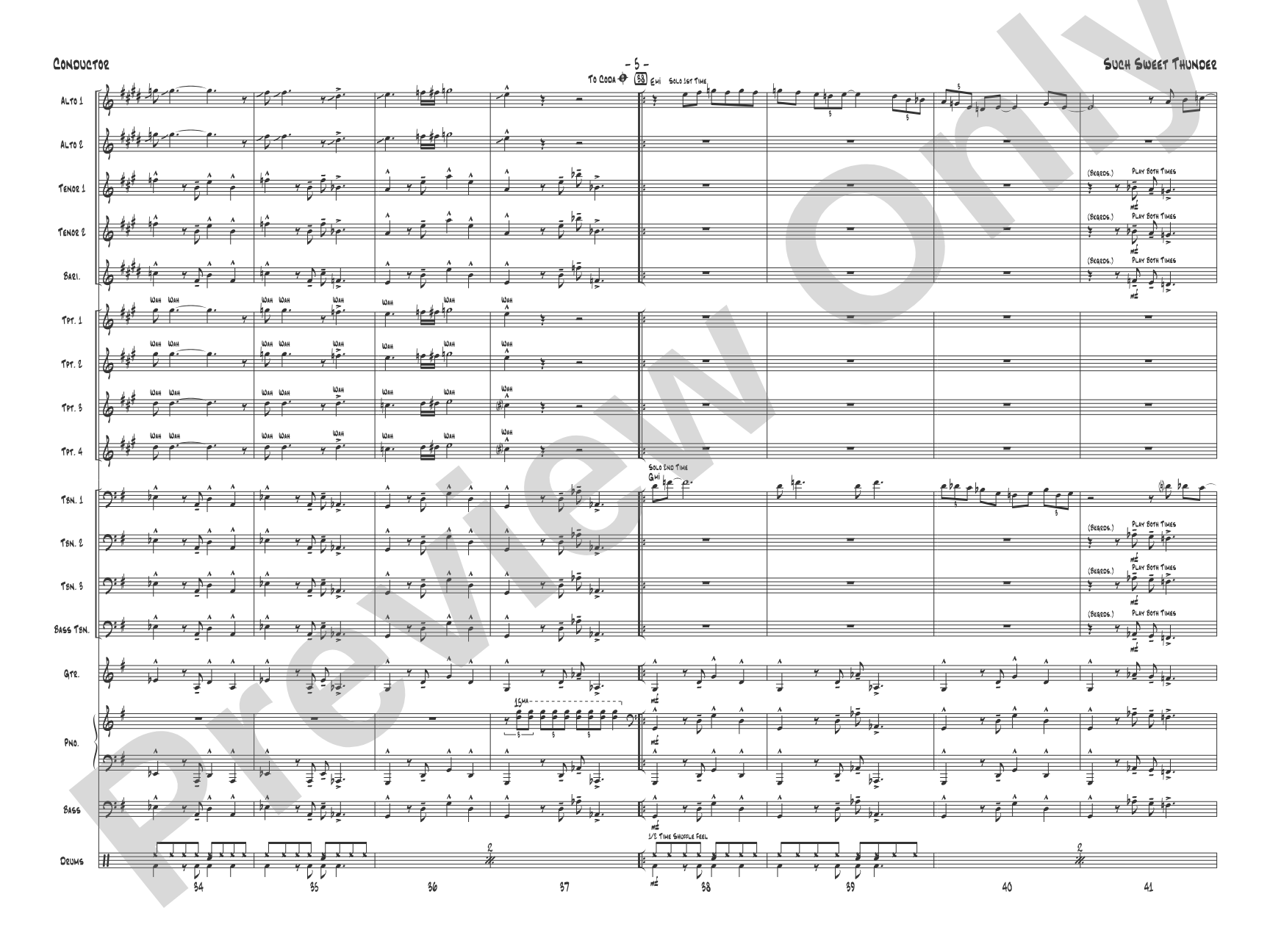
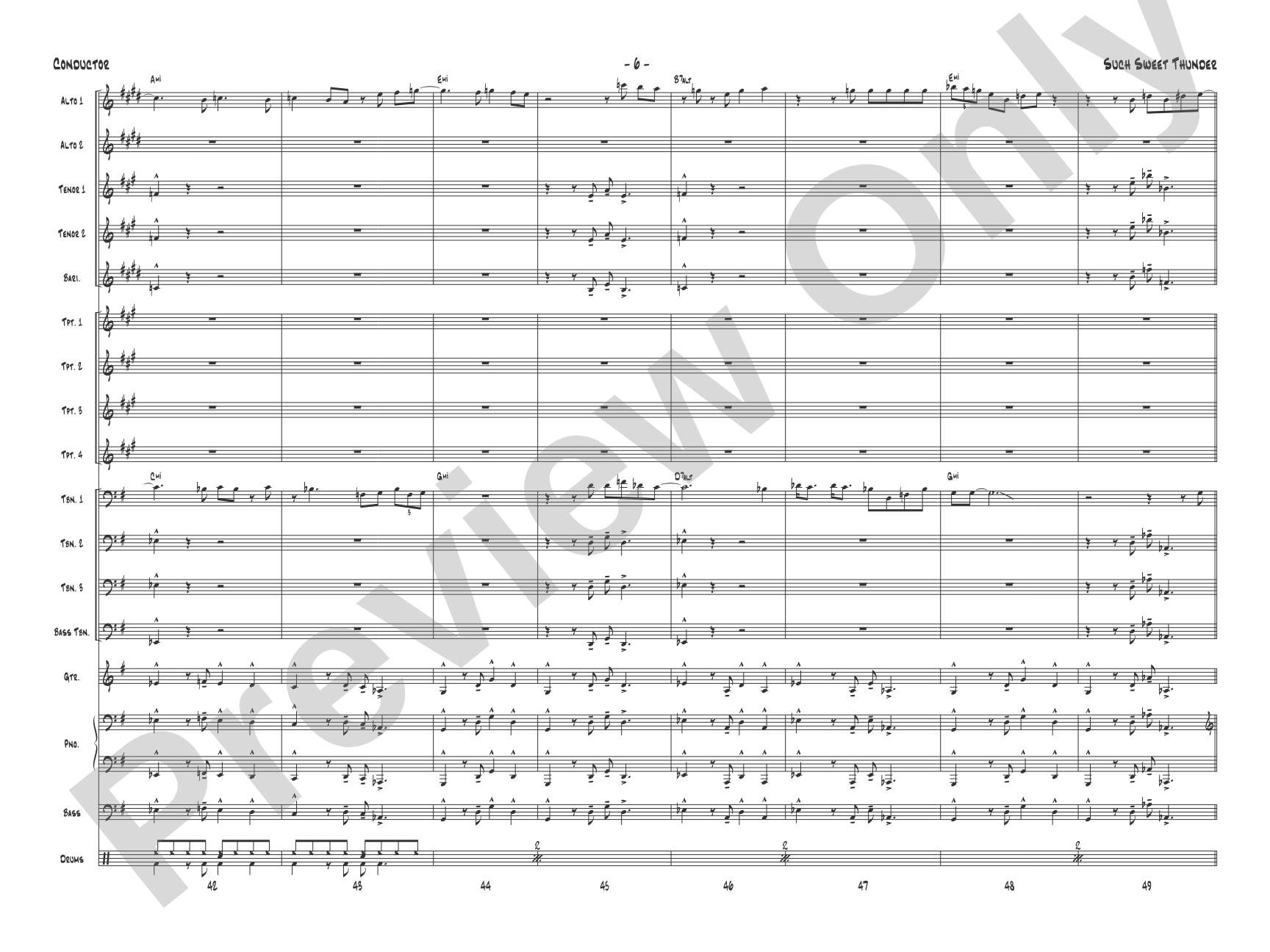
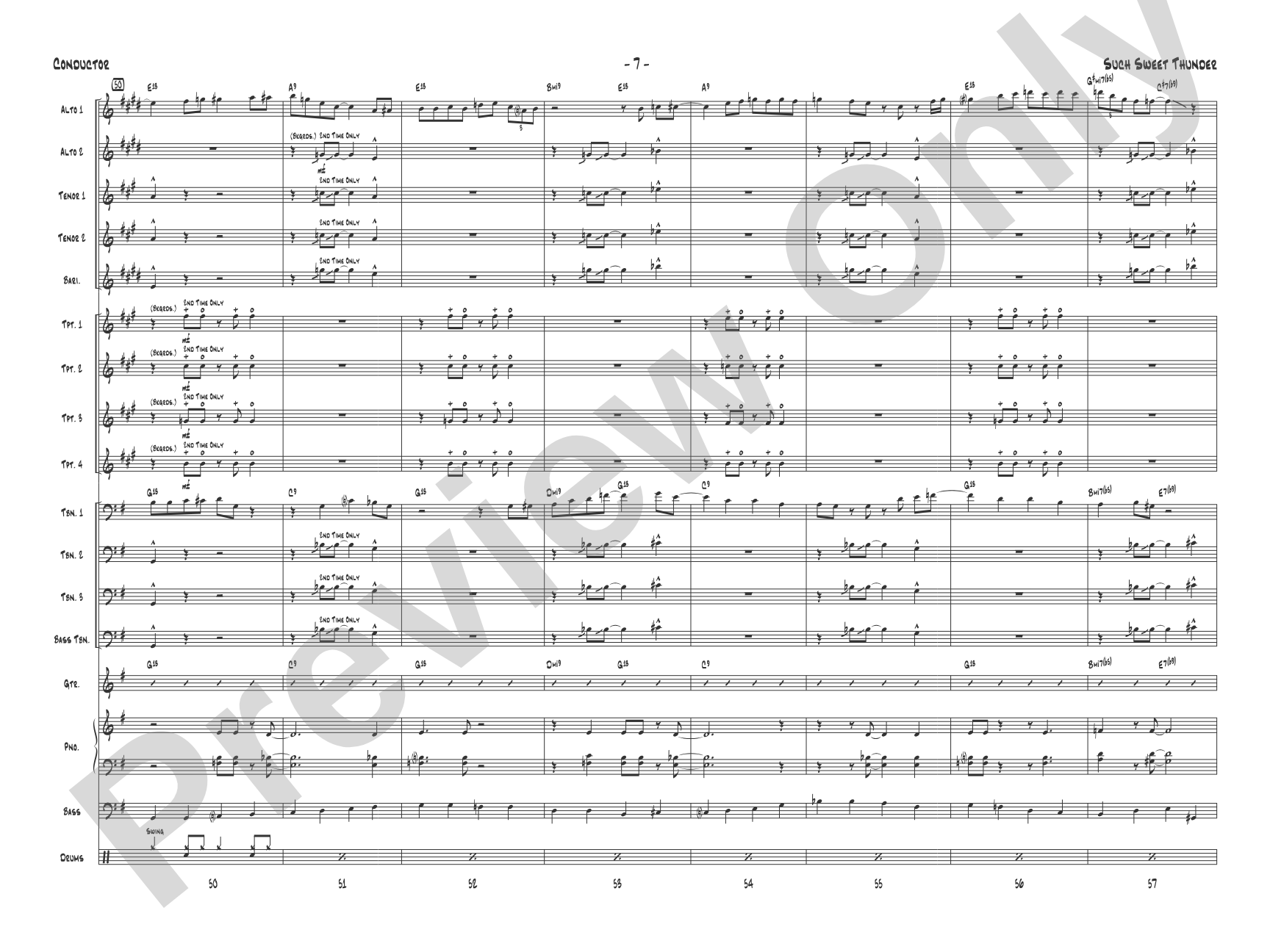
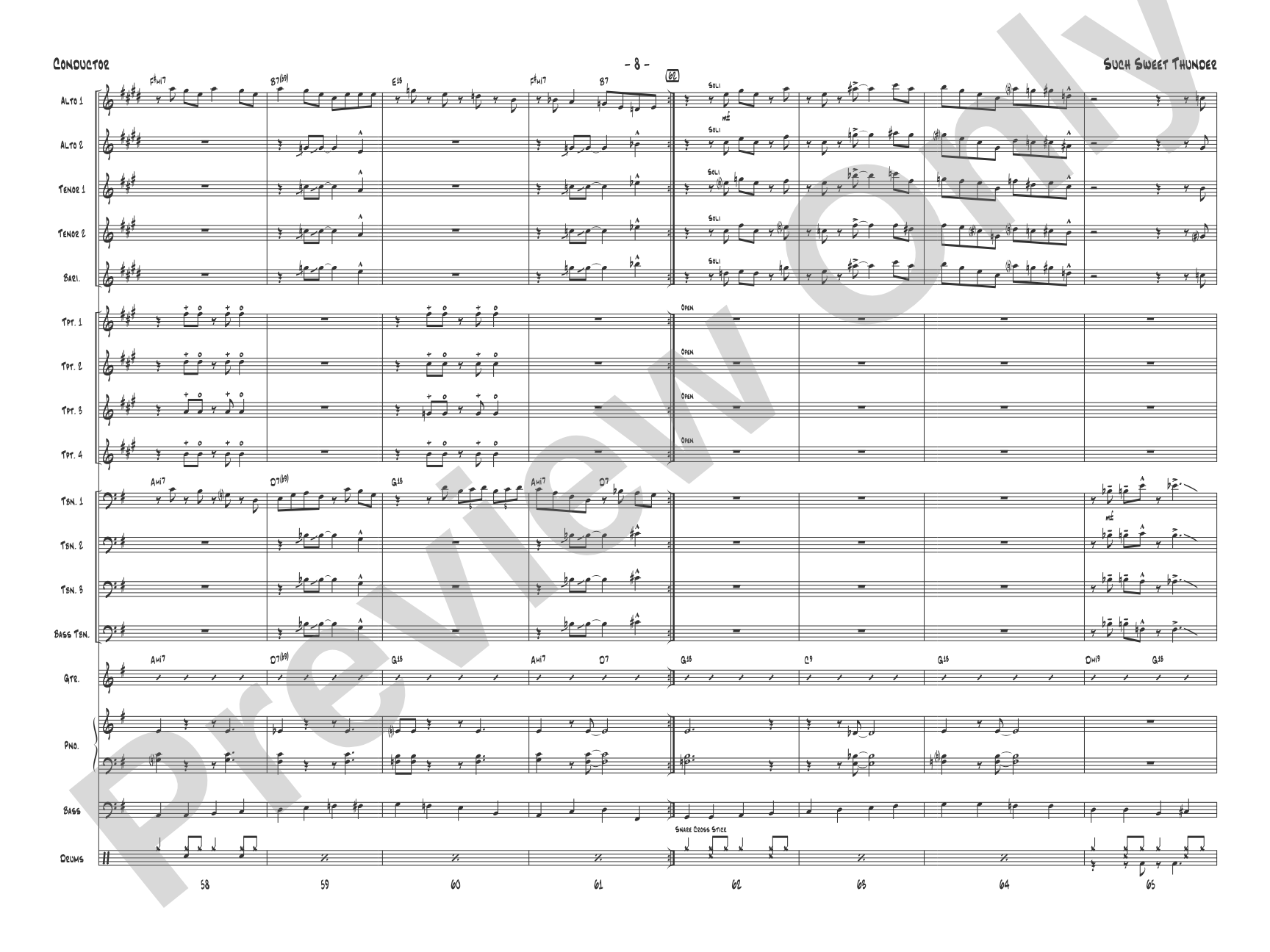
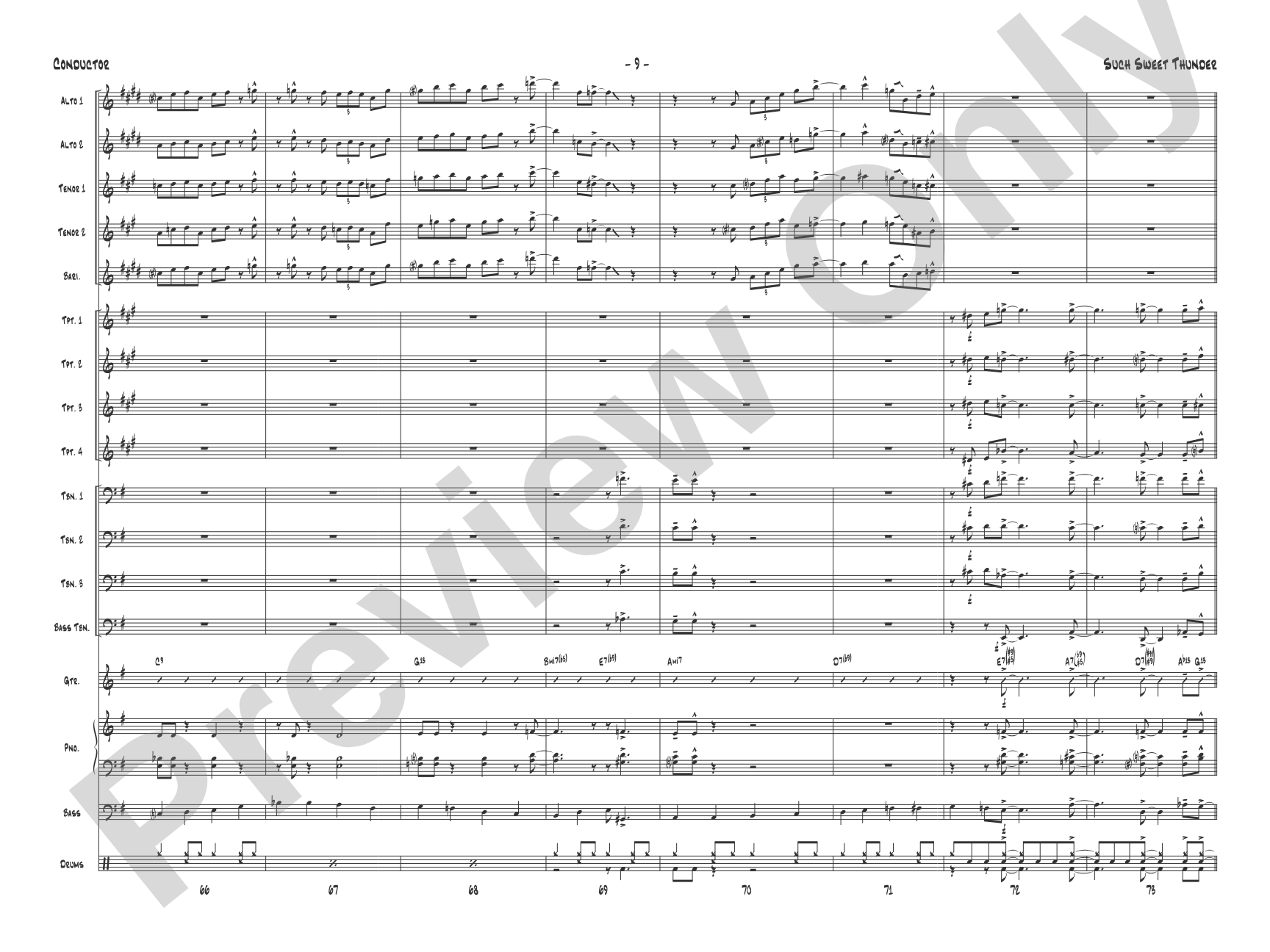
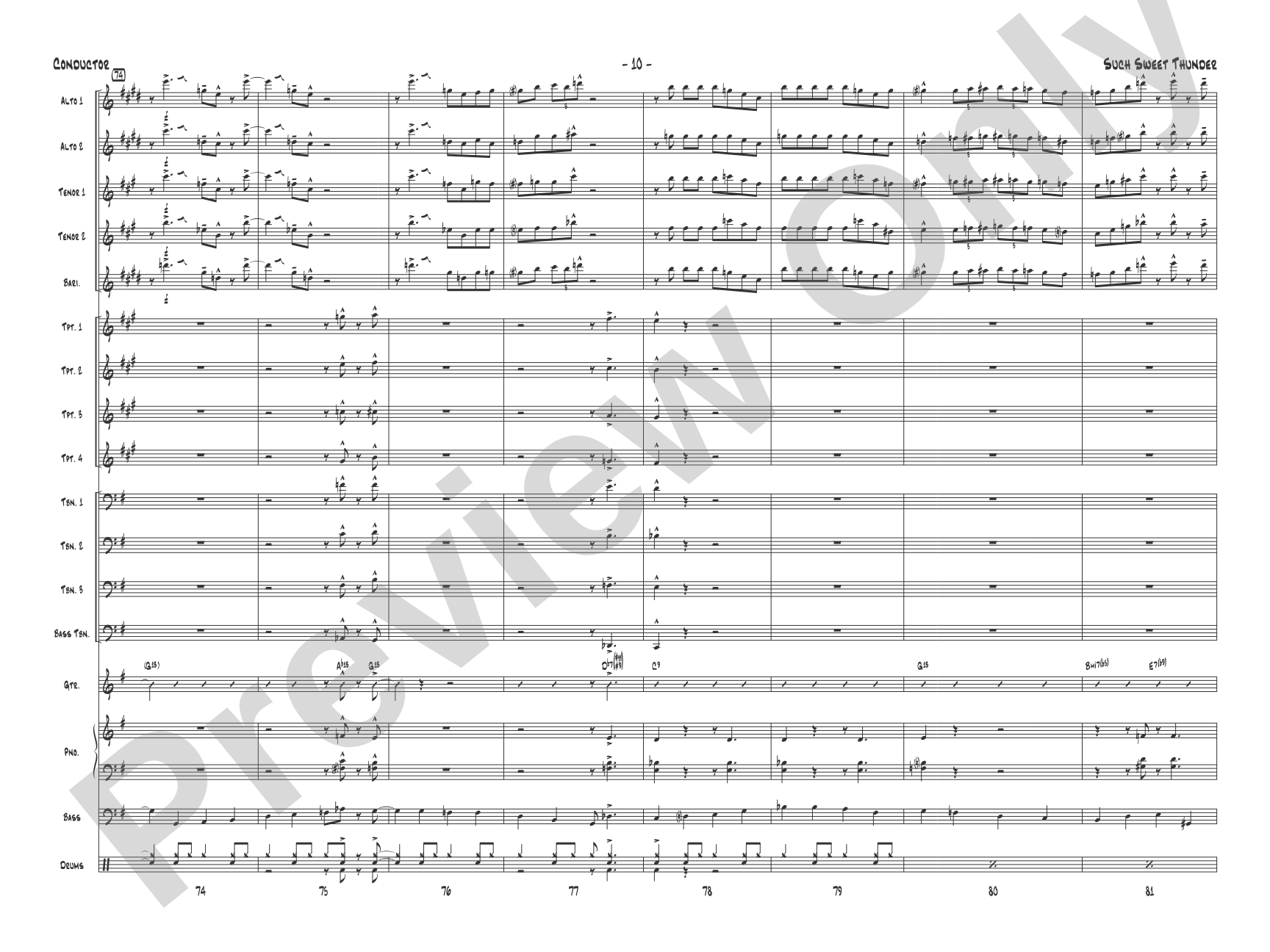
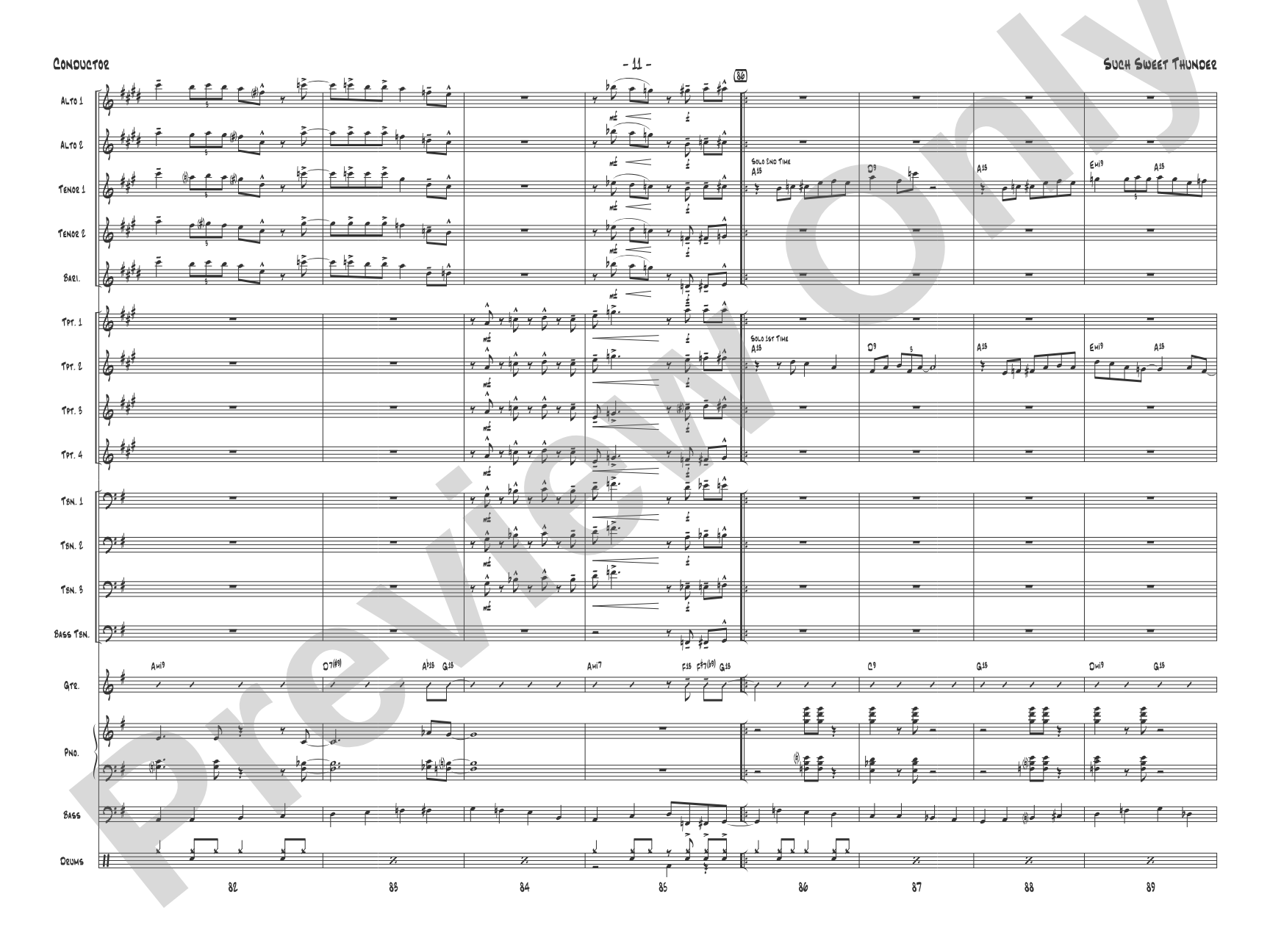
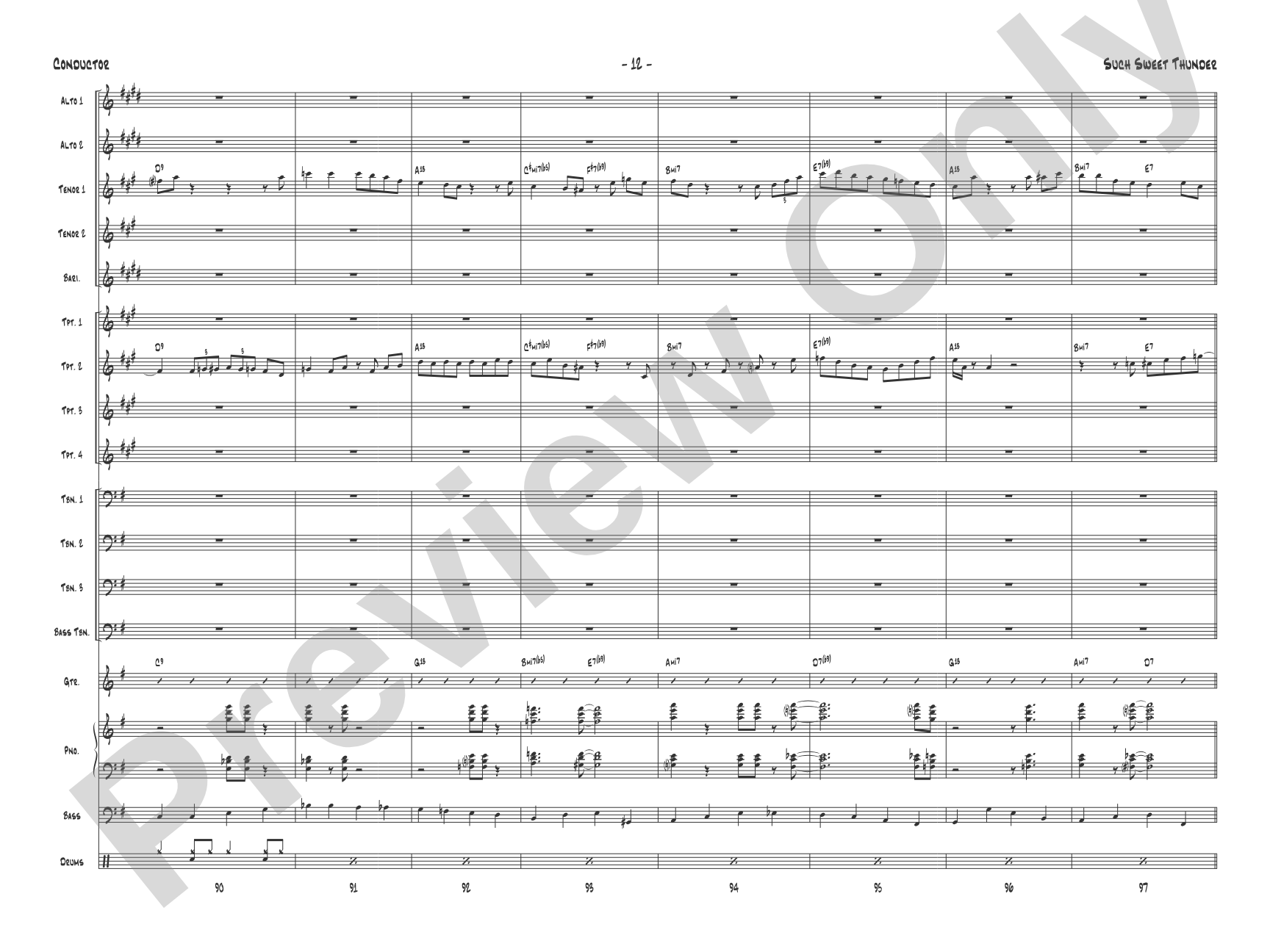
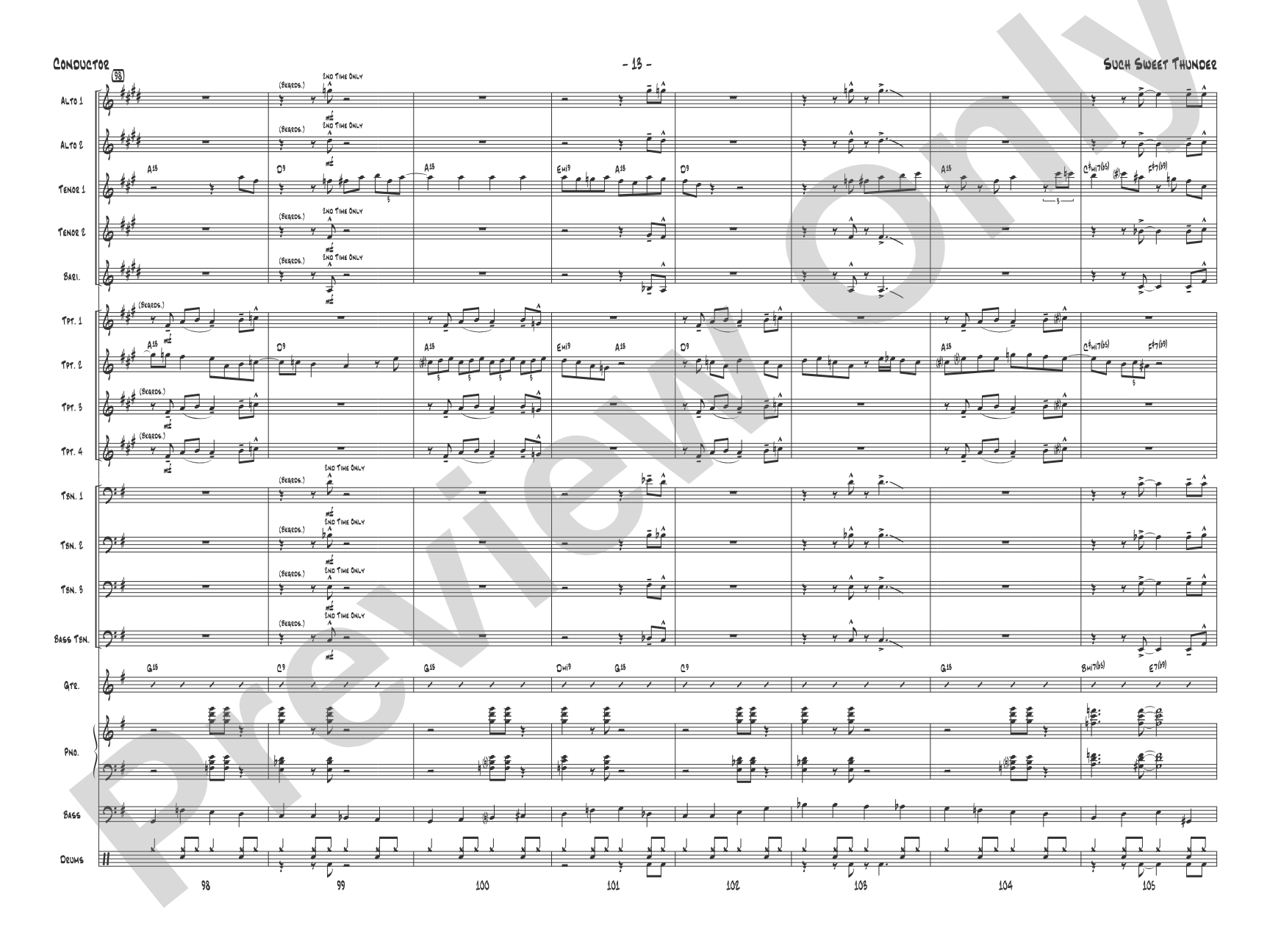
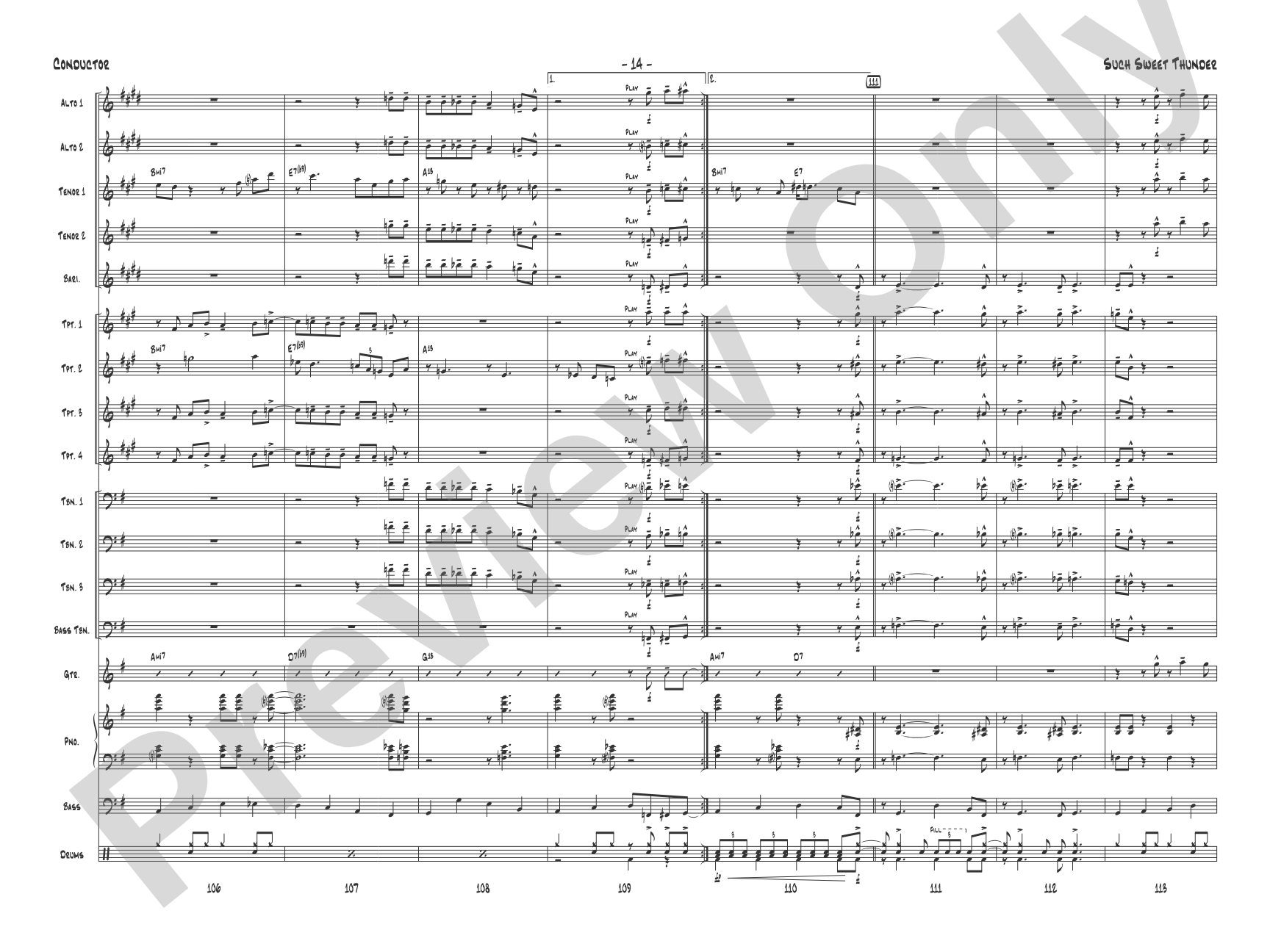
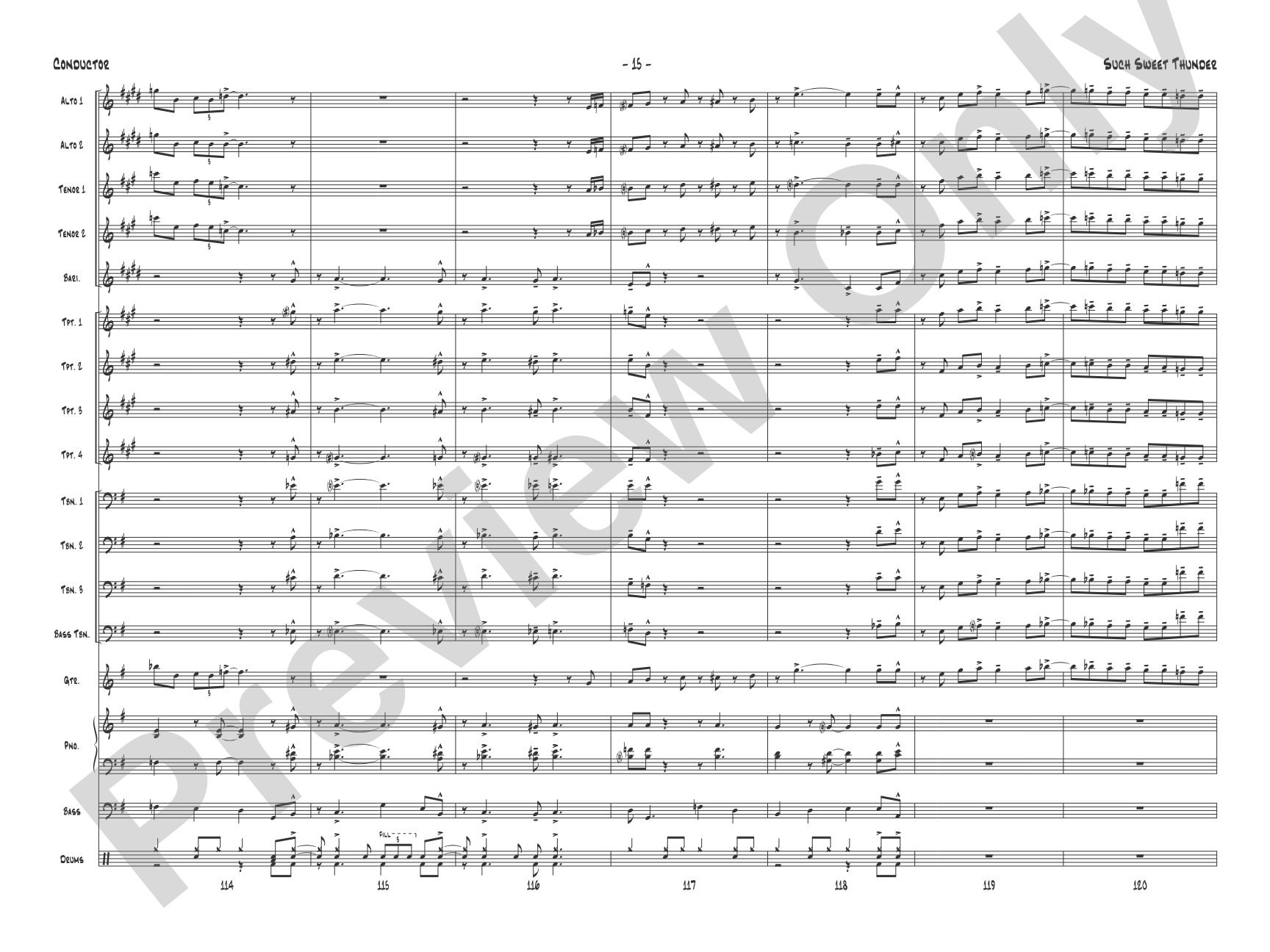
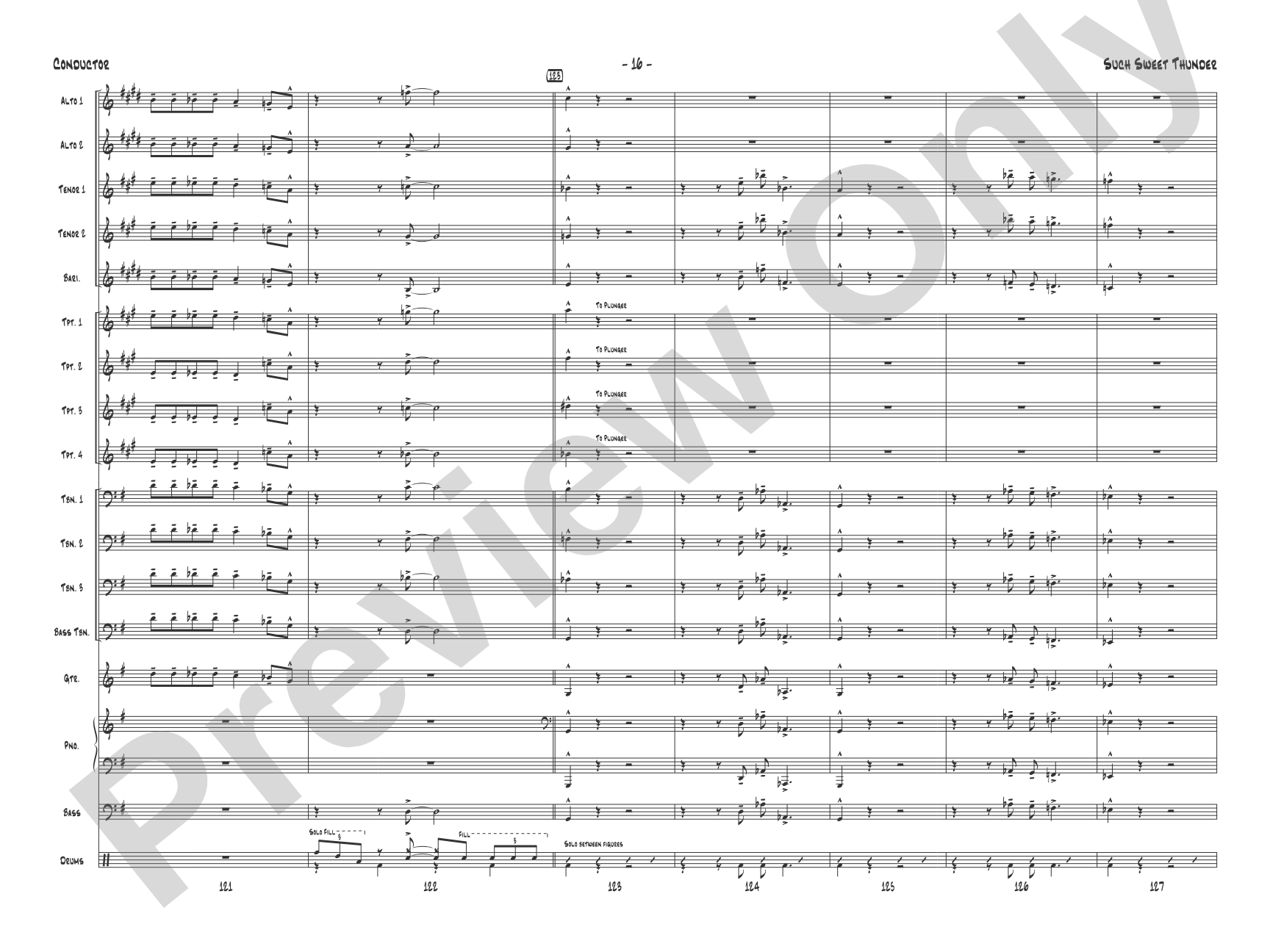
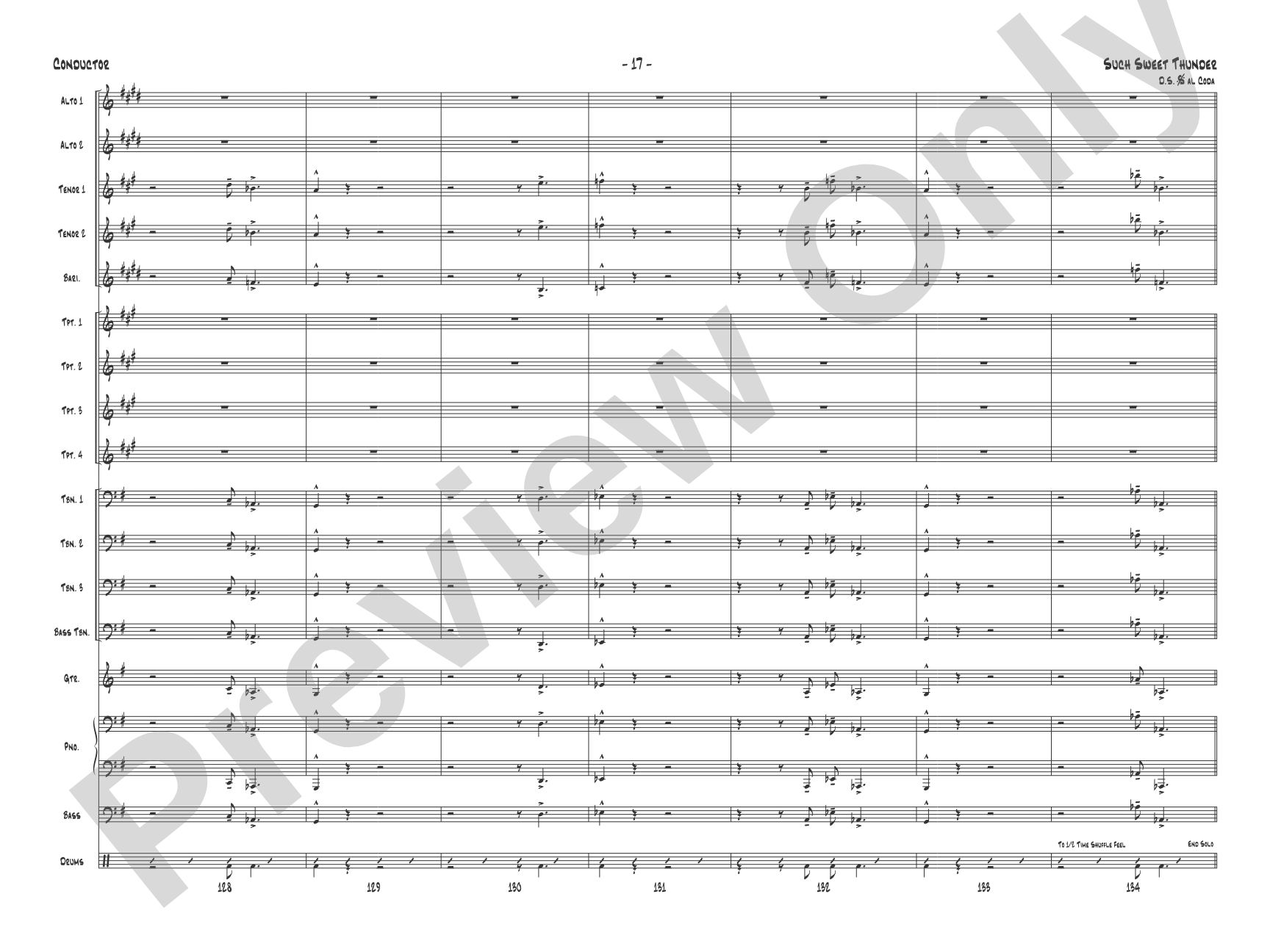
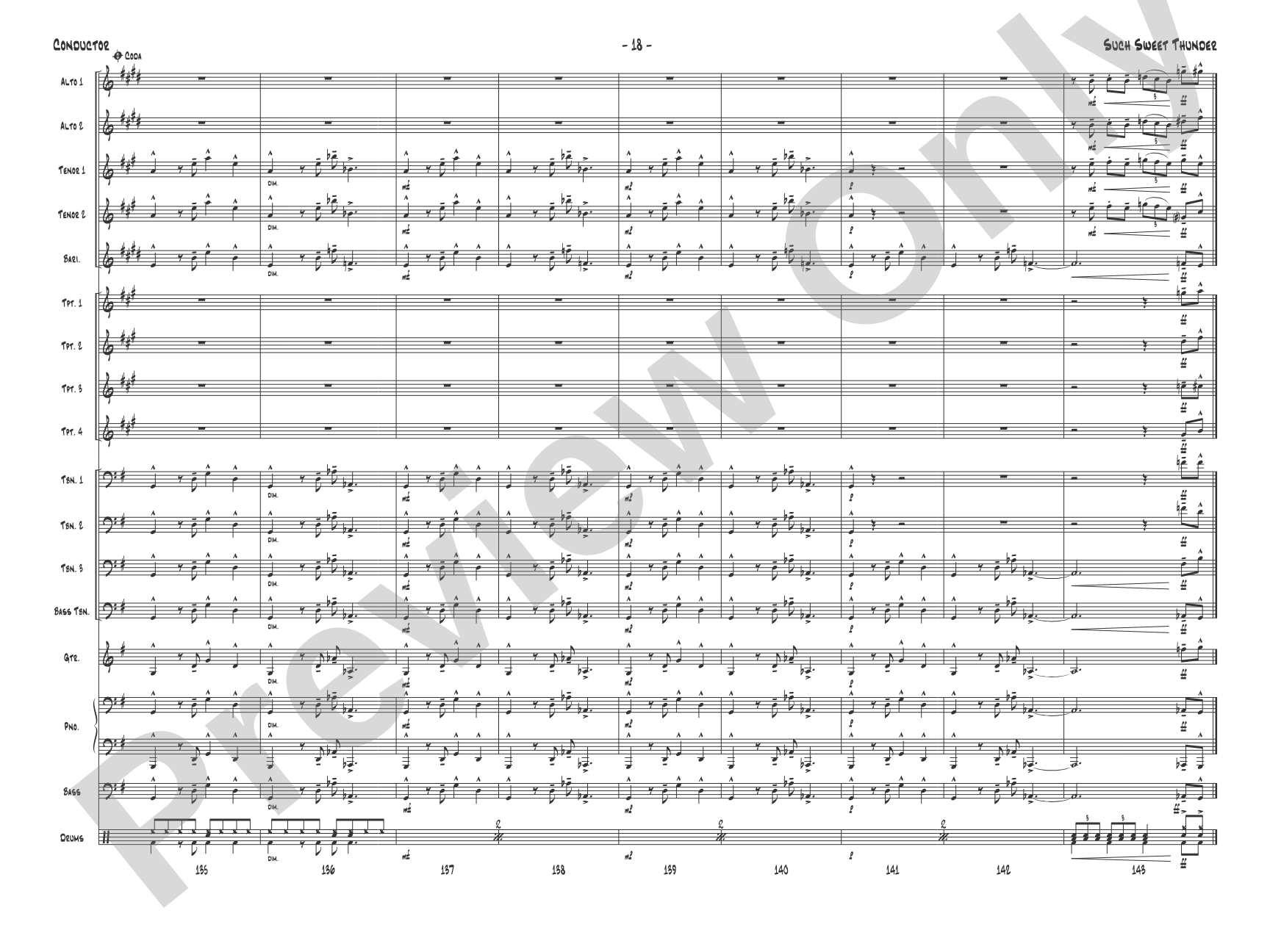

Such Sweet Thunder: Jazz Ensemble Conductor Score & Parts
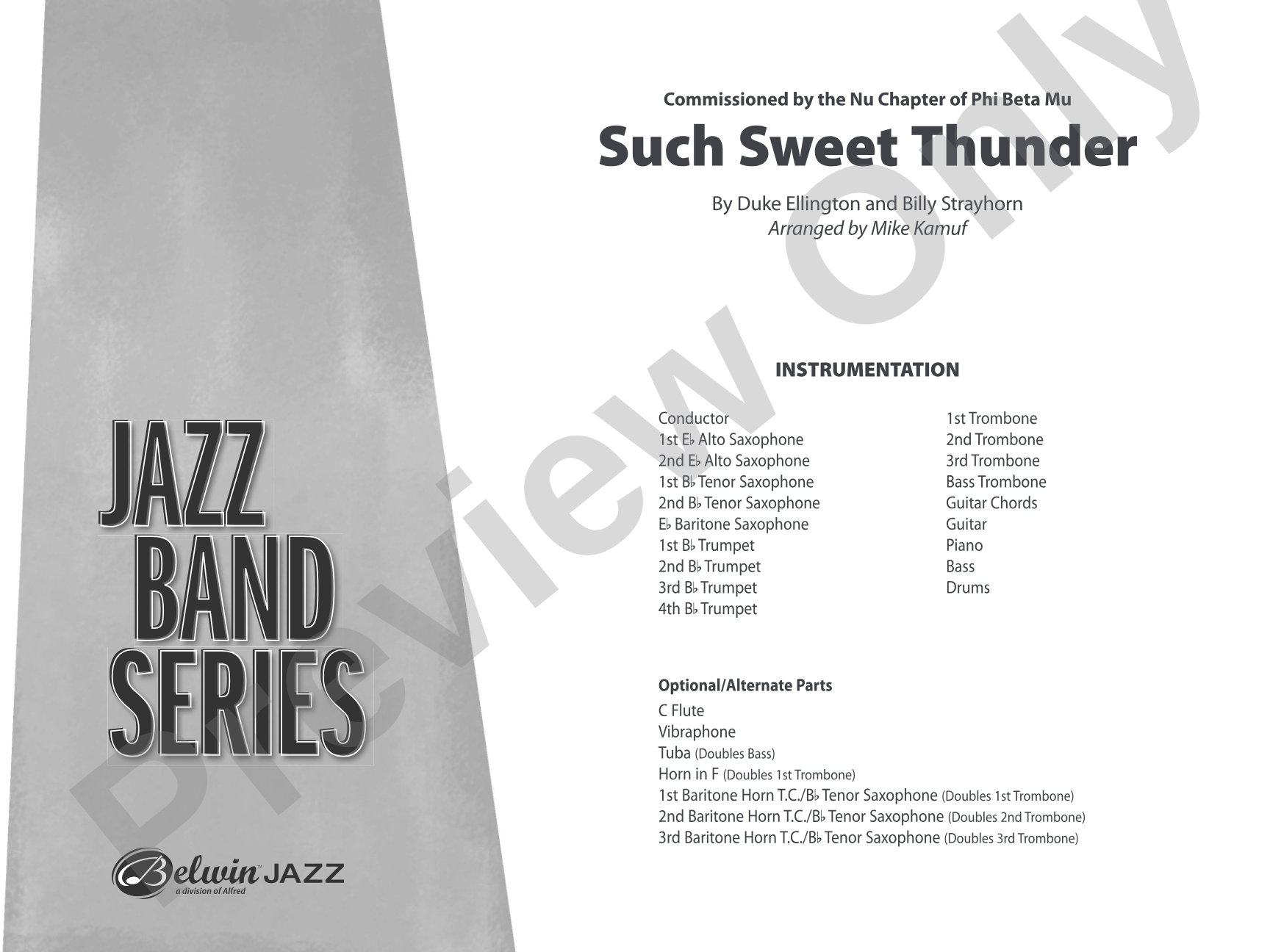
Commissioned by the Nu Chapter of Phi Beta Mu
By Duke Ellington and Billy Strayhorn / arr. Mike Kamuf
Grade: 3.5 (Medium)
Item: 00-PK-0007575

$52.00
One moment…
Description
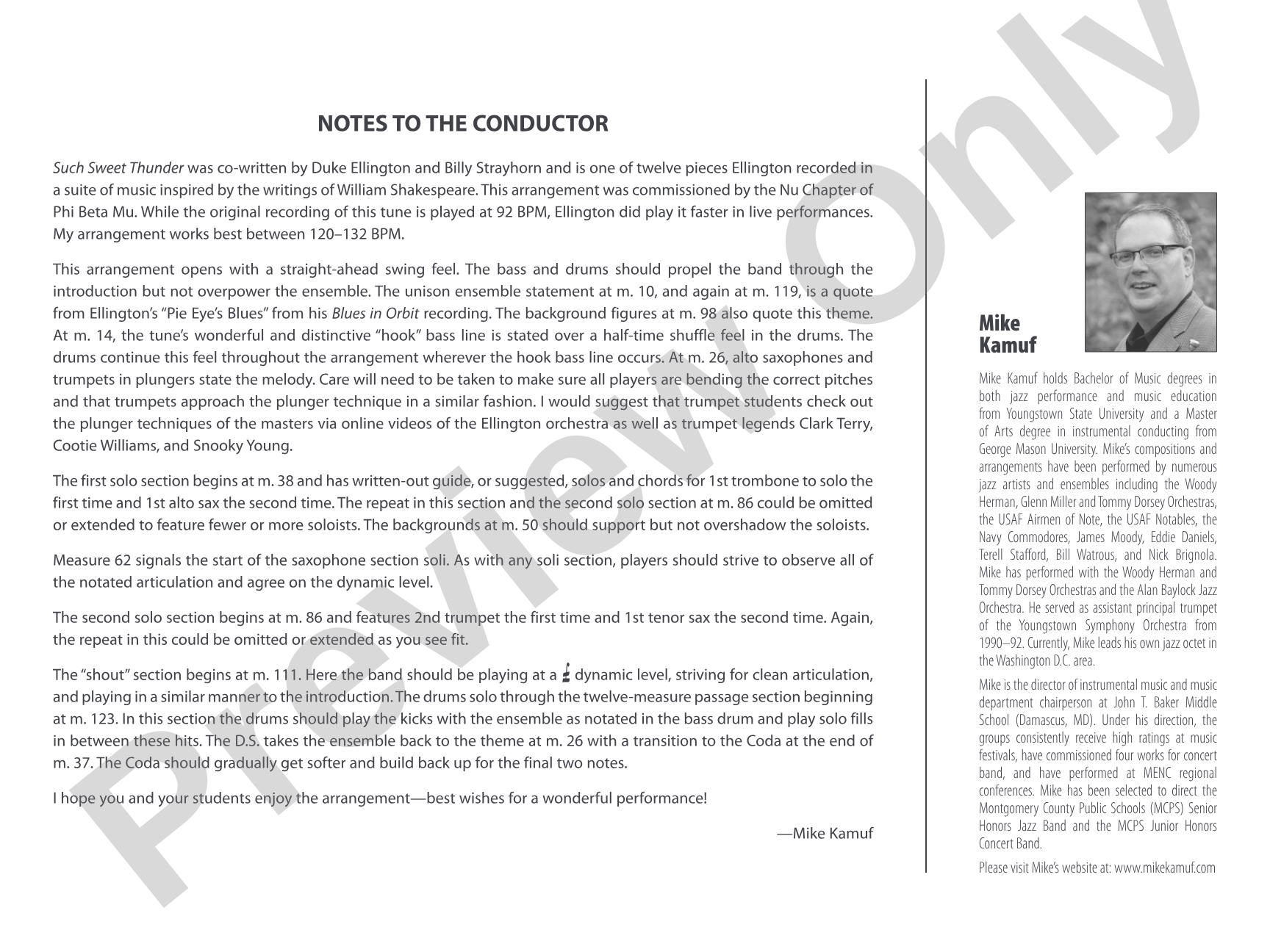
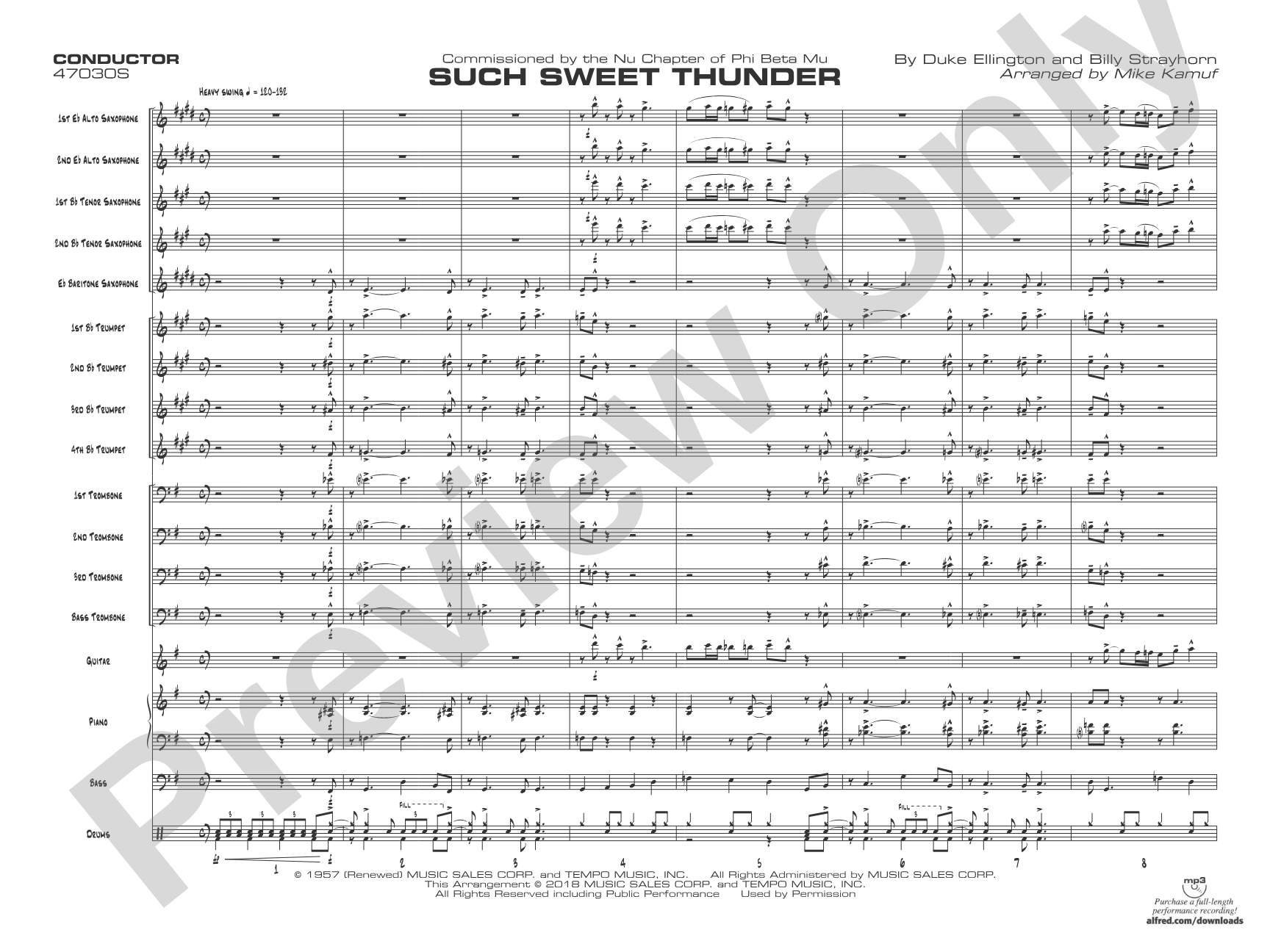
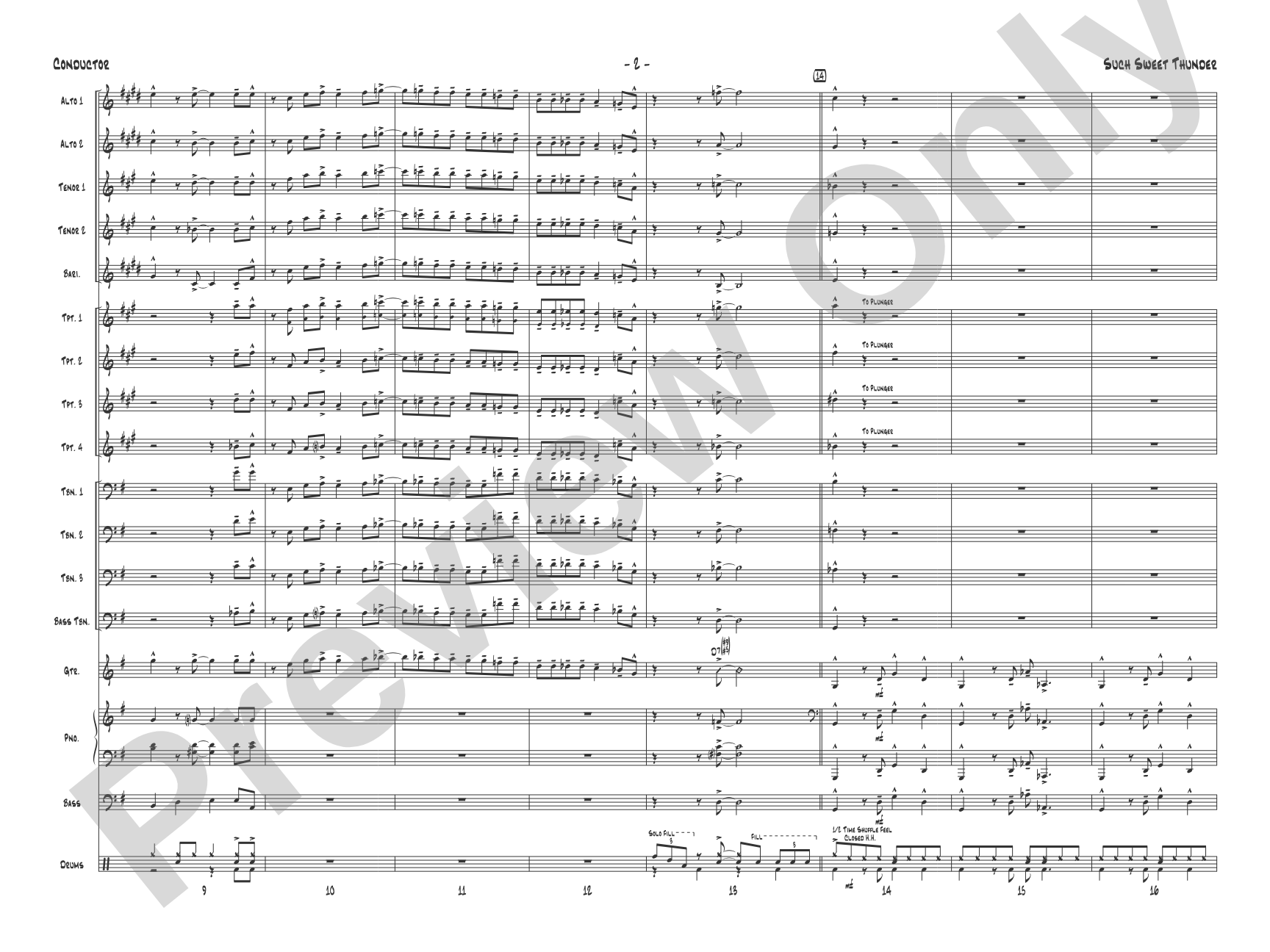
This chart swings! A sensational chart that captures the collaboration of Ellington and Strayhorn, played around 130 BPM. Lead trumpet plays to written A with optional high C. Solos written out for trombone, alto, trumpet, and tenor. Great use of plunger mutes for trumpets. Excellent chart in every way!


Don't just read it, hear it, play along with it, and watch your students grow with it. In MakeMusic Cloud, Such Sweet Thunder: Jazz Ensemble Conductor Score & Parts comes alive with professional accompaniment, adjustable tempo, and built-in practice tools that turn solo practice into real progress.
Open in the Player
Jump straight in and assign it today.
Start Your Free Trial
Open this title and explore the full library in minutes.
Sample Audio
1
Audio File
--:--
0:00
0:00
Sample Video
Additional Details
Series:
Jazz Band Series
Publisher:
Alfred Music
Page Count:
102
SKU:
00-PK-0007575
More about this title
About the Composer: Duke Ellington
Duke Ellington stands as one of the most consequential figures in American music history. A virtuoso pianist, bandleader, and prolific composer, Ellington created thousands of works spanning from 1920s hot jazz to ambitious extended compositions, establishing himself as a standard-setter for both popular song and concert music across seven decades.
For school ensembles, Ellington's legacy offers direct pedagogical value. His writing demonstrates sophisticated voicing, rhythmic clarity, and harmonic innovation within accessible frameworks. His partnership with Billy Strayhorn produced some of jazz's most enduring compositions, marked by melodic strength and structural integrity that rewards student musicians with music that sounds mature and rewarding to play.
Why we love this
This chart delivers the swagger and sophistication Ellington and Strayhorn are known for without overwhelming a developing jazz ensemble. The written solos remove guesswork, giving your saxophones and brass players legitimate solo experiences in a controlled setting, while the plunger mute writing adds sonic color and visual interest that students genuinely enjoy executing.
What to expect
Polished swing with unmistakable elegance. The chart glides forward at 130 BPM with a refined groove that never feels forced, while the plunger mute colors add warmth and personality. This is Ellington at his most accessible and immediately engaging.
Who it's for
Jazz ensembles at the intermediate level, particularly those ready to explore composed solos and stylistic mute techniques without advanced harmonic or rhythmic complexity. Conductors seeking repertoire that sounds sophisticated while remaining teachable will find this chart directly useful for contests, festivals, or concert programming.
How to get the most out of it
- Balance the lead trumpet part at written A; the optional high C should emerge naturally from phrasing rather than forcing volume. This keeps the chart singable and prevents unnecessary strain at tempo.
- Lock the trombone and tenor solos with the rhythm section's pocket. These written lines sit deep in the swing feel, and rushing or dragging will undercut the chart's ease and groove.
- Establish the plunger mute sound in sectionals before full ensemble rehearsal. The trumpets need consistent hand position and mute insertion depth to achieve the tonal unity Ellington's writing demands.
- Maintain steady articulation in the ensemble figures during solo passages. A common mistake is letting energy drop when soloists carry the line; your section parts remain the foundation.
How to use it
Feature this on a jazz festival or concert where you want to showcase your ensemble's maturity and musicality. The chart pairs well with bebop-era standards or Strayhorn showcase pieces, creating a program that demonstrates range within the Ellington-Strayhorn repertoire.
Skills your students will build
- Reading lead trumpet range (including optional high notes)
- Interpreting written jazz solos for multiple voices (trombone, alto, trumpet, tenor)
- Ensemble balance and section cohesion during soloist-featured passages
- Stylistic mute techniques and tonal control with plunger mutes
- Maintaining swing articulation and pocket at medium tempo