
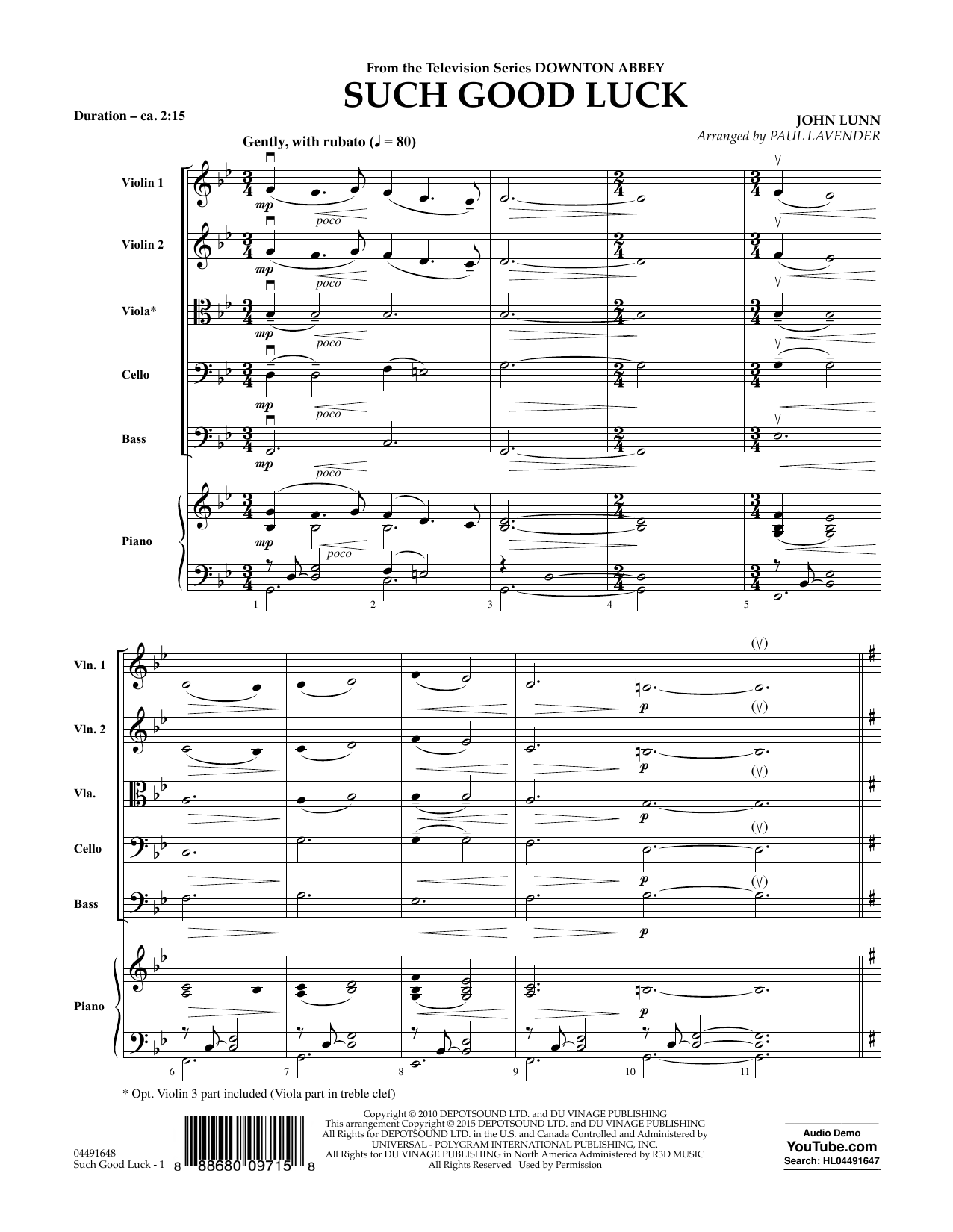

Such Good Luck (from Downton Abbey): String Orchestra Conductor Score & Parts
As performed by John Lunn / Arranged by Paul Lavender
Grade: 2
Item: 35-PK00338765
$45.00
Pickup currently not available
Buy Extra Parts (Digital PDF Download)
Parts Added to Cart!
Description
Also known as "Nothing to Forgive," this theme is heard throughout the award-winning television series. A simple, diatonic melody shifting from minor to major mode (G) and with easy and accessible orchestration, this very familiar theme will bring guaranteed success to your developing string group. Dur: 2:15


Such Good Luck (from Downton Abbey): String Orchestra Conductor Score & Parts isn't in MakeMusic Cloud just yet...but it could be. Let us know you'd like to see it, and you'll help shape what comes next. In the meantime, start a free trial and dive into thousands of interactive titles your students can play along with today.
Request This Title
Tell us you want it.
Start Your Free Trial
Explore everything that's ready to play right now.
Sample Audio
No sample audio found.
Sample Video
No sample videos found.
Additional Details
Publisher:
Hal Leonard
SKU:
35-PK00338765
More about this title
About the Artist: John Lunn
John Lunn is a British composer whose work across television and film has shaped the soundscapes of contemporary drama. His scores for Downton Abbey earned him widespread recognition and demonstrated his gift for writing themes that resonate with both casual viewers and serious musicians.
Why we love this
This arrangement captures everything that makes the original theme memorable while sitting comfortably within the technical range of developing players. The shift between G minor and G major gives your string section a tangible musical goal without demanding advanced technique, and the two-minute duration means it lands with impact without overstaying its welcome.
What to expect
The piece carries a warmth and reflective quality, opening in the quieter colors of G minor before gradually brightening into major key resolutions. There is an accessibility to the melody that feels both familiar and slightly wistful, the kind of writing that engages audiences immediately.
Who it's for
This works exceptionally well for younger string orchestras, freshman ensembles, or groups preparing for their first concert. Directors of developing programs will appreciate material that sounds more sophisticated than its technical demands suggest.
How to get the most out of it
- Lean into the minor tonality during the opening section; let the uncertainty sit before the major resolution arrives. This emotional arc is what makes the theme resonate.
- Balance the melody carefully across your first violins and violas. The theme passes between them, so track the line as it moves rather than treating each entrance separately.
- Shape the phrasing in four-bar units. The diatonic melody breathes naturally at these points, and your players will find their way through more confidently with clear structural signposts.
How to use it
This pairs naturally with other accessible classical orchestral works as a closer for a concert, or it can anchor a film or television themed concert alongside other screen music. Its recognizability makes it an excellent audience connector for community performances.
Skills your students will build
- Shifting between parallel minor and major tonalities
- Sustaining lyrical phrasing over longer melodic lines
- Voice independence in string textures (melody, countermelody, and accompaniment)
- Responding to dynamic and expressive direction as the mode shifts