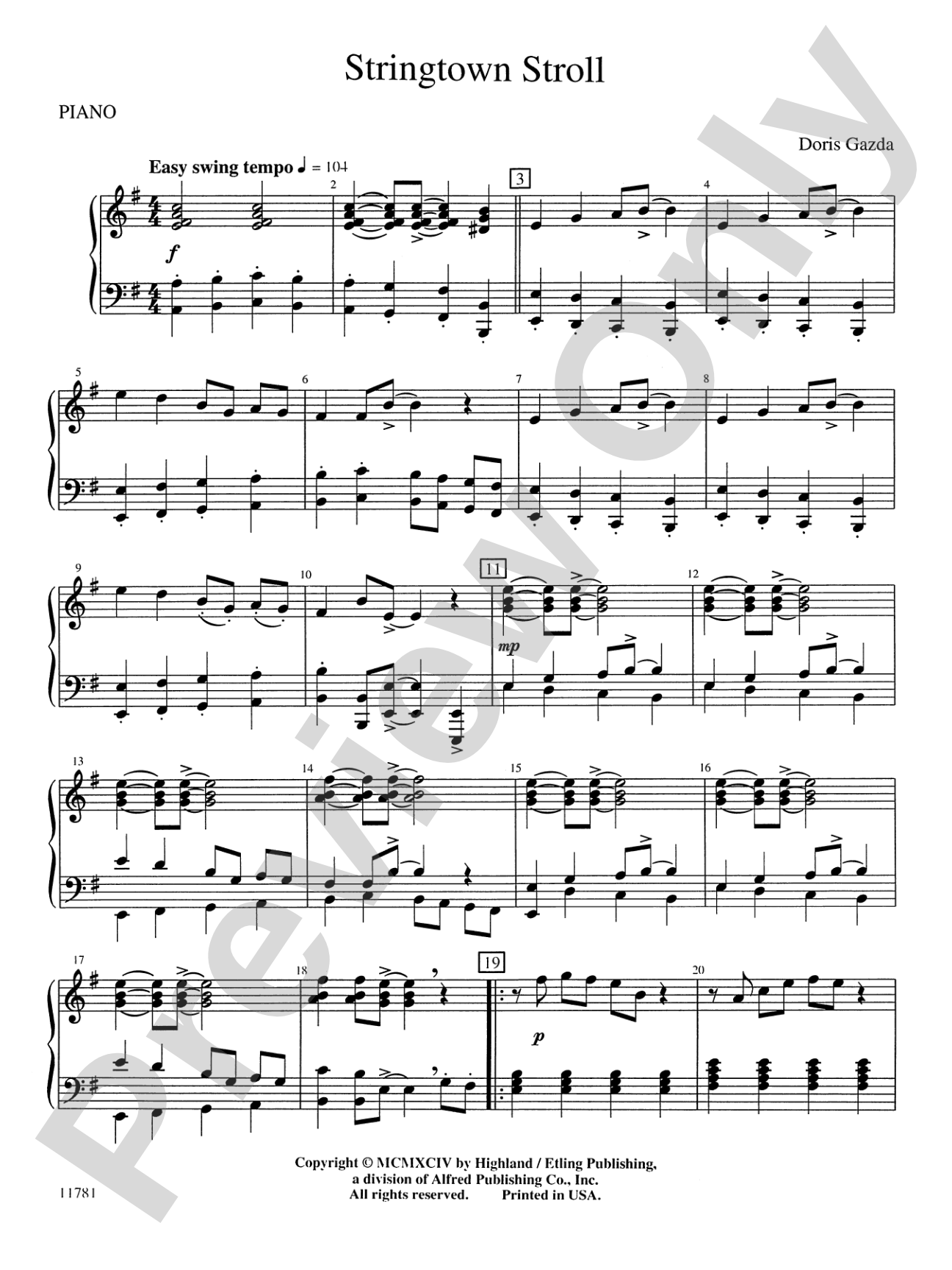
Stringtown Stroll: Piano Accompaniment Sheet Music Preview

Stringtown Stroll: Piano Accompaniment

By Doris Gazda

Grade: 2

Item: 00-PC-0000027_K

Digital Download
$5.99
Description
Written to be played in an easy swing style, this piece is sure to be a showstopper for all ages. The third Violin is an independent part and Cellists get a share of the melodic action, and your Basses wil love the walking bass line! This title is available in MakeMusic Cloud.

Don't just read it, hear it, play along with it, and watch your students grow with it. In MakeMusic Cloud, Stringtown Stroll: Piano Accompaniment comes alive with professional accompaniment, adjustable tempo, and built-in practice tools that turn solo practice into real progress.

Sample Audio
0:00
0:00
Sample Video
Additional Details
Series: Highland/Etling String Orchestra
Publisher: Alfred Music
Page Count: 72
SKU: 00-PC-0000027_K

More about this title

Why we love this

Gazda writes for string orchestras with genuine understanding of what each section can do. Third Violin gets a real melodic line instead of doubling, cellists step into the spotlight alongside the violins, and the walking bass isn't filler—it's the groove that holds everything together. Grade 2 doesn't mean simple; it means smart orchestration that makes every player feel essential.

What to expect

A casual stroll with a spring in your step. The easy swing feel and walking bass create an approachable, upbeat energy that audiences of all ages connect with immediately. There's sophistication in the orchestration even though the technical demands stay accessible.

Who it's for

String orchestra programs at the Grade 2 level looking for contemporary light concert material that doesn't feel generic. This works equally well for school orchestras, community ensembles, and youth orchestras ready to tackle a piece with real rhythmic swing and independent section writing.

How to get the most out of it

  • Keep the swing feel relaxed and bouncy rather than metronomic. The walking bass should breathe naturally, following the harmonic rhythm rather than rushing ahead of the beat.
  • Balance the third violin line so it sits clearly above the first and second violin parts without overwhelming them. This independent voice is what gives the piece its character.
  • Let the cellos phrase their melodic material expressively. They're not accompaniment here; they deserve the same attention to tone and shape that you'd give the violin section.

How to use it

This lands naturally on a spring or end-of-year concert where you want a crowd pleaser that still showcases solid musicianship. Pair it with baroque or classical pieces to show range, or use it as a finale that sends the audience out smiling.

Skills your students will build

  • Reading and maintaining swing rhythms in an ensemble context
  • Sustaining independent melodic lines while listening to the harmonic texture around them
  • Walking bass technique and rhythmic precision in the lower strings
  • Balancing as a full orchestral section with multiple melodic voices occurring simultaneously

You May Also Like