
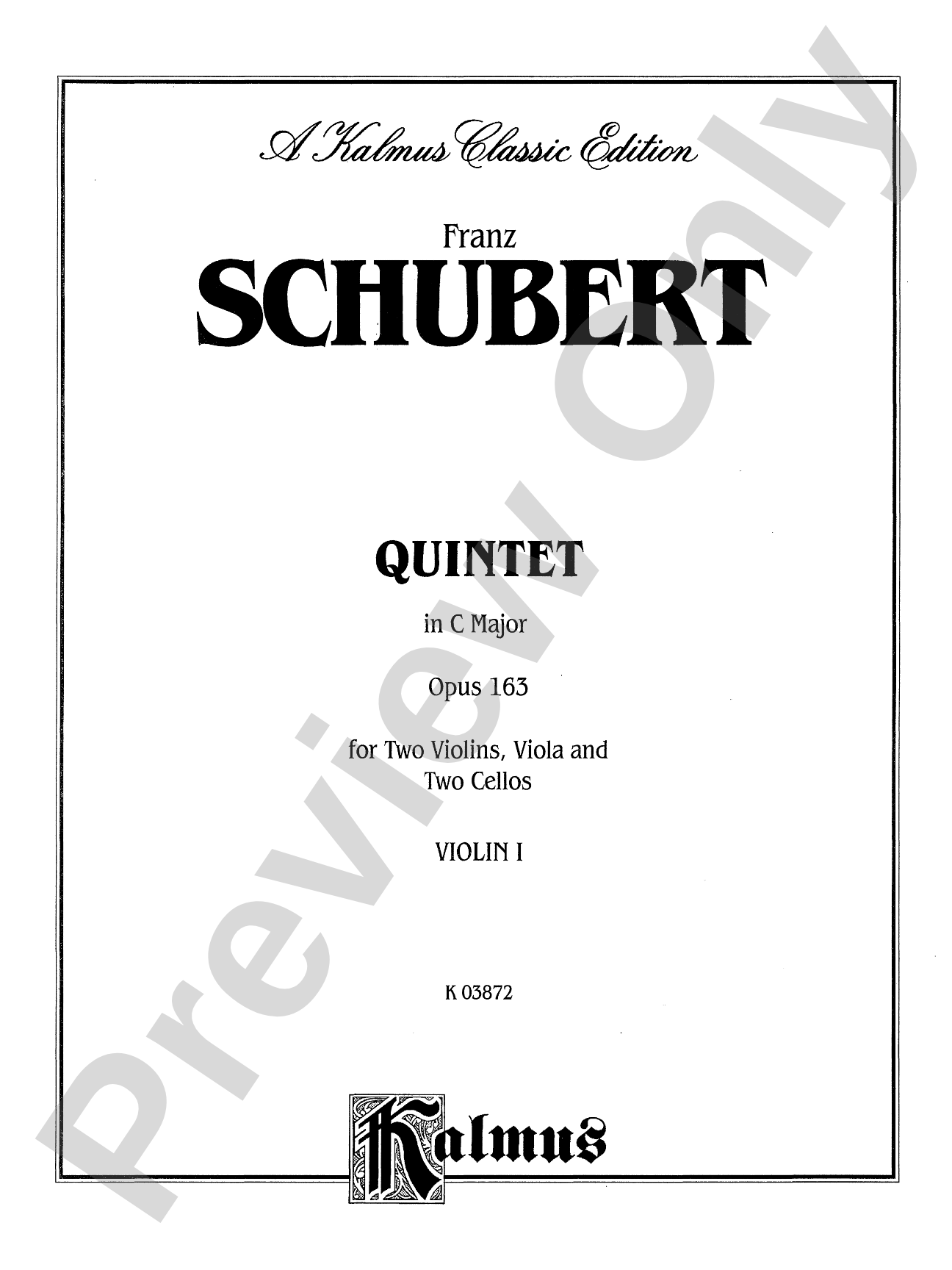
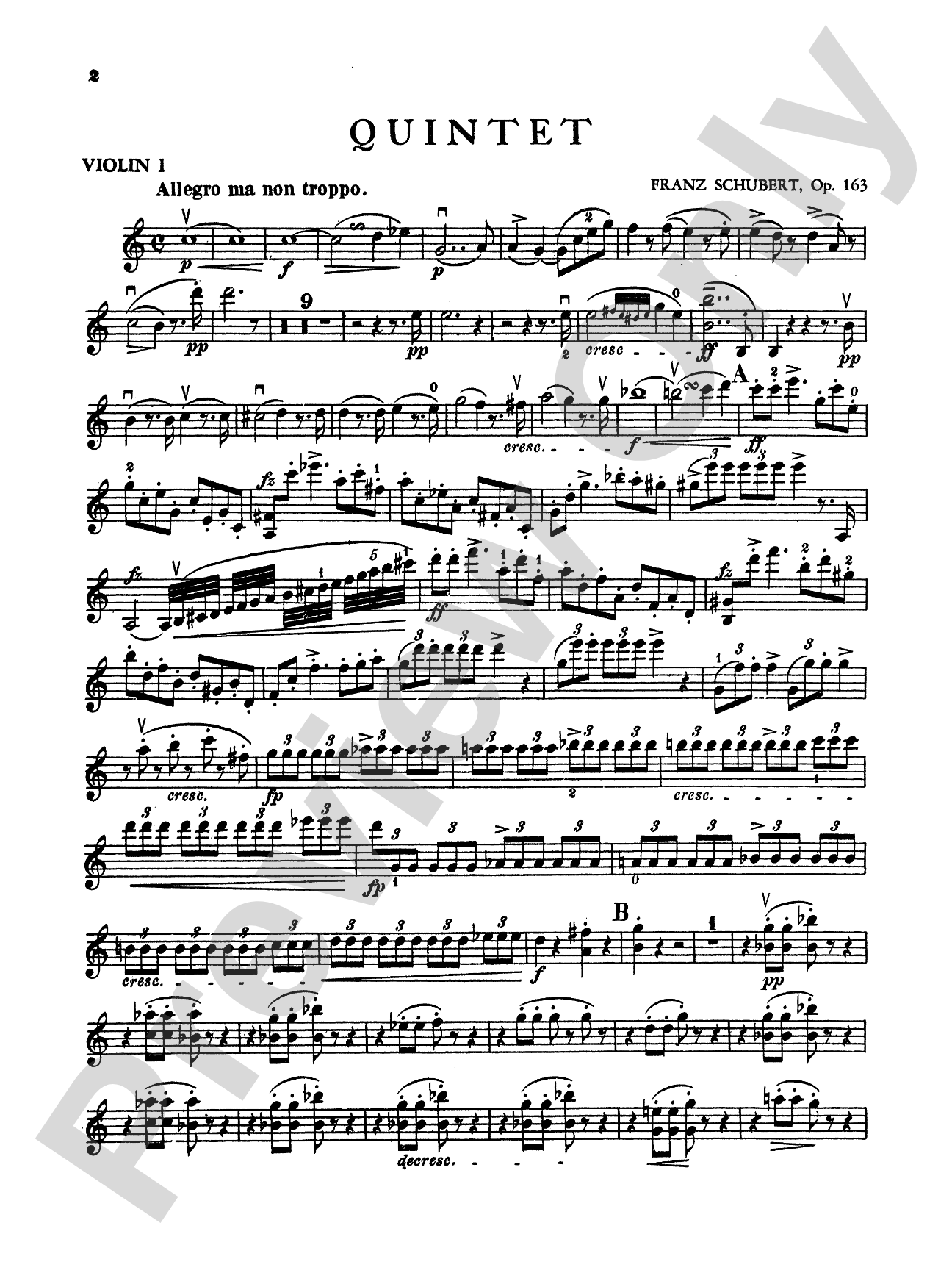
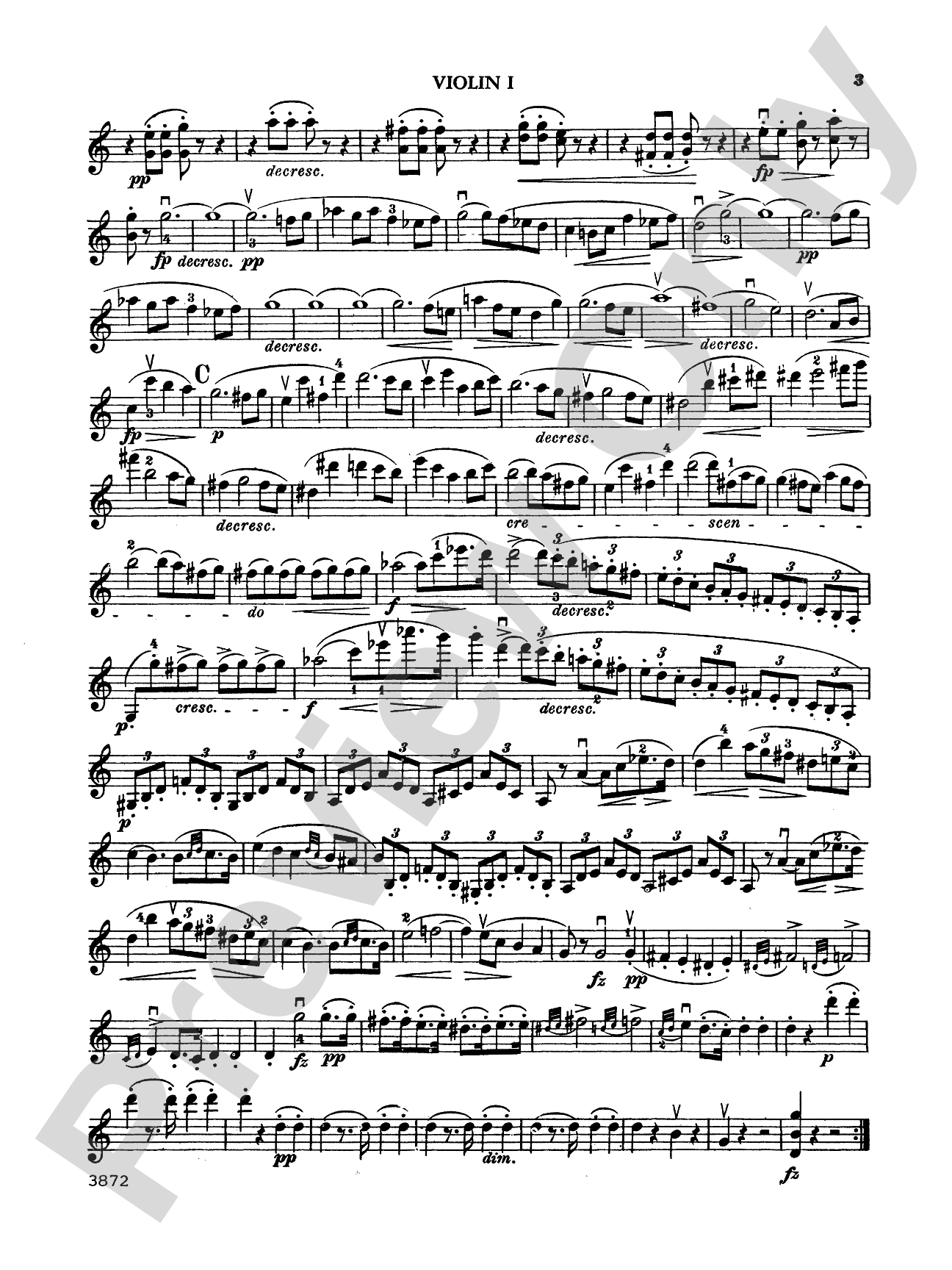
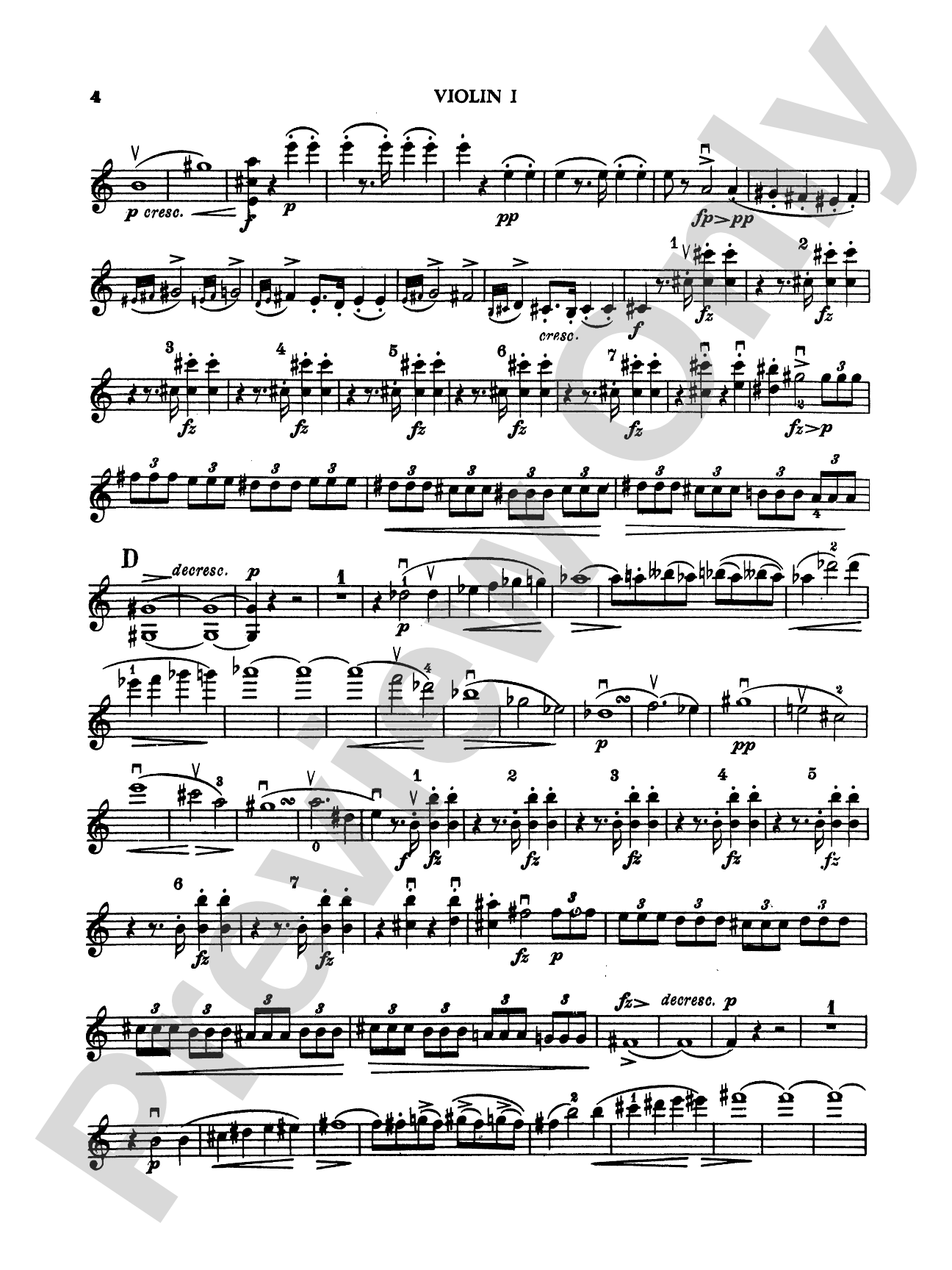

String Quintet in C Major, Op. 163: 1st Violin
By Franz Schubert
Item: 00-PC-0002526_VN1
$6.00
Pickup currently not available
Description
Expertly arranged String Quintet for 2 Violins, Viola, and 2 Cellos by Franz Schubert from the Kalmus Edition series. This is from the Romantic and Classical eras.


Don't just read it, hear it, play along with it, and watch your students grow with it. In MakeMusic Cloud, String Quintet in C Major, Op. 163: 1st Violin comes alive with professional accompaniment, adjustable tempo, and built-in practice tools that turn solo practice into real progress.
Open in the Player
Jump straight in and assign it today.
Start Your Free Trial
Open this title and explore the full library in minutes.
Sample Audio
No sample audio found.
Sample Video
No sample videos found.
Additional Details
Series:
Kalmus Edition
Publisher:
Alfred Music
Page Count:
84
SKU:
00-PC-0002526_VN1
Instrumentation:
2 Violins, Viola, 2 Cellos
More about this title
About the Composer: Franz Schubert
Franz Schubert (1797-1828) was an Austrian composer whose chamber music redefined the possibilities of intimate ensemble writing. Working across genres during the late Classical and Romantic periods, Schubert brought lyrical melody, harmonic innovation, and emotional depth to the string quintet form, creating works that remain central to the chamber music repertoire.
Schubert's two string quintets represent the culmination of his chamber writing. Late in his life, he turned to the quintet medium with fresh artistic vision, expanding the ensemble's expressive range through masterful voice leading and the richness of two cello parts. His influence on string quintet literature is immeasurable, establishing a standard that composers have referenced ever since.
Why we love this
This quintet showcases Schubert at his most lyrical and structurally assured. The C Major tonality creates a luminous, open quality that allows each voice to sing, making it an ideal choice for ensembles that have mastered basic technique and are ready to explore the subtleties of Romantic chamber writing without requiring the virtuosity demanded by many contemporary works.
What to expect
The C Major Quintet unfolds with an almost conversational intimacy, as if five musicians are sharing a long afternoon of musical thoughts. Schubert's melodies seem to emerge naturally from the ensemble itself; lyrical passages give way to moments of surprising harmonic complexity, and the two-cello sound creates a warmth and resonance that feels both grounded and expressive.
Who it's for
Intermediate to advanced string quartets looking to expand to quintet scoring, festival-level chamber ensembles preparing competition repertoire, and string studios seeking substantial Romantic-era literature that balances technical accessibility with artistic depth. This work rewards ensemble maturity and collaborative listening rather than individual virtuosity.
How to get the most out of it
- Balance the two violin parts carefully in the opening themes; the first violin's melody must soar above the second violin's accompaniment, but both lines need clarity and independence to reveal Schubert's voice-leading craft.
- Shape the harmonic shifts between major and minor tonalities with slight adjustments to tone color and vibrato intensity rather than dramatic tempo changes; Schubert's modulations work best when they feel inevitable rather than surprising.
- Give the cello duet passages genuine dialogue. The two cello parts are not simply accompaniment; treat them as equal conversational voices, especially in slower movements where Schubert explores their combined sonority.
- Mark your parts with rehearsal points before the first reading. This five-part score benefits from clear structural signposts so ensemble members can anticipate key moments and build musical architecture across the full 84 pages.
How to use it
Program this alongside other Schubert chamber works to explore his mastery of the genre, or pair it with later Romantic quintets to show the evolution of ensemble writing. Its relative structural clarity and accessible tonality make it an excellent choice for a mid-season chamber concert before works of greater technical demand.
Skills your students will build
- Voice independence within five-part textures
- Harmonic awareness and tonal relationships in the Romantic idiom
- Dialogue and balance between cello and violin sections
- Phrasing and ensemble breathing across extended lyrical passages
- Reading and coordinating across multiple instrumental staves in chamber context
- Interpretive choices in ornamentation and vibrato for period-appropriate Schubert performance