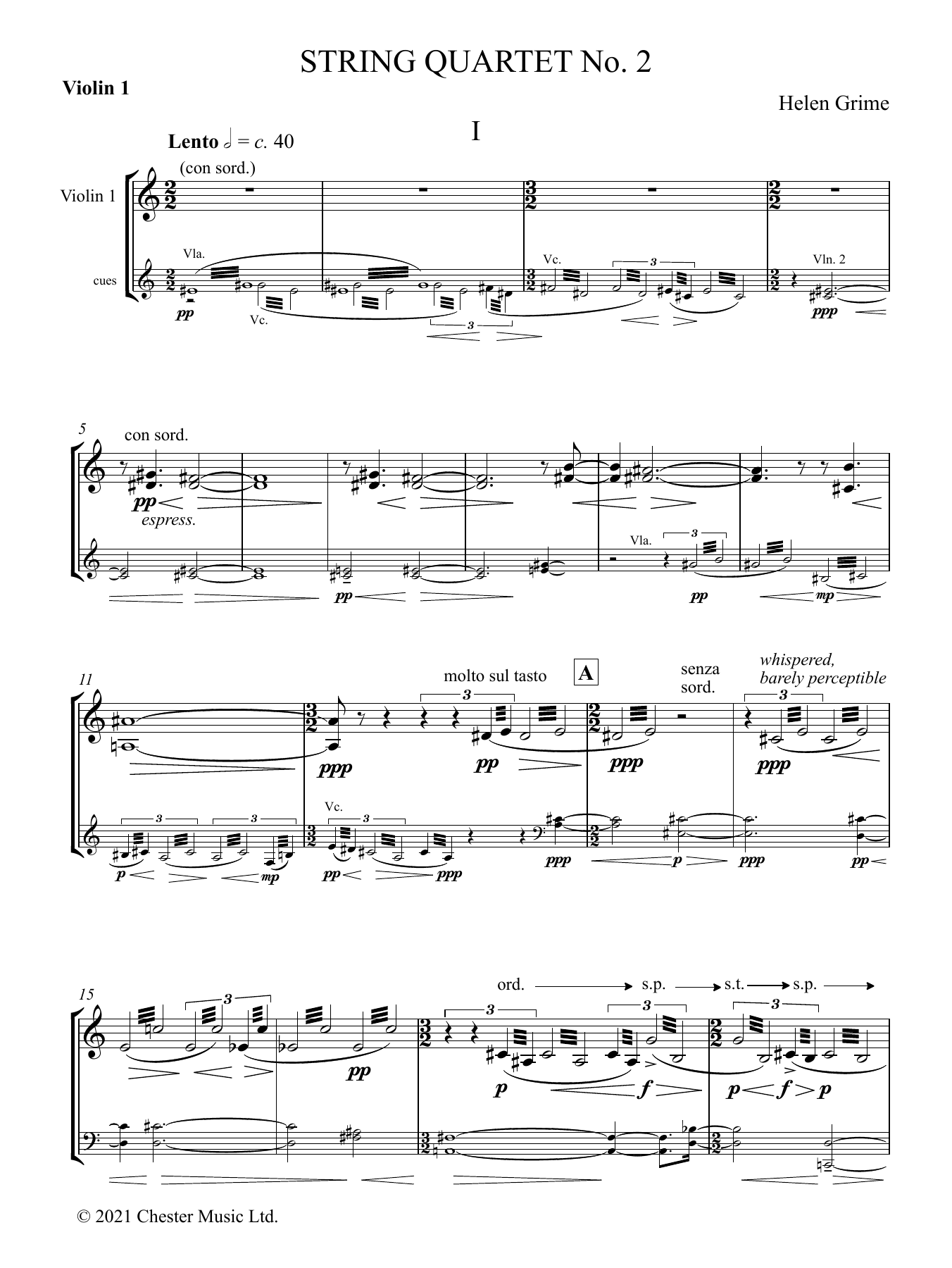
String Quartet No. 2 (Parts) Sheet Music Preview

String Quartet No. 2 (Parts)

By Helen Grime

Item: 35-PK01607342

Digital Download
$50.00

Buy Extra Parts (Digital PDF Download)

Parts Added to Cart!

Description
String Quartet No. 2 (Parts)

String Quartet No. 2 (Parts) isn't in MakeMusic Cloud just yet...but it could be. Let us know you'd like to see it, and you'll help shape what comes next. In the meantime, start a free trial and dive into thousands of interactive titles your students can play along with today.

Sample Audio
No sample audio found.
Sample Video
Additional Details
Publisher: Hal Leonard
SKU: 35-PK01607342

More about this title

About the Composer: Helen Grime

Helen Grime is a Scottish composer whose chamber works have earned recognition for their lyrical sensibility and structural clarity. Her compositional voice blends contemporary harmonic language with a deep understanding of instrumental writing, making her work particularly valuable for ensembles seeking 21st-century chamber repertoire that respects performers without sacrificing artistic substance.

Why we love this

Grime writes for strings with real empathy for the medium. This quartet sits comfortably under the fingers while demanding genuine musicianship from all four players, meaning no one gets relegated to accompanimental duty. It's the kind of piece that sounds more sophisticated than it is difficult to learn.

What to expect

The work unfolds with lyrical grace punctuated by moments of harmonic surprise. Grime's writing suggests both introspection and forward motion, creating an emotional landscape that feels both intimate and expansive.

Who it's for

Advanced high school quartets and community ensembles seeking contemporary chamber music with real substance. This quartet works well for groups that have mastered standard Romantic repertoire and are ready to engage with modern compositional thinking.

How to get the most out of it

  • Balance the thematic material across all four parts; resist the urge to spotlight the first violin at the expense of the other voices.
  • Pay close attention to dynamic markings and articulation changes as they shape the harmonic color rather than merely indicating volume.
  • Rehearse the ensemble's rhythmic precision in passages with mixed note values, especially where parts move independently.

How to use it

Include this on a chamber music recital alongside baroque works or early classical quartets to frame how string writing has evolved. It also pairs well with other contemporary British composers on a program exploring modern chamber repertoire.

Skills your students will build

  • Balancing thematic material across ensemble voices
  • Executing contemporary harmonic language and tonal centers
  • Coordinating rhythmic independence with ensemble cohesion
  • Responding to detailed dynamic and articulation markings

You May Also Like