
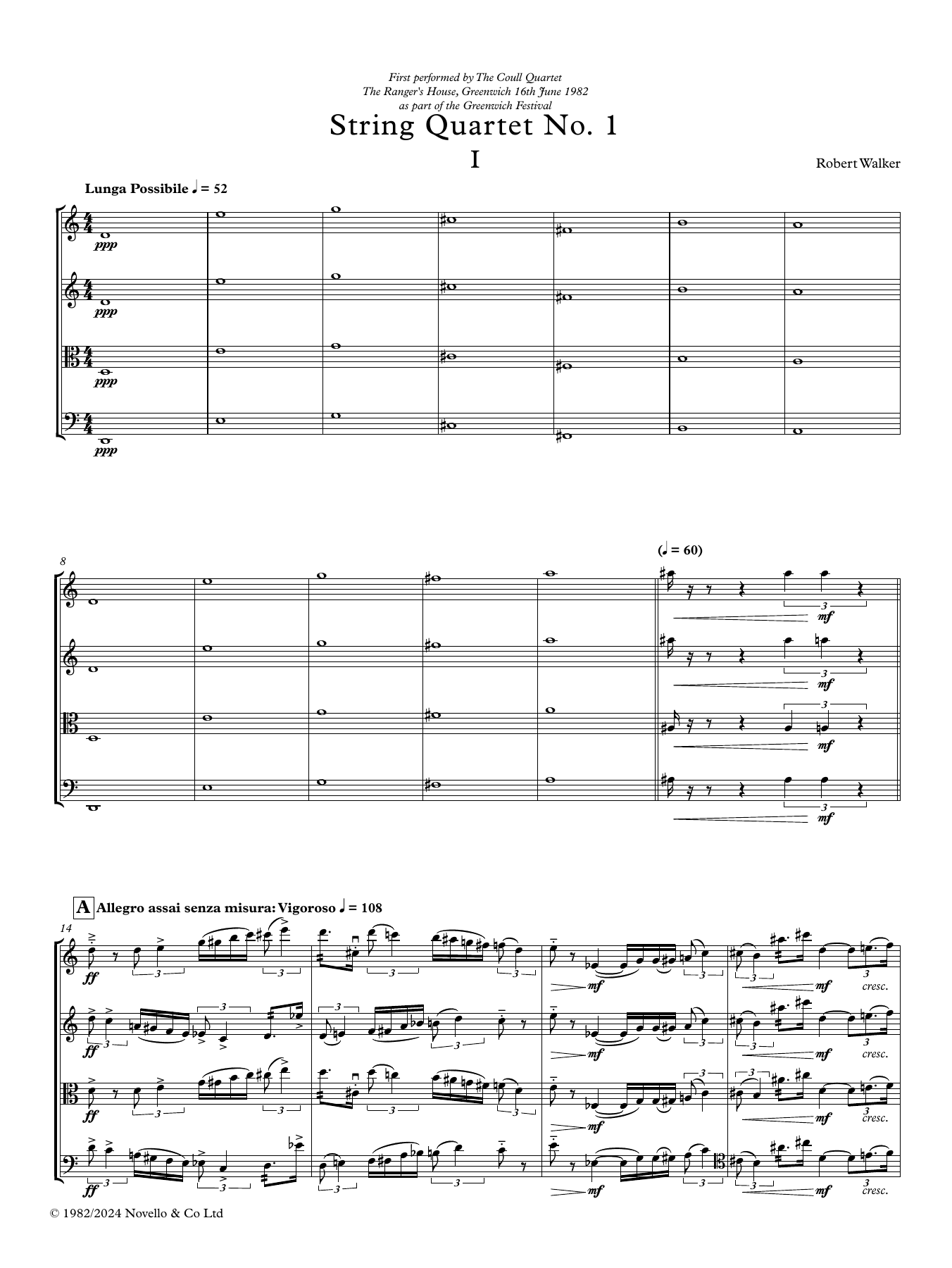

String Quartet No. 1
By Robert Walker
Item: 35-PK01662401
$39.99
Pickup currently not available
Buy Extra Parts (Digital PDF Download)
| Product | Price | Quantity |
|---|---|---|
| String Quartet No. 1 - Full Score | $39.99 | |
| String Quartet No. 1 - Violin 1 | $39.99 | |
| String Quartet No. 1 - Violin 2 | $39.99 | |
| String Quartet No. 1 - Viola | $39.99 | |
| String Quartet No. 1 - Violoncello | $39.99 |
Parts Added to Cart!
Description
Score and parts for String Quartet No. 1


String Quartet No. 1 isn't in MakeMusic Cloud just yet...but it could be. Let us know you'd like to see it, and you'll help shape what comes next. In the meantime, start a free trial and dive into thousands of interactive titles your students can play along with today.
Request This Title
Tell us you want it.
Start Your Free Trial
Explore everything that's ready to play right now.
Sample Audio
No sample audio found.
Sample Video
No sample videos found.
Additional Details
Publisher:
Hal Leonard
SKU:
35-PK01662401
More about this title
Why we love this
Walker's first quartet demonstrates solid command of the string quartet idiom without sacrificing musical substance. The writing sits comfortably for intermediate to advanced players while maintaining genuine compositional intent throughout.
What to expect
Structured and purposeful. The music unfolds with classical clarity while avoiding sentimentality, offering four distinct movement characters that hold together through craft rather than emotional sweep.
Who it's for
Advanced high school ensembles and community string quartets seeking repertoire that respects their growing technical maturity. This quartet works well for groups ready to move beyond pedagogical models into actual chamber music literature.
How to get the most out of it
- Establish clear ensemble balance during the opening statements. The dialogue between instruments carries the form, so articulation and phrase shaping matter as much as intonation.
- Attend to the inner voices, particularly the viola and cello counterpoint in slower passages. These lines define the harmonic language and shouldn't recede into accompaniment.
- Mark tempo relationships between movements before the first rehearsal. Walker's contrasts are architectural, not dramatic, which requires precise control rather than expressive flexibility.
How to use it
Pair this with a contemporary work or an earlier classical quartet to create a mini concert exploring how the string quartet genre evolves. It also serves chamber music festivals and competitions where intermediate ensembles need substantial, nonflashy repertoire.
Skills your students will build
- Balancing multiple independent melodic lines within an ensemble texture
- Sustaining intonation across longer harmonic progressions
- Interpreting classical phrase structure in contemporary voice leading
- Collaborative listening and response between all four players