

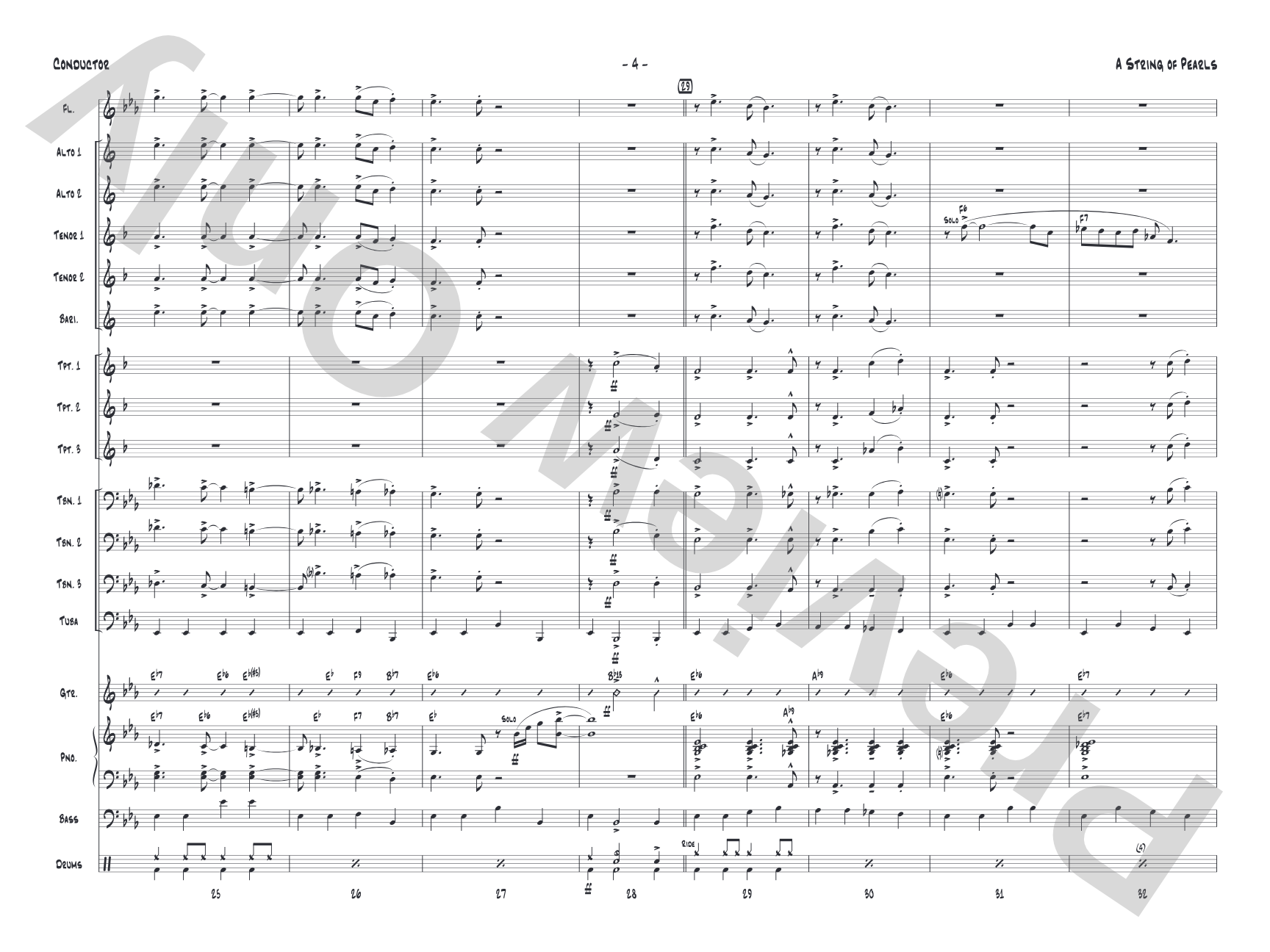
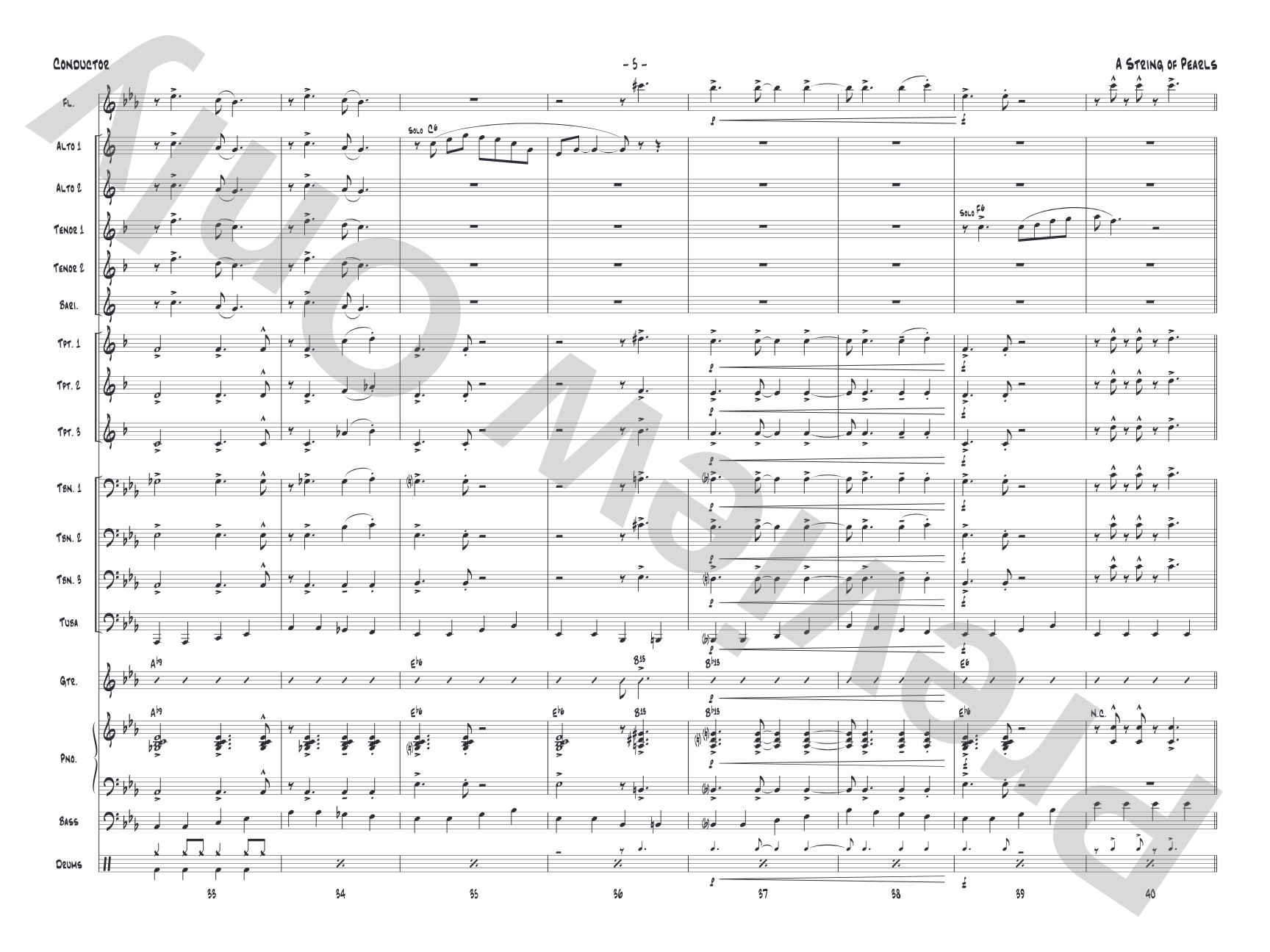
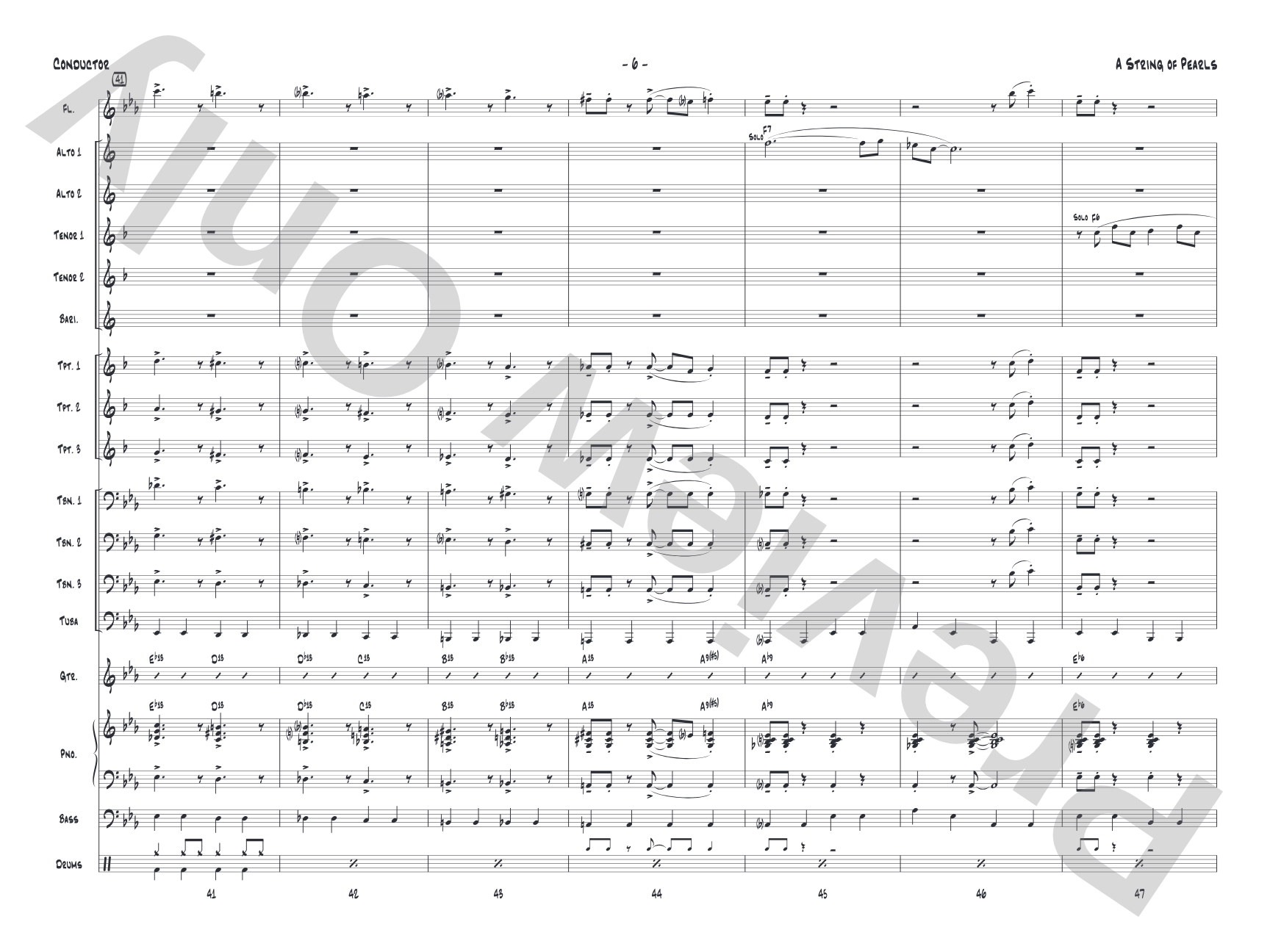
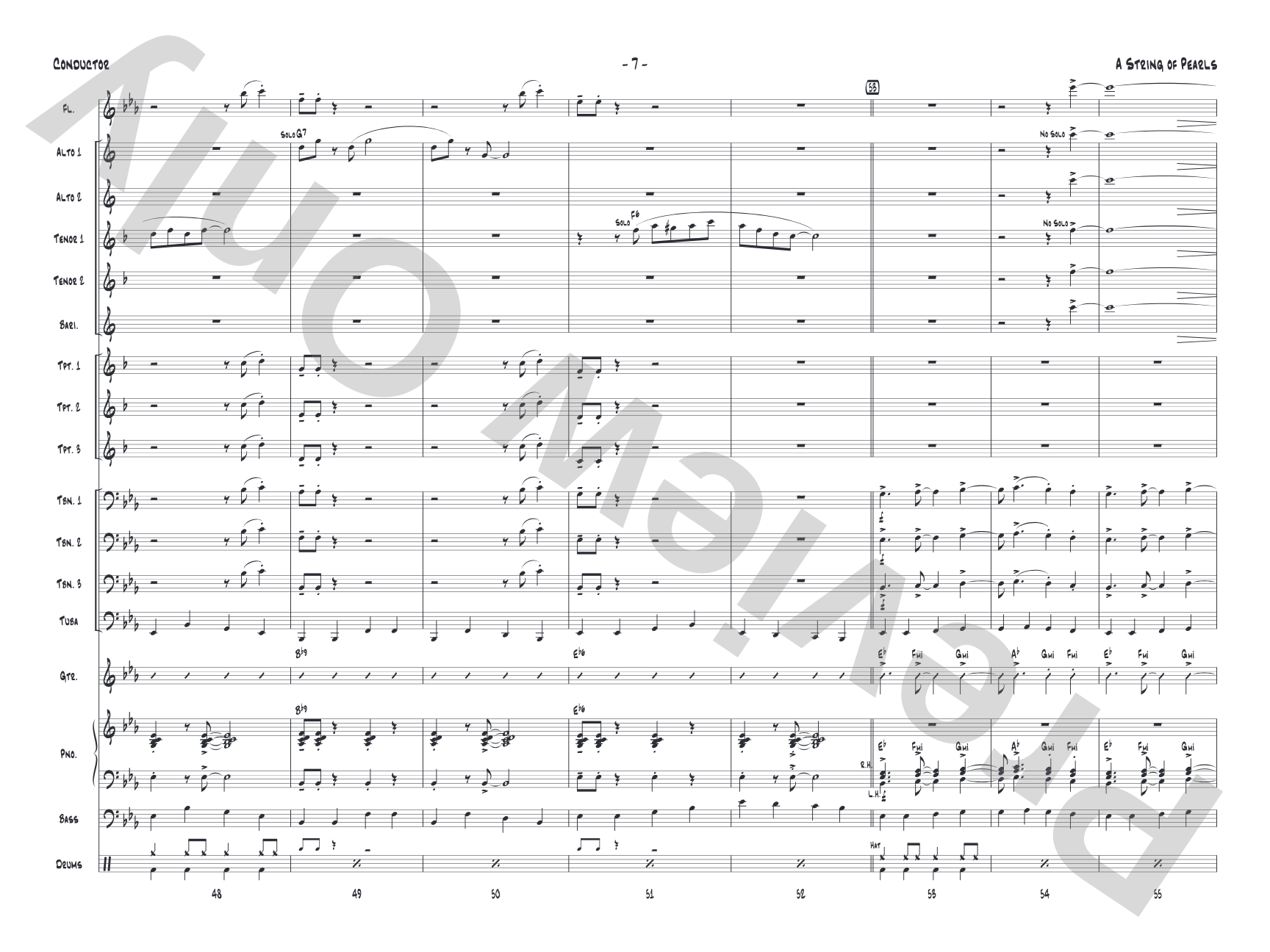
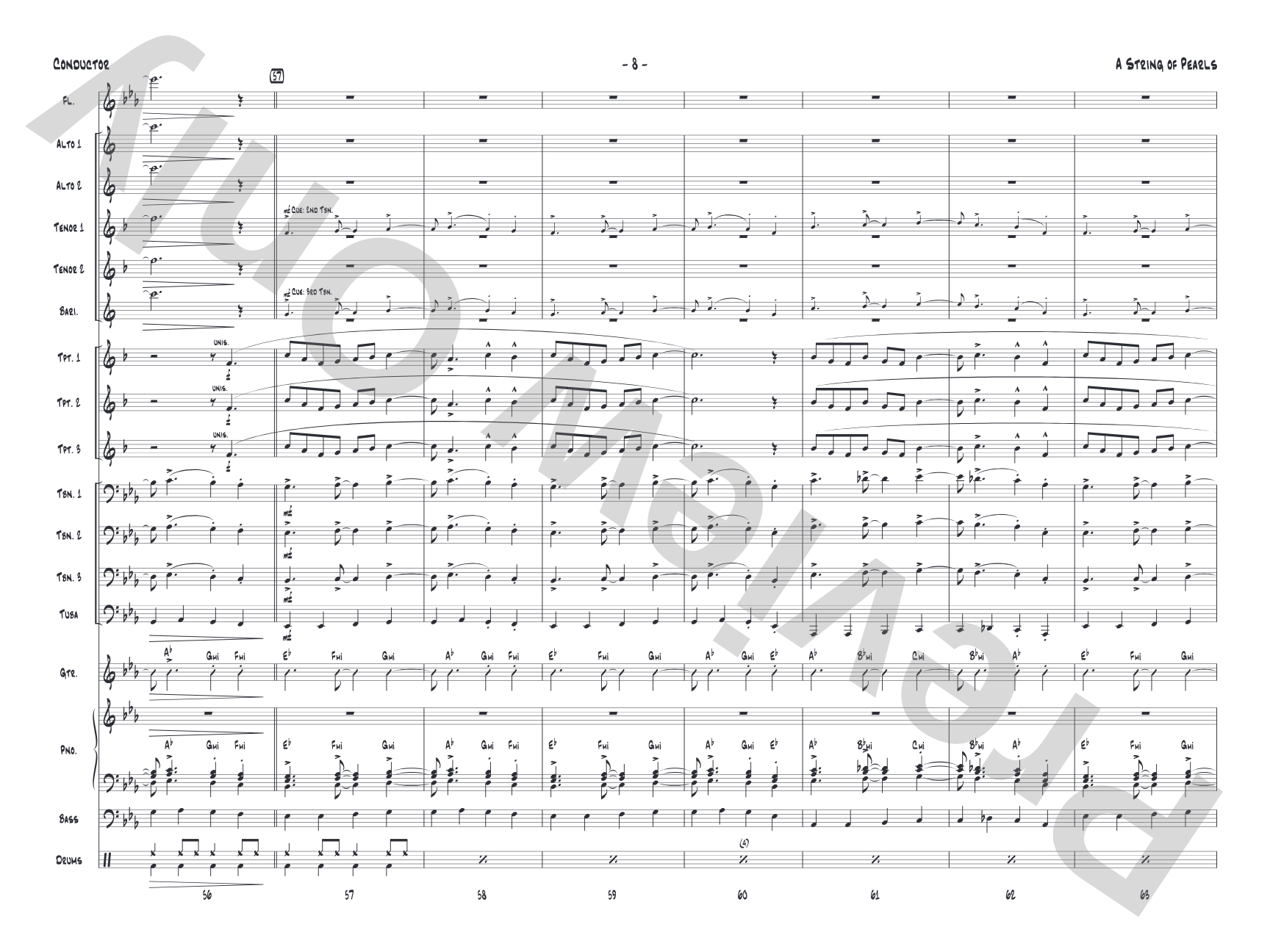
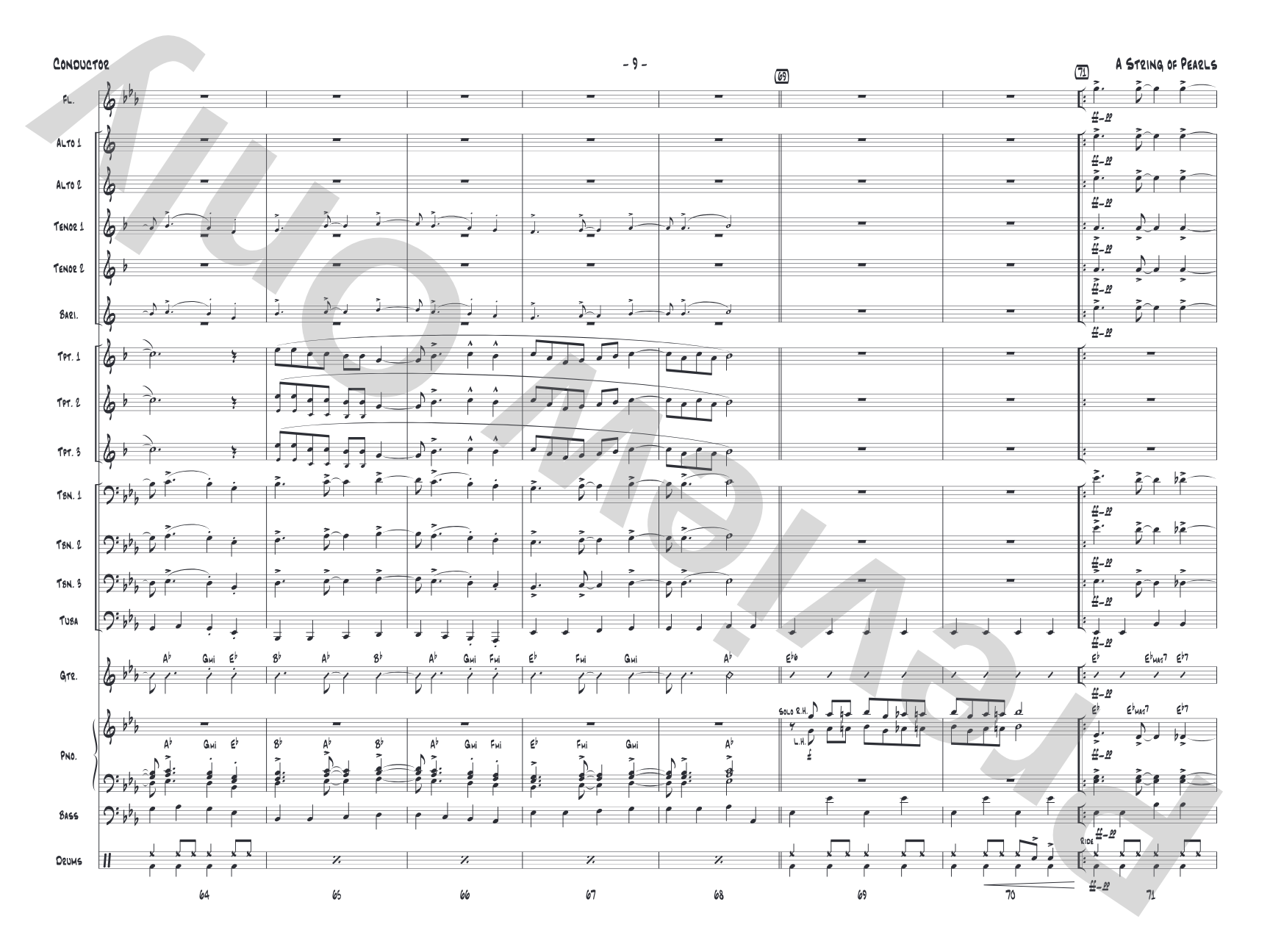
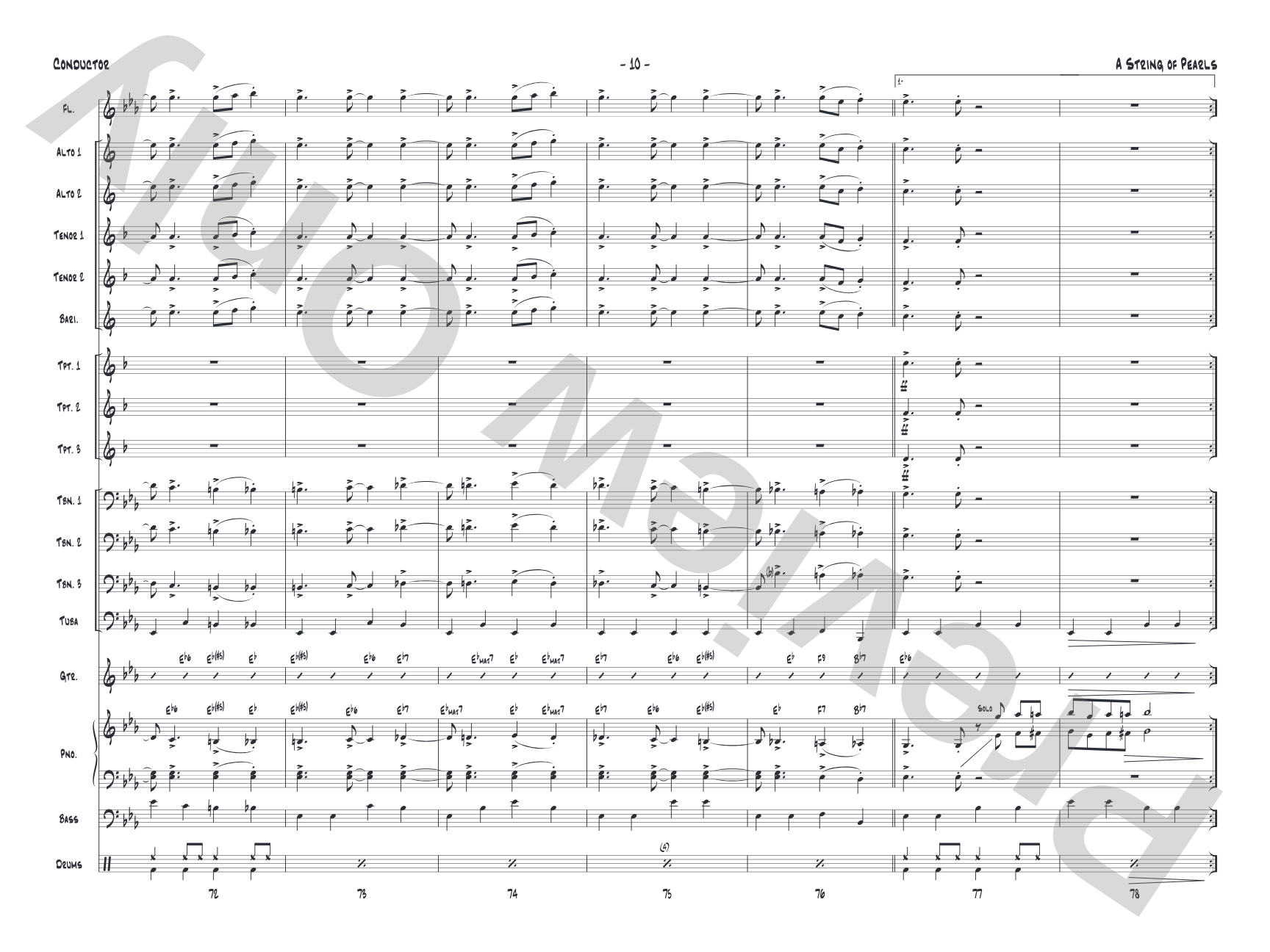
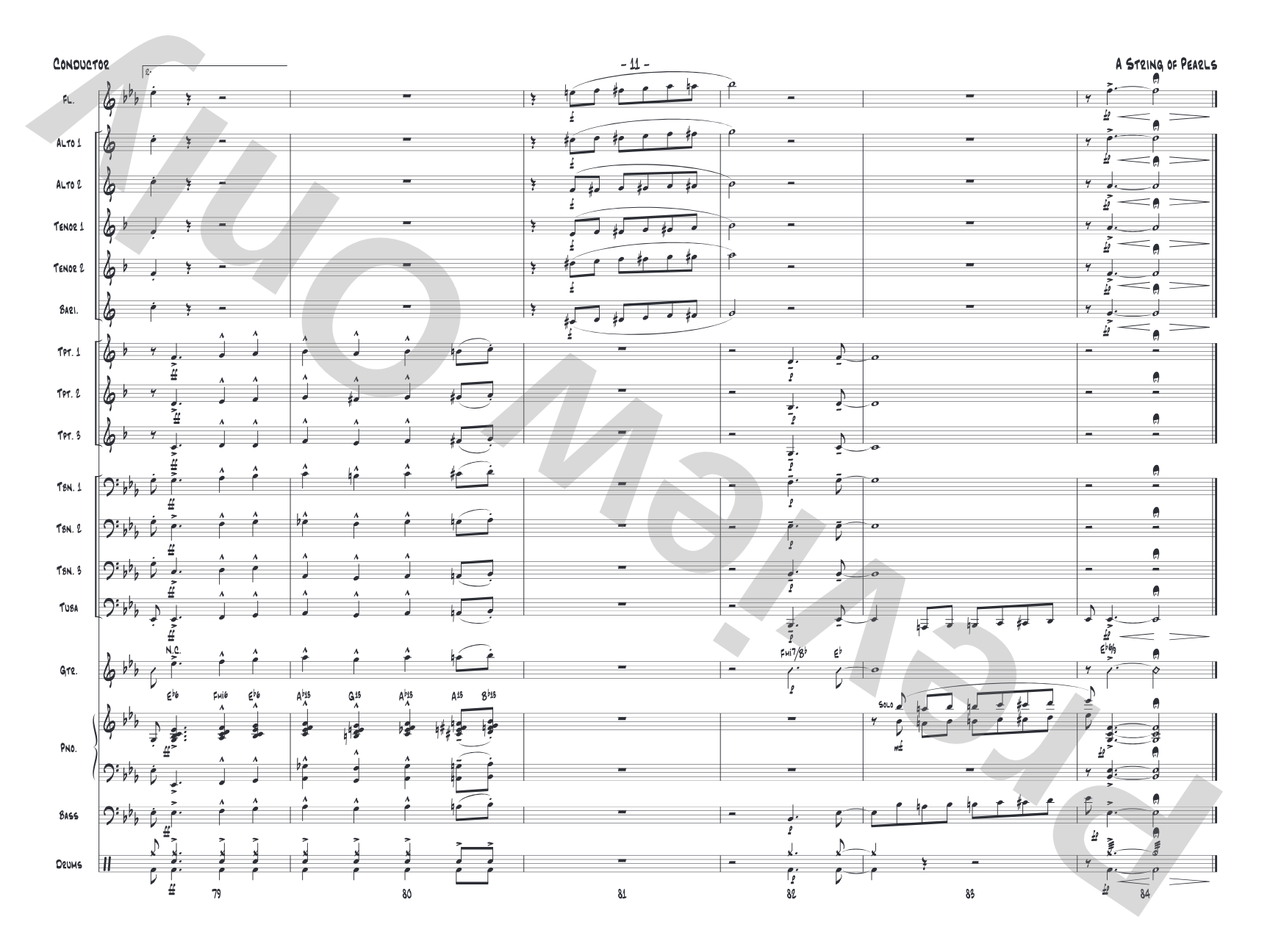




String of Pearls: Score
By Jerry Gray / arr. Mike Lewis
Grade: 1 (Easy)
Item: 00-PR-0004029
$8.00
Pickup currently not available
Description
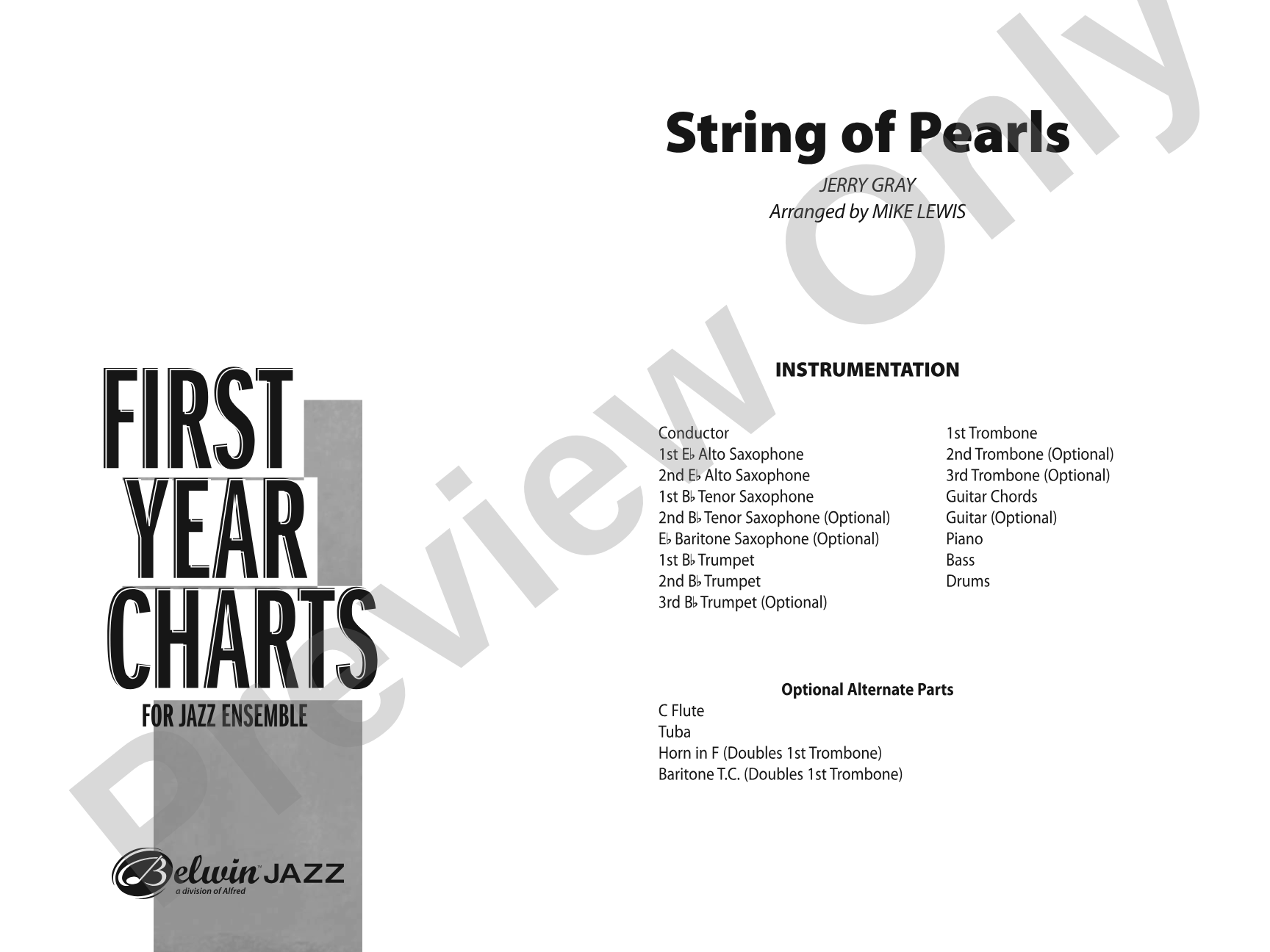
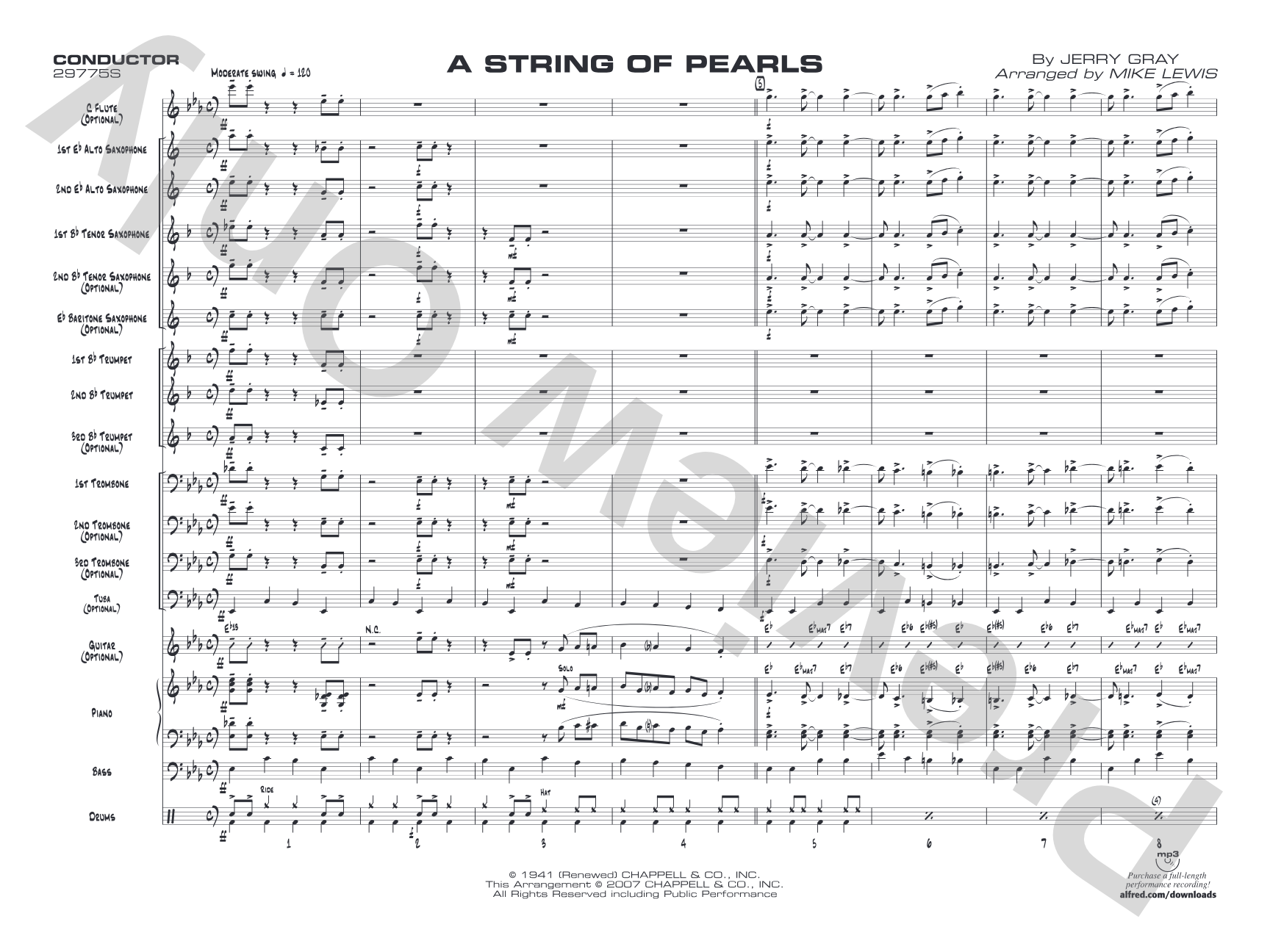
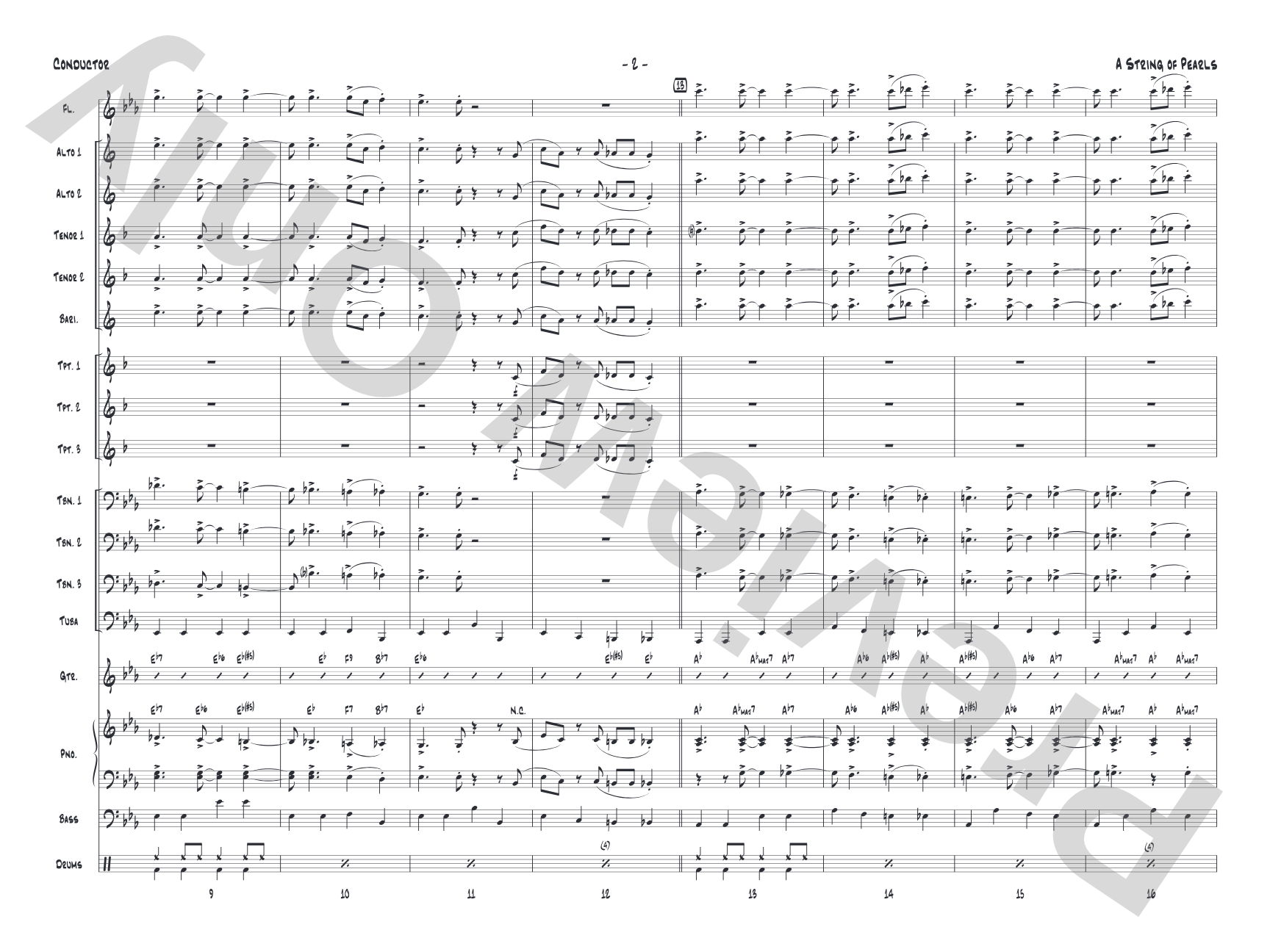
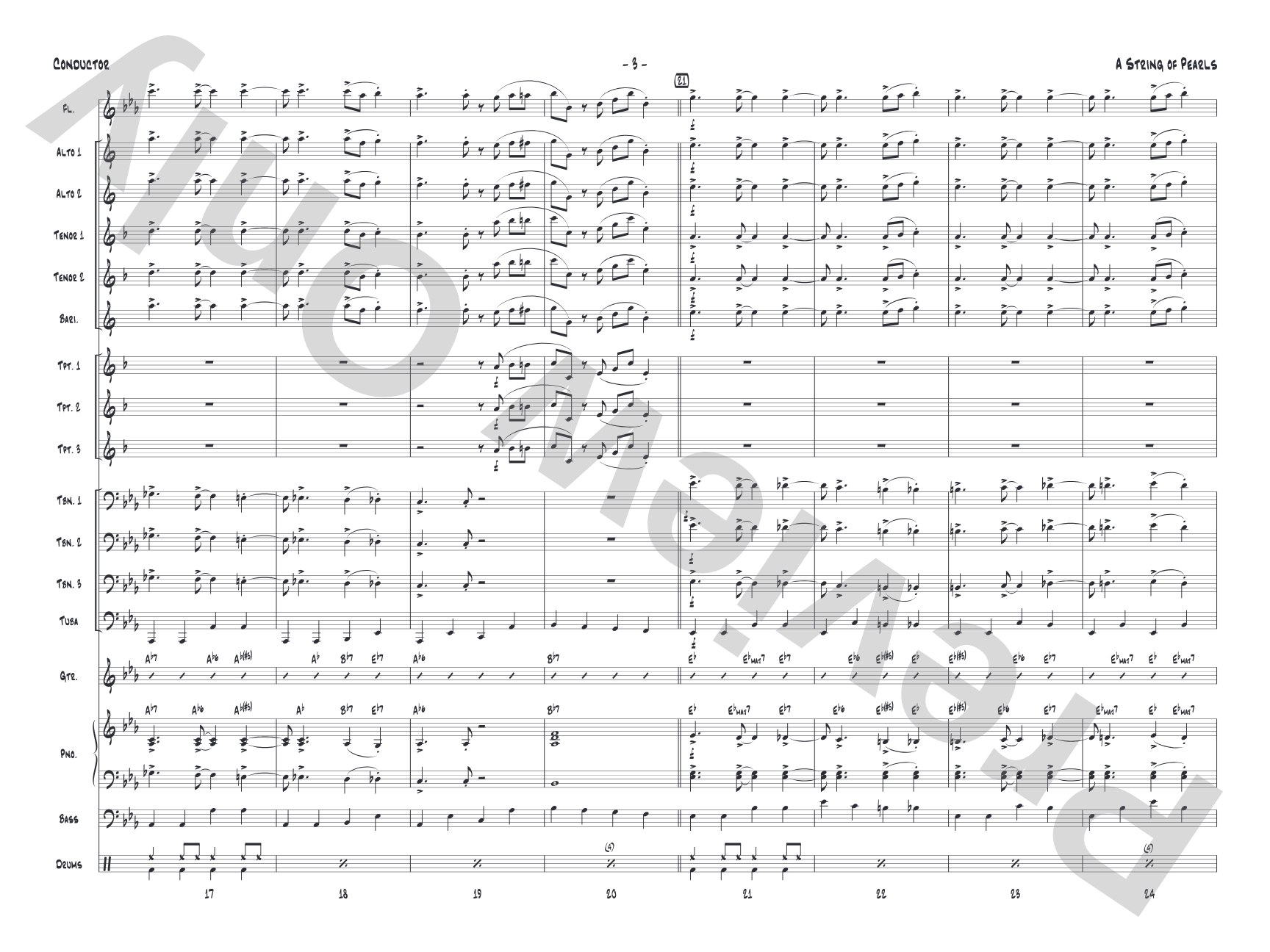
Arranger Mike Lewis took the swinging Glenn Miller hit and arranged it for the easy jazz ensemble player. Mike's clever reworking of the solo sections and the descending harmony line makes this chart very playable for the young jazz musician. 1st trumpet range is to written F top line. Ideal for any performance. (3:04)


Don't just read it, hear it, play along with it, and watch your students grow with it. In MakeMusic Cloud, String of Pearls: Score comes alive with professional accompaniment, adjustable tempo, and built-in practice tools that turn solo practice into real progress.
Open in the Player
Jump straight in and assign it today.
Start Your Free Trial
Open this title and explore the full library in minutes.
Sample Audio
1
Audio File
--:--
0:00
0:00
Sample Video
No sample videos found.
Additional Details
Series:
First Year Charts for Jazz Ensemble
Publisher:
Alfred Music
Page Count:
66
SKU:
00-PR-0004029
More about this title
About the Composer: Jerry Gray
Jerry Gray (1915-1976) was a trombonist, composer, and arranger who became one of the most prolific writers for the Glenn Miller Orchestra during the big band era. His arrangements defined the Miller sound with their clarity, sophistication, and accessibility to audiences of all levels. Gray continued composing and arranging long after the big band era, leaving a catalog of jazz standards that remain essential to the repertoire.
Why we love this
Mike Lewis's adaptation preserves the charm and momentum of Gray's original while making the piece genuinely achievable for newer jazz players. The reworked solo sections and streamlined harmony line keep the energy intact without overwhelming young ensembles, making this an excellent bridge between educational charts and authentic swing literature.
What to expect
Bright, propulsive, and genuinely swinging despite its accessible level. The piece captures the optimism and forward momentum of the big band era, with enough harmonic interest to keep mature listeners engaged while remaining fun and achievable for developing musicians.
Who it's for
Jazz ensemble directors working with Grade 1 players who want an authentic swing standard without the steep technical demands. This chart works equally well for young jazz combos, high school jazz I ensembles, or community jazz bands prioritizing repertoire over complexity.
How to get the most out of it
- Balance the descending harmony line carefully so it supports rather than overshadows the trumpet melody; this counterline is what gives the piece its character.
- Lock the rhythm section into a relaxed swing feel rather than rushing; the chart's effectiveness depends on the pocket staying patient and grounded.
- Feature soloists generously during the solo sections, as Lewis's reworking creates natural opportunities for section players to take the spotlight without technical barriers.
- Pay attention to the articulation markings in the trumpet section; they shape the phrasing and keep the swinging quality clear throughout.
How to use it
This is an ideal opener or closer for a jazz concert program, offering an immediately recognizable tune that audiences connect with right away. It pairs well with other First Year Charts selections in a concert devoted to early-level ensemble repertoire, or serves as a crowd-pleasing standard on mixed-difficulty programs.
Skills your students will build
- Reading swing rhythms and jazz articulation
- Playing countermelodies and harmony lines in a jazz context
- Balancing solo and ensemble roles within a chart
- Developing rhythmic confidence in medium-tempo swing feels
- Interpreting jazz phrasing and dynamics in an ensemble setting