
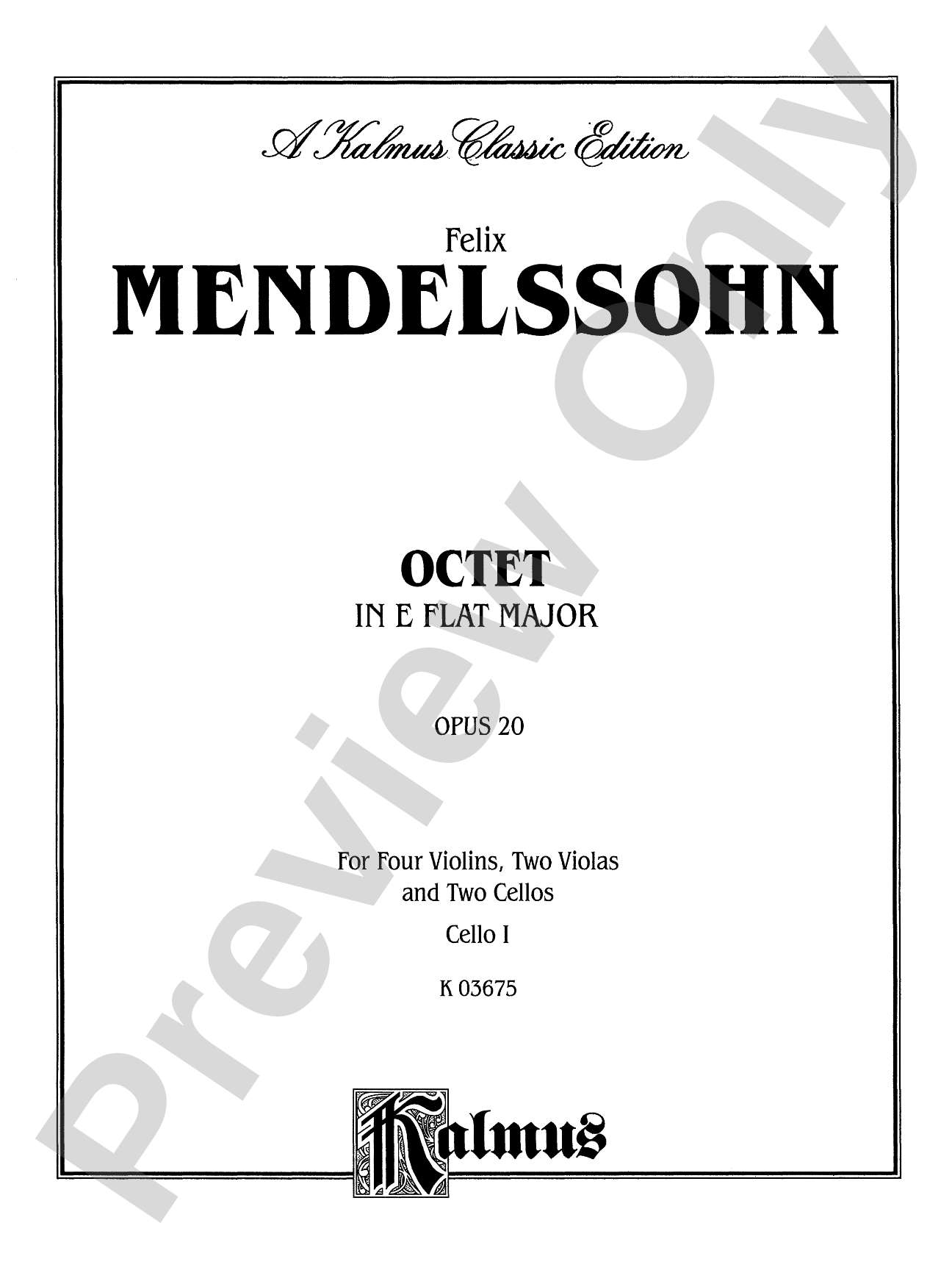
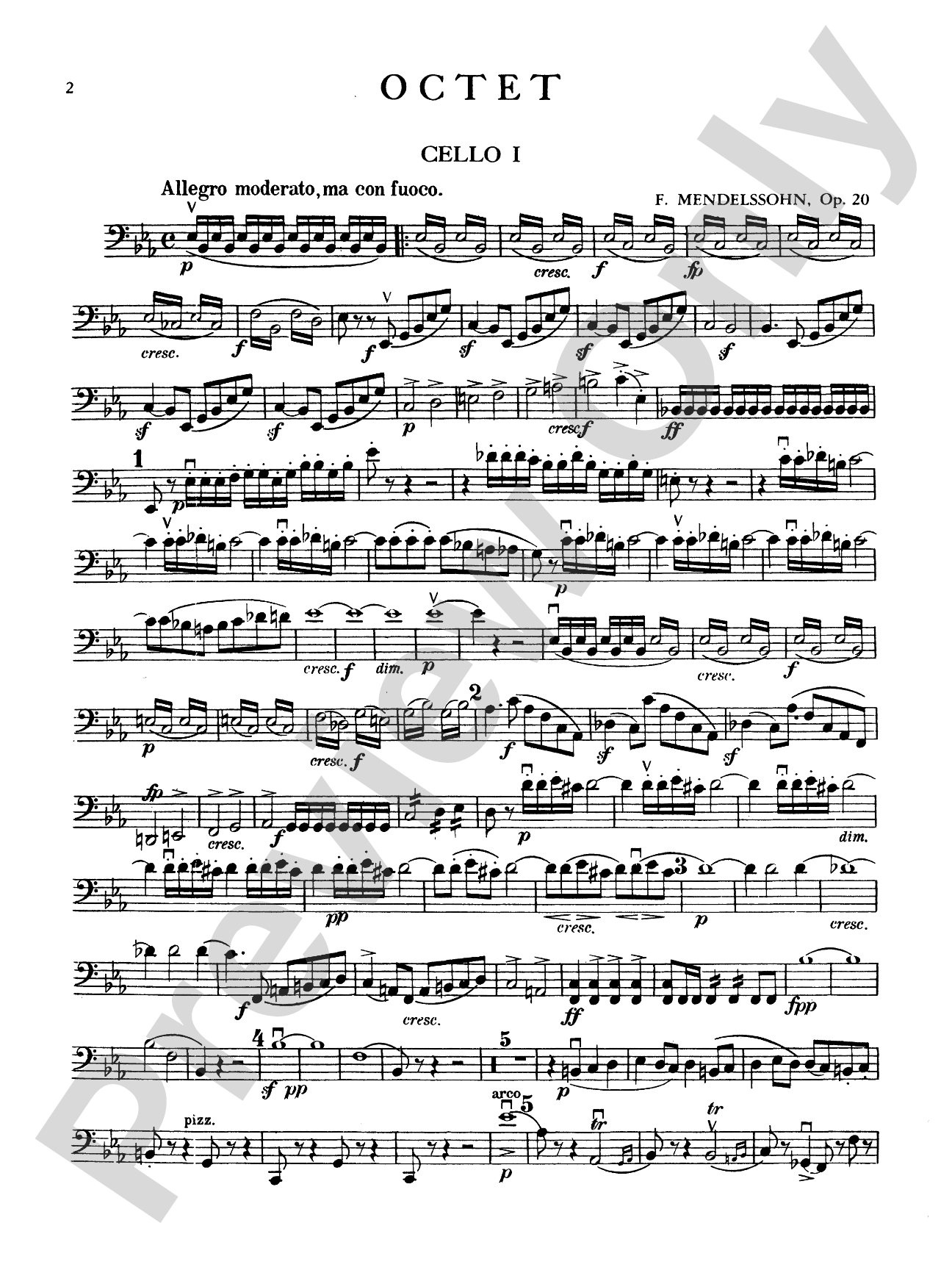
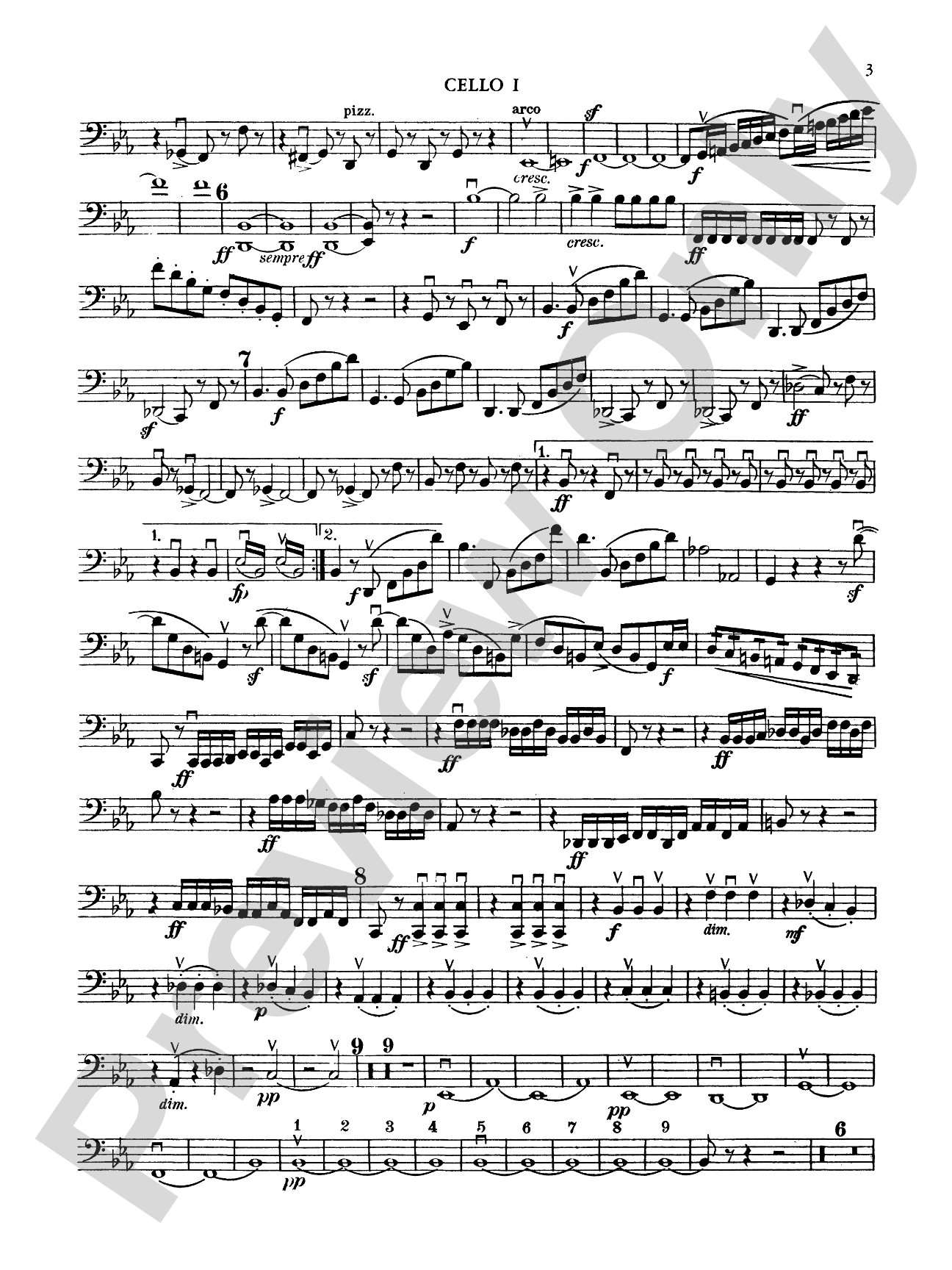

String Octet in E-Flat Major, Op. 20: Cello
By Felix Mendelssohn
Item: 00-PC-0002521_VC1
$3.00
Pickup currently not available
Description
Expertly arranged string octet from our Kalmus Edition.


Don't just read it, hear it, play along with it, and watch your students grow with it. In MakeMusic Cloud, String Octet in E-Flat Major, Op. 20: Cello comes alive with professional accompaniment, adjustable tempo, and built-in practice tools that turn solo practice into real progress.
Open in the Player
Jump straight in and assign it today.
Start Your Free Trial
Open this title and explore the full library in minutes.
Sample Audio
No sample audio found.
Sample Video
No sample videos found.
Additional Details
Series:
Kalmus Edition
Publisher:
Alfred Music
Page Count:
92
SKU:
00-PC-0002521_VC1
Instrumentation:
4 Violins, 2 Violas, 2 Cellos
More about this title
About the Composer: Felix Mendelssohn
Felix Mendelssohn (1809-1847) was a German composer whose gifts for both symphonic architecture and chamber music established him as a central figure of the early Romantic era. He composed the String Octet in E-flat Major while still a teenager, yet it remains one of the most performed works in the chamber music repertoire, demonstrating his rare ability to write idiomatically for strings while maintaining the structural sophistication of a major symphonic form.
Mendelssohn's influence on music education extends beyond his compositions to his role as a conductor and educator who championed both classical masterworks and contemporary music. His string writing shaped how subsequent generations understood the expressive and technical possibilities of the medium, making his chamber works essential repertoire for developing ensembles seeking models of clarity, vitality, and emotional directness.
Why we love this
This octet strikes an ideal balance between accessibility and ambition. The four-movement architecture unfolds with dramatic momentum and orchestral scope, yet the writing lies comfortably for eight capable players without excessive technical hurdles. Directors choose this work because it delivers genuine artistic satisfaction in performance while remaining achievable for high school and early collegiate ensembles.
What to expect
The E-flat Major tonality radiates warmth and generosity, while the four movements span the full emotional spectrum: the opening Allegro moderato bustles with youthful energy and symphonic scope, the second movement offers graceful elegance, the Scherzo dances with mischievous charm, and the finale builds to jubilant affirmation. Throughout, Mendelssohn's melodic gift and transparent orchestration create a work that feels both intellectually satisfying and emotionally accessible.
Who it's for
This work suits advanced high school and collegiate string ensembles with eight players of comparable ability. It works equally well for professional groups preparing for concert or chamber music festival performances and serves as a natural capstone repertoire experience for serious string players moving beyond smaller ensemble formats.
How to get the most out of it
- Shape each violin line with clear individual voice, especially in the first movement where the two first violins carry distinct thematic material. Avoid blending into an undifferentiated mass of sound.
- Balance the violas as equal partners in dialogue rather than harmonic filler. Mendelssohn gives both violas substantial musical responsibility, particularly in the Scherzo.
- Establish a rock-solid rhythmic foundation in the Scherzo by locking the cello section together; this infectious movement depends on precise, propulsive ensemble rhythm.
- Honor the lyrical warmth of the Andante by allowing time for phrasing to breathe. This movement reveals Mendelssohn's gift for singing melody and requires restraint in tempo rather than aggressive forward motion.
How to use it
Program this alongside other chamber masterworks on a concert celebrating the breadth of Romantic string writing, or feature it as the centerpiece of a string ensemble recital. It also serves as an excellent choice for chamber music competitions and regional music festivals, where its combination of artistic substance and audience appeal makes a strong impression.
Skills your students will build
- Reading multiple independent string parts with clear voice leading
- Maintaining rhythmic precision while managing complex polyphonic texture
- Balancing four distinct violin lines across two parts
- Interpreting Romantic-era articulation and phrasing conventions
- Ensemble listening and response across eight players
- Large-scale form awareness through a four-movement structure