
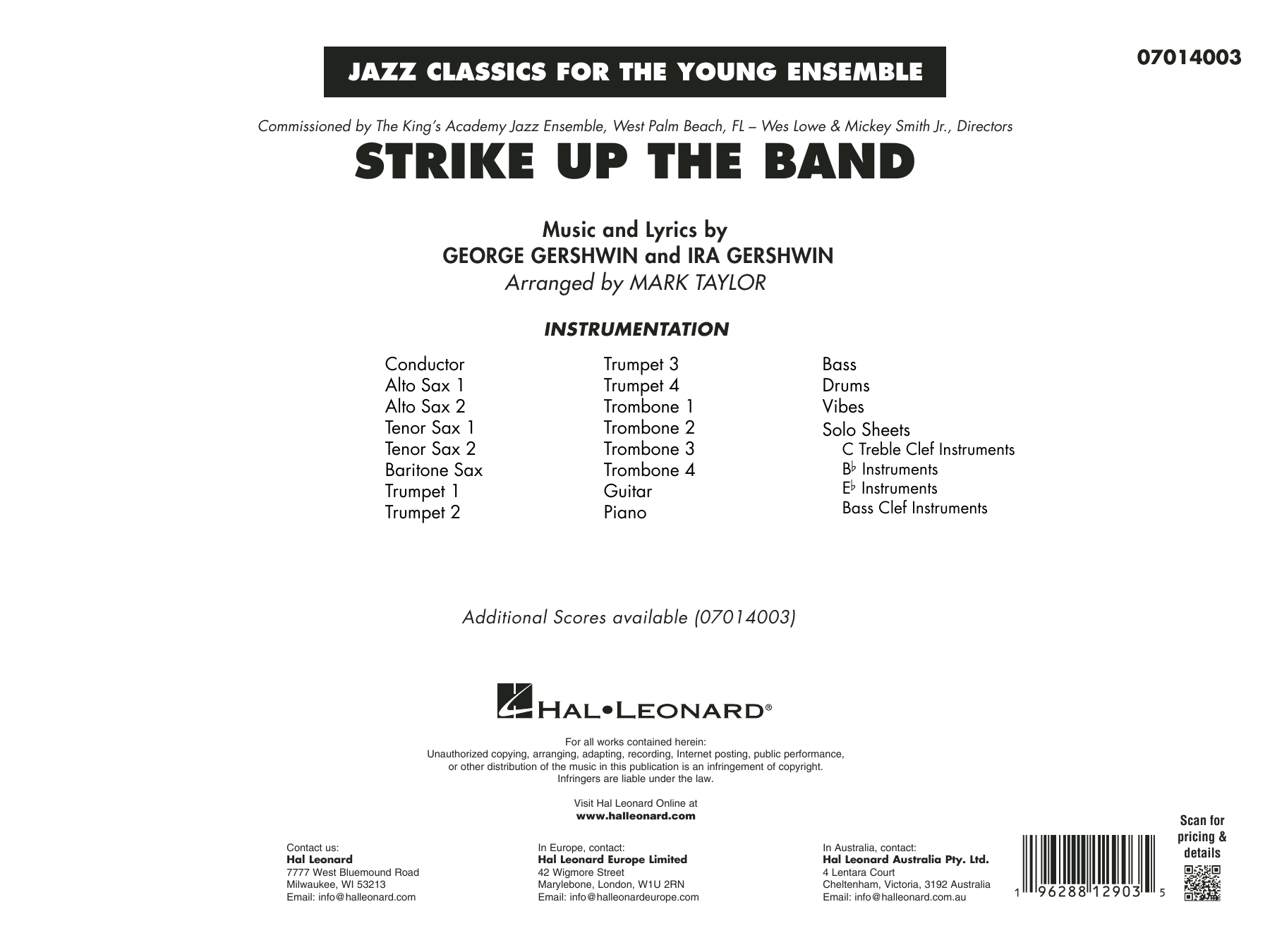

Strike Up the Band (arr. Mark Taylor): Jazz Ensemble Conductor Score & Parts
By George Gershwin Ira Gershwin / Arranged by Mark Taylor
Grade: 3
Item: 35-PK01278726
$50.00
Pickup currently not available
Buy Extra Parts (Digital PDF Download)
Parts Added to Cart!
Description
Inspired by the classic version recorded by Count Basie, here is a terrific uptempo swing chart suitable for younger bands. The melody is passed from section to section while building to a full band climax. Various soloing options are provided, and then a powerful shout chorus drives home this exciting chart.


Strike Up the Band (arr. Mark Taylor): Jazz Ensemble Conductor Score & Parts isn't in MakeMusic Cloud just yet...but it could be. Let us know you'd like to see it, and you'll help shape what comes next. In the meantime, start a free trial and dive into thousands of interactive titles your students can play along with today.
Request This Title
Tell us you want it.
Start Your Free Trial
Explore everything that's ready to play right now.
Sample Audio
No sample audio found.
Sample Video
No sample videos found.
Additional Details
Publisher:
Hal Leonard
SKU:
35-PK01278726
More about this title
About the Composer: George Gershwin Ira Gershwin
George Gershwin (1898–1937) and his brother Ira Gershwin (1896–1983) formed one of American music's most productive songwriting partnerships. George's gift for melody and harmonic sophistication combined with Ira's witty, singable lyrics created standards that defined the jazz age and Broadway's golden era. Their collaboration produced some of the 20th century's most enduring American music, from concert works like Rhapsody in Blue to theatrical hits like Girl Crazy and Of Thee I Sing.
Strike Up the Band, originally composed as a satirical operetta in 1927, became a cultural touchstone. The Gershwins' ability to blend sophisticated harmonies with infectious, memorable themes made their music equally at home in concert halls and dance bands. For music educators, their catalog offers repertoire that teaches harmonic vocabulary, blues influences, and the bridge between classical and popular idioms that defines American musical identity.
Why we love this
Mark Taylor's arrangement captures the infectious swagger of the Basie band while keeping the chart accessible for younger ensembles. The sectional melody passing creates natural opportunities for each section to shine, and the optional solos keep players engaged without overwhelming less advanced musicians. That final shout chorus delivers real energy and satisfaction, giving your band a genuine climax rather than just fading out.
What to expect
Bright and propulsive, like a Manhattan morning in the 1930s. The melody bounces from section to section with genuine joy, anchored by a solid swing groove. By the time you reach that final chorus, the whole band feels like it's swinging together in a real big band.
Who it's for
Grade 3 jazz bands that want a piece with real swing credentials and audience appeal. This works equally well for groups working on their first extended jazz arrangement and for more experienced ensembles seeking a program opener with proven energy.
How to get the most out of it
- Keep the swing feel relaxed and grounded in the rhythm section; younger bands often rush the eighths, so lock the pulse before rehearsing the horns.
- Let each section own its melodic moment without overblowing it. The power comes from clarity and precision, not volume.
- Feature your strongest soloists in the optional passages, but don't skip them entirely. These moments teach phrasing and jazz vocabulary to players who might not otherwise get solo experience.
- Shape the shout chorus as a unified swell rather than hitting it all at once. Bring the dynamics up gradually through the final eight bars so the ending lands with real punch.
How to use it
Open a jazz concert or spring pops show with this one. Its accessibility and immediate appeal make it an ideal choice for audiences new to jazz, while the Gershwin pedigree and Basie connection satisfy musicians. Pair it with a ballad and a funk tune to create a varied set that shows your ensemble's range.
Skills your students will build
- Swing eighth-note feel and groove maintenance
- Sectional melody passing and balanced voicing
- Jazz solo phrasing and rhythm changes language
- Dynamic control through crescendos and shout choruses
- Reading jazz notation and articulation conventions