
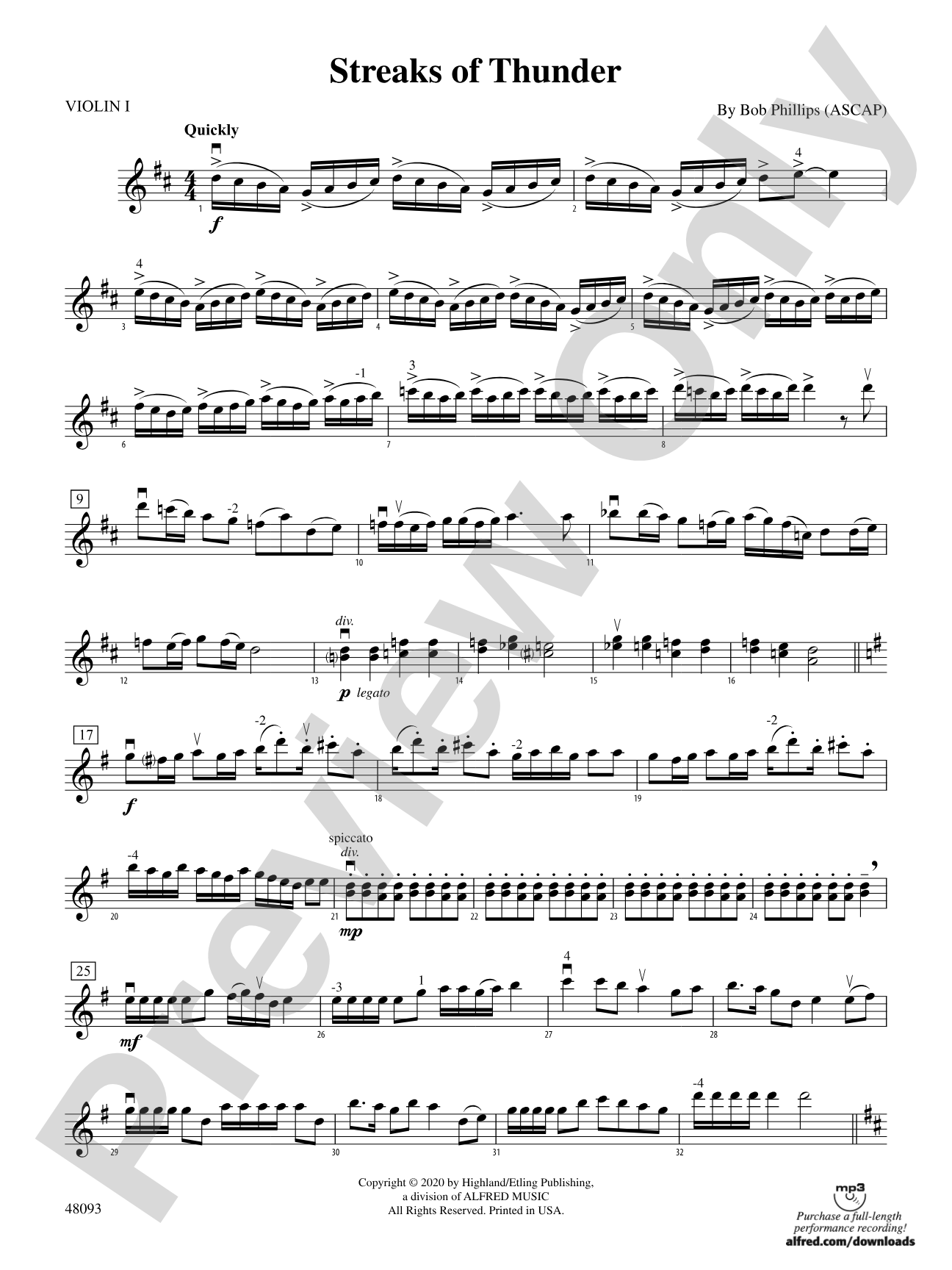

Streaks of Thunder: 1st Violin
By Bob Phillips
Grade: 3
Item: 00-PC-0018528_VN1
$3.00
Pickup currently not available
Description
Full of energy and life, Streaks of Thunder, an original piece by Bob Phillips, includes moments of sheer exuberance as well as reflection. The series of memorable melodies and driving rhythms "streak" through all sections in an almost call and response between upper and lower strings. Excitement abounds in this piece, making it a great opener or closer! (4:15) This title is available in MakeMusic Cloud.


Don't just read it, hear it, play along with it, and watch your students grow with it. In MakeMusic Cloud, Streaks of Thunder: 1st Violin comes alive with professional accompaniment, adjustable tempo, and built-in practice tools that turn solo practice into real progress.
Open in the Player
Jump straight in and assign it today.
Start Your Free Trial
Open this title and explore the full library in minutes.
Sample Audio
1
Audio File
--:--
0:00
0:00
Sample Video
Additional Details
Series:
Highland/Etling String Orchestra
Publisher:
Alfred Music
Page Count:
128
SKU:
00-PC-0018528_VN1
More about this title
About the Composer: Bob Phillips

Bob Phillips is a composer and pedagogue who has shaped string education through both innovative instructional materials and performance repertoire. Since the 1970s, he has developed comprehensive curricula including the Sound Innovations series across all six levels and genre-specific collections like Jazz Philharmonic, Rock Philharmonic, and Mariachi Philharmonic. Over 200 of his works have been published for orchestras and bands, and he is an ASCAP award-winning composer whose pieces are regularly performed at the Midwest Clinic.
Phillips built a nationally recognized string program in Saline, Michigan that grew to over 700 students, where he demonstrated mastery of both classical and eclectic musical styles. He founded the Saline Fiddlers Philharmonic, which gained international recognition through performances at the White House and major conferences. His conducting experience spans youth symphonies, all-state orchestras at multiple state festivals, and prestigious summer programs including Interlochen and Blue Lake Fine Arts Camp. For 12 years he served as resident conductor and arranger for the Wintergrass Festival in Seattle.
Why we love this
Streaks of Thunder delivers the kind of immediate energy that launches a concert or sends an audience out energized at the end. The piece balances genuine moments of reflection against driving rhythmic passages, preventing it from becoming one-dimensional, while the call-and-response dialogue between upper and lower strings keeps every section engaged and creates natural teaching moments around section independence.
What to expect
Streaks of Thunder moves with purpose and momentum, capturing that feeling of something dynamic breaking through calm. The piece alternates between moments where the full orchestra surges forward together and quieter passages where individual sections shine, creating a narrative arc that feels both exciting and intentional.
Who it's for
Grade 3 string orchestras seeking repertoire that energizes audiences and holds student interest throughout a full four minutes. This piece works for orchestras confident in basic rhythmic reading and independent ensemble playing but not yet at the technical complexity of Grade 4 material.
How to get the most out of it
- Emphasize the rhythmic vitality in the lower strings during the driving passages; their precision sets the foundation for the call-and-response exchanges with the upper strings.
- Shape the reflective sections with clear dynamic contrast to make the return to exuberance feel earned and intentional rather than simply loud.
- Encourage the upper strings to balance projection with clarity when they enter in response to the lower strings, so dialogue remains conversational rather than competing.
How to use it
Use this as a concert opener to establish energy and engagement from the first piece, or as a finale to send your audience home on a high note. It pairs well alongside more introspective selections, where its contrasts highlight both the reflective and exuberant sides of what your orchestra can express.
Skills your students will build
- Call-and-response between string sections (independence and listening)
- Dynamic contrast between driving and reflective passages
- Sustaining rhythmic momentum across a four-minute arc
- Sectional balance and dialogue within the ensemble