
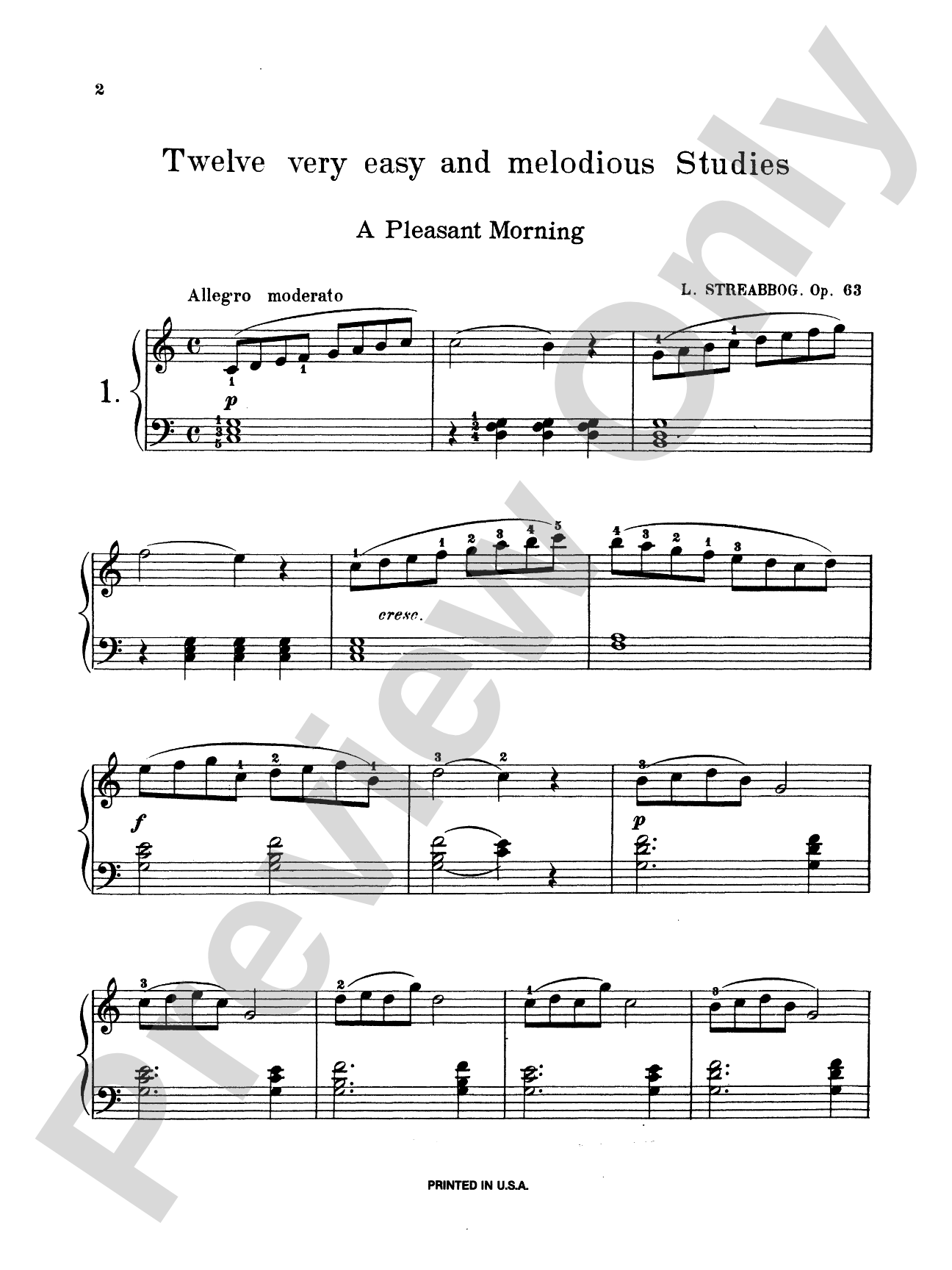
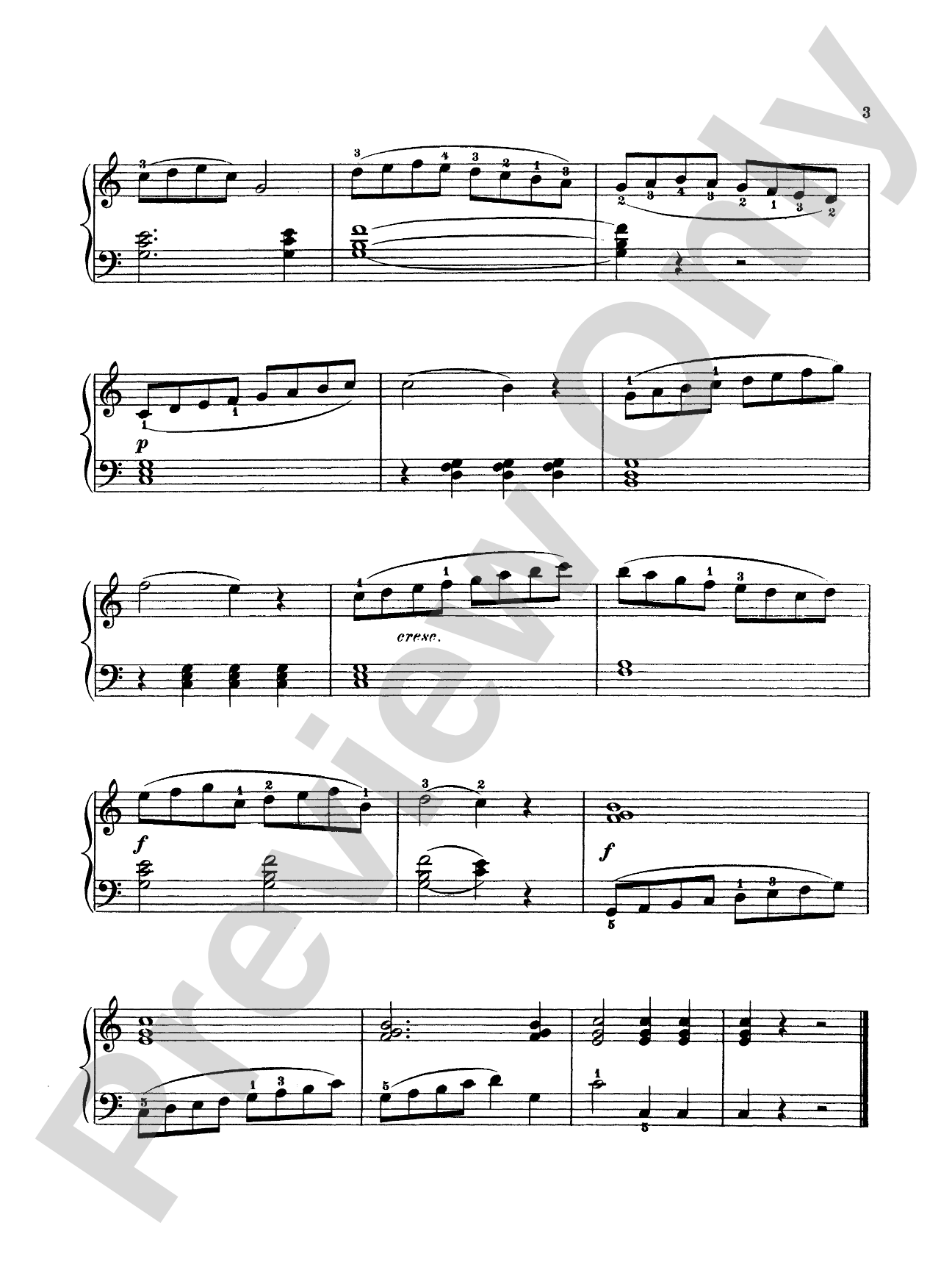

Streabbog: Twelve Very Easy and Melodious Studies, Op. 63: Piano Book
By Louis Streabbog
Item: 00-PK-0003358

$9.99
Pickup currently not available
Buy Extra Parts (Digital PDF Download)
Parts Added to Cart!
Related Items
Twelve Very Easy and Melodious Studies, Opus 63: Piano Book |
$9.99
|
View |
Description
A collection of Christmas solos, for Piano, composed by Louis Streabbog.


Don't just read it, hear it, play along with it, and watch your students grow with it. In MakeMusic Cloud, Streabbog: Twelve Very Easy and Melodious Studies, Op. 63: Piano Book comes alive with professional accompaniment, adjustable tempo, and built-in practice tools that turn solo practice into real progress.
Open in the Player
Jump straight in and assign it today.
Start Your Free Trial
Open this title and explore the full library in minutes.
Sample Audio
No sample audio found.
Sample Video
No sample videos found.
Additional Details
Series:
Kalmus Edition
Publisher:
Alfred Music
Page Count:
28
SKU:
00-PK-0003358
More about this title
About the Composer: Louis Streabbog
Louis Streabbog (1835-1886) was a French pianist and composer whose gift for melody and accessible writing made him a fixture in 19th-century music education. Working during the Romantic era, he published over 150 compositions, many designed specifically for students at early and intermediate levels. His studies emphasize singing lines and musical expression rather than technical display, reflecting a pedagogical philosophy that treats learning pieces as complete musical statements rather than mere exercises.
Streabbog's legacy rests on his understanding of what young pianists need: material that sounds beautiful, sits naturally under the hand, and rewards careful listening. Teachers across Europe adopted his works for their clarity and melodic appeal, and they remain staples of piano curricula today because they accomplish their dual purpose so effectively: students make genuine musical progress while genuinely enjoying what they play.
Why we love this
This collection delivers exactly what early piano students crave: short pieces that sound substantially better than their technical demands suggest. Each study unfolds a complete musical idea without padding, so players feel musicianship developing rather than merely drilling patterns. Streabbog's melodic gift shines throughout; a student working through Op. 63 will find themselves wanting to play these pieces again, which is the surest sign of lasting pedagogical value.
What to expect
These pieces breathe with Romantic warmth and tuneful grace. Melodies unfold with the gentle inevitability of a song remembered clearly; accompaniments remain supportive and uncluttered. The overall character is introspective and lyrical rather than showy, inviting the player to find beauty in simplicity and to listen closely to the music unfolding beneath their fingers.
Who it's for
Early intermediate pianists (roughly grades 2-3) who have mastered basic technique and are ready for repertoire that rewards musicality and interpretive thinking. Teachers seeking short, elegant pieces suitable for recitals, studio showcases, or exam preparation will find genuine value in a collection that combines pedagogical purpose with musical substance. The modest length and melodic accessibility also make these studies ideal for adult beginners seeking satisfying repertoire.
How to get the most out of it
- Shape the melody with consistent voicing and gentle dynamic nuance; even at a leisurely tempo, Romantic phrasing elevates these studies from exercises to performances.
- Maintain evenness in the accompanying figure or left-hand pattern while allowing the singing line to breathe naturally, giving priority to melodic contour over metronomic regularity.
- Listen across phrases rather than note-to-note; treat each study as a coherent arc with clear points of arrival, which helps dissolve the 'piece-as-study' feeling.
How to use it
Program individual studies as elegant filler pieces between weightier works on recitals, or offer several consecutively as a mini-suite demonstrating technical and expressive growth. They work equally well as month-long focus pieces in a private studio, where each study receives sufficient rehearsal time to become truly polished. The collection's gentle character makes it particularly suited to informal settings or educational concerts where accessibility and musicality matter more than virtuosity.
Skills your students will build
- Shaping longer melodic phrases with dynamic and tonal control
- Balancing melody and accompaniment texture
- Sustaining even, non-mechanical rhythm in simple left-hand patterns
- Reading and performing Romantic-era notational conventions (including expression markings and tempo indications)
- Maintaining poise and musical continuity in short, complete musical structures