
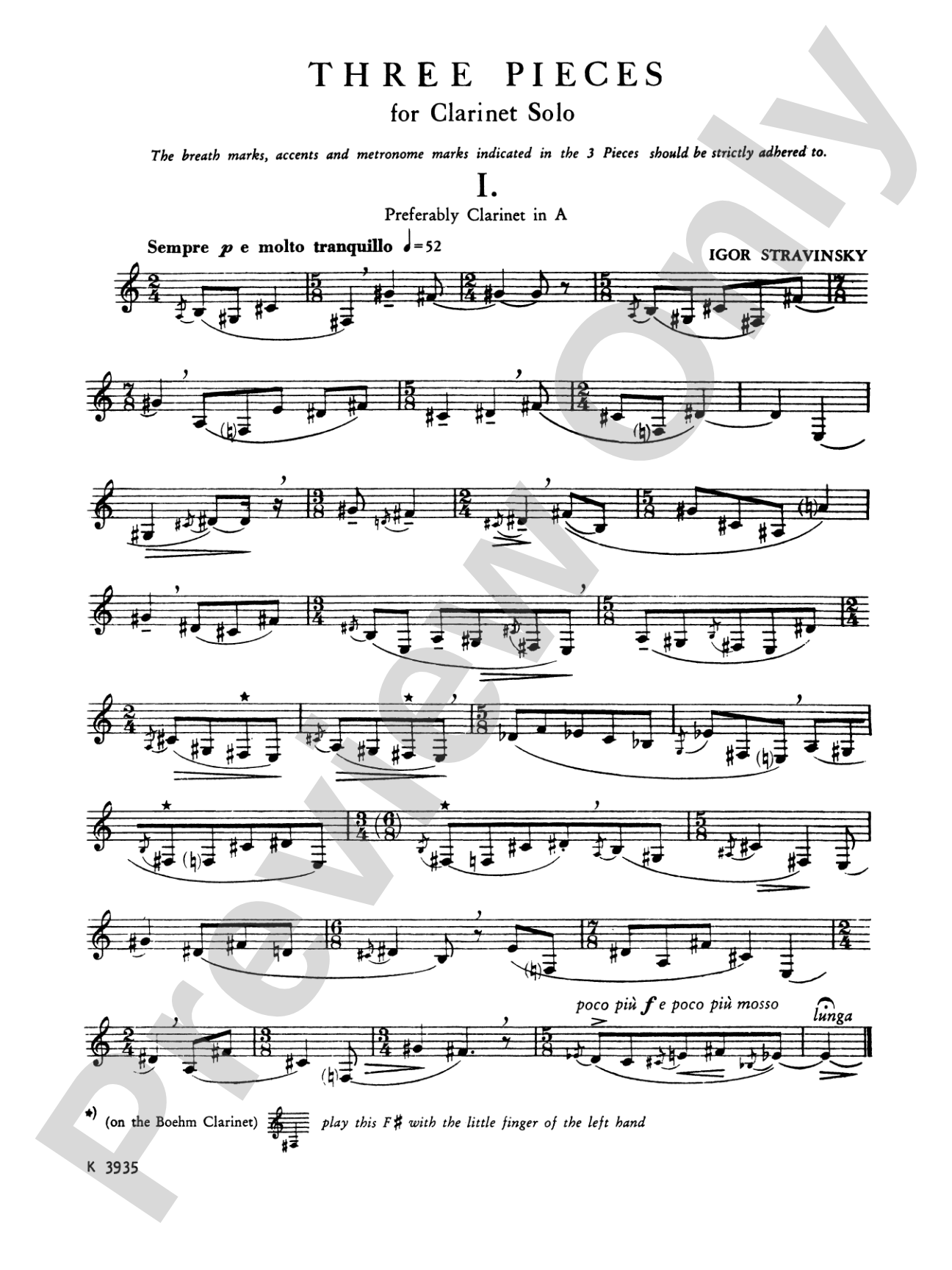

Stravinsky: Three Pieces: Clarinet Part(s)
By Igor Stravinsky
Item: 00-PK-0003338

$6.99
Pickup currently not available
Buy Extra Parts (Digital PDF Download)
| Product | Price | Quantity |
|---|---|---|
| Stravinsky: Three Pieces | $1.99 | |
| Stravinsky: Three Pieces | $1.99 | |
| Stravinsky: Three Pieces | $1.99 |
Parts Added to Cart!
Related Items
Three Pieces: Clarinet Part(s) |
$6.95
|
View |
Description
Stravinsky wrote the Three Pieces for Clarinet in late 1918, dedicating them to a long time supporter and friend, Werner Reinhart. The tempo is marked "Sempre piano e molto tranquillo."


Don't just read it, hear it, play along with it, and watch your students grow with it. In MakeMusic Cloud, Stravinsky: Three Pieces: Clarinet Part(s) comes alive with professional accompaniment, adjustable tempo, and built-in practice tools that turn solo practice into real progress.
Open in the Player
Jump straight in and assign it today.
Start Your Free Trial
Open this title and explore the full library in minutes.
Sample Audio
No sample audio found.
Sample Video
No sample videos found.
Additional Details
Series:
Kalmus Edition
Publisher:
Alfred Music
Page Count:
8
SKU:
00-PK-0003338
More about this title
About the Composer: Igor Stravinsky
Igor Stravinsky (1882-1971) fundamentally reshaped 20th-century music through relentless formal innovation and rhythmic complexity. His ballets for the Diaghilev company transformed what audiences expected from orchestral music, while his later works demonstrated an equally restless engagement with serial technique and neoclassical forms.
Stravinsky's chamber works for solo instruments reveal a composer intensely interested in the individual voice. The Three Pieces for Clarinet exemplify his gift for distilling profound musical ideas into sparse, economical gestures. Written during his early years in Switzerland, they capture a moment of artistic reflection and represent some of his most accessible yet uncompromising solo writing.
Why we love this
These pieces demand nothing but restraint and clarity from the clarinetist, yet contain all the harmonic sophistication and formal precision that make Stravinsky essential repertoire. The marking "Sempre piano e molto tranquillo" sets an entirely different aesthetic from the explosive works students may know; here the challenge lies in sustaining tension through stillness. Contest adjudicators consistently respect the musician who can inhabit this quiet, concentrated sound world.
What to expect
Spare, meditative, and enigmatic. Each of the three pieces unfolds with deliberate pacing, creating moments of harmonic ambiguity and lyrical restraint that feel contemporaneous yet timeless. The constant soft dynamic and unhurried tempo invite deep listening rather than virtuosic display.
Who it's for
Intermediate to advanced clarinetists preparing for solo competitions, recitals, or concert programs seeking 20th-century repertoire with genuine artistic substance. These pieces suit musicians comfortable with modern harmonic language and willing to cultivate an introspective interpretive approach.
How to get the most out of it
- Commit fully to the marking "Sempre piano e molto tranquillo." Soft playing in Stravinsky demands absolute clarity of line and articulation, not vagueness. Let the low dynamic expose rather than conceal your tonal control.
- Honor the harmonic language by listening carefully to how each note sits within the implied harmony. Stravinsky's sparse textures mean every pitch carries structural weight.
- Approach phrasing with architectural precision. These pieces are brief and aphoristic; resist the urge to over-shape. Let the silence between phrases speak.
- Pay close attention to articulation markings and dynamics. In music this economical, every notational detail is a compositional choice, not a suggestion.
How to use it
Program these pieces as a contrasting set within a recital that might otherwise feature lyrical Romantic repertoire or contemporary works with more overt energy. Their quiet intensity makes them particularly effective as concert closers or as a centerpiece in a program exploring 20th-century aesthetics. They also serve as excellent audition material for music conservatory programs and chamber music competitions.
Skills your students will build
- Sustaining focused, controlled tone at soft dynamic levels
- Hearing and performing within complex harmonic language without tonal reference
- Maintaining musical shape and phrasing in aphoristic, sparsely notated contexts
- Interpreting contemporary notation and performance markings with precision
- Developing patience and concentration in music that rewards restraint over display