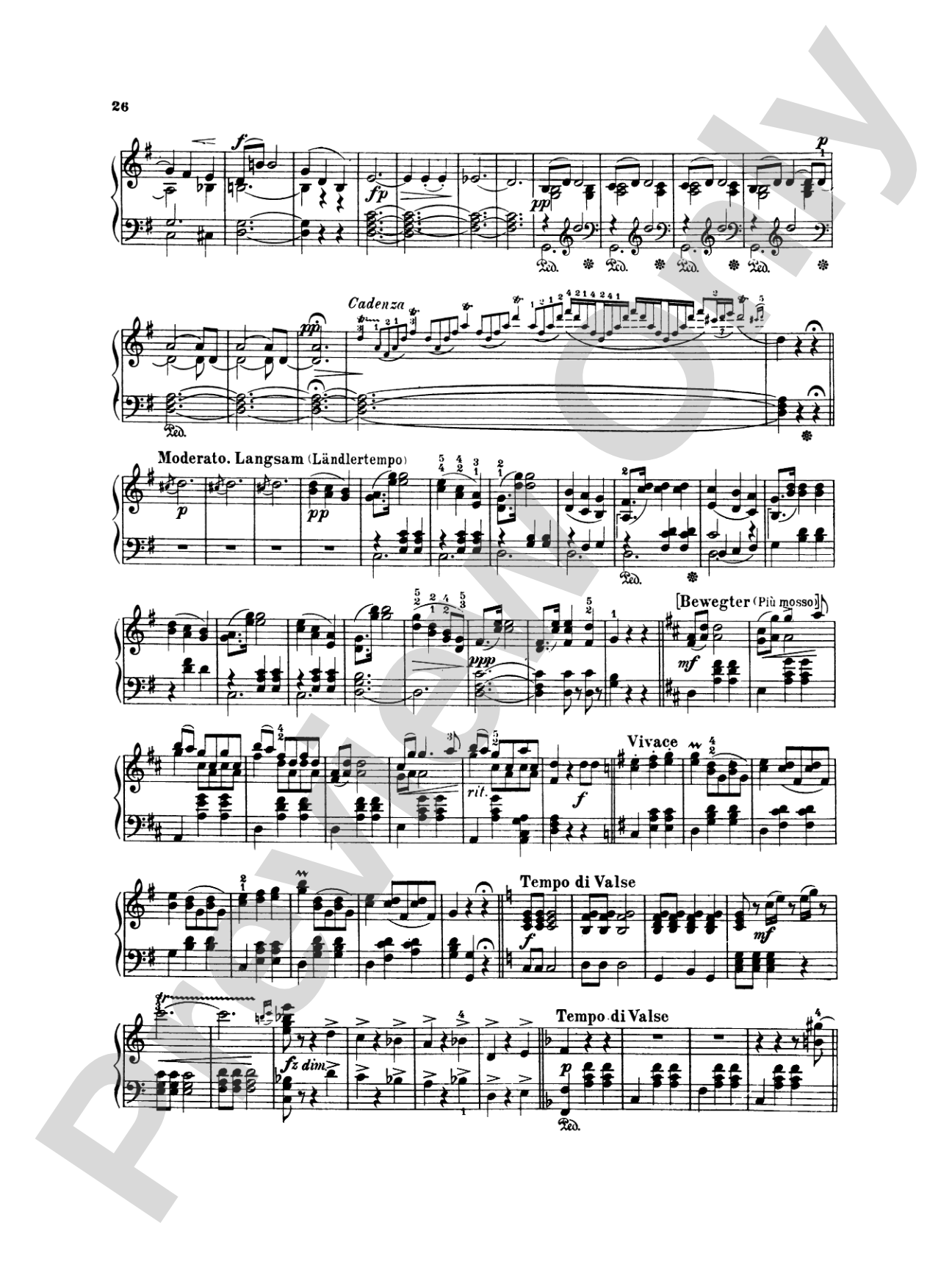
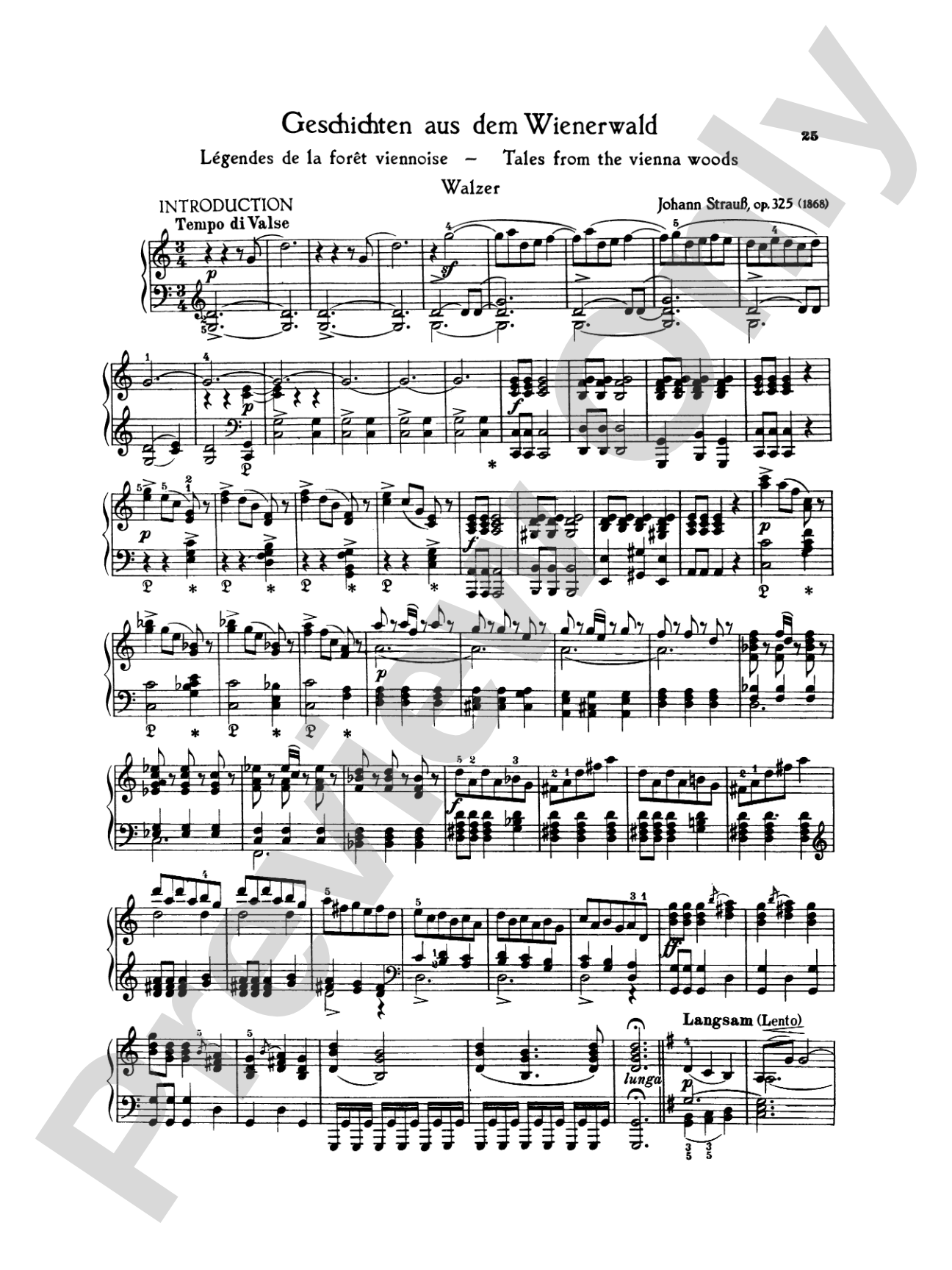
Strauss: Waltzes, Volume I Sheet Music Preview

Strauss: Waltzes, Volume I

By Johann Strauss, Jr.

Level: Intermediate / Advanced

Item: 00-PC-0009451

Digital Download
$0.99
Description
A collection of Intermediate / Advanced piano solos composed by Johann Strauss, Jr..

Don't just read it, hear it, play along with it, and watch your students grow with it. In MakeMusic Cloud, Strauss: Waltzes, Volume I comes alive with professional accompaniment, adjustable tempo, and built-in practice tools that turn solo practice into real progress.

Sample Audio
No sample audio found.
Sample Video
Additional Details
Series: Kalmus Edition
Publisher: Alfred Music
Page Count: 48
SKU: 00-PC-0009451

More about this title

About the Composer: Johann Strauss, Jr.

Johann Strauss, Jr. (1825–1899) defined the waltz as the dominant dance form of 19th-century Vienna. The son of an accomplished composer, he surpassed his father's fame and became known as the "Waltz King," composing over 500 dance pieces that balanced technical brilliance with memorable melody. His works shaped the sound of the Romantic era and remain central to both concert and ballroom repertoires.

Strauss brought orchestral sophistication to a form originally rooted in folk tradition. His waltzes feature characteristic triple meter, lilting accompaniment patterns, and seamless modulations that reward pianists who understand their harmonic architecture. For intermediate and advanced pianists, his keyboard arrangements provide essential repertoire that teaches both historical style and musical elegance.

Why we love this

These arrangements capture what made Strauss indispensable to concert programming: genuine melodic appeal paired with writing that demands real pianistic control. The intermediate-advanced level hits the sweet spot where students move beyond five-finger patterns but are still building independence and voicing clarity, making these waltzes ideal for recitals that showcase both technical growth and musicianship.

What to expect

Elegant, graceful, and rhythmically alive. Strauss waltzes move with the buoyant confidence of a ballroom, yet these piano arrangements invite you into intimate harmonic sophistication. Every melody unfolds with natural phrasing, and the supporting harmonies (often thick and rich in these intermediate versions) create a sense of musical weight that makes even a single waltz feel like a complete artistic statement.

Who it's for

Pianists who have solid technique in the intermediate-advanced range and are ready for music that demands both refined tone control and stylistic awareness. This collection serves students preparing for recitals, auditions, or exams where 19th-century concert repertoire is expected, as well as teachers seeking elegant literature that bridges the gap between early advanced work and full concert-level mastery.

How to get the most out of it

  • Shape the main waltz melody with gentle dynamic swell; resist the urge to accent every strong beat, which deadens the characteristic lilt of triple meter
  • Keep the accompanying oom-pah pattern light and rhythmically supple rather than metronomic; this rhythmic flexibility is essential to Viennese waltz style
  • Prepare for key changes by listening carefully to how Strauss transitions between sections; these modulations are often subtle and require smooth voice leading in the left hand
  • Practice the harmonic structure in isolation if you find yourself rushing; these pieces reward pianists who understand where the phrase goals lie

How to use it

Waltzes from this collection work beautifully in recitals that explore Romantic-era keyboard literature or in programs celebrating Vienna's musical culture. Consider pairing a single waltz with works by Brahms, Dvořák, or other 19th-century composers to create thematic coherence, or program consecutive waltzes from the collection as a suite that demonstrates your student's stamina and expressive range.

Skills your students will build

  • Maintenance of tempo and rhythmic stability within triple meter while avoiding mechanical accompaniment patterns
  • Harmonic understanding of Romantic-era modulation techniques
  • Phrase shaping and dynamic control in lyrical, dance-oriented melody
  • Left-hand independence and voicing in alternating bass-chord accompaniment patterns
  • Style-appropriate interpretation of 19th-century ballroom music

You May Also Like