Strauss: Piano Pieces, Op. 3 Sheet Music Preview

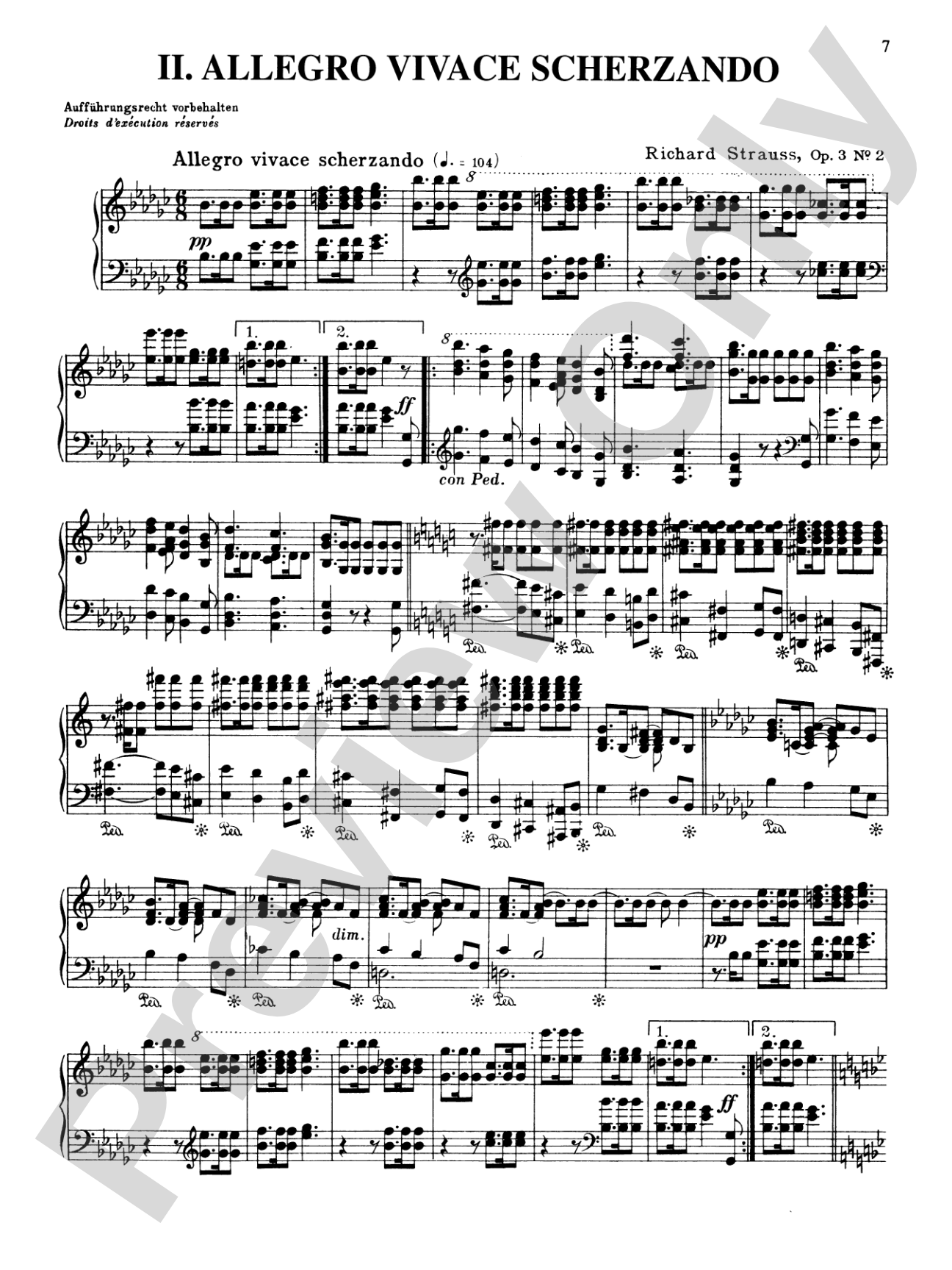
Strauss: Piano Pieces, Op. 3

By Richard Strauss

Item: 00-PC-0003980

Digital Download
$0.99
Description
This collection offers five lush piano solos for the advanced player. Each piece is orchestral in texture, although none are very lengthy. The pieces may be performed separately or as a complete set. A cleanly printed edition.

Don't just read it, hear it, play along with it, and watch your students grow with it. In MakeMusic Cloud, Strauss: Piano Pieces, Op. 3 comes alive with professional accompaniment, adjustable tempo, and built-in practice tools that turn solo practice into real progress.

Sample Audio
No sample audio found.
Sample Video
Additional Details
Series: Kalmus Edition
Publisher: Alfred Music
Page Count: 28
SKU: 00-PC-0003980

More about this title

About the Composer: Richard Strauss

Richard Strauss (1864-1949) stands as one of the last major figures of the Romantic tradition, bridging nineteenth-century lyricism with twentieth-century modernism. A master orchestrator whose symphonic poems revolutionized instrumental music, Strauss also composed extensively for solo piano, exploring the instrument's capacity for orchestral color and grandeur.

Though best known for his monumental orchestral works, Strauss's piano writing reveals an intimate understanding of keyboard texture and virtuosity. His Op. 3 collection demonstrates how thoroughly he absorbed the Romantic piano tradition while pushing toward his own harmonic language. For pianists and educators, Strauss's smaller works offer direct access to the compositional voice that shaped early modern music.

Why we love this

These five pieces give advanced pianists a chance to explore Strauss's harmonic language at a manageable scale. Each work stands on its own musically, yet the collection coheres beautifully when performed as a suite, making it ideal for recital programming that demands sophistication without overwhelming the player. The orchestral textures demand real musical maturity, rewarding students who have developed genuine interpretive depth.

What to expect

Lush, introspective, and harmonically sumptuous. These pieces evoke the world of Strauss's larger orchestral canvases, condensed into intimate keyboard expressions. The writing luxuriates in chromatic harmony and rich sonorities while maintaining an elegiac restraint that distinguishes them from flashier Romantic display pieces.

Who it's for

Advanced pianists with solid technique and interpretive confidence will find these pieces rewarding. They suit students preparing for conservatory auditions, adult pianists expanding their Romantic-era repertoire, and teachers building recital programs that balance accessibility with genuine musical substance.

How to get the most out of it

  • Shape the harmonic progressions with a long line rather than treating them as ornamental. Strauss's chromaticism serves the melodic arc, not decoration.
  • Balance transparency in the texture by allowing the middle voices to breathe; resist the temptation to overweight the bass simply because it sits low on the keyboard.
  • Attend to the subtle dynamic shadings within each piece. Strauss rarely marks dramatic shifts; instead, he uses inflection to create architectural movement.
  • Sustain the pedal with discretion, clearing it frequently enough to preserve harmonic clarity despite the rich sonorities.

How to use it

Program the complete set as an intermission piece or second-half opener to showcase an advanced student's maturity, or select individual pieces to complement other Romantic or early twentieth-century works. The shorter length of each piece makes them excellent choices for variety within a recital dominated by longer-form works.

Skills your students will build

  • Managing chromatically complex harmonic progressions
  • Balancing multiple voices across the keyboard without sacrificing clarity
  • Interpreting subtle dynamic and textural shifts within a limited harmonic vocabulary
  • Sustaining long musical lines through carefully controlled pedaling
  • Recognizing the relationship between orchestral and pianistic texture

You May Also Like