Strange Sheet Music Preview

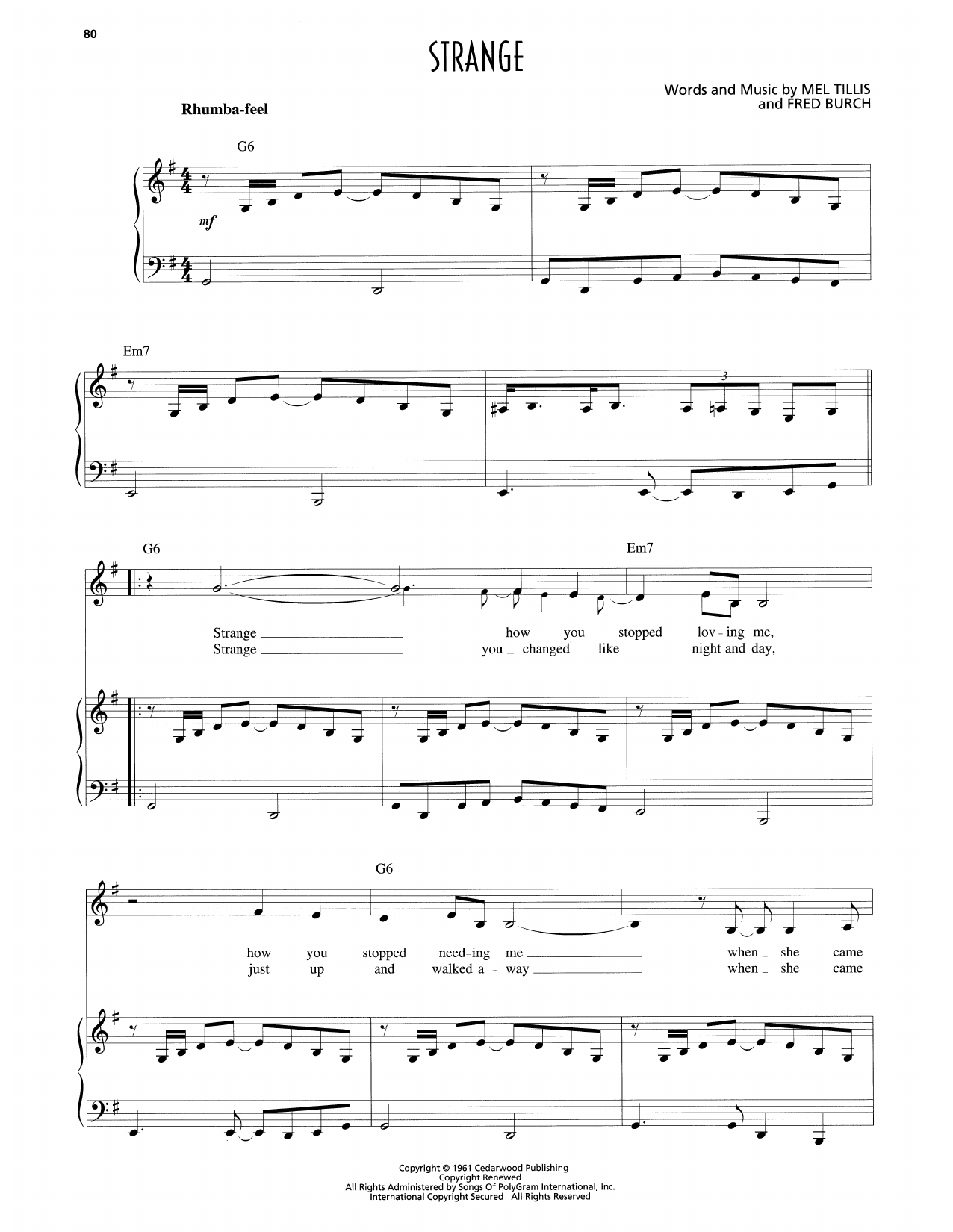
Strange: Piano Vocal

As performed by Patsy Cline

Item: 35-DS01823718

Digital Download
$5.99
Description

Strange: Piano Vocal isn't in MakeMusic Cloud just yet...but it could be. Let us know you'd like to see it, and you'll help shape what comes next. In the meantime, start a free trial and dive into thousands of interactive titles your students can play along with today.

Sample Audio
No sample audio found.
Sample Video
Additional Details
Publisher: Hal Leonard
Page Count: 4
SKU: 35-DS01823718

More about this title

About the Artist: Patsy Cline

Patsy Cline (1932-1963) was a trailblazer who bridged country and pop music during the 1950s and early 1960s, earning her place as one of the first female country artists to achieve mainstream crossover success. Her warm, sophisticated vocal delivery and emotional depth transformed what country music could be, influencing generations of singers across genres.

Cline's catalog remains a masterclass in vocal phrasing and emotional authenticity. For singers and pianists, her recordings offer clear models of how to balance technical control with genuine feeling, making her work invaluable for studying expressive performance.

Why we love this

Patsy Cline's catalog gives singers access to material that sits comfortably in the contemporary vocal toolkit while maintaining genuine artistic substance. "Strange" showcases her gift for emotional restraint and control, offering pianists and vocalists a song that rewards attention to detail and nuance without demanding operatic extremes.

What to expect

"Strange" carries the quiet confidence of someone who knows their own heart. The song settles into a contemplative space, with enough harmonic interest to keep pianists engaged while remaining emotionally direct and uncluttered.

Who it's for

Solo singers preparing audition material or performance repertoire will find this song hits the sweet spot between accessibility and sophistication. Pianists accompanying vocalists, whether in voice lessons or recitals, gain insight into how to support an emotionally engaged performer.

How to get the most out of it

  • Shape the vocal line with careful attention to rubato; Cline's signature sound came from the spaces between strict time and her willingness to breathe expressively.
  • Let the piano part breathe alongside the voice rather than driving mechanically. The accompaniment should feel like a conversation partner, not a metronome.
  • Explore the relationship between restraint and vulnerability in the lyric; the vocal quality should feel intimate, as if singing directly to one person.
  • Balance the recorded style (often featuring lush string arrangements) with the simplicity of the piano part; consider what emotional core remains when you strip away production.

How to use it

Include this alongside other classic vocal standards in a recital devoted to American songwriting, or pair it with contemporary country material to show how Cline's work continues to influence modern singers. It also works well in a voice studio setting as a study in controlled emotional expression.

Skills your students will build

  • Phrasing and breath placement for lyrical vocal delivery
  • Accompanying a soloist with sensitivity and responsiveness
  • Interpreting period style in 1950s country pop
  • Managing tempo flexibility and rubato collaboratively

You May Also Like