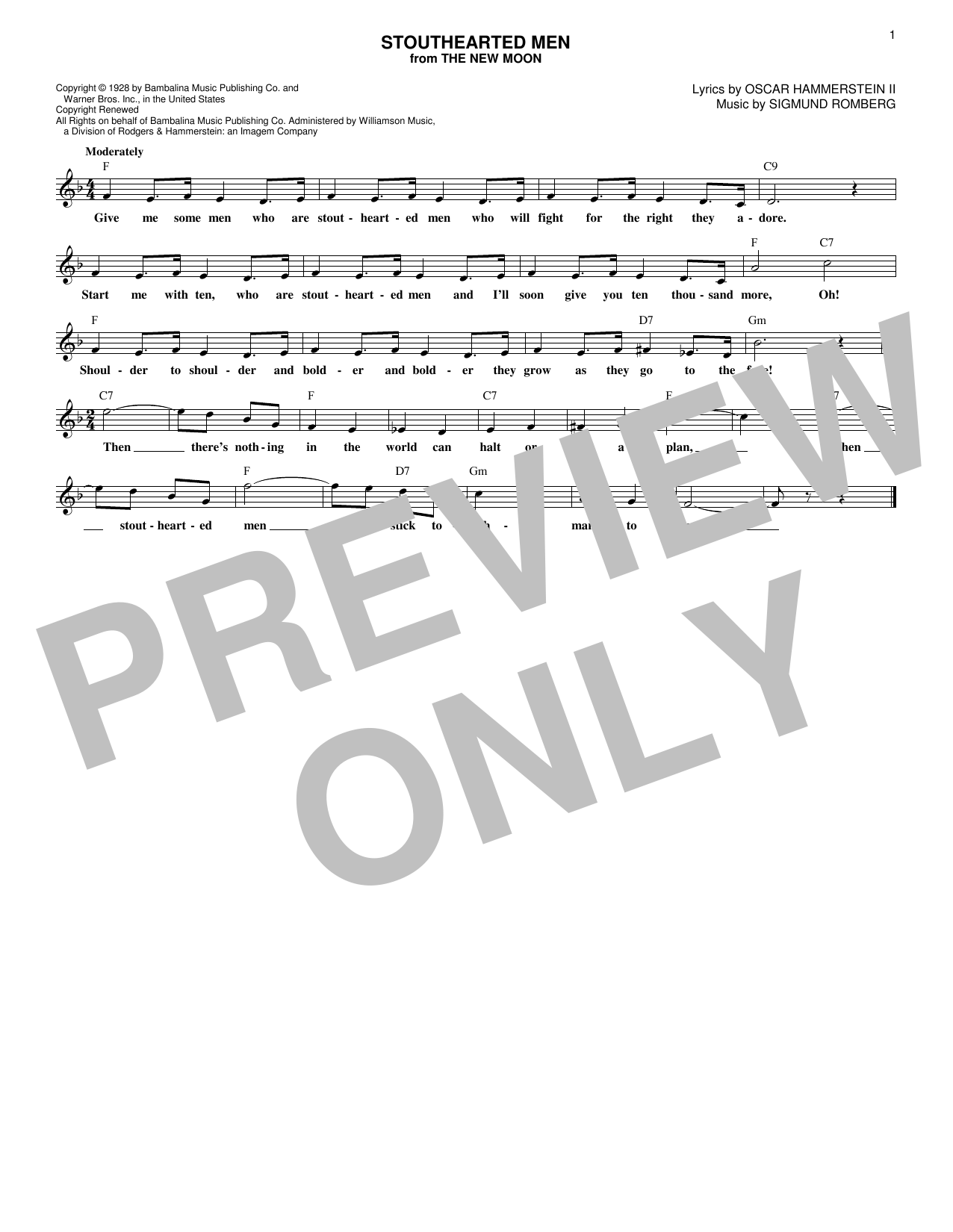
Stouthearted Men Sheet Music Preview

Stouthearted Men: Lead Sheet / Fake Book

Item: 35-DS00410630

Digital Download
$3.99
Description

Stouthearted Men: Lead Sheet / Fake Book isn't in MakeMusic Cloud just yet...but it could be. Let us know you'd like to see it, and you'll help shape what comes next. In the meantime, start a free trial and dive into thousands of interactive titles your students can play along with today.

Sample Audio
No sample audio found.
Sample Video
Additional Details
Publisher: Hal Leonard
Page Count: 1
SKU: 35-DS00410630

More about this title

About the Creator: Sigmund Romberg

Sigmund Romberg was a Hungarian-born composer who became one of Broadway's most prolific architects of operetta and musical theater during the early twentieth century. His gift for sweeping melody and sophisticated harmonic language made him a defining voice of the Golden Age, producing dozens of stage works that earned him a permanent place in American musical theater.

Why we love this

This lead sheet captures one of Broadway's most iconic male vocal showstoppers in an accessible format that works equally well for jazz pianists, music theater students, and singers building their standards repertoire. The song's straightforward harmonic structure and immediately memorable melody make it an ideal choice for performers learning to navigate lead sheets without getting bogged down in unnecessary complexity.

What to expect

Stouthearted Men radiates confidence and masculine bravado wrapped in the lush, romantic sensibility of early musical theater. The melody strides forward with the buoyancy of a traditional march, while the harmonic palette provides warm, enveloping support that grounds the performance in genuine emotion rather than empty bombast.

Who it's for

Vocalists performing auditions or recitals will appreciate having this standard in a lead sheet format that leaves room for personal interpretation. Piano students and jazz musicians also benefit from studying how Romberg's harmonies sit on the page and translating that understanding to their own comping choices.

How to get the most out of it

  • Lean into the march-like character of the melody; the rhythm and phrasing should feel sturdy and purposeful rather than overly lyrical.
  • Comp the chords with a light touch during vocal passages so the voice sits naturally above the accompaniment without feeling crowded.
  • Experiment with different voicings of the chords on repeats to keep the arrangement fresh and maintain the listener's interest across multiple choruses.
  • Pay attention to the lyrical content when shaping phrases; the text naturally suggests where to breathe and where to press forward.

How to use it

Include this in a Broadway or American songbook recital where it can anchor a program of standards, or assign it to music theater students as a foundational piece for understanding how to interpret lead sheets in performance. Its recognizable melody and theatrical character also make it a natural fit for educational concerts exploring the evolution of musical theater composition.

Skills your students will build

  • Reading and interpreting lead sheet notation
  • Identifying and voicing seventh chords and extended harmonies
  • Shaping melodic phrases with text-appropriate phrasing and breath placement
  • Developing flexible accompaniment textures that support rather than overshadow a soloist
  • Understanding the harmonic conventions of Golden Age musical theater

You May Also Like