Storm Trail: 1st Violin Sheet Music Preview

Storm Trail: 1st Violin

By Doug Spata

Grade: 3

Item: 00-PC-0014508_VN1

Digital Download
$5.99
Description
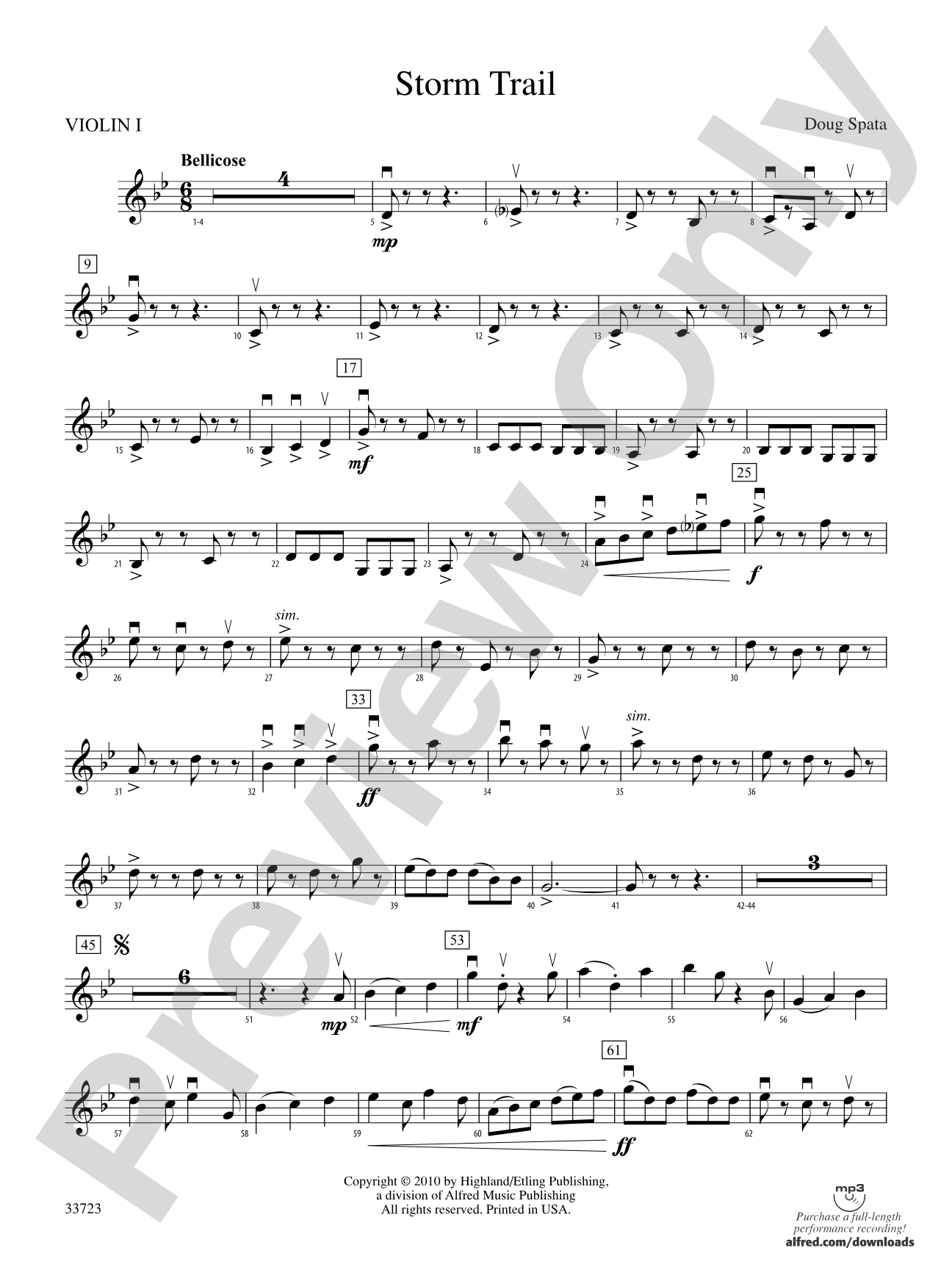
A dramatic and high-energy piece in 6/8 time featuring surging melodies and intense rhythms! Audiences will appreciate the mature style while students explore technical challenges. The key of G minor offers students great experience with mixing low 1st finger and extended 3rd finger patterns, and the frequent use of hemiola will reinforce the relationship between 6/8 and 3/4 time. An exciting addition to your next concert program! This title is available in MakeMusic Cloud.

Don't just read it, hear it, play along with it, and watch your students grow with it. In MakeMusic Cloud, Storm Trail: 1st Violin comes alive with professional accompaniment, adjustable tempo, and built-in practice tools that turn solo practice into real progress.

Sample Audio
0:00
0:00
Sample Video
Additional Details
Series: Highland/Etling String Orchestra
Publisher: Alfred Music
Page Count: 124
SKU: 00-PC-0014508_VN1

More about this title

About the Composer: Doug Spata

Doug Spata

Doug Spata trained as a clarinetist but found his primary voice as a composer for strings, shaped by years spent teaching orchestra. His works have earned recognition across the country and internationally, performed by student and professional ensembles alike. Beyond educational repertoire, he has created operas, ballets, symphonies, and chamber works across a wide range of ensemble sizes.

Teachers consistently turn to Spata's music because it balances accessibility with genuine musical substance. His writing respects young players while refusing to compromise on artistic integrity or orchestral color.

Why we love this

Storm Trail captures that rare quality of sounding fully mature without condescending to a Grade 3 ensemble. The hemiola writing reinforces rhythmic understanding through real musical context rather than isolating the concept, and the G minor tonality with its technical demands in the low positions feels earned rather than imposed.

What to expect

Storm Trail sweeps forward with propulsive energy, its 6/8 rhythms creating momentum that feels almost inevitable. The G minor tonality gives the piece a serious, dramatic character, while the hemiola patterns add complexity without losing clarity. Audiences experience this as a confident, fully realized work, not student fare.

Who it's for

String orchestras at Grade 3 who are ready for rhythmic sophistication and tonal maturity. Students should have solid low position technique and be comfortable with basic extended positions. This piece rewards orchestras with balanced sections and reasonably reliable intonation habits.

How to get the most out of it

  • Establish the 6/8 pulse clearly before rehearsing the hemiola passages. Once your ensemble feels the beat subdividing into threes, the metric shifts between 6/8 and 3/4 will feel like natural conversation rather than disruption.
  • The surging melody sections demand consistent bow control across all string voices. Work dynamics and phrasing as a unified gesture, not part by part, so the line doesn't fragment.
  • Watch intonation carefully in G minor, particularly with the extended 3rd finger work. Isolate those passages in sectional rehearsals before bringing them into the full texture.
  • Let the opening establish genuine drama. The piece earns its intensity through contrast, so don't rush the quieter moments.

How to use it

Program this as a concert opener to establish energy and sophistication immediately, or use it as a closer to send audiences home energized. It pairs well with contrasting lyrical or lighter pieces, and its dramatic competence makes it a solid choice for festival or contest performances.

Skills your students will build

  • Reading hemiola rhythms in relation to the underlying 6/8 pulse
  • Technical facility with low 1st finger and extended 3rd finger patterns in G minor
  • Rhythmic precision and coordination across multiple string parts moving in different metric relationships
  • Dynamic control and phrasing in surging, long-line passages
  • Intonation stability in minor tonality with extended technical demands

You May Also Like