
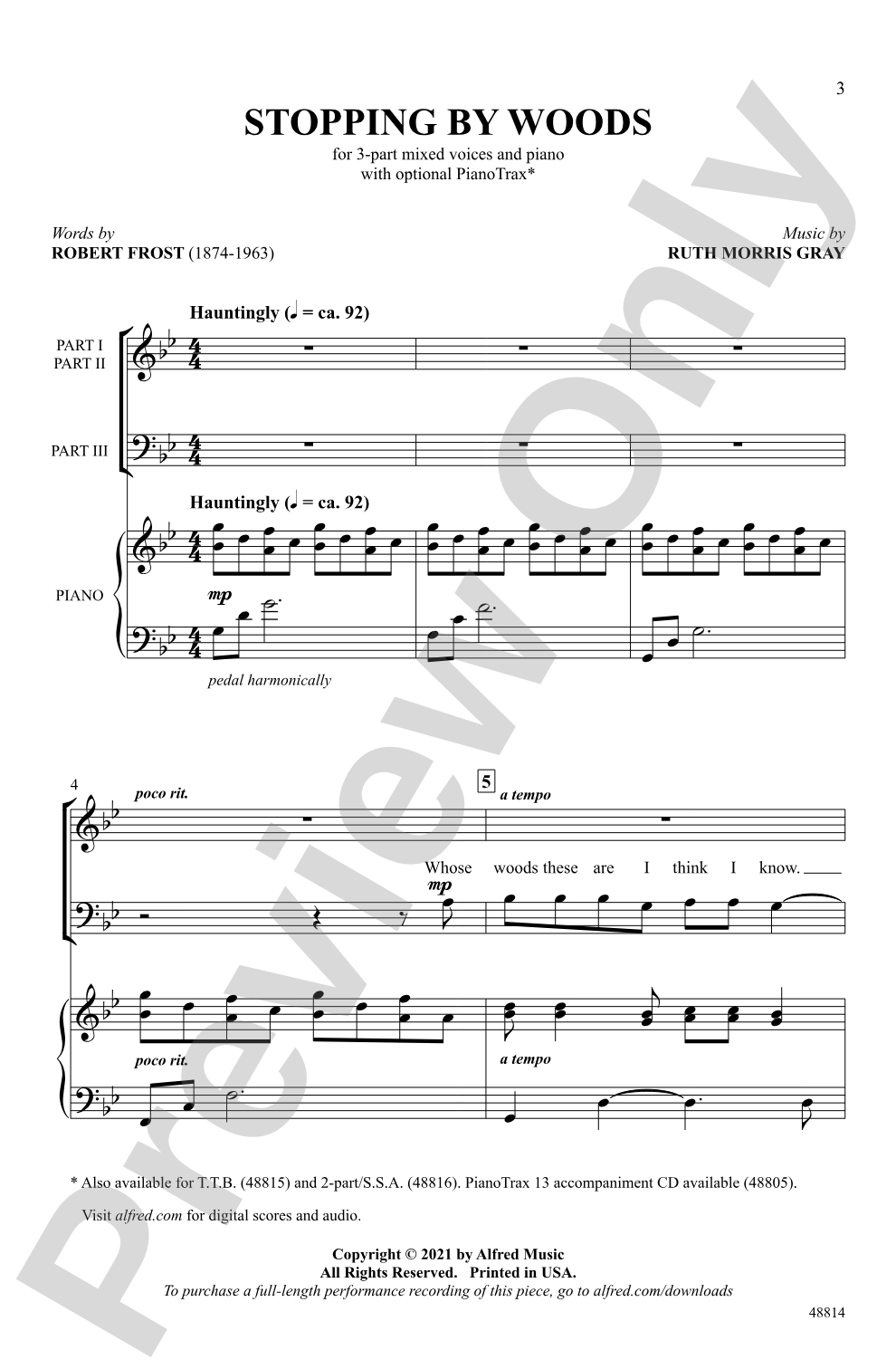

Stopping by Woods: 3-Part Mixed Choral Octavo
Words by Robert Frost, music by Ruth Morris Gray
Item: 00-PO-0006622
$2.05
Minimum order quantity: 20 copies
Pickup currently not available
Related Items
Stopping by Woods: PianoTrax Digital Audio Download |
$9.99
|
View | |
Stopping by Woods: TTB Choral Octavo |
$2.05
|
View | |
Stopping by Woods: 2-Part / SSA Choral Octavo |
$2.05
|
View | |
Stopping by Woods: 3-Part Mixed Choral Octavo |
$2.05
|
View | |
Stopping by Woods: TTB Choral Octavo |
$2.05
|
View | |
Stopping by Woods: 2-Part / SSA Choral Octavo |
$2.05
|
View |
Description
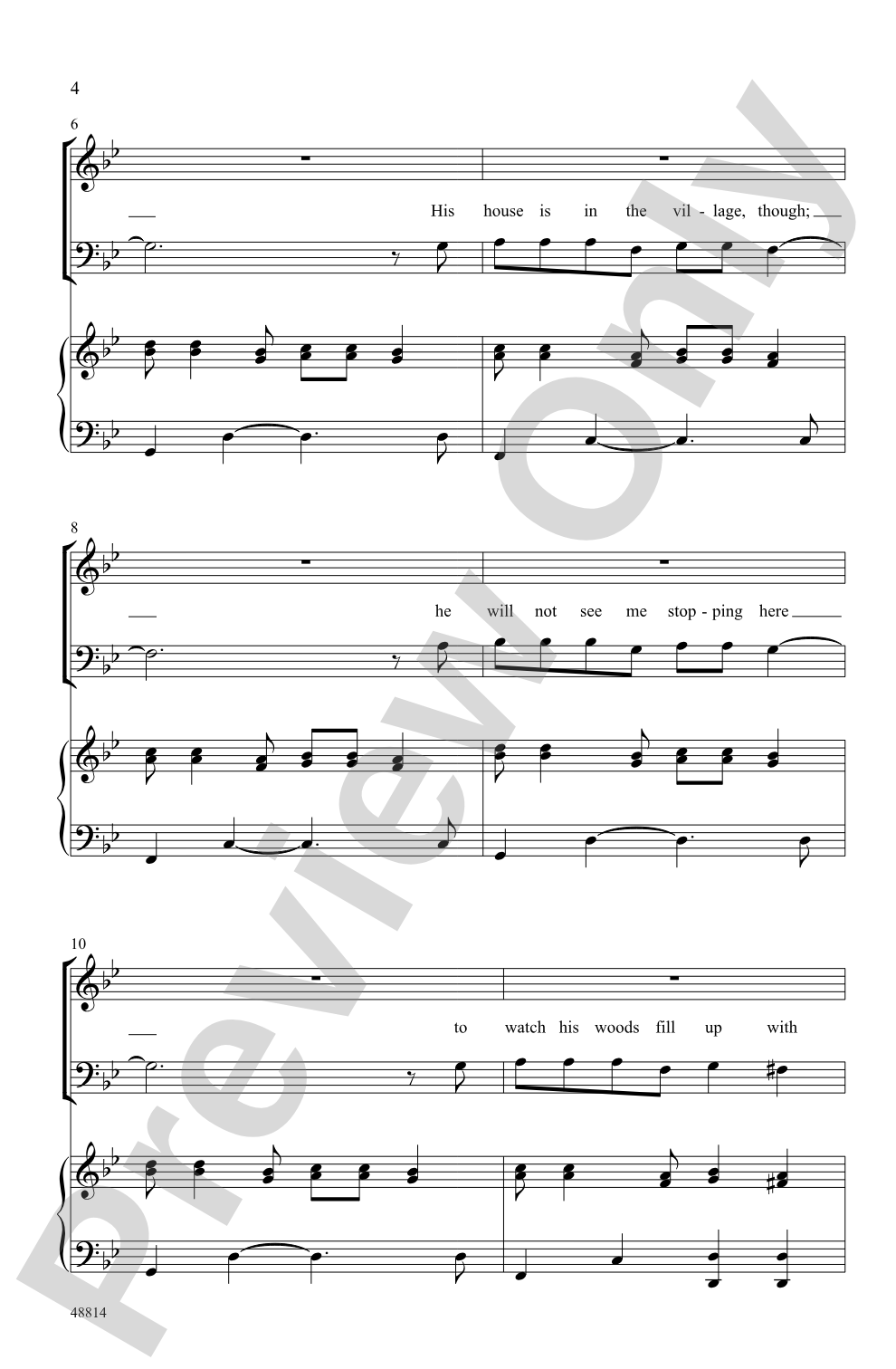
Robert Frost's famous poem describes the woods as "lovely, dark, and deep," and the same can be said about this appealing setting for winter concerts. The minor key casts a pensive backdrop for the vivid imagery of the text. The composer shows her teaching prowess by sculpting a line that harmonizes easily when sung in thirds and fits together perfectly when echoed from part to part. Developing choirs will appreciate the balance of emotional depth in the words and approachable challenges in the vocal parts. Sing the cue notes to quickly convert the 2-part voicing to S.S.A.


Discover MakeMusic Cloud: thousands of interactive titles your students can play along with today.
Sample Audio
1
Audio File
--:--
0:00
0:00
Sample Video
1 / 2
Additional Details
Series:
Alfred Choral Designs
Publisher:
Alfred Music
Page Count:
12
SKU:
00-PO-0006622
More about this title
About the Composer: Ruth Morris Gray

Ruth Morris Gray directs choirs at Rosemead High School in California, where she has shaped vocal programs since 2004. She earned her Bachelor of Music in Piano Performance and Composition from Biola University and completed graduate studies in Music Composition at the University of California, Santa Barbara. Her teaching credential comes from California State University, Northridge.
With over 100 published choral compositions to her name, Gray has established herself as a composer who understands the voice deeply and writes with classroom realities in mind. Her work balances artistic integrity with pedagogical insight, making her pieces rewarding for both singers and directors.
Why we love this
Gray's setting transforms Frost's meditative poem into something genuinely singable without sacrificing emotional weight. The minor key creates atmosphere while the harmonic writing in thirds and echo passages between parts feels natural under the voice, letting developing singers feel successful at the same moment they're engaging with a substantial text.
What to expect
Quiet and contemplative, like standing in a winter landscape at dusk. The minor key lends a wistful, thoughtful quality to Frost's iconic imagery, while the part-writing creates moments of gentle interweaving that feel intimate even in a full choir.
Who it's for
Developing mixed choirs ready to engage with literary text and minor-key introspection. This octavo works for groups that have secure blend in thirds and can hold independent lines; the approachable vocal ranges make it accessible to singers still building confidence.
How to get the most out of it
- Pay attention to how the thirds echo between parts; this interplay is what holds the arrangement together, so clarity in each voice's line matters even when singing soft or sparse textures.
- The minor tonality benefits from intentional pacing—resist rushing through phrases. Let the singers feel the introspective quality that the key provides.
- Convert the cue notes to access the optional 2-part voicing, which offers flexibility if your SAB sections are uneven or if you want to layer the arrangement for younger ensembles.
- Balance the imagery in your interpretation: the snow and woods are quiet and still, so consider how dynamic contrast and breath support can paint that scene without overplaying the drama.
How to use it
This pairs naturally with other winter or holiday concert repertoire and works well in contests and festivals where a single, focused piece can showcase ensemble cohesion and interpretive maturity. It could also anchor a concert program exploring American poetry or serve as a contrasting piece alongside lighter seasonal fare.
Skills your students will build
- Singing in parallel thirds with blend and intonation
- Maintaining independent vocal lines while hearing harmonic relationships
- Interpreting text with musical sensitivity in a minor key
- Echo passages and call-response between choir sections
- Flexible voicing (converting SAB to SSA using cue notes)