Stonybrook Overture: Baritone T.C. Sheet Music Preview

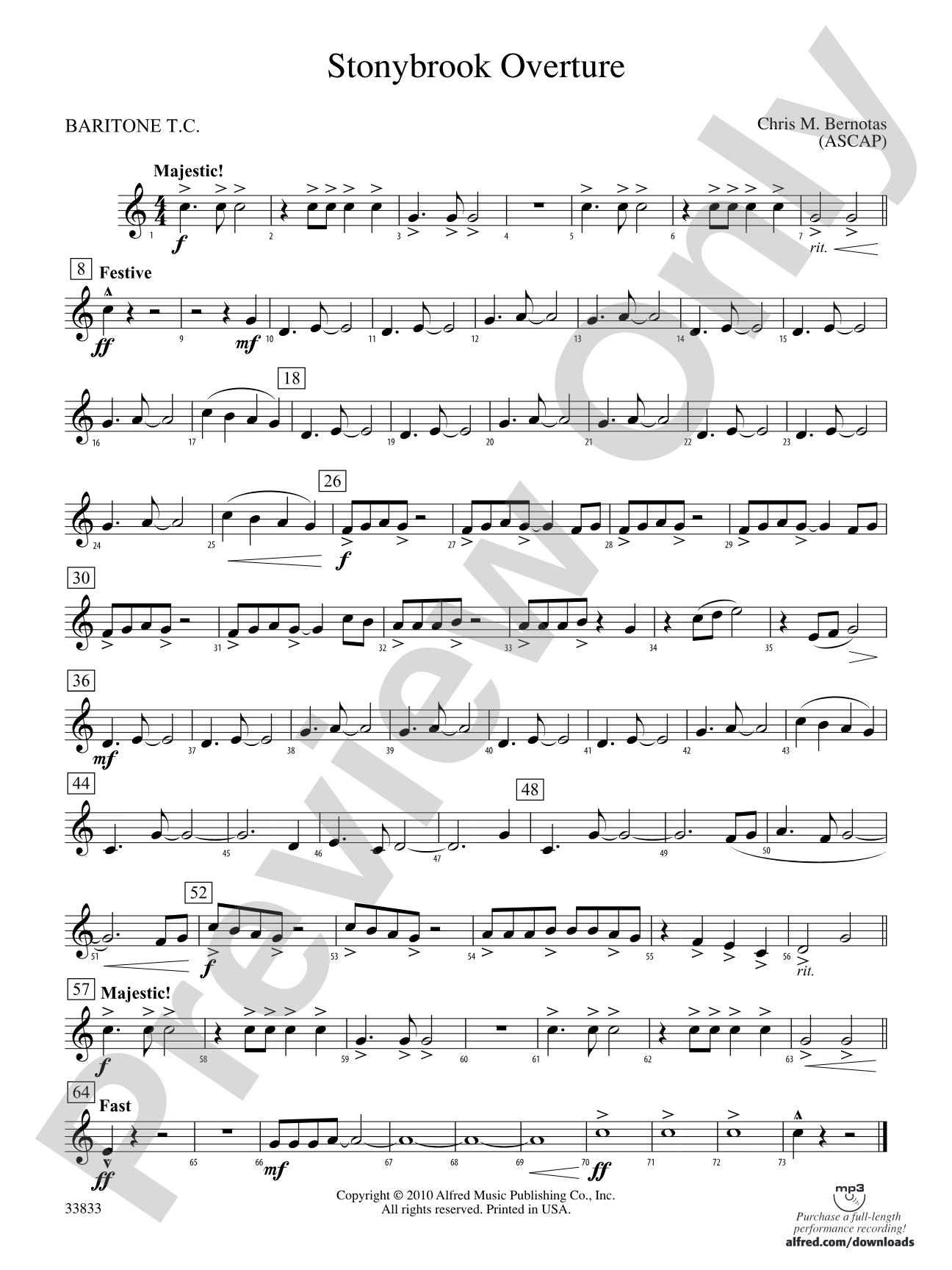
Stonybrook Overture: Baritone T.C.

By Chris M. Bernotas

Grade: 1 (Very Easy)

Item: 00-PC-0014564_BTC1

Digital Download
$3.00
Description
Stonybrook Overture was written for a concert band festival hosted by the 4th and 5th grade band of the Stonybrook School in Kinnelon, NJ. Beginning with a majestic statement, it moves into a legato melody with a lively percussion accompaniment. The melody makes its way around the ensemble with harmonized countermelodies. The piece concludes with a restatement of the festival fanfare and a bold ending. This is a terrific vehicle for students to work on phrasing and articulation.

Don't just read it, hear it, play along with it, and watch your students grow with it. In MakeMusic Cloud, Stonybrook Overture: Baritone T.C. comes alive with professional accompaniment, adjustable tempo, and built-in practice tools that turn solo practice into real progress.

Sample Audio
0:00
0:00
Sample Video
Additional Details
Series: Alfred Debut Series
Publisher: Alfred Music
Page Count: 124
SKU: 00-PC-0014564_BTC1

More about this title

About the Composer: Chris M. Bernotas

Chris M. Bernotas

Chris M. Bernotas brings over 25 years of experience as a composer, conductor, and music educator to his work at Alfred Music, where he directs instrumental publications. His compositions span elementary through advanced levels and are performed by ensembles worldwide, known for combining genuine musicality with the practical realities of teaching and learning.

Bernotas draws on extensive classroom experience to create music that engages students while addressing their developmental needs. He regularly conducts honor groups and leads workshops for directors, and has co-authored multiple educational resources including the Sound Innovations series. His approach to composition and pedagogy reflects a deep commitment to supporting both teachers and their students in meaningful musical growth.

Why we love this

Bernotas writes for the ensemble in front of him, and it shows. This overture gives every section memorable material to play while keeping the technical demands modest enough that 4th and 5th graders can focus on musicianship rather than mechanics. The contrast between the majestic opening and the flowing legato section creates a satisfying arc without overcomplicating the score.

What to expect

The piece opens with a grand, ceremonial gesture that feels special and occasion-worthy. It soon settles into a warm, singing quality where each section gets a turn with the tune, then builds back to its bold proclamation, leaving everyone feeling they've been part of something spirited.

Who it's for

This overture fits elementary concert bands at the very beginning of their journey. It gives young musicians their first experience with contrasting musical sections, passing a melody between voices, and shaping phrasing at a scale they can manage.

How to get the most out of it

  • Shape the opening fanfare with dynamic control. The majestic character depends on clarity and confidence in the articulation, not on volume alone.
  • Balance the legato melody against its countermelodies carefully. The supporting lines should enhance, not overshadow, the primary voice as it passes around the ensemble.
  • Let the percussion accompaniment breathe during the melodic section. These parts provide rhythmic color; they don't need to drive the tempo.
  • Build energy into the final restatement of the festival fanfare. This return rewards the audience and gives students a satisfying moment to execute what they've practiced.

How to use it

This works beautifully as a festival opener or a concert's first selection when you want to set a bright, accomplished tone. It also serves as a natural teaching piece mid-year, when students have the fundamentals in place and are ready to explore phrasing and balance without the pressure of more complex repertoire.

Skills your students will build

  • Phrasing and shaping melodic lines
  • Articulation control and clarity
  • Passing a melody between instrumental sections
  • Balancing a primary melody with countermelodies and accompaniment
  • Responding to dynamic contrast and form

You May Also Like