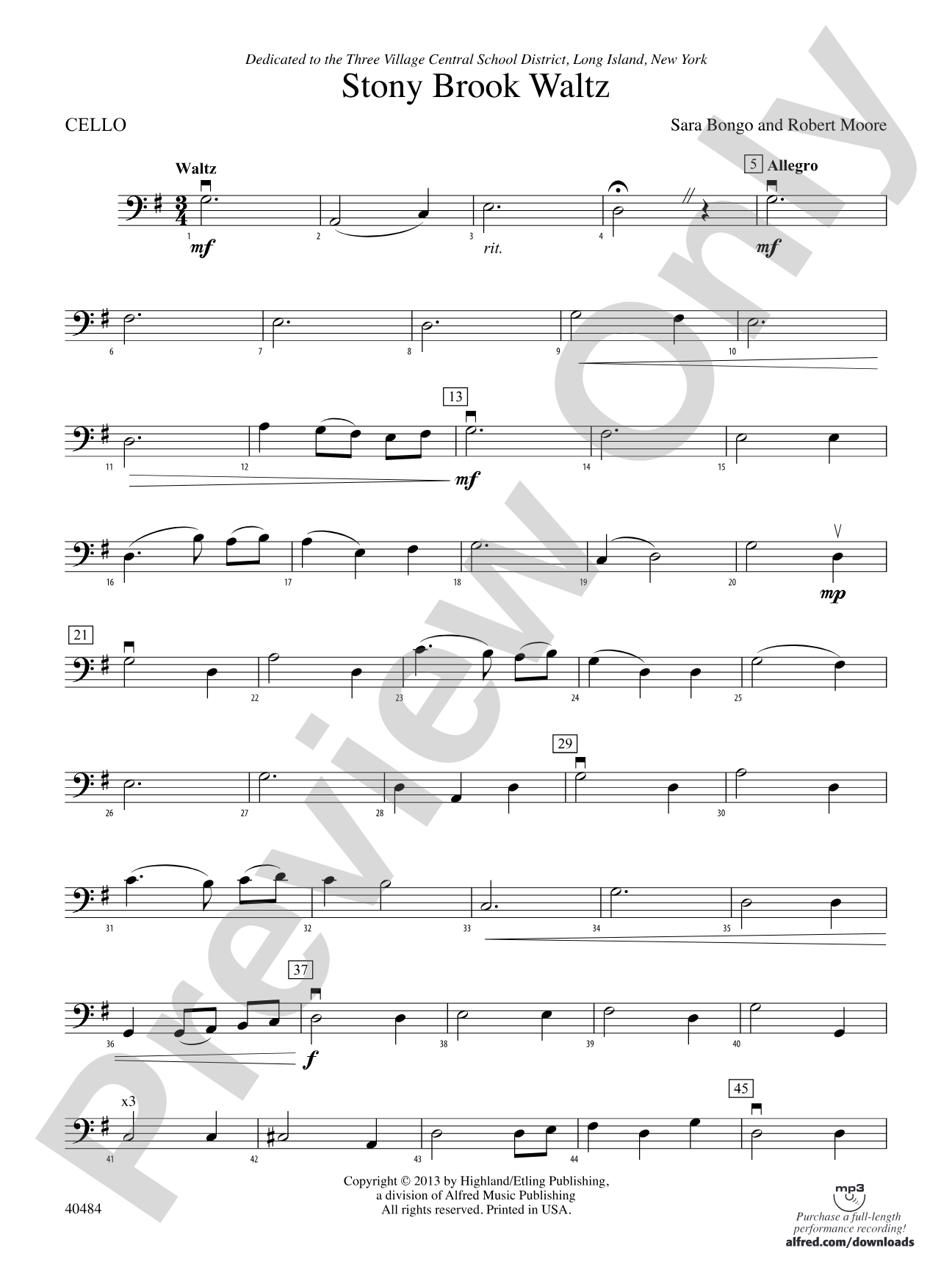
Stony Brook Waltz: Cello Sheet Music Preview

Stony Brook Waltz: Cello

By Sara Bongo and Robert Moore

Grade: 2

Item: 00-PC-0016016_VC1

Digital Download
$5.99
Description
The inspiration for this stately waltz comes from an area nestled on the north shore of Long Island replete with historical significance and rich cultural diversity. Each section has important parts as each plays an integral role in representing the cultural landscape within the flowing music.

Don't just read it, hear it, play along with it, and watch your students grow with it. In MakeMusic Cloud, Stony Brook Waltz: Cello comes alive with professional accompaniment, adjustable tempo, and built-in practice tools that turn solo practice into real progress.

Sample Audio
0:00
0:00
Sample Video
Additional Details
Series: Highland/Etling String Orchestra
Publisher: Alfred Music
Page Count: 124
SKU: 00-PC-0016016_VC1

More about this title

Why we love this

Stony Brook Waltz gives Grade 2 orchestras a piece that sounds more sophisticated than its difficulty level suggests. The waltz form provides a natural framework for teaching phrase structure and ensemble balance, while the cultural narrative embedded in the orchestration keeps students engaged in the meaning behind the notes they're playing.

What to expect

Stony Brook Waltz evokes a stately, reflective mood anchored in place and memory. The flowing waltz rhythm carries the listener through musical representations of the landscape and community it honors, creating a sense of reverence without pretense.

Who it's for

String orchestra directors working with Grade 2 ensembles who want a concert or festival piece with historical and cultural depth. This work suits orchestras with developing technique and solid section reading skills but limited experience with complex rhythmic or harmonic language.

How to get the most out of it

  • Shape each phrase with a gentle swell rather than a constant dynamic; this lifts the waltz character and prevents the music from feeling static across four measures.
  • Balance the inner voices carefully during tutti sections so the melody remains the prominent line without pushing harder than necessary.
  • Practice the modulations between sections slowly first, making sure all parts hear where the harmonic center shifts and adjust intonation accordingly.
  • Maintain a steady, lilting three; resist the urge to rush the second and third beats, which will make the waltz feel more like a march.

How to use it

Program this as a centerpiece for a concert celebrating local history or cultural heritage, or pair it with other character pieces that share a sense of place. Its accessible difficulty makes it ideal for a mid-program concert piece that showcases ensemble musicality and control.

Skills your students will build

  • Sustaining legato phrasing across four-measure phrases in waltz form
  • Balancing melody and accompaniment parts within a full string texture
  • Playing through simple modulations with accurate intonation
  • Maintaining steady three-beat pulse and rhythmic clarity in dance meter
  • Responding to the cultural and historical narrative as expressive motivation

You May Also Like