Stone Age Stomp: E-flat Alto Saxophone 2 Sheet Music Preview

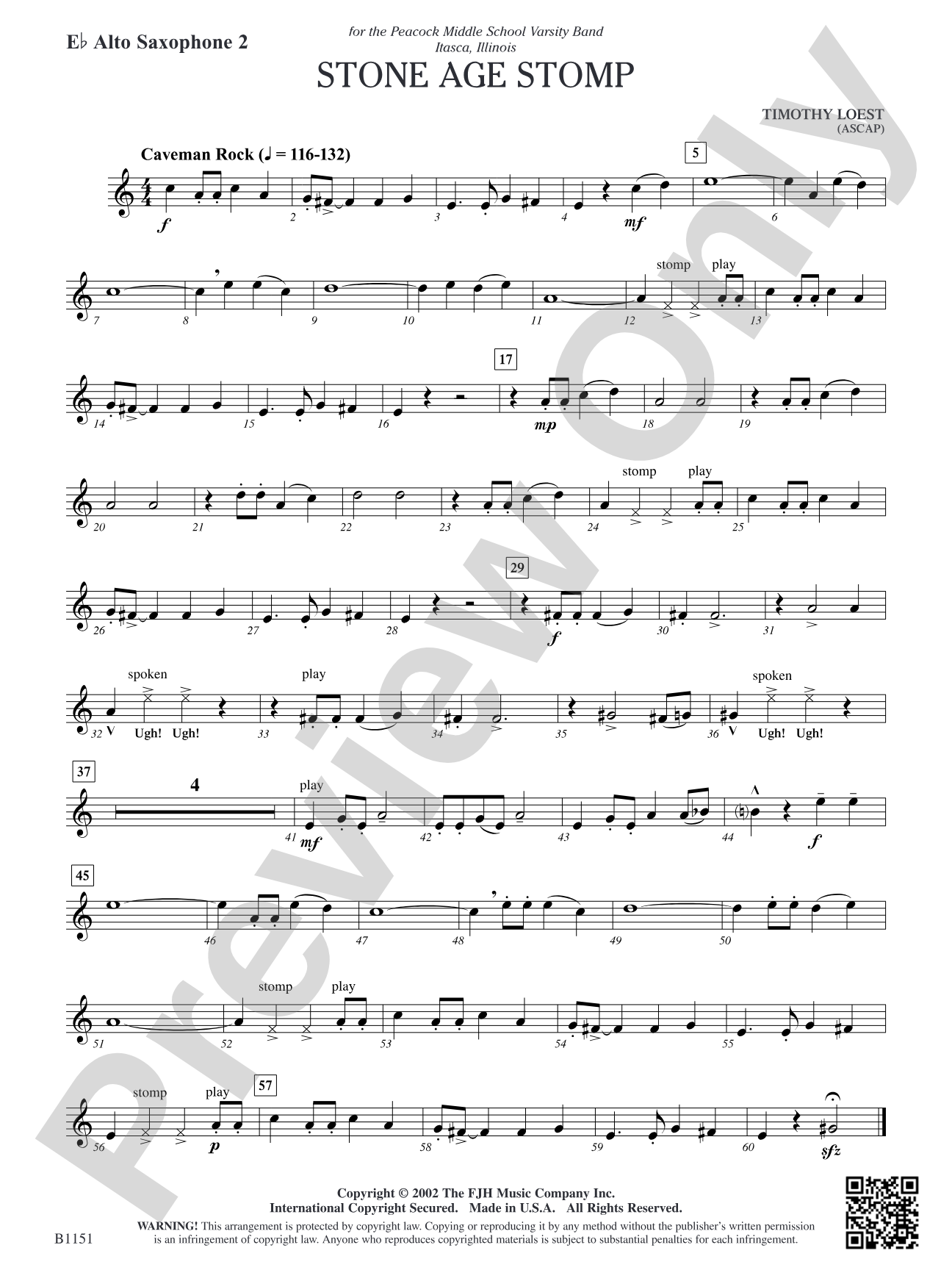
Stone Age Stomp: E-flat Alto Saxophone 2

By Timothy Loest

Grade: 1.5

Item: 98-PC-DB1151_AX2

Digital Download
$7.00
Description
Experience "caveman rock" like you've never experienced before! This well-crafted original makes use of stomping effects as well as several sections where the band gets to give a good "ugh!" A wonderful novelty piece to add some humor to your program. (2:00)

Stone Age Stomp: E-flat Alto Saxophone 2 isn't in MakeMusic Cloud just yet...but it could be. Let us know you'd like to see it, and you'll help shape what comes next. In the meantime, start a free trial and dive into thousands of interactive titles your students can play along with today.

Sample Audio
0:00
0:00
Sample Video
Additional Details
Series: FJH Developing Band
Publisher: The FJH Music Company, Inc.
SKU: 98-PC-DB1151_AX2

More about this title

About the Composer: Timothy Loest

Timothy Loest

Timothy Loest has shaped young band programs across the country through compositions that balance musical substance with genuine accessibility. His works reach thousands of performers annually, and his pedagogical influence extends through multiple best-selling method books including Measures of Success and Warm-ups and Beyond. In 2017, his composition Cloud Gate drew over 5,000 spectators to Chicago's Millennium Park, and that same year he received the Illinois Grade School Music Association's highest honor, the Cloyd Myers Memorial Award for Excellence in Music Education.

With more than thirty years in the classroom at F.E. Peacock Middle School in Illinois, Loest understands what works on the stand and what engages young musicians. His catalog spans publications with Warner Bros., C.L. Barnhouse, FJH Music, and MakeMusic, and his television credits include The Tonight Show Starring Jimmy Fallon and Good Morning America. In 2022, he founded Fanfare Music Press to focus on high-quality compositions and arrangements for band. He holds degrees from Illinois State University and Northwestern University, and accepts commissions through his website.

Why we love this

Loest knows how to land a joke without compromising musicality. The stomping effects and vocal interjections feel earned rather than gimmicky, and the rock sensibility gives younger players something genuinely fun to sink their teeth into while you sneak in solid ensemble work.

What to expect

Pure joy. The rock attitude draws energy from the band and gives audiences permission to laugh and groove along. At two minutes, it hits hard enough to register as a full moment rather than a novelty toss-off.

Who it's for

Grade 1.5 concert bands looking for a genuine crowd-pleaser that doesn't talk down to the audience. Directors who want to program something with personality and humor while keeping technical demands reasonable for developing ensembles.

How to get the most out of it

  • Treat the "ugh!" moments as ensemble attacks; lock them in during sectionals so everyone commits with the same intensity and timing.
  • Let the stomp section breathe naturally. Mark dynamic accents in parts so rhythm section players understand they're driving the groove, not just keeping time.
  • Record a quick rehearsal playback and listen for balance between the rock groove and melodic lines. Young players often push the rhythm too hard when they're having fun.
  • Schedule the stomp section as a confidence builder earlier in rehearsal rather than saving it for the end of a long run-through.

How to use it

Perfect as a second-half opener to reset audience energy after something heavier, or close out a concert on a high note that leaves people smiling. The Grade 1.5 level means you can program it mid-season without waiting for advanced technique to develop, giving the band an early win.

Skills your students will build

  • Ensemble rhythmic precision in rock contexts
  • Coordinated articulation and attack in group figures
  • Reading and executing dynamic accents and stylistic marks
  • Building confidence through accessible, rewarding repertoire
  • Understanding genre conventions beyond traditional concert music

You May Also Like