
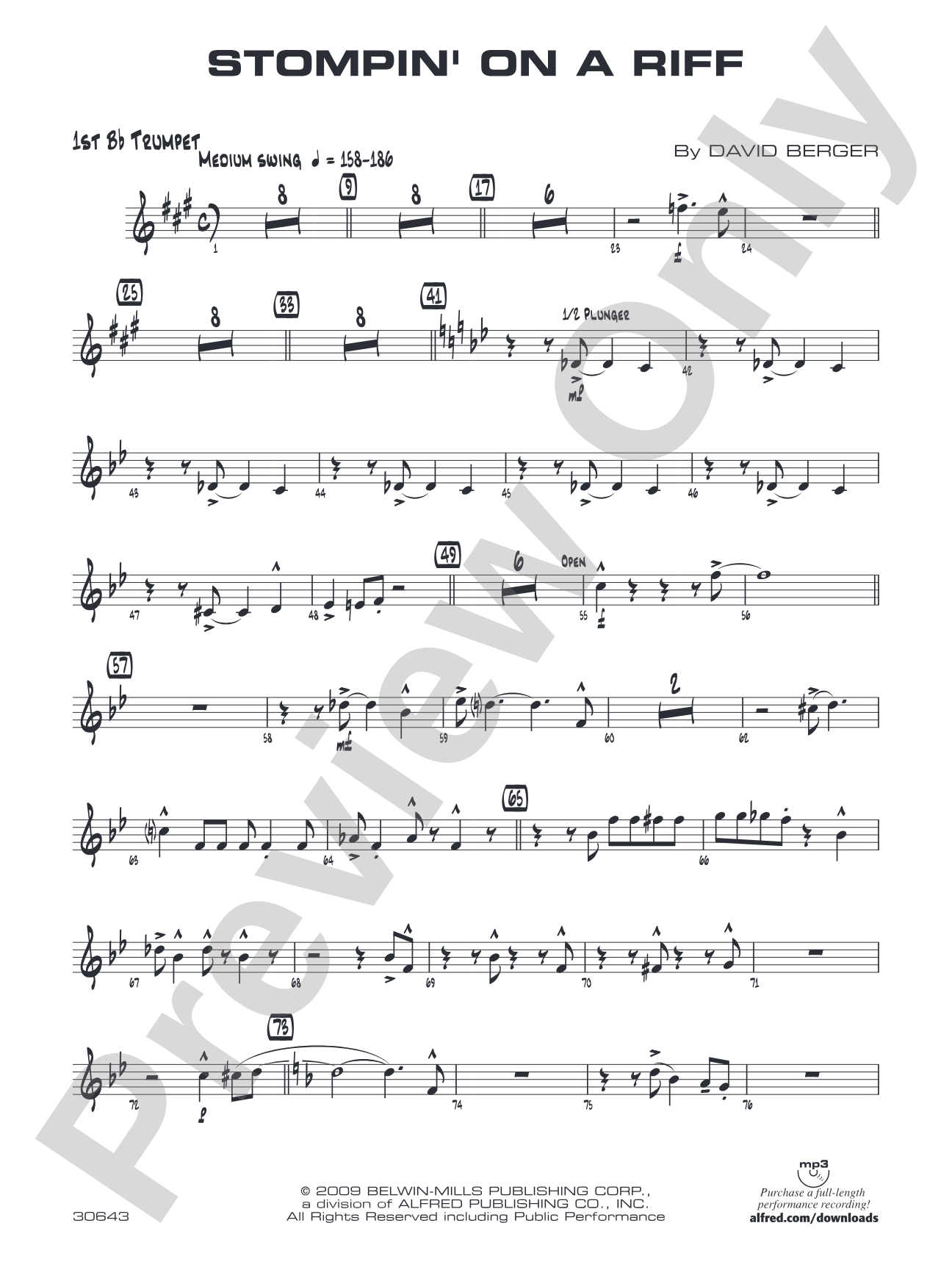

Stompin' on a Riff: 1st B-flat Trumpet
By David Berger
Grade: 3 (Medium)
Item: 00-PC-0017156_T1
$3.00
Pickup currently not available
Description
As an homage to the great Count Basie, composer/arranger David Berger delivers just what the title says---this chart is truly Stompin' on a Riff. Features include a piano intro, a sax section melody and some brass, written solos for 2nd trumpet and 1st alto, a modulation, some piano fills, another modulation and a diminuendo into the shout chorus. This chart swings hard---you'll love it! (3:41)
"This excellent blues chart in the Basie style uses the keys of G, A-flat, E-flat, and A-flat. The written solos for piano, trumpet, and alto sax include changes and fit the style well. The writing includes a great shout chorus and some neat plunger work for the trumpets"
-The Instrumentalist
This title is available in MakeMusic Cloud.


"This excellent blues chart in the Basie style uses the keys of G, A-flat, E-flat, and A-flat. The written solos for piano, trumpet, and alto sax include changes and fit the style well. The writing includes a great shout chorus and some neat plunger work for the trumpets"
-The Instrumentalist
This title is available in MakeMusic Cloud.
Don't just read it, hear it, play along with it, and watch your students grow with it. In MakeMusic Cloud, Stompin' on a Riff: 1st B-flat Trumpet comes alive with professional accompaniment, adjustable tempo, and built-in practice tools that turn solo practice into real progress.
Open in the Player
Jump straight in and assign it today.
Start Your Free Trial
Open this title and explore the full library in minutes.
Sample Audio
1
Audio File
--:--
0:00
0:00
Sample Video
No sample videos found.
Additional Details
Series:
Jazz Band Series
Publisher:
Alfred Music
Page Count:
98
SKU:
00-PC-0017156_T1
More about this title
About the Composer: David Berger
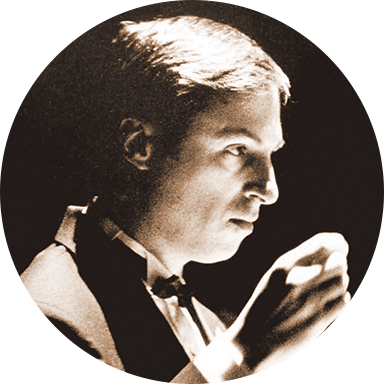
David Berger has spent decades immersed in the language of American jazz, earning recognition as one of the foremost scholars of Duke Ellington and the Swing Era. His work as conductor and arranger for the Lincoln Center Jazz Orchestra (1988-1994) positioned him at the center of jazz preservation and interpretation during a pivotal moment in the music's institutional history.
Berger's scholarly rigor informs his arranging voice. Having transcribed over 700 full scores from classic recordings—nearly 500 of them Ellington and Strayhorn compositions—he understands the architecture of swing writing from the inside. That knowledge translates into charts that sound authentic without becoming museum pieces.
Why we love this
Berger captures the swagger of Count Basie's writing without asking your ensemble to execute bebop complexity. The succession of keys (G, A-flat, E-flat, A-flat) and the strategic modulations create forward momentum while remaining accessible at the Grade 3 level. Your soloists get meaningful written material—real changes, real style—and that shout chorus lands with the kind of payoff that makes students understand why they're learning jazz in the first place.
What to expect
The energy is infectious and grounded. You get the lift of a good swing feel, the satisfaction of ensemble riffs that stick in your ear, and genuine solo moments that invite players to stretch their stylistic legs. The arrangement breathes; it's not wall-to-wall density, which gives the shout chorus real impact when it arrives.
Who it's for
Jazz ensembles at the high school level and beyond who want to experience authentic Basie-style writing without overextending their technical range. Conductors seeking a chart that teaches swing phrasing, riff-based construction, and small-group solo work all within a single 3:41 performance. This is ideal for programs building a blues and swing foundation in their jazz curriculum.
How to get the most out of it
- Lock the rhythmic pocket between your rhythm section and the section playing the main riff; the chart's propulsive feel depends on that precision alignment.
- Have your trumpet section rehearse the plunger work as a distinct technical unit before integrating it into full ensemble passages. The articulation and mute technique change the timbre considerably.
- Guide your soloists through the written changes before they improvise; Berger's harmonic movement in the trumpet and alto sax solos is purposeful and rewards players who understand the underlying progression.
- Shape the piano fills as conversation with the ensemble rather than interruptions. They're orchestrated interludes that drive the arrangement forward.
How to use it
Pair this with other blues-based charts to build a full set that showcases the ensemble's rhythmic control and swing vocabulary. It works equally well as a concert opener (the energy sets the tone) or as a crowd-pleaser mid-set. The 3:41 length also makes it an excellent choice for adjudicated festivals where timing matters and impact counts.
Skills your students will build
- Swing phrasing and rhythmic precision in ensemble playing
- Reading and executing written jazz solos with harmonic awareness
- Mute technique (plunger) and timbral control in brass sections
- Blues changes and turnaround navigation
- Riff-based arrangement structure and call-and-response phrasing
- Balancing support voices while featuring soloists