Stompin' at the Savoy: Guitar Sheet Music Preview

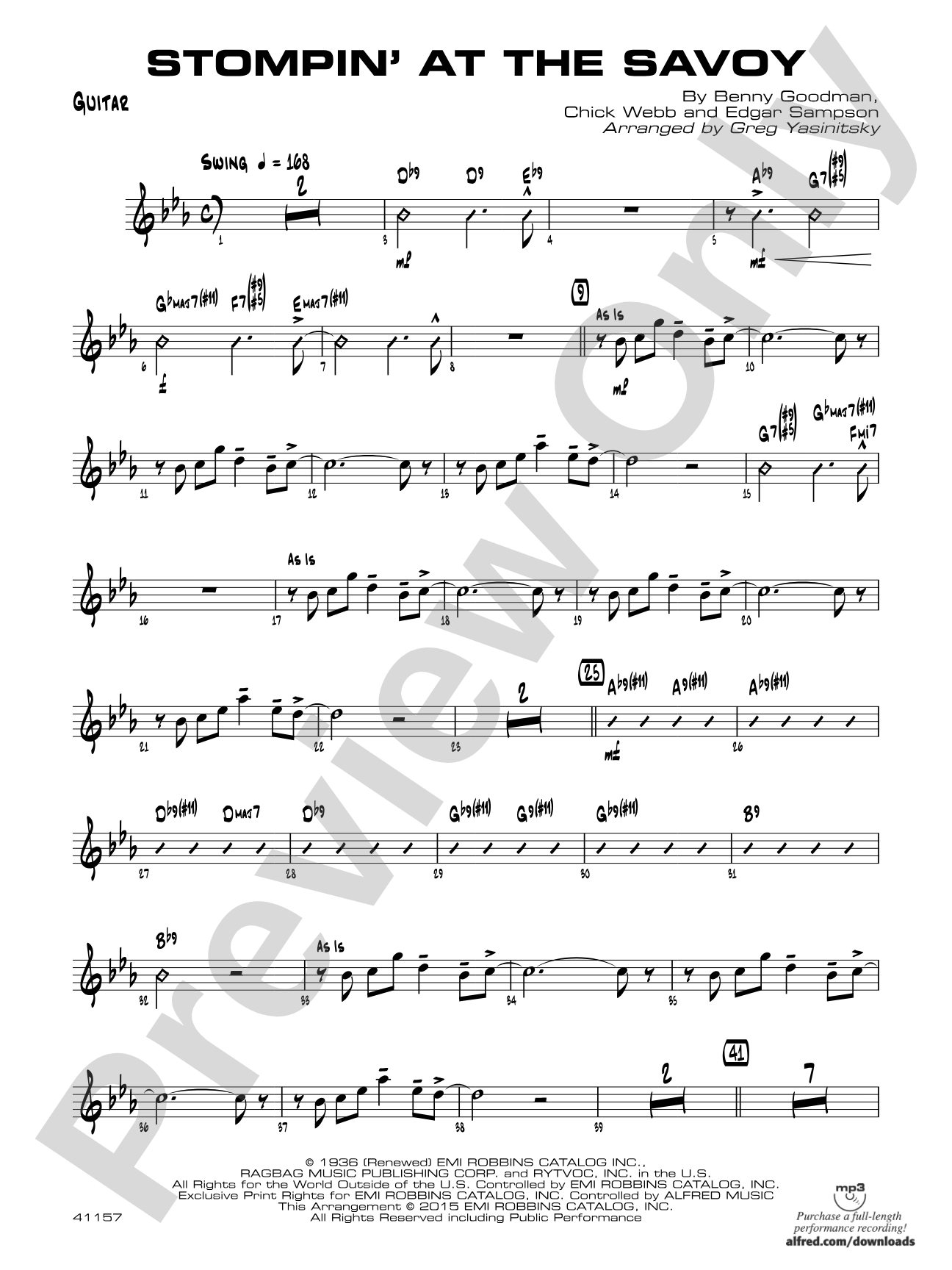
Stompin' at the Savoy: Guitar

By Benny Goodman, Chick Webb, and Edgar Sampson / arr. Greg Yasinitsky

Grade: 3.5 (Medium)

Item: 00-PC-0016703_G

Digital Download
$3.00
Description
A great swing tune with great dynamic contrasts, "Stompin' at the Savoy" includes a sax section soli, ensemble interludes, and a written trumpet 2 solo---and it's all played around 168 BPM. The lead trumpet range is to written B-flat above the staff. You'll love it! (4:07)

Don't just read it, hear it, play along with it, and watch your students grow with it. In MakeMusic Cloud, Stompin' at the Savoy: Guitar comes alive with professional accompaniment, adjustable tempo, and built-in practice tools that turn solo practice into real progress.

Sample Audio
0:00
0:00
Sample Video
Additional Details
Series: Jazz Band Series
Publisher: Alfred Music
Page Count: 102
SKU: 00-PC-0016703_G

More about this title

About the Composer: Benny Goodman

Benny Goodman (1909-1986) was the King of Swing, a clarinetist and bandleader whose ensembles defined the sound of American jazz in the 1930s and 1940s. His commitment to racially integrated bands and his partnerships with arrangers like Fletcher Henderson and Edgar Sampson created some of the era's most sophisticated and swinging big band charts. Goodman's influence on jazz repertoire and performance standards remains foundational to music education.

Why we love this

Greg Yasinitsky's arrangement captures the propulsive energy of the original while building in strategic dynamic shifts that keep an ensemble engaged and listening. The sax section soli and written trumpet solo offer focused spotlight moments, and the medium difficulty level makes this achievable for jazz ensembles still developing their swing vocabulary without sacrificing authenticity.

What to expect

The piece has the propulsive, dance-floor energy of its title, with moments where the whole band is driving hard and others where soloists step into the spotlight against a supportive backdrop. It swings with infectious optimism, the kind of tune that feels alive and demands precision from every player.

Who it's for

Jazz ensembles at the intermediate level (Grade 3.5) who want a historically grounded swing standard with real solo opportunities and clean arranging. This works especially well for groups preparing for contest or festival performance.

How to get the most out of it

  • Lock the rhythm section into the 168 BPM groove before rehearsing the full ensemble; the pocket here is everything, and a tight foundation gives horns the confidence to play freely over the changes.
  • Balance the lead trumpet soloist against the ensemble interludes by having the full band mark time during the written solo, then bring full energy back when everyone returns.
  • Shape the dynamic contrasts dynamically rather than structurally; use the printed dynamics as anchor points, but encourage sections to listen across the band and respond in real time.
  • Articulate the sax section soli with uniform precision and clarity; the blend and rhythmic unity here set up the ensemble's confidence for the sections that follow.

How to use it

Program this as a concert centerpiece or festival selection where you want to showcase your ensemble's swing feel and balance between section and solo work. Its historical weight and accessible difficulty make it ideal for a spring jazz concert or a program pairing classic big band standards with newer compositions.

Skills your students will build

  • Reading and executing swing articulation and phrasing
  • Playing through tempo at 168 BPM with ensemble unity
  • Balancing solo spotlight against ensemble support
  • Interpreting dynamic contrast as a group
  • Reading written solos with harmonic confidence

You May Also Like