
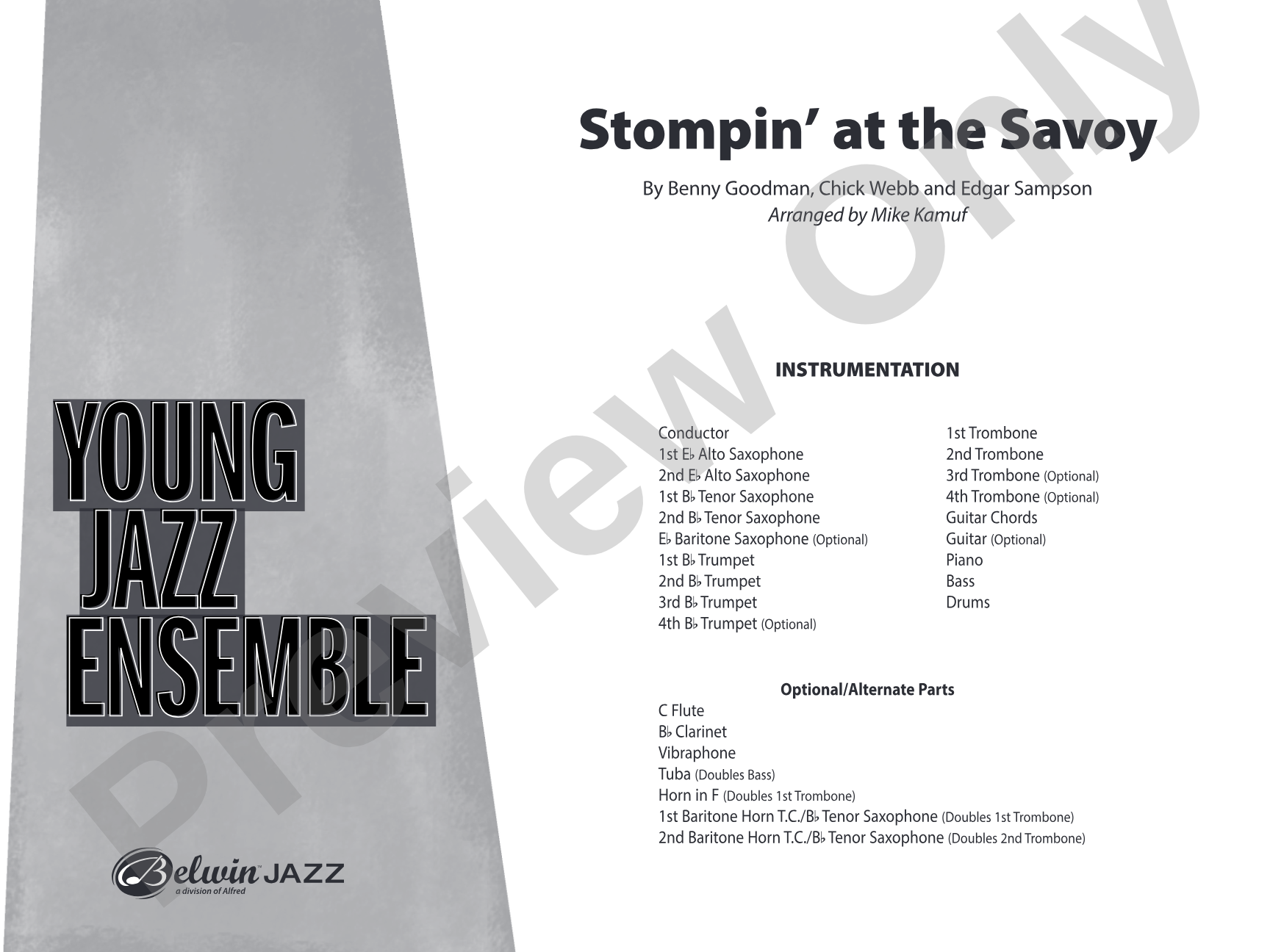
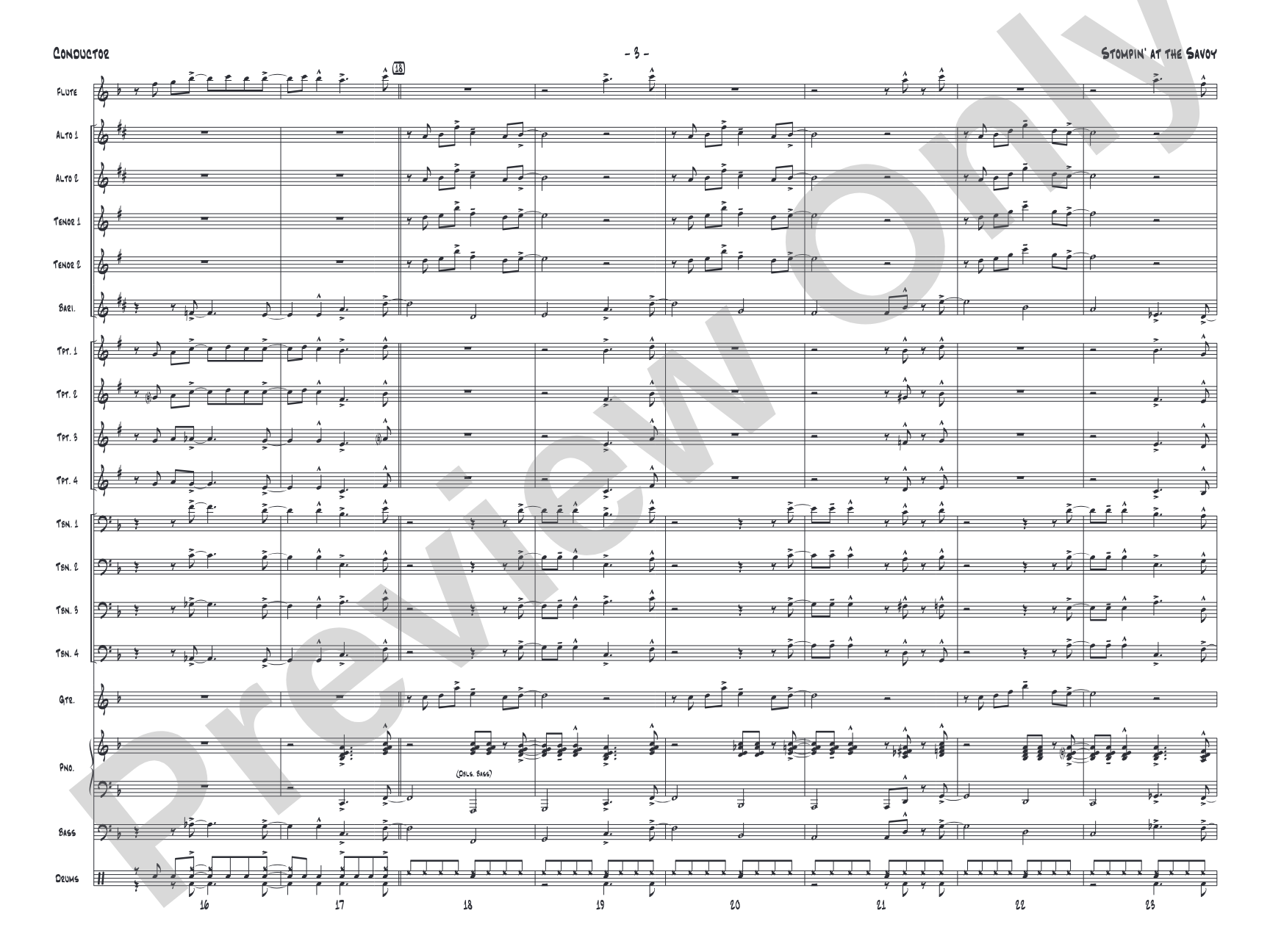
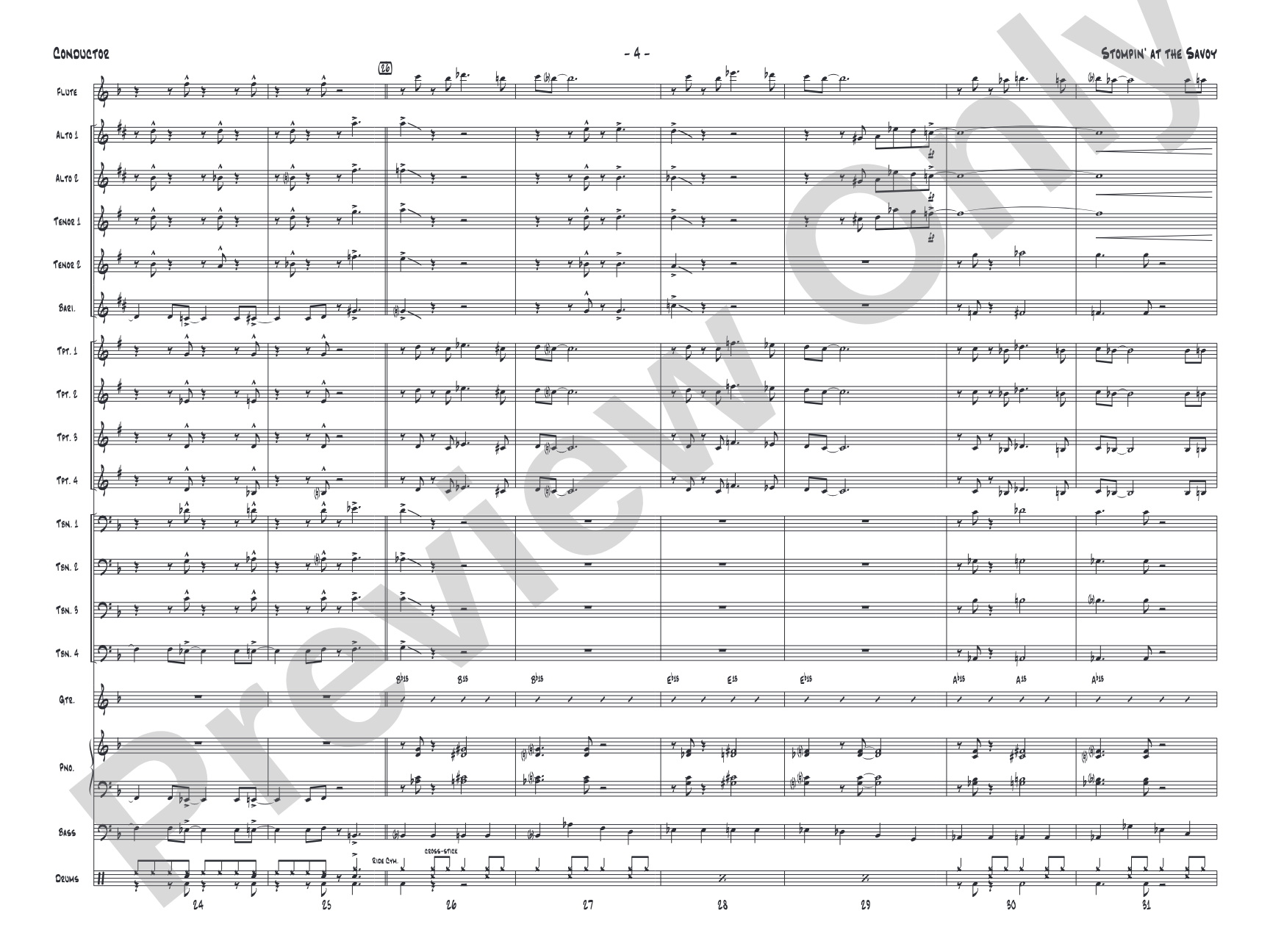
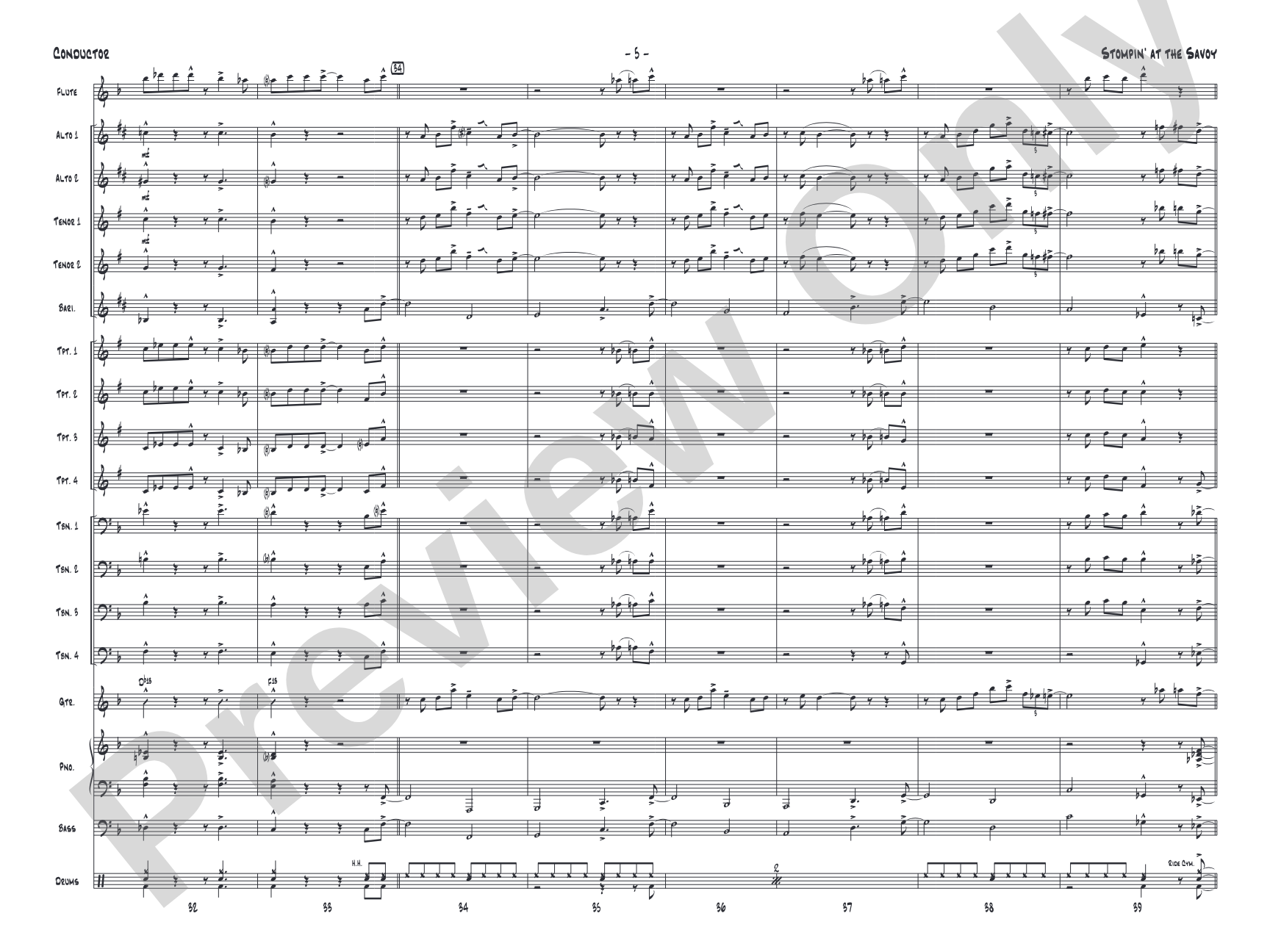
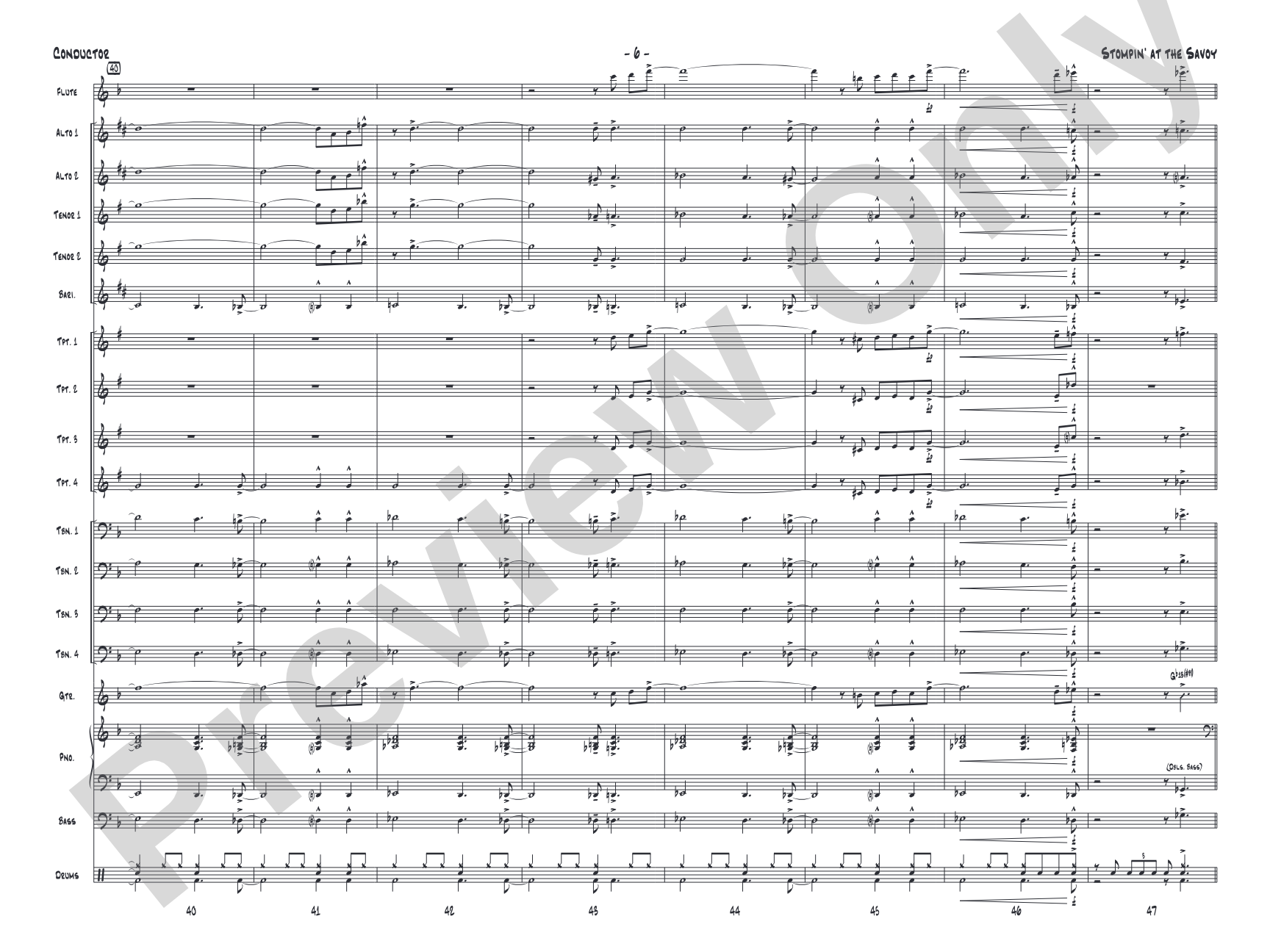
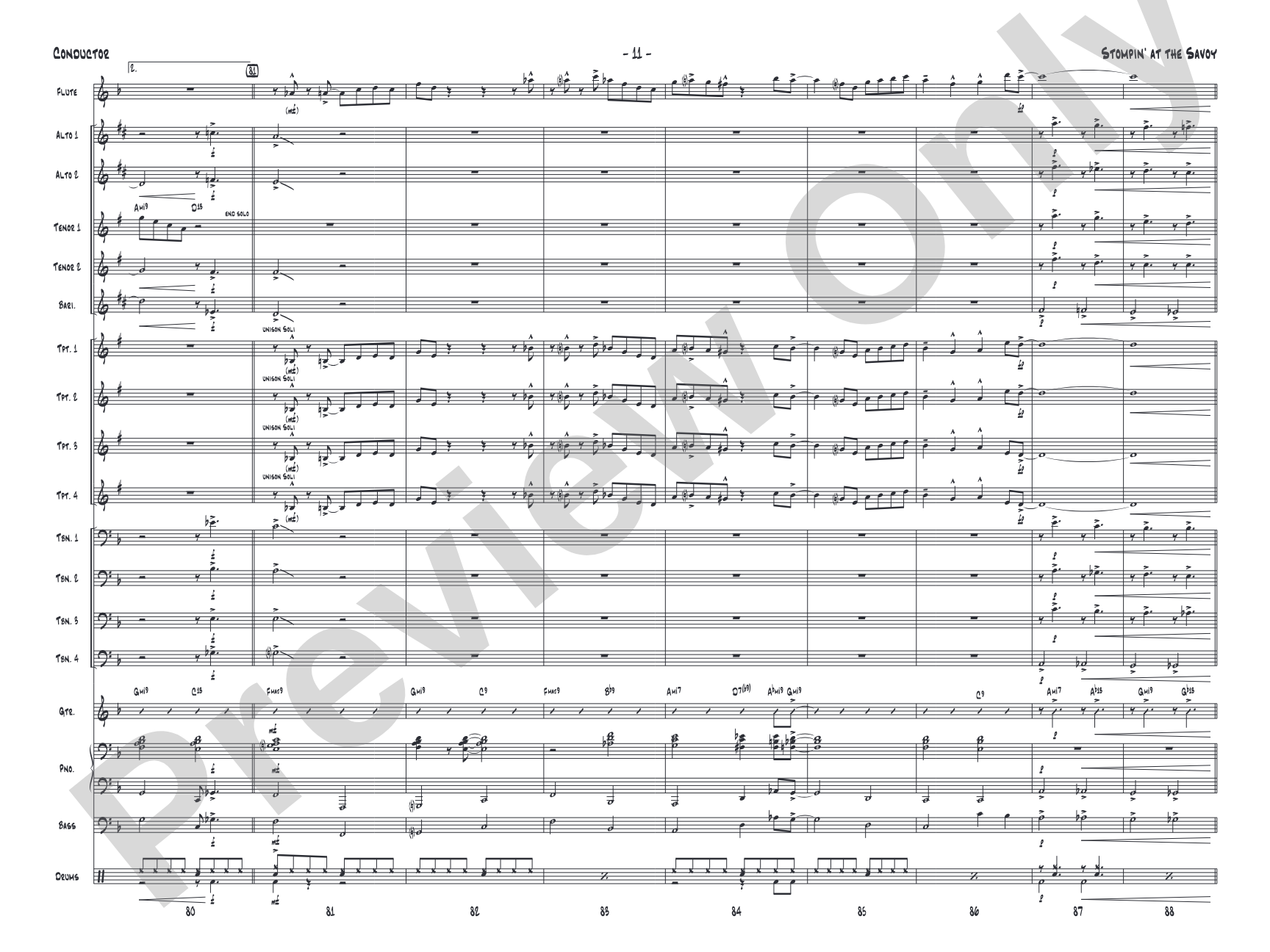
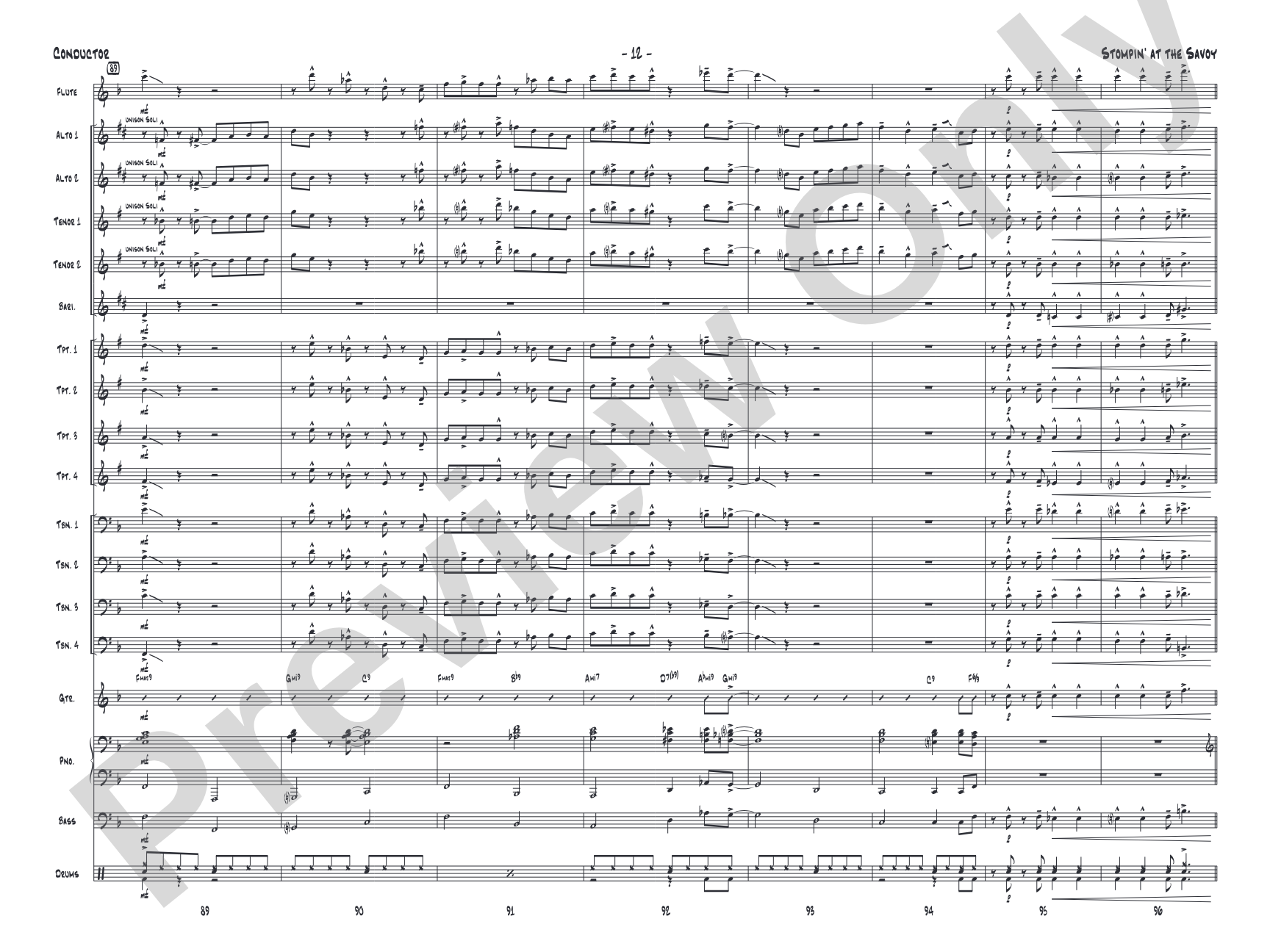
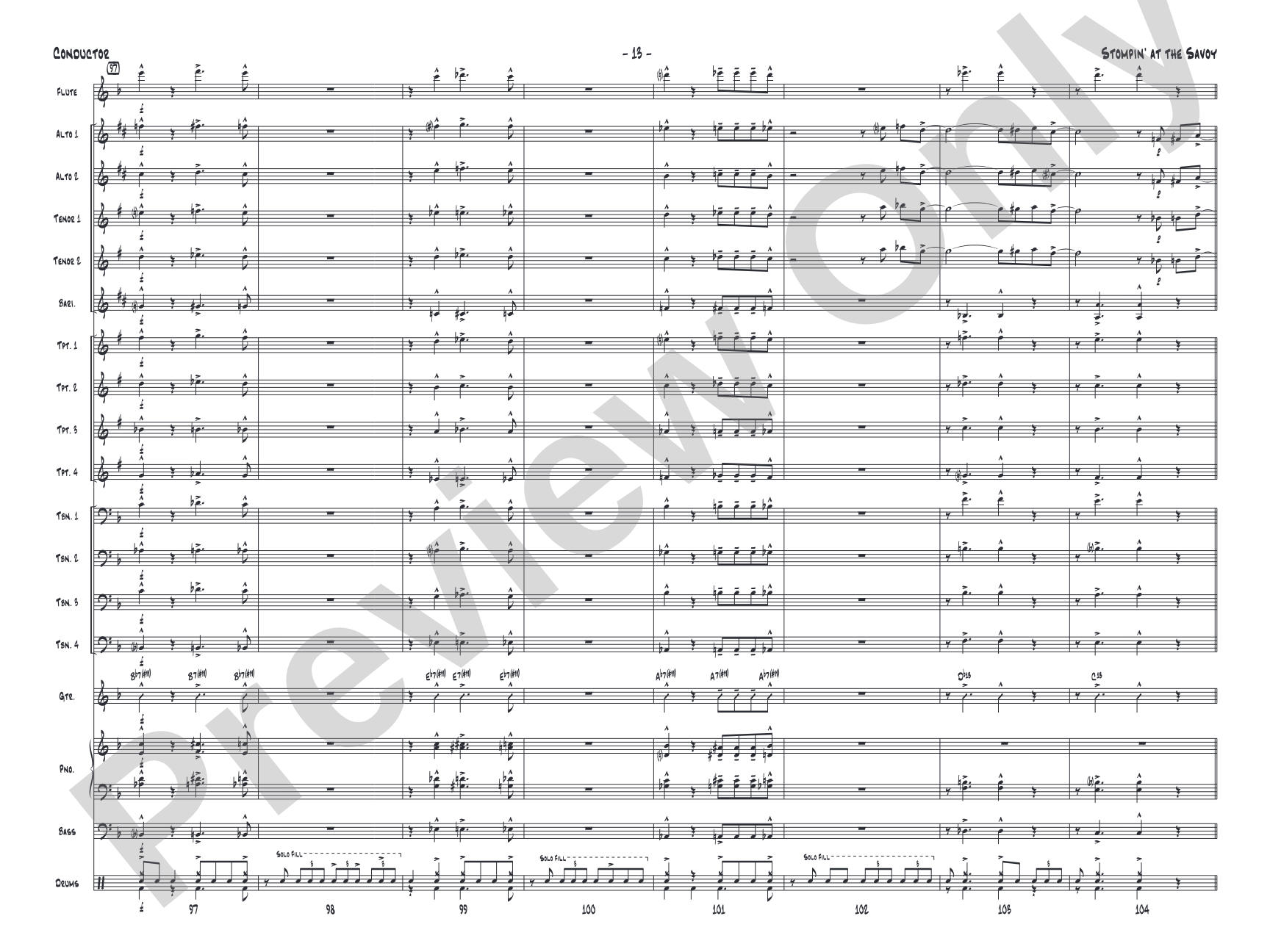
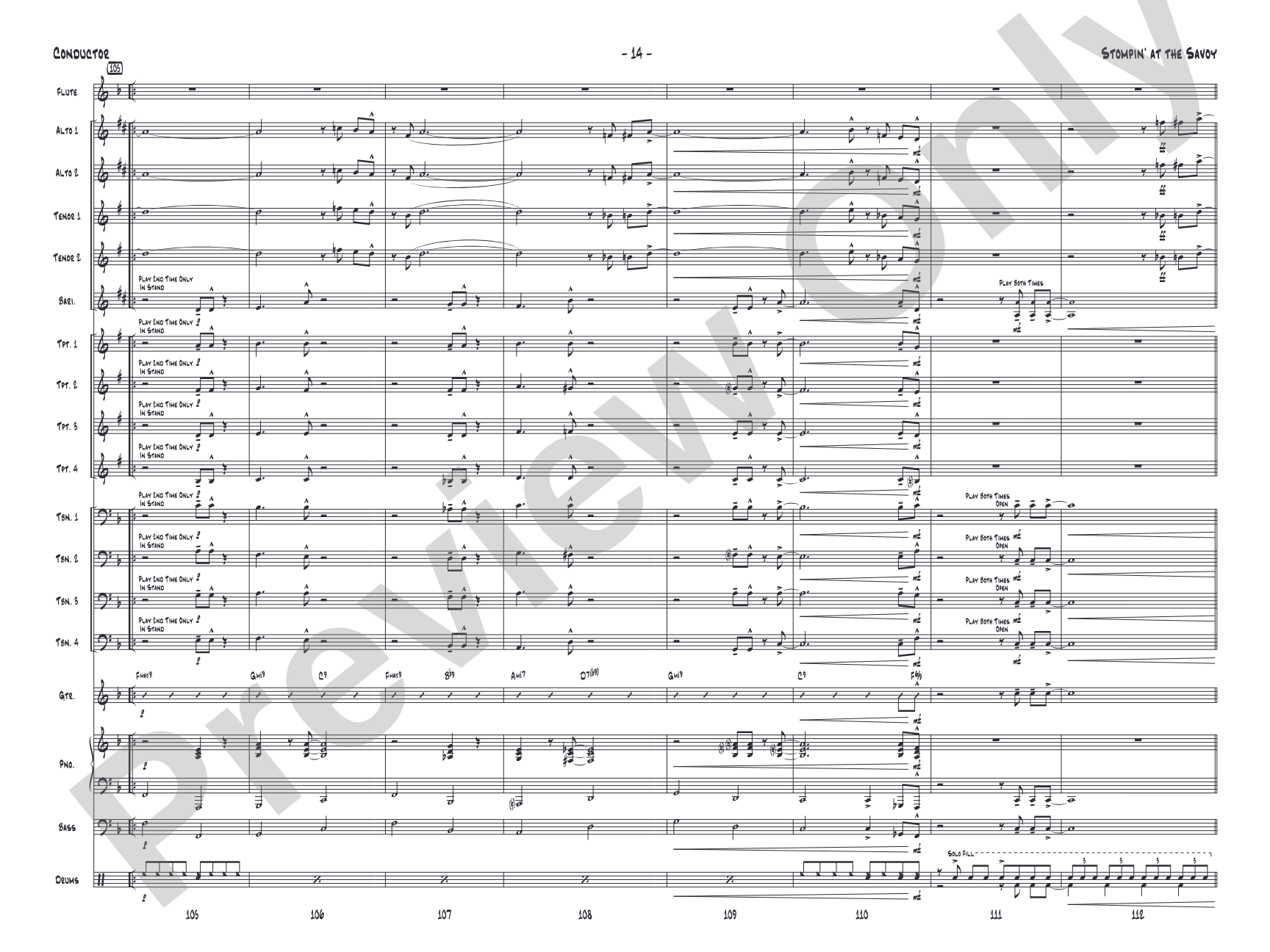
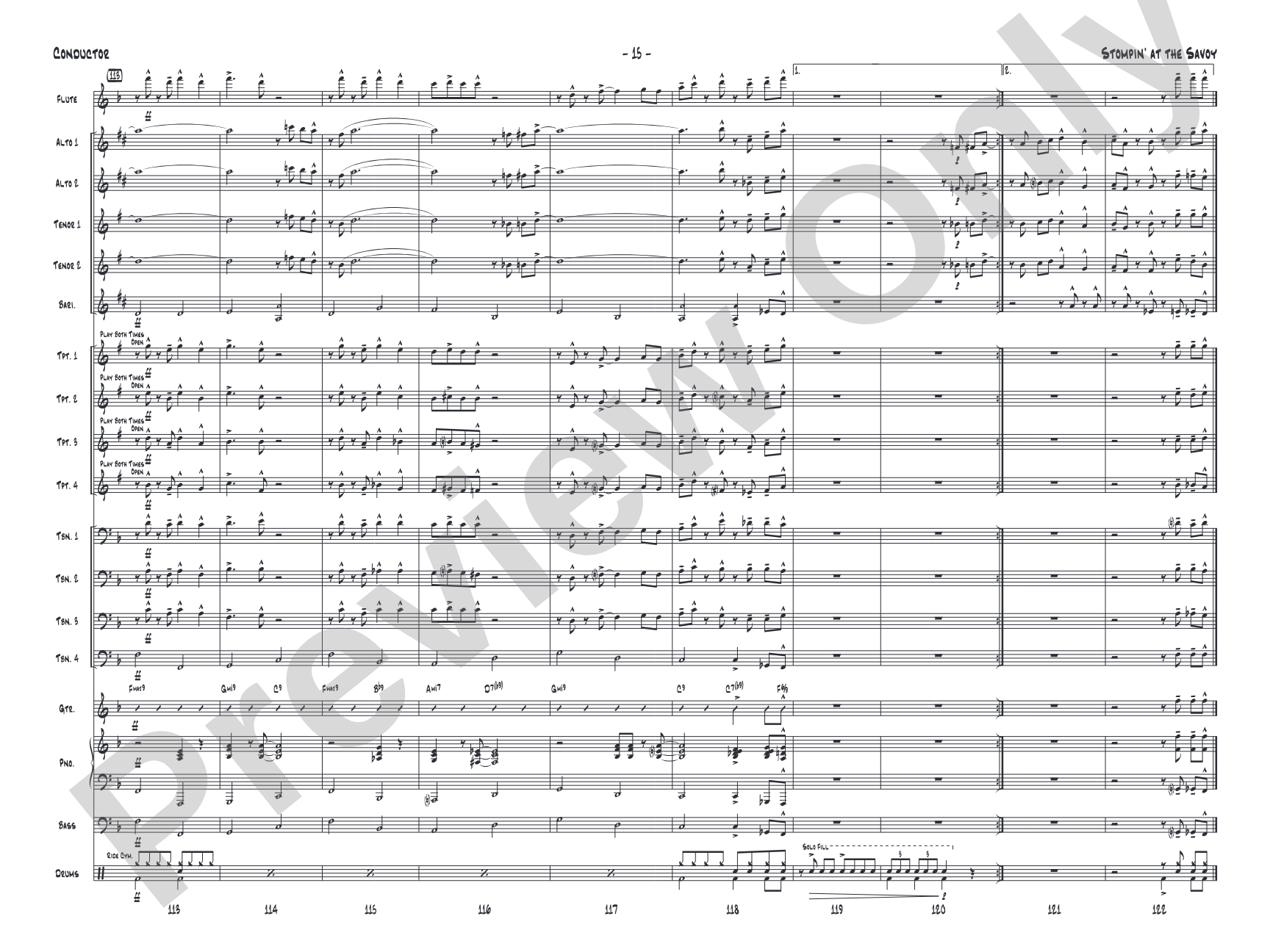

Stompin' at the Savoy: Jazz Ensemble Conductor Score & Parts
By Benny Goodman, Chick Webb, and Edgar Sampson / arr. Mike Kamuf
Grade: 2.5 (Medium Easy)
Item: 00-PK-0008428

$52.00
One moment…
Description
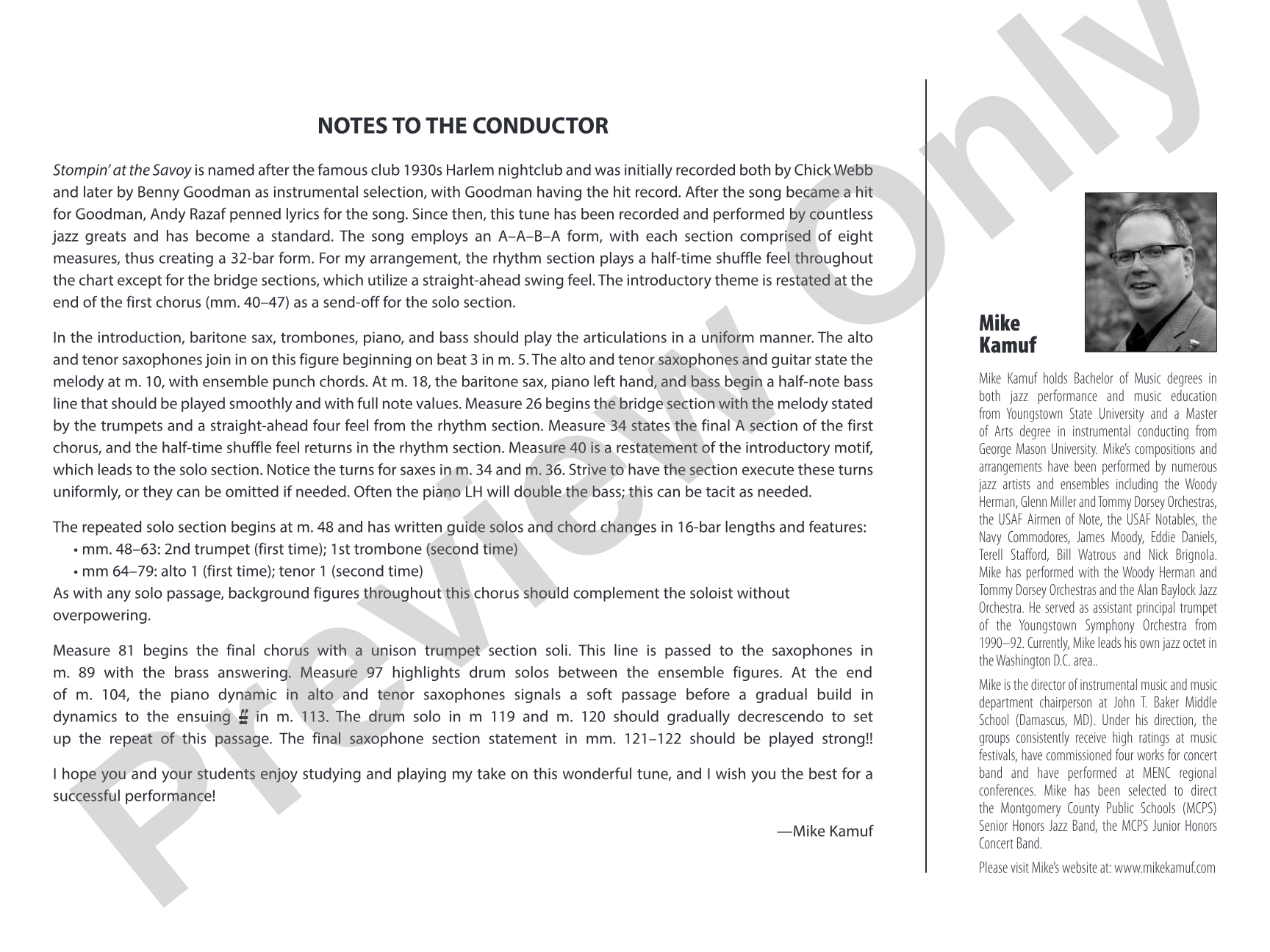
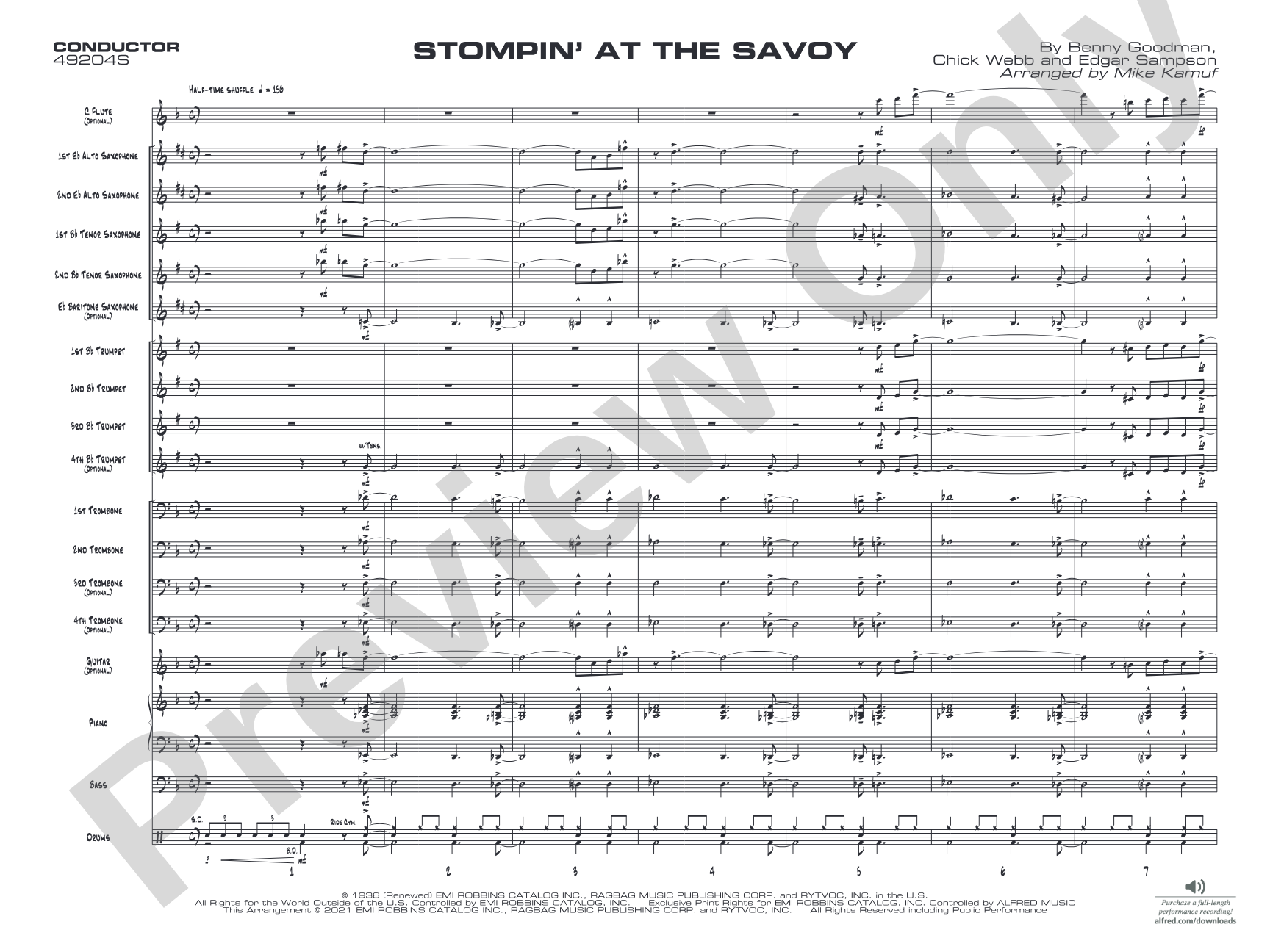
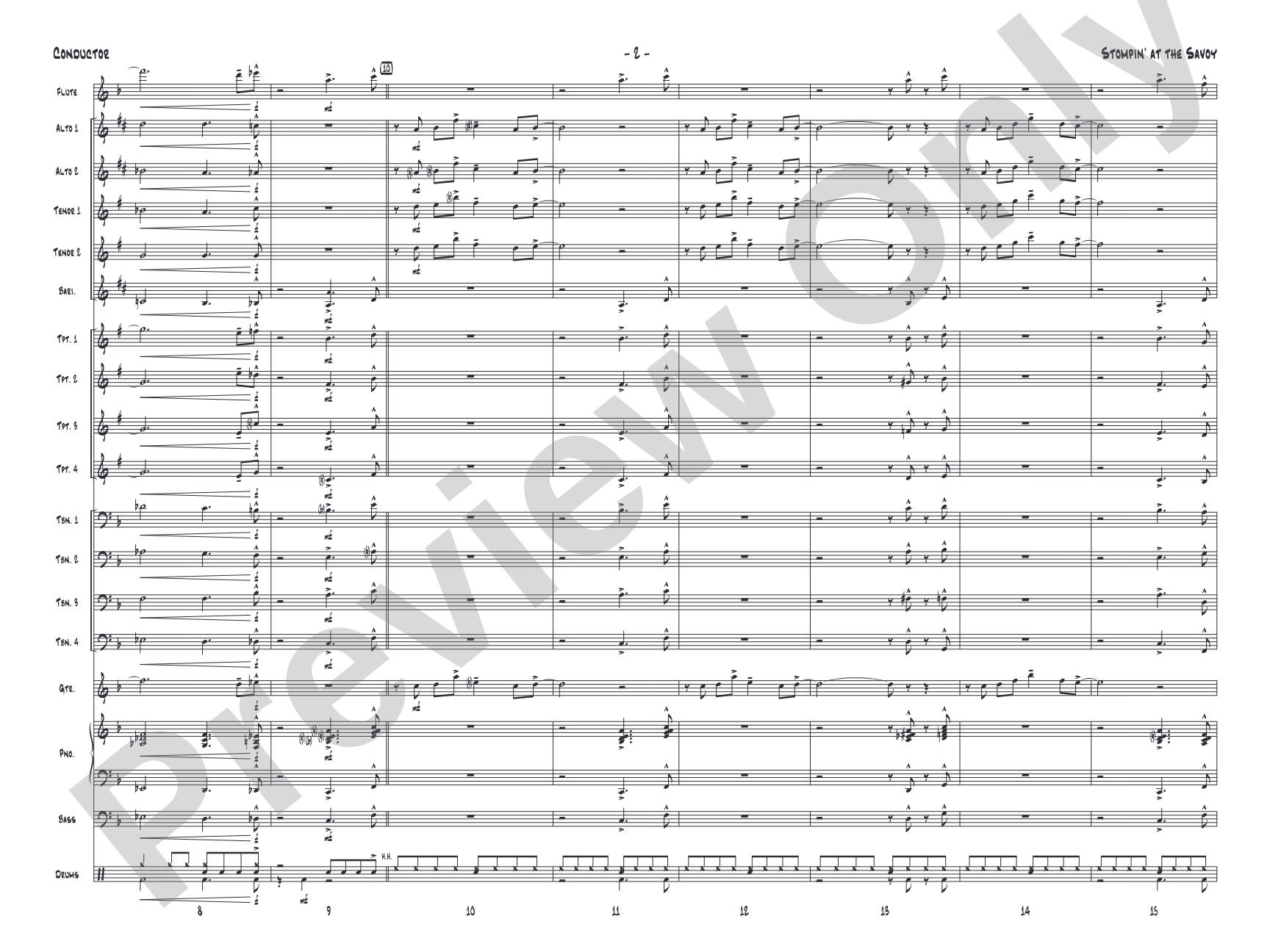
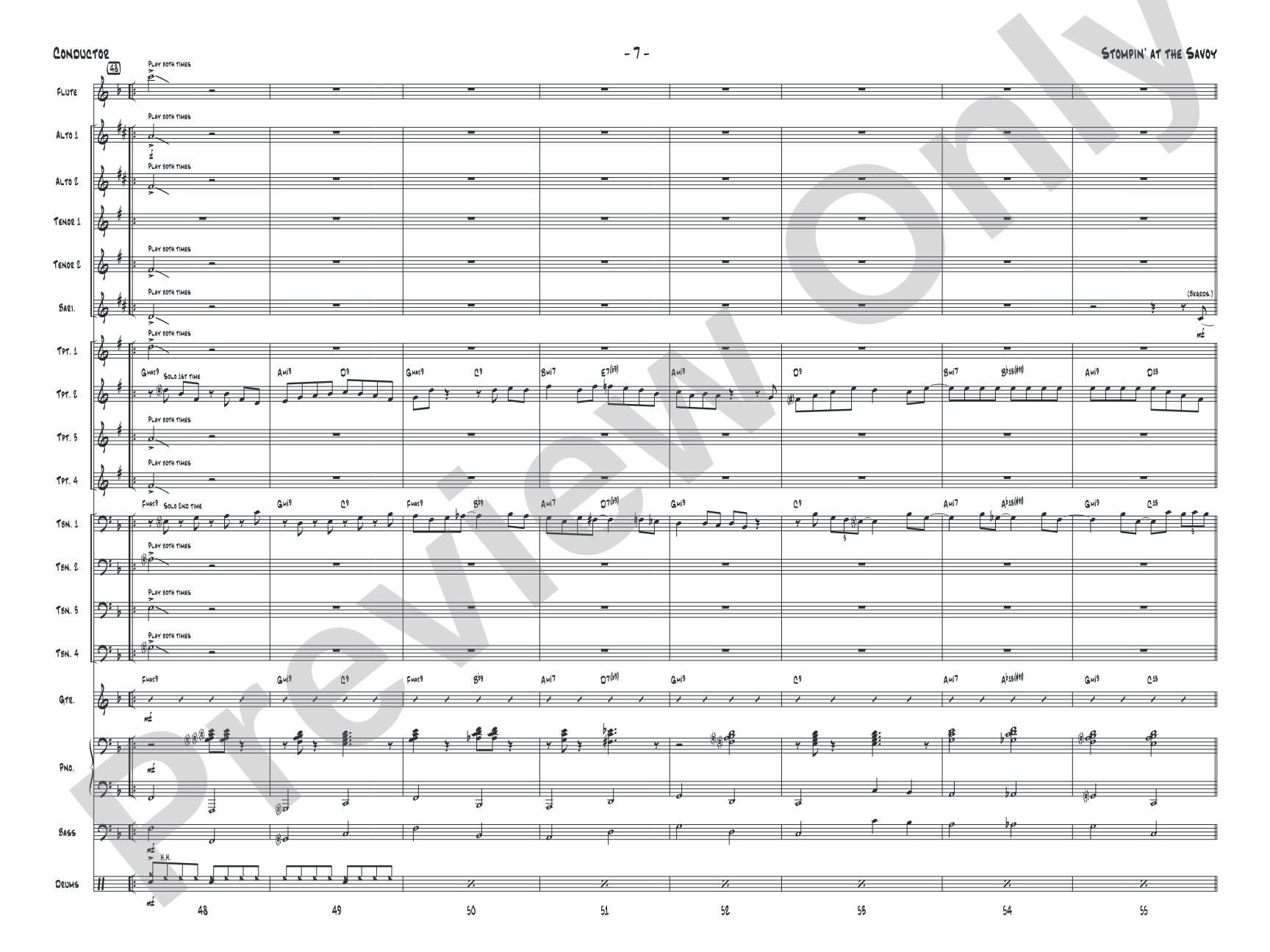
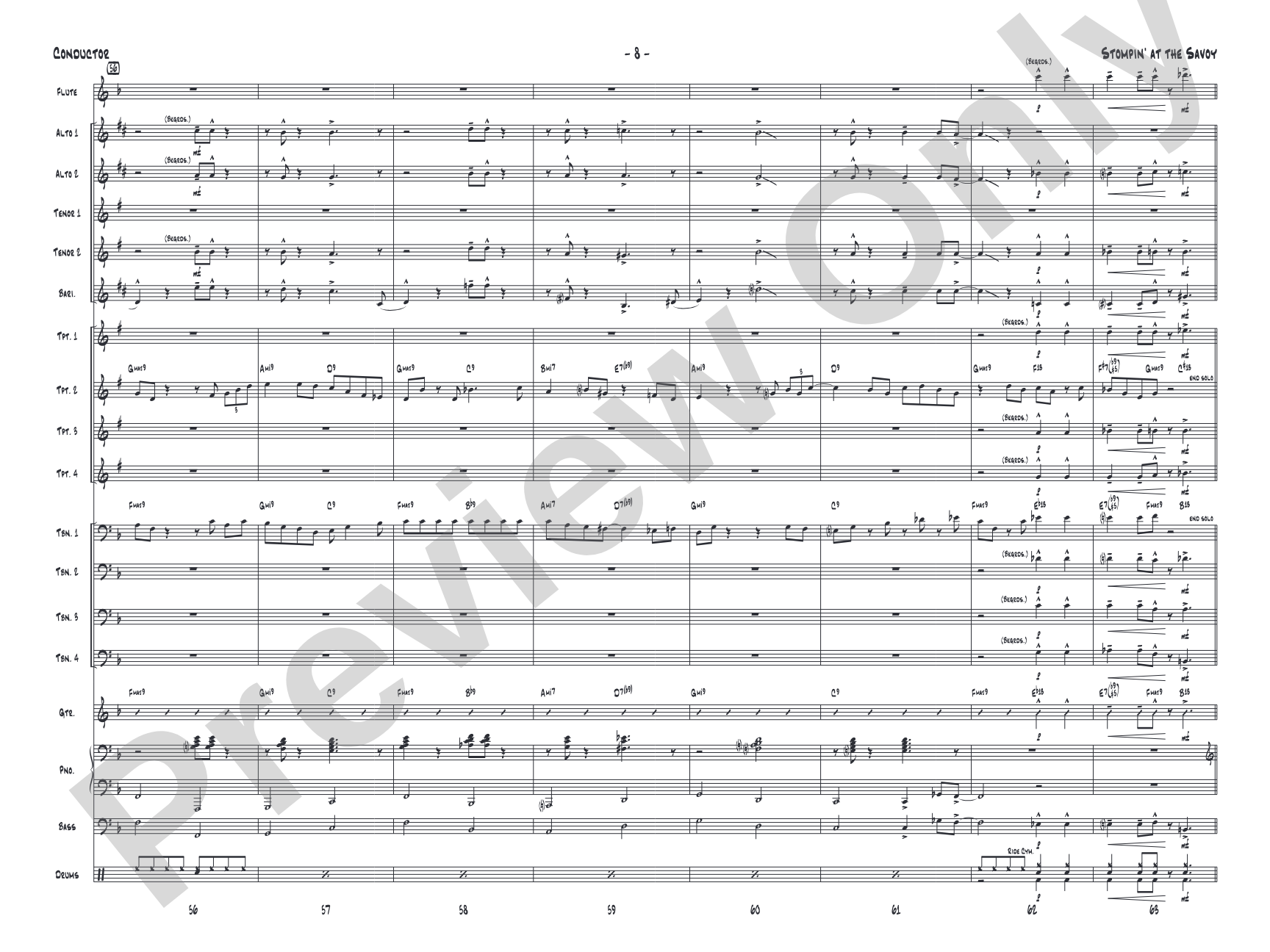
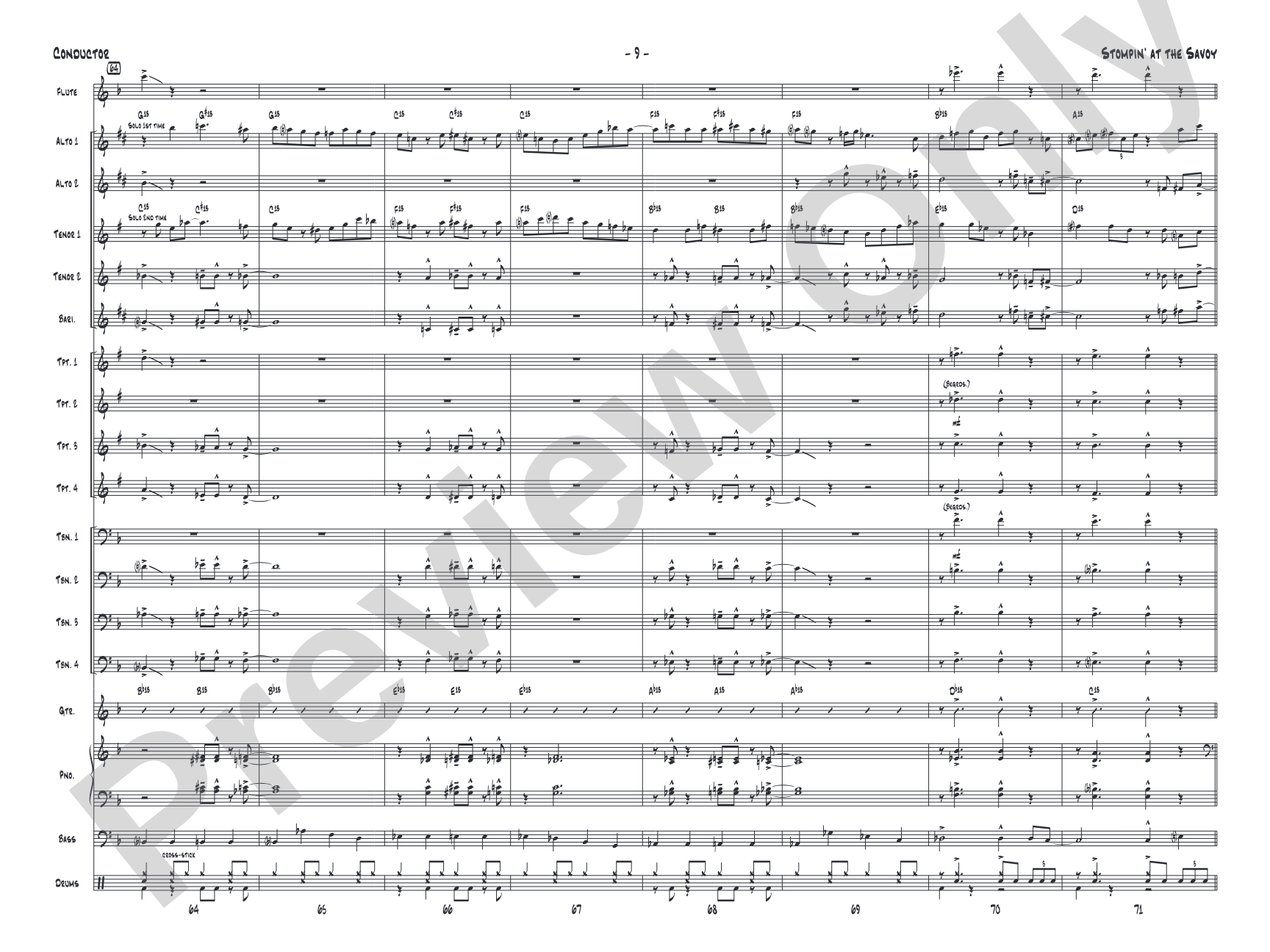
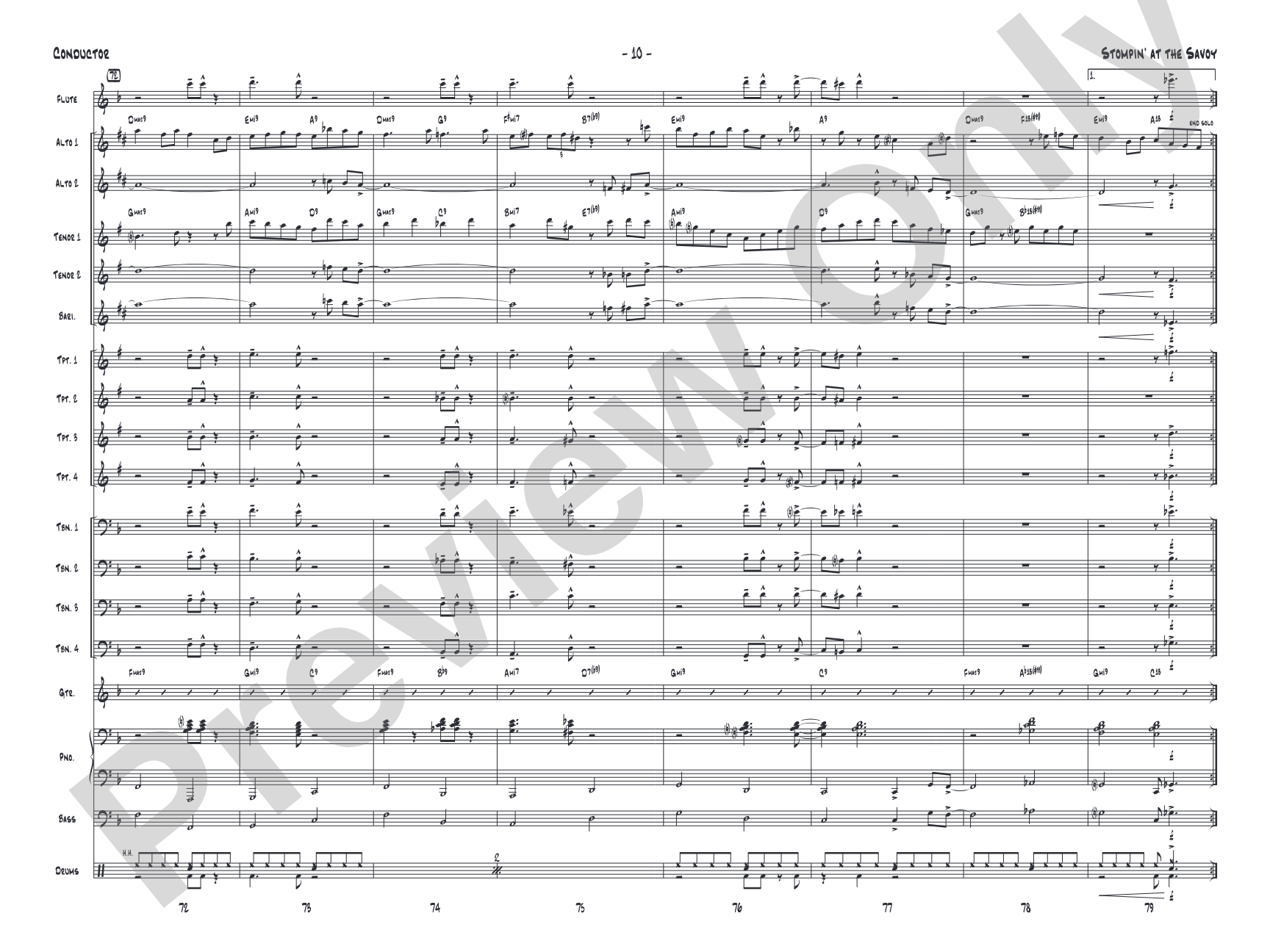
Stompin' at the Savoy arranged by Mike Kamuf is a great jazz standard played around 156 BPM. This swinger is superbly arranged to feature five soloists; trombone 1, trumpet 2, tenor 1, alto 1, and drumset. Lead trumpet range is to written G on top of the staff. Features include section solis, interludes, a kickin' shout chorus, it's all here, enjoy! (4:20) This title is available in MakeMusic Cloud.


Don't just read it, hear it, play along with it, and watch your students grow with it. In MakeMusic Cloud, Stompin' at the Savoy: Jazz Ensemble Conductor Score & Parts comes alive with professional accompaniment, adjustable tempo, and built-in practice tools that turn solo practice into real progress.
Open in the Player
Jump straight in and assign it today.
Start Your Free Trial
Open this title and explore the full library in minutes.
Sample Audio
1
Audio File
--:--
0:00
0:00
Sample Video
Additional Details
Series:
Young Jazz Ensemble
Publisher:
Alfred Music
Page Count:
88
SKU:
00-PK-0008428
More about this title
About the Composer: Benny Goodman
Benny Goodman (1909-1986) was a clarinetist and bandleader whose influence on jazz and popular music extended far beyond his instrumental virtuosity. Known as the "King of Swing," Goodman led one of the most commercially successful and artistically vital big bands of the 1930s and 1940s, helping to bring jazz into mainstream concert halls and radio broadcasts across America. His bandstand became a proving ground for soloists and arrangers who shaped the sound of the swing era.
Goodman's legacy in music education rests partly on the accessibility and enduring appeal of his compositions and recordings. Standards he championed, like "Stompin' at the Savoy," remain central to the jazz repertoire taught in high schools and colleges. His collaborative approach to ensemble playing, which emphasized both disciplined section work and individual improvisation, established pedagogical principles that directors still apply today.
Why we love this
Kamuf's arrangement strips away none of the swing and energy of the original while scaling it perfectly for developing ensembles. The solo features are generous without overwhelming young improvisers, and the section work is clean enough that students can hear what they're supposed to be playing rather than drowning in complexity. A concert that opens or closes with this tune lands with real joy.
What to expect
The groove is propulsive and buoyant, with that classic swing rhythm that makes dancers want to move. The solos trade back and forth with enough interplay to keep the energy climbing, and when the full ensemble locks into the shout chorus, it feels like the whole band is grinning.
Who it's for
This score and parts set works for jazz ensembles at the high school level and upper middle school advanced groups. Soloists need basic improvisation experience, but the arrangement accommodates players still building their solo language, and the section writing is accessible for students learning ensemble jazz playing.
How to get the most out of it
- Keep the tempo sitting at 156 BPM consistently. Young rhythm sections often sag slightly when they're concentrating on comping, so use a click track in rehearsal to anchor the pocket.
- Balance the five featured soloists so each one shines without overshadowing the section. This means the accompaniment figures need to sit behind, not over, each soloist.
- Lock the shout chorus with physical precision. The punch of this arrangement comes from tight section hits, so mark exactly where every section enters and executes those hits as a single voice.
- Give the lead trumpet player permission to breathe naturally between phrases rather than holding the top G on the staff beyond comfort. The written range is demanding for Grade 2.5 players, and phrasing matters more than note duration.
How to use it
This is a natural mid-set energizer on a concert with mixed jazz styles. Pair it with a slower ballad arrangement beforehand to highlight the contrast, or close a set with it to send the audience out on a high note. At 4 minutes and 20 seconds, it's also ideal for competitive festival sets where timing matters.
Skills your students will build
- Reading and performing swing rhythms at tempo with consistent subdivision
- Balancing solo improvisation with ensemble accompaniment figures
- Executing section soli and shout chorus hits with unified articulation and dynamics
- Navigating written ranges appropriate to each instrument section
- Trading solos and maintaining groove during interlude passages