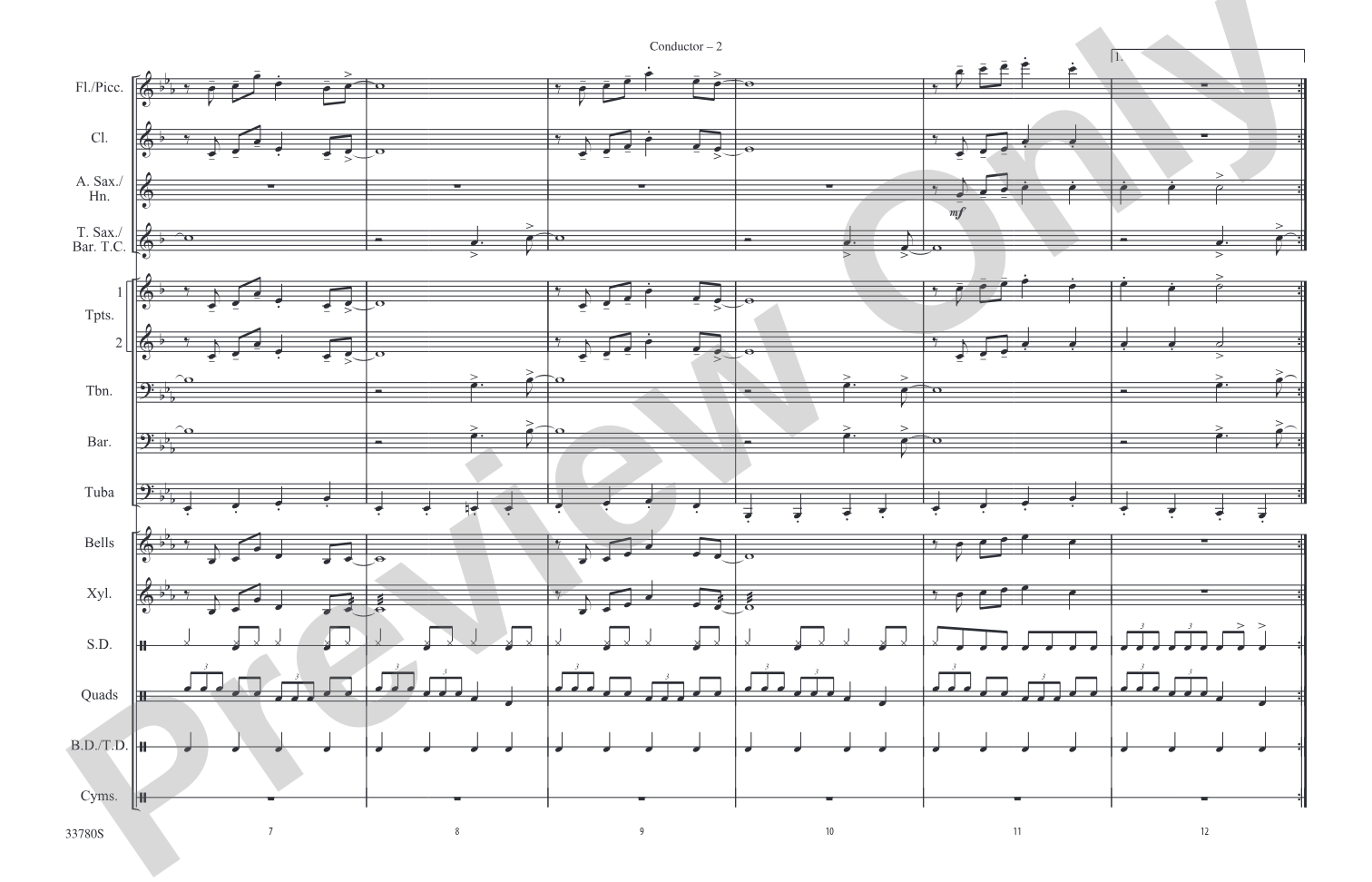
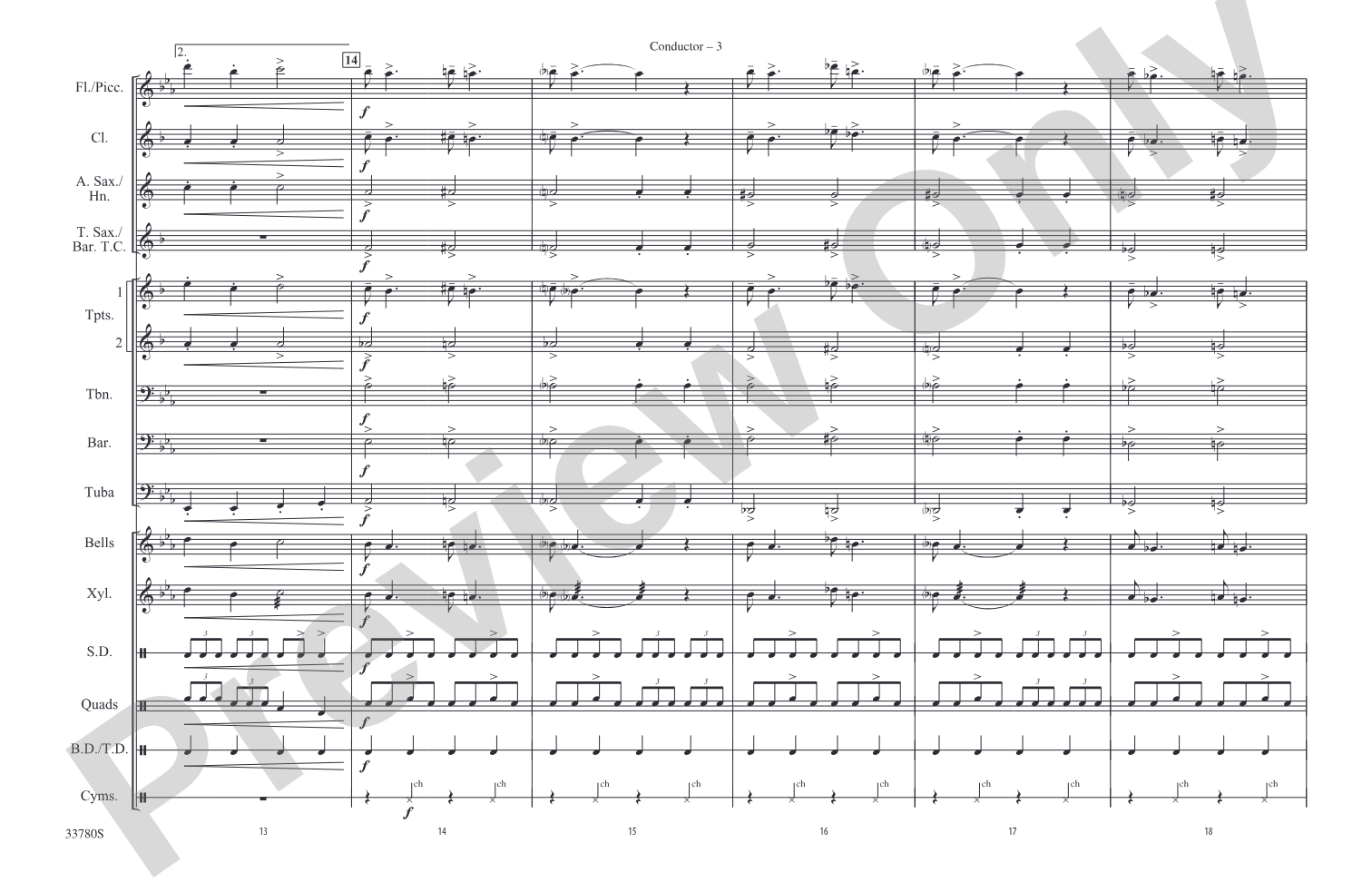
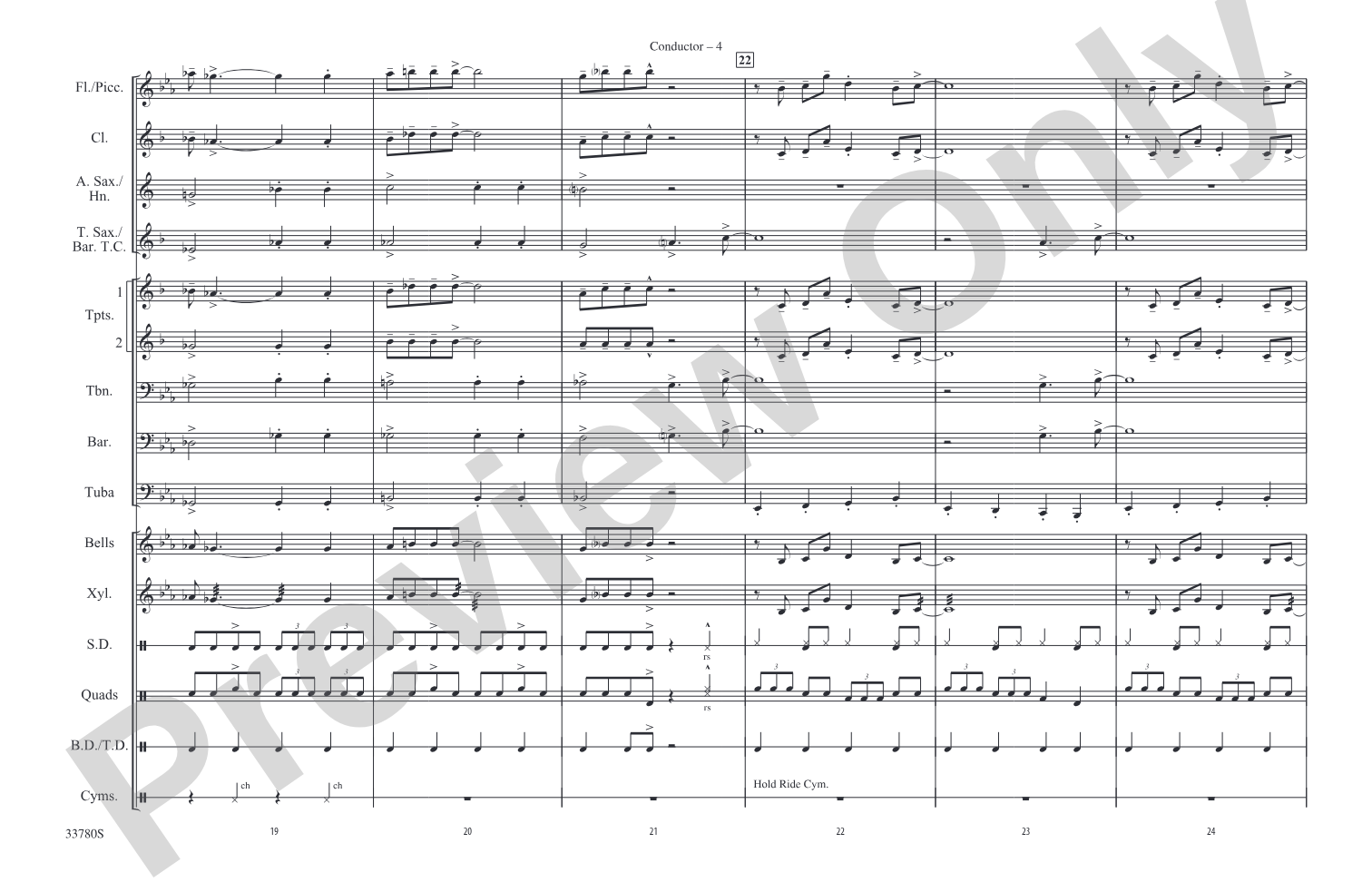
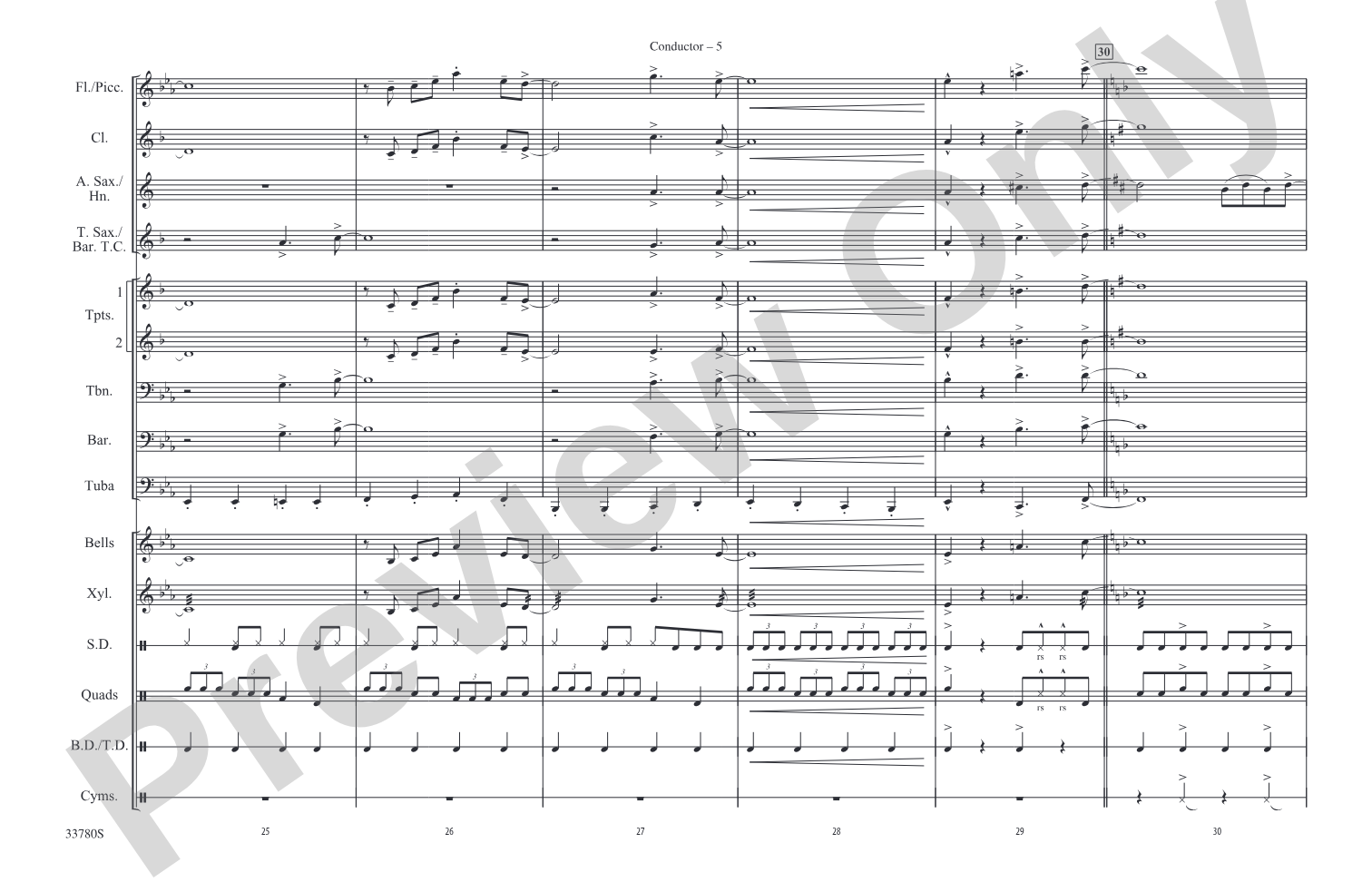
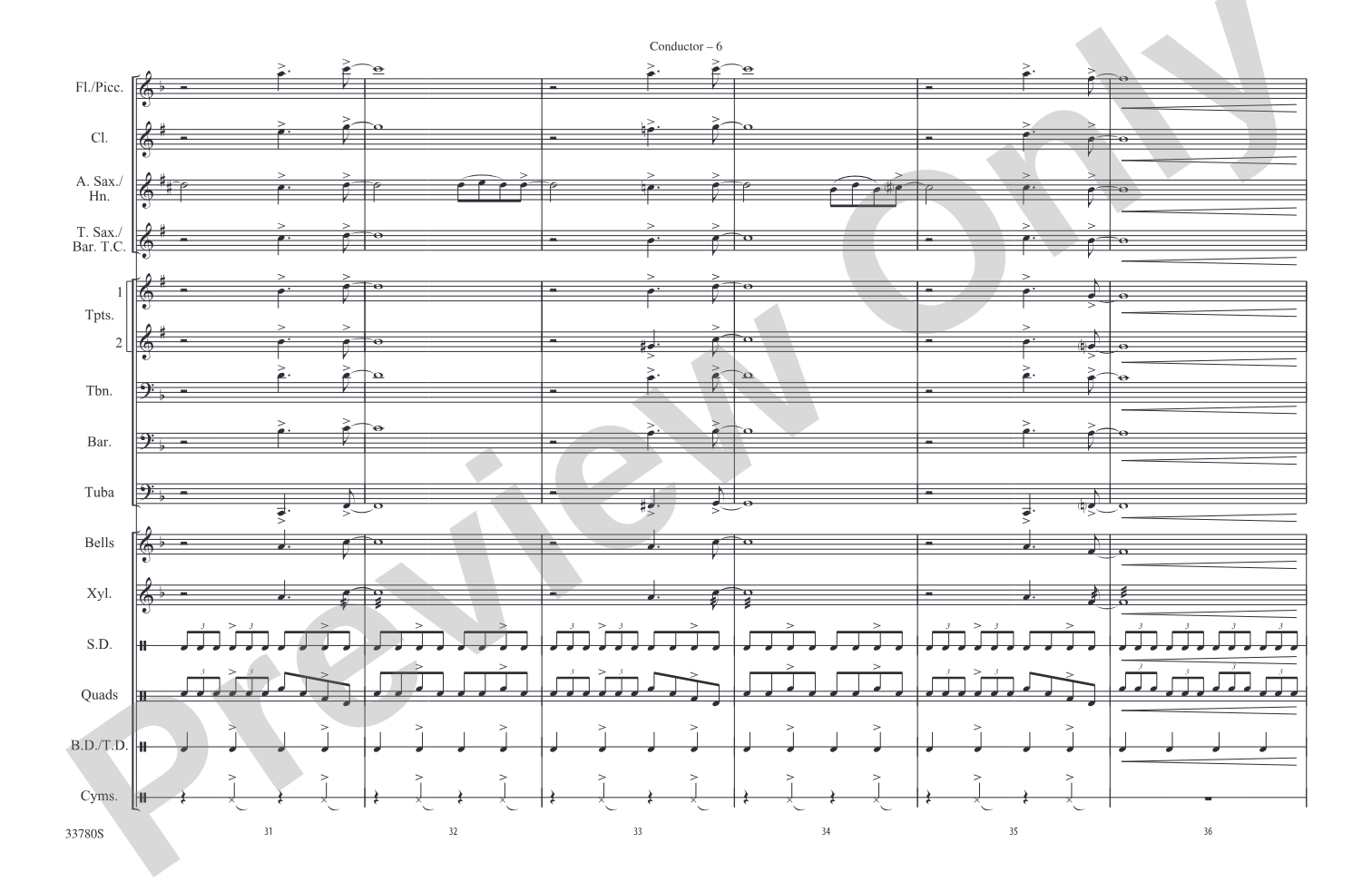
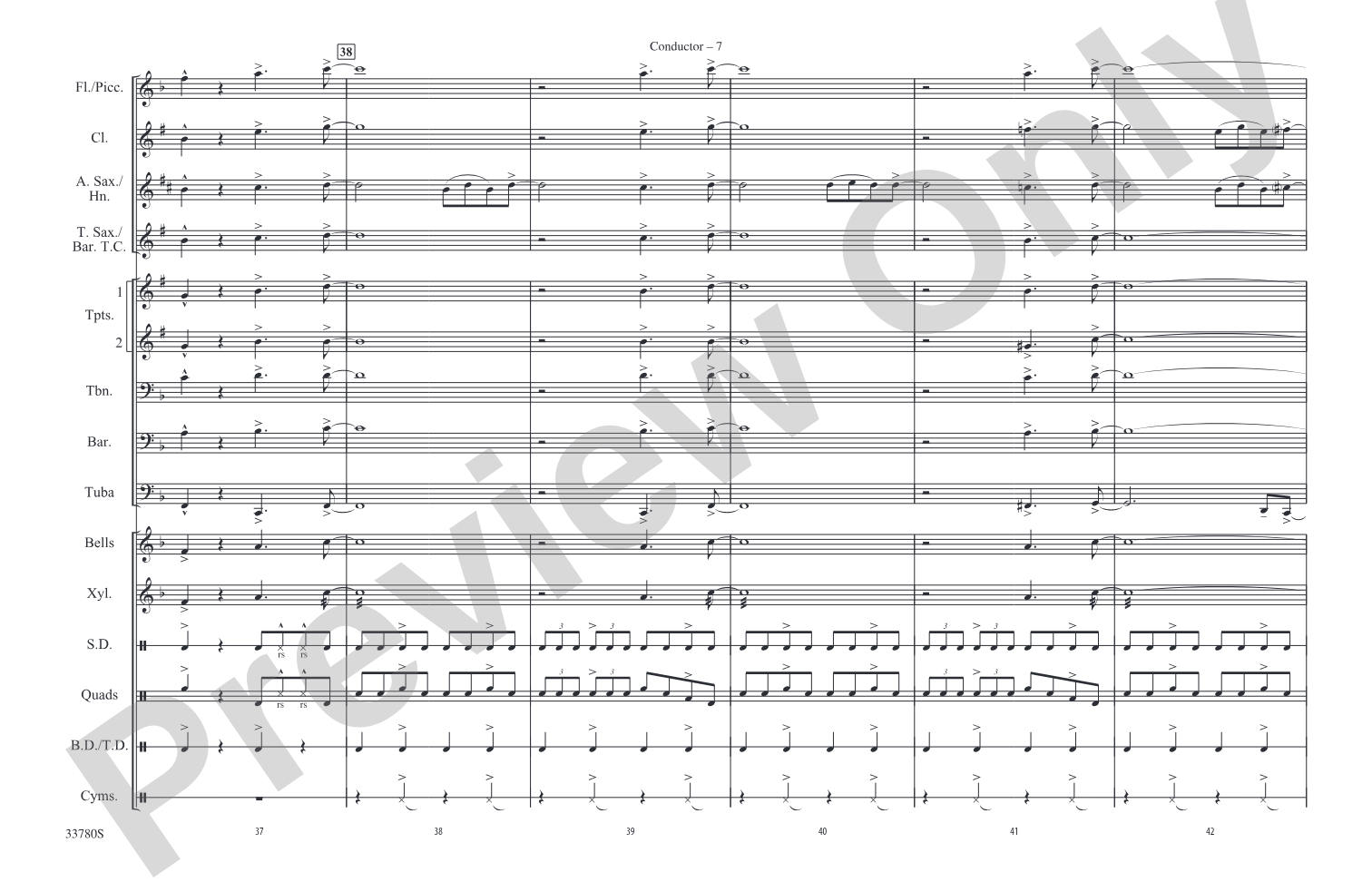
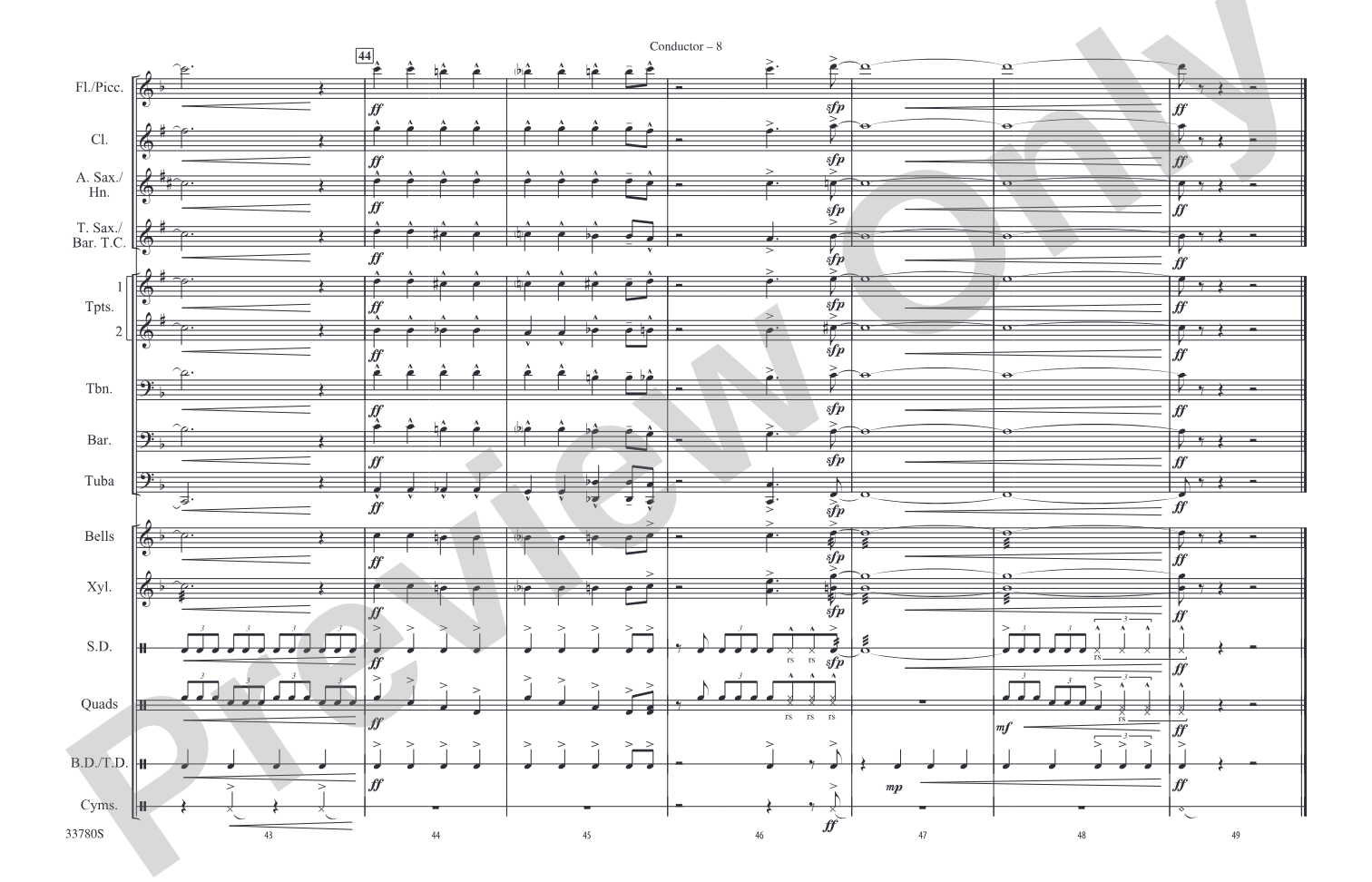
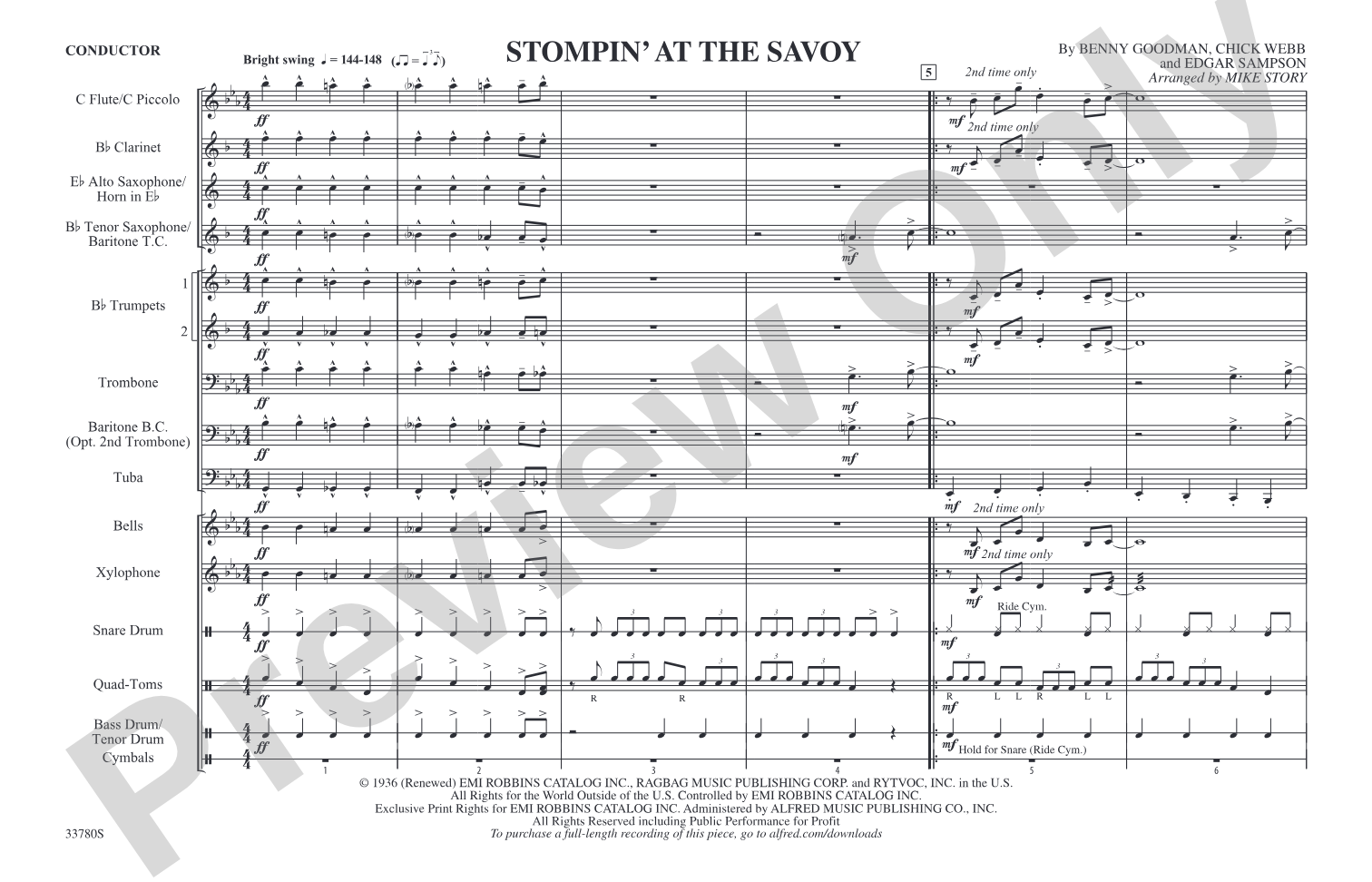
Stompin' at the Savoy Sheet Music Preview

Stompin' at the Savoy: Marching Band Conductor Score & Parts

By Benny Goodman, Chick Webb, and Edgar Sampson / arr. Mike Story

Grade: 2 (Easy)

Item: 00-PK-0007921

Digital Download
makemusic Cloud badge
$45.00

One moment…

Description
Great jazz and big band tunes make great marching band charts! Check out this easy but effective swingin' arrangement of one of the best big band tunes ever! Mike Story does it again!

Don't just read it, hear it, play along with it, and watch your students grow with it. In MakeMusic Cloud, Stompin' at the Savoy: Marching Band Conductor Score & Parts comes alive with professional accompaniment, adjustable tempo, and built-in practice tools that turn solo practice into real progress.

Sample Audio
0:00
0:00
Sample Video
Additional Details
Series: Big and Easy
Publisher: Alfred Music
Page Count: 114
SKU: 00-PK-0007921

More about this title

About the Composer: Benny Goodman

Benny Goodman (1909-1986) earned his place in jazz history as the "King of Swing," bringing hot jazz arrangements to mainstream concert halls and radio during the 1930s and 1940s. A clarinetist of exceptional technical facility and musical intelligence, Goodman led some of the most influential big bands of the era, collaborating with composers and arrangers like Edgar Sampson and recording standards that remain central to the jazz repertoire.

Goodman's cultural impact extended beyond the jazz world: his 1938 Carnegie Hall concert legitimized swing music in the eyes of classical music institutions, and his integrated bands broke racial barriers in American music when segregation was still the norm. For music educators, Goodman's compositions and the charts written for his band offer accessible entry points into swing style, demonstrating how jazz arranging principles work within structured ensemble formats.

Why we love this

Mike Story's Grade 2 arrangement captures the infectious energy of one of swing's most recognizable tunes without overwhelming a developing marching band. The straightforward scoring keeps the focus on groove and style rather than technical fireworks, making it ideal for bands working on jazz phrasing, section balance, and rhythmic precision at an accessible level. This is the kind of chart that sounds considerably more sophisticated than its difficulty rating suggests, rewarding both performers and audiences.

What to expect

Clean, energetic, and playful. The arrangement swings with the relaxed confidence of the original big band sound, featuring bright articulation and a groove that propels forward without demanding breakneck precision. There's genuine sophistication in the voicing even at this accessible level, giving performers a taste of what makes the Savoy Ballroom classic so timeless.

Who it's for

Marching bands at the Grade 2 level who want to program recognizable, engaging jazz material without the technical demands of more complex swing charts. Directors seeking a confidence-builder that introduces students to big band style and jazz arranging conventions will find the straightforward orchestration and familiar melody especially useful.

How to get the most out of it

  • Lock the section rhythms before worrying about dynamics; the swing feel depends on consistent, relaxed subdivision across all parts, especially in the backbeat.
  • Shape the melody with gentle swells rather than dramatic accents to capture the subtle sophistication of the original arrangement.
  • Balance the front ensemble with the wind sections carefully during tutti passages to prevent the piece from feeling top-heavy.
  • Allow slight flexibility in the tempo during ensemble transitions to let the swing feel breathe naturally rather than mechanical.

How to use it

Use this as a show opener or closer to establish a jazzy, upbeat tone for a concert program mixing classical and contemporary works. It also works exceptionally well as a pep band feature, where its instantly recognizable melody and swing groove connect immediately with audiences unfamiliar with formal concert music.

Skills your students will build

  • Swing articulation and phrasing (detached eighth notes, relaxed groove)
  • Balance and blend across wind and front ensemble sections in jazz context
  • Reading and executing written jazz rhythms and syncopation patterns
  • Responding to conductor shape and style choices specific to swing interpretation

You May Also Like