
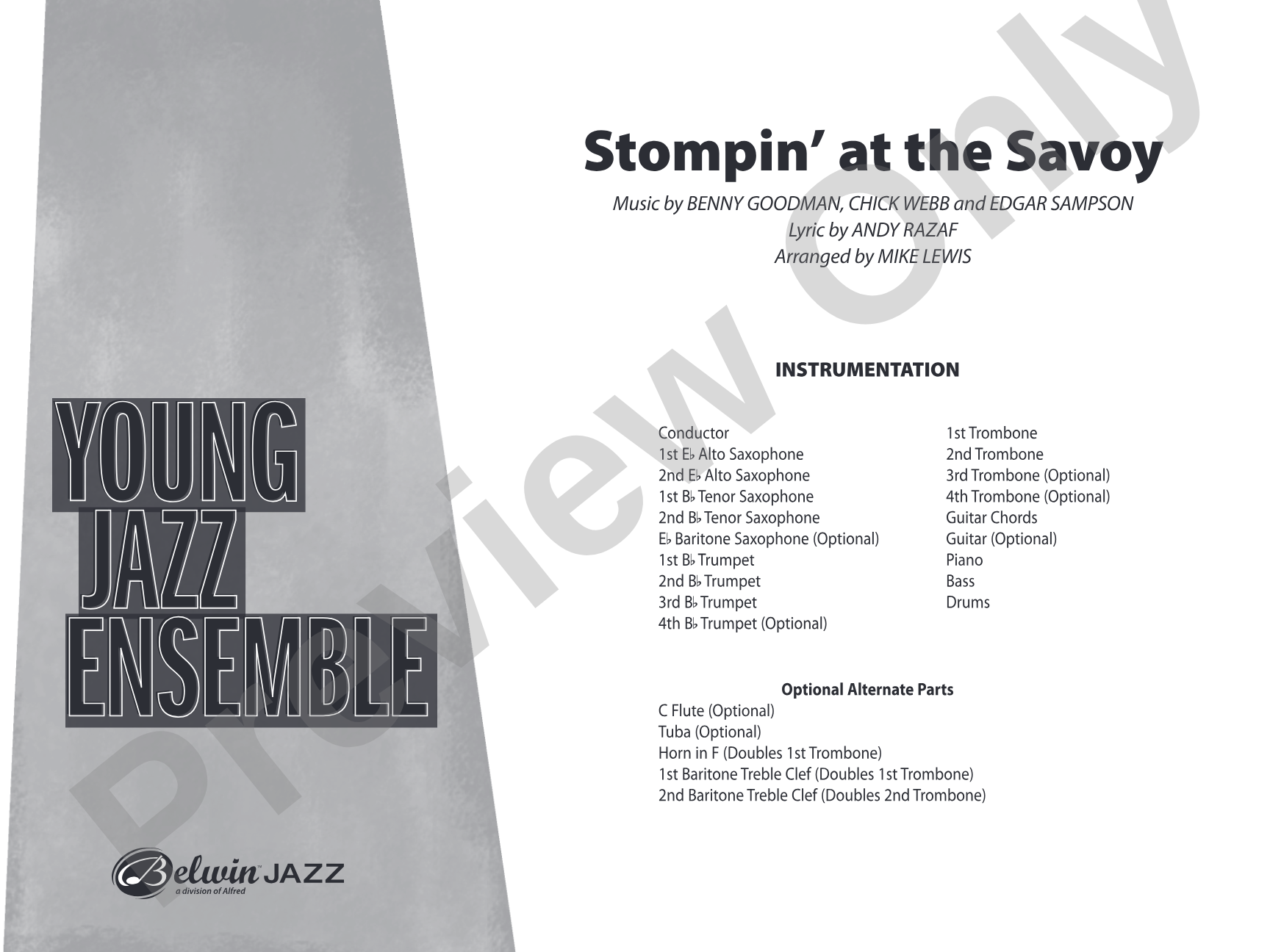
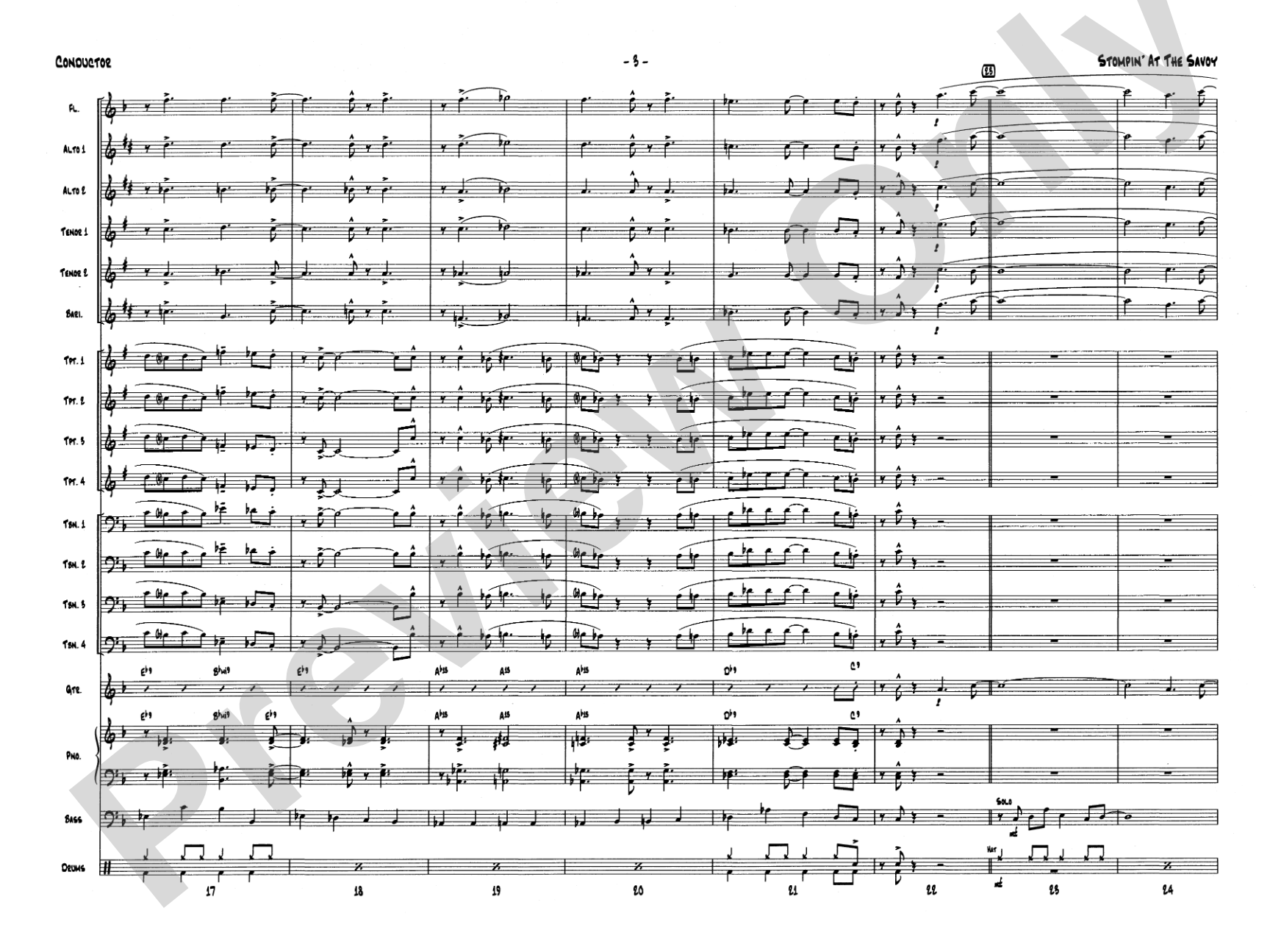
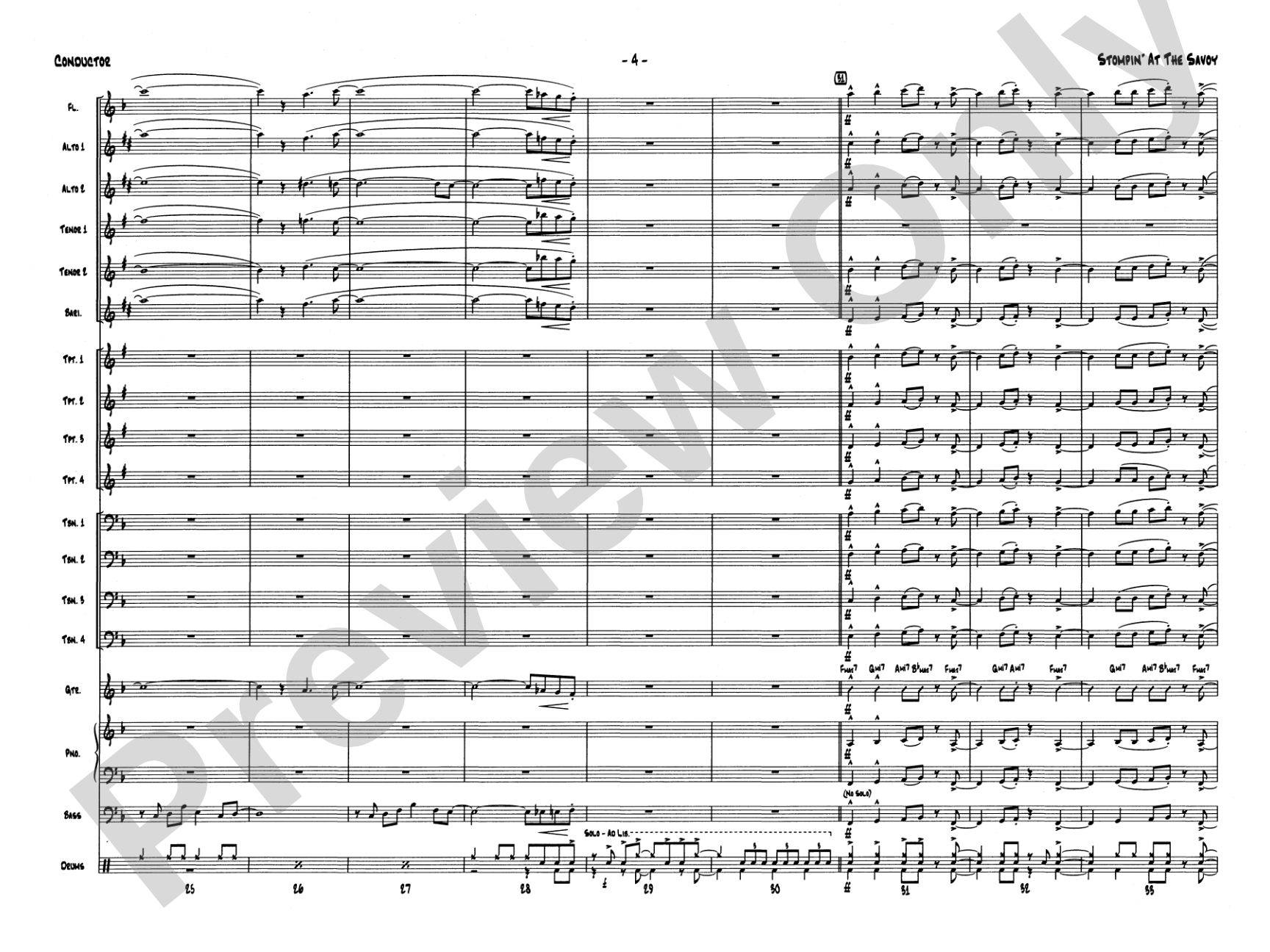
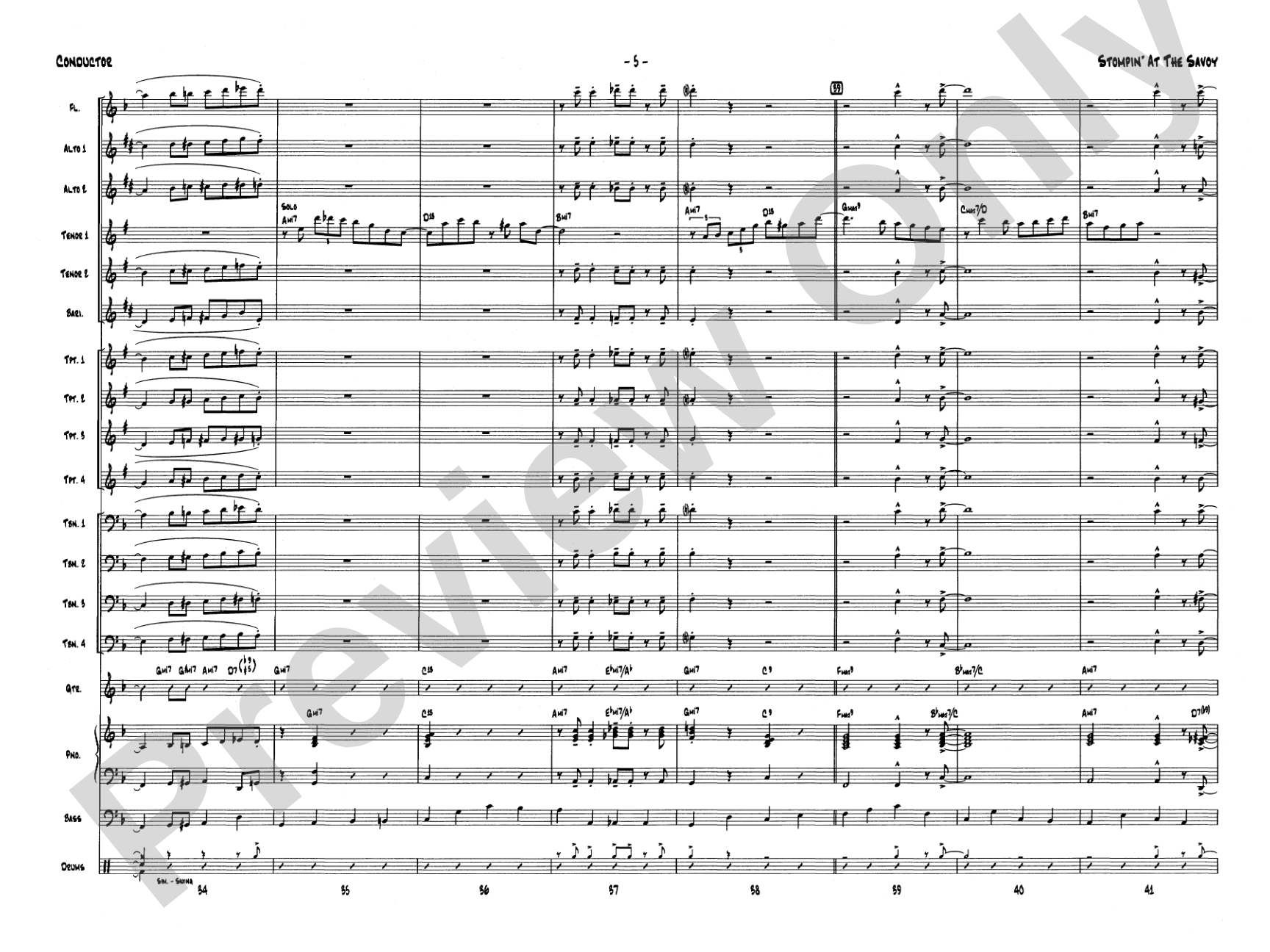
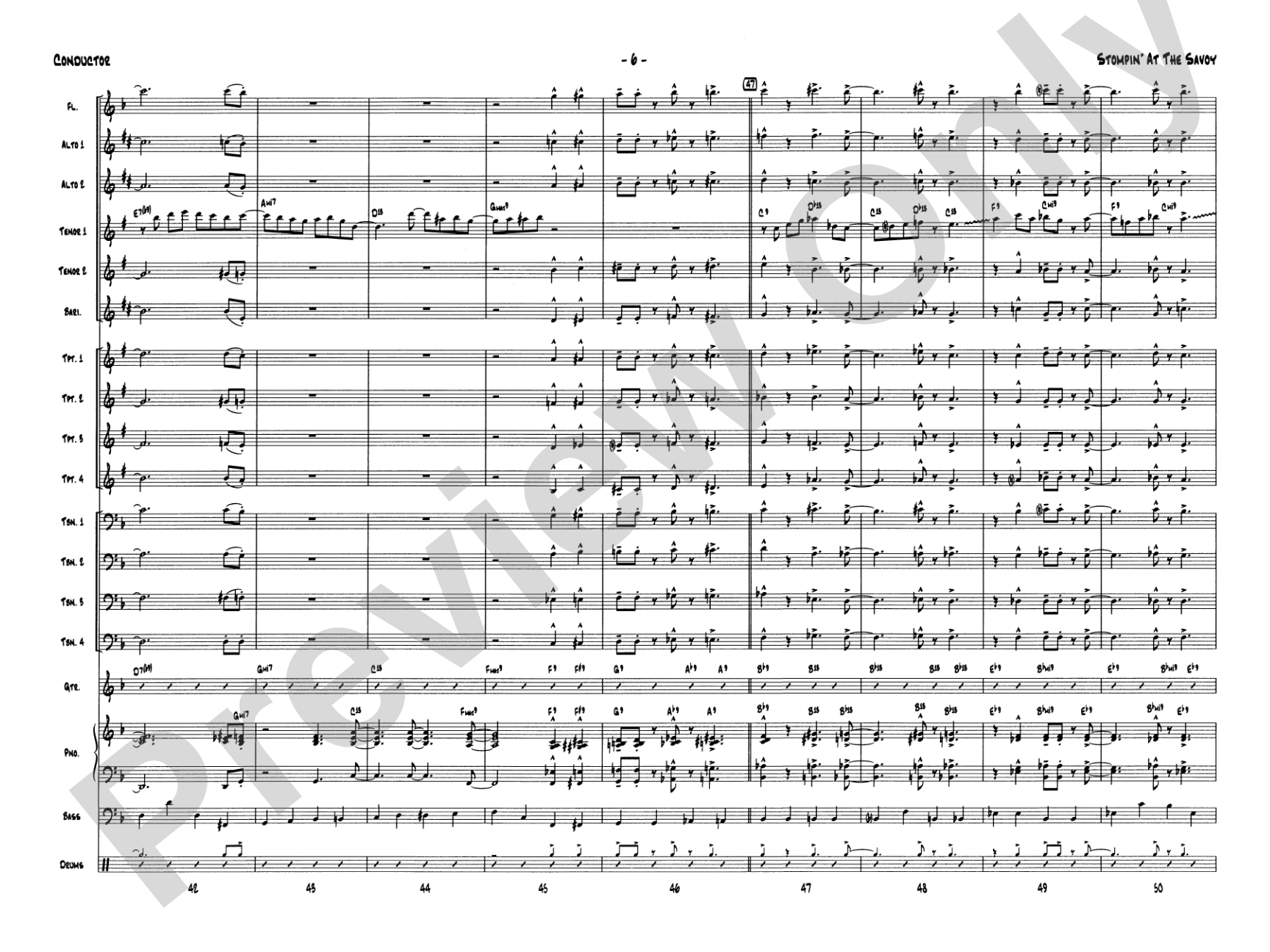
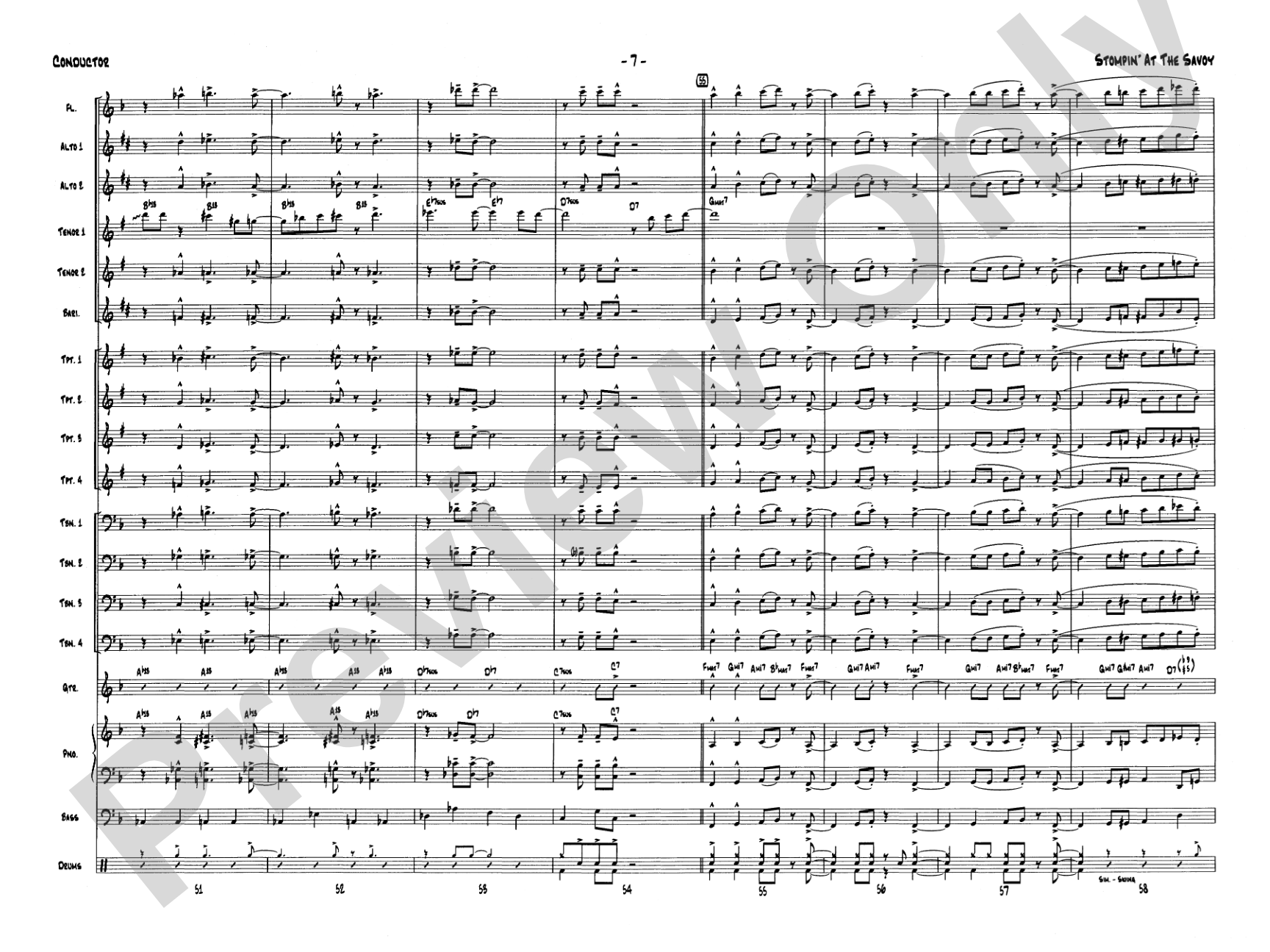
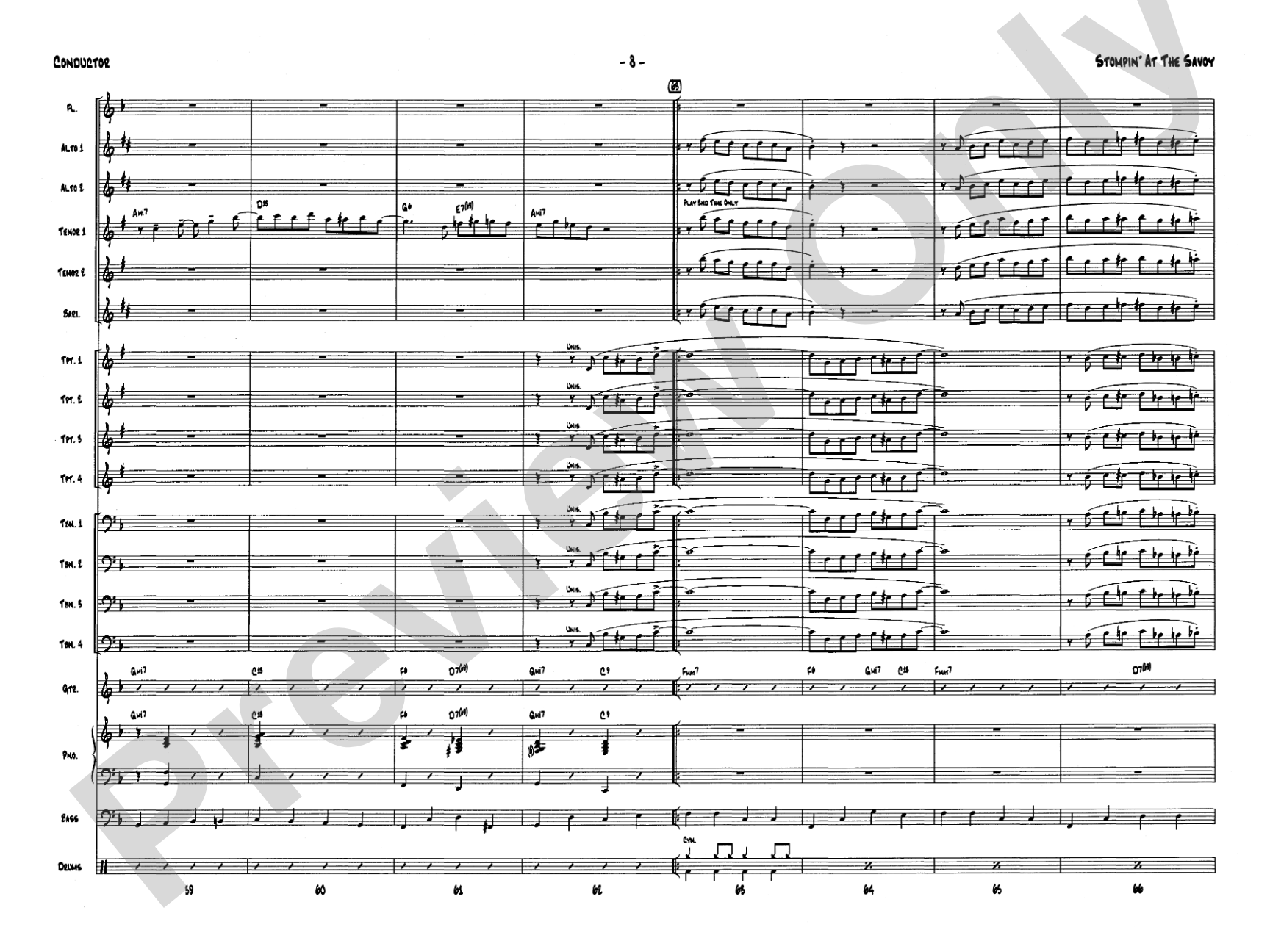
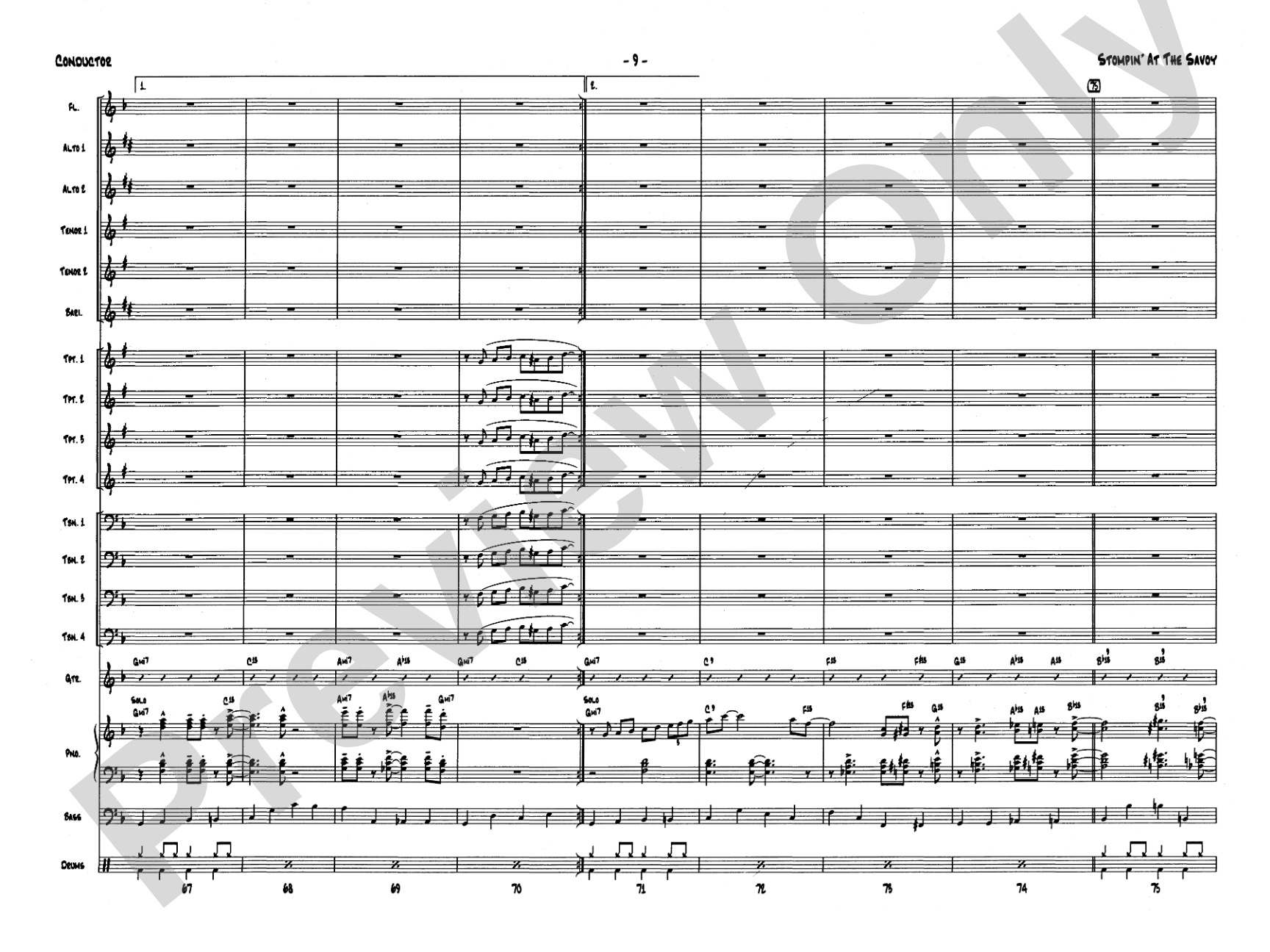
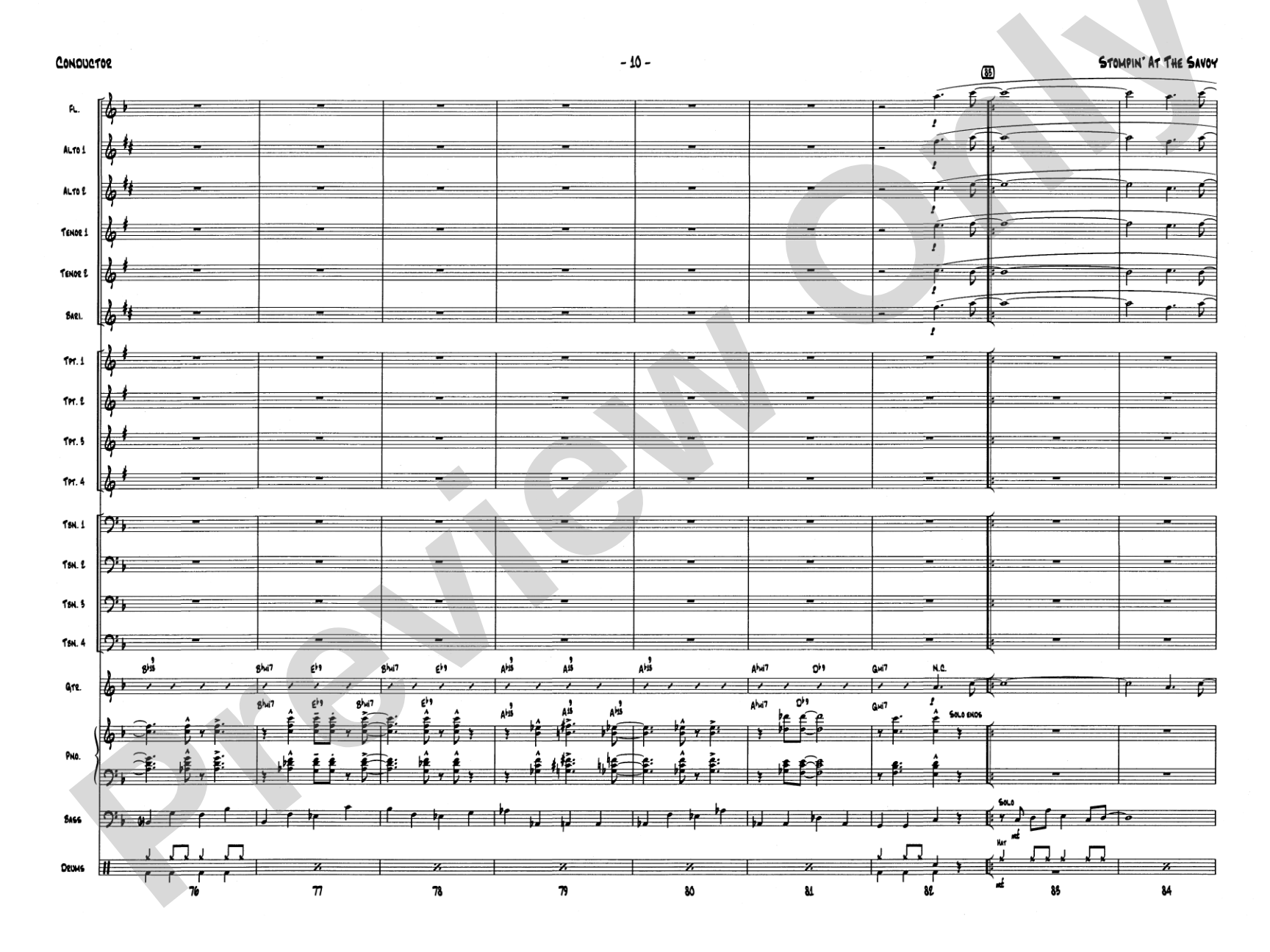
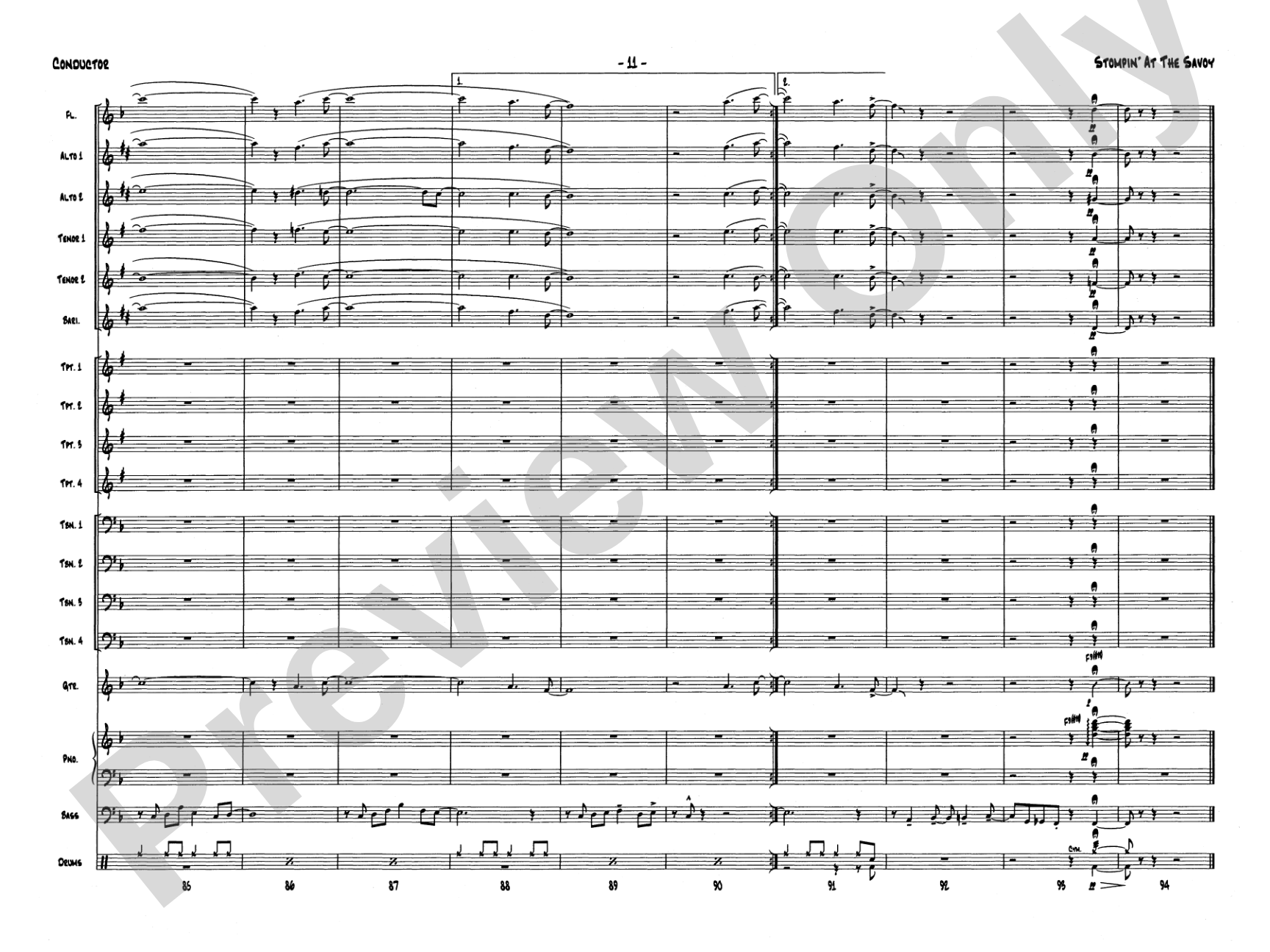




Stompin' at the Savoy: Jazz Ensemble Conductor Score & Parts
Music by Benny Goodman, Chick Webb, and Edgar Sampson, lyric by Andy Razaf / arr. Mike Lewis
Grade: 2 (Medium Easy)
Item: 00-PK-0004436

$48.00
One moment…
Description
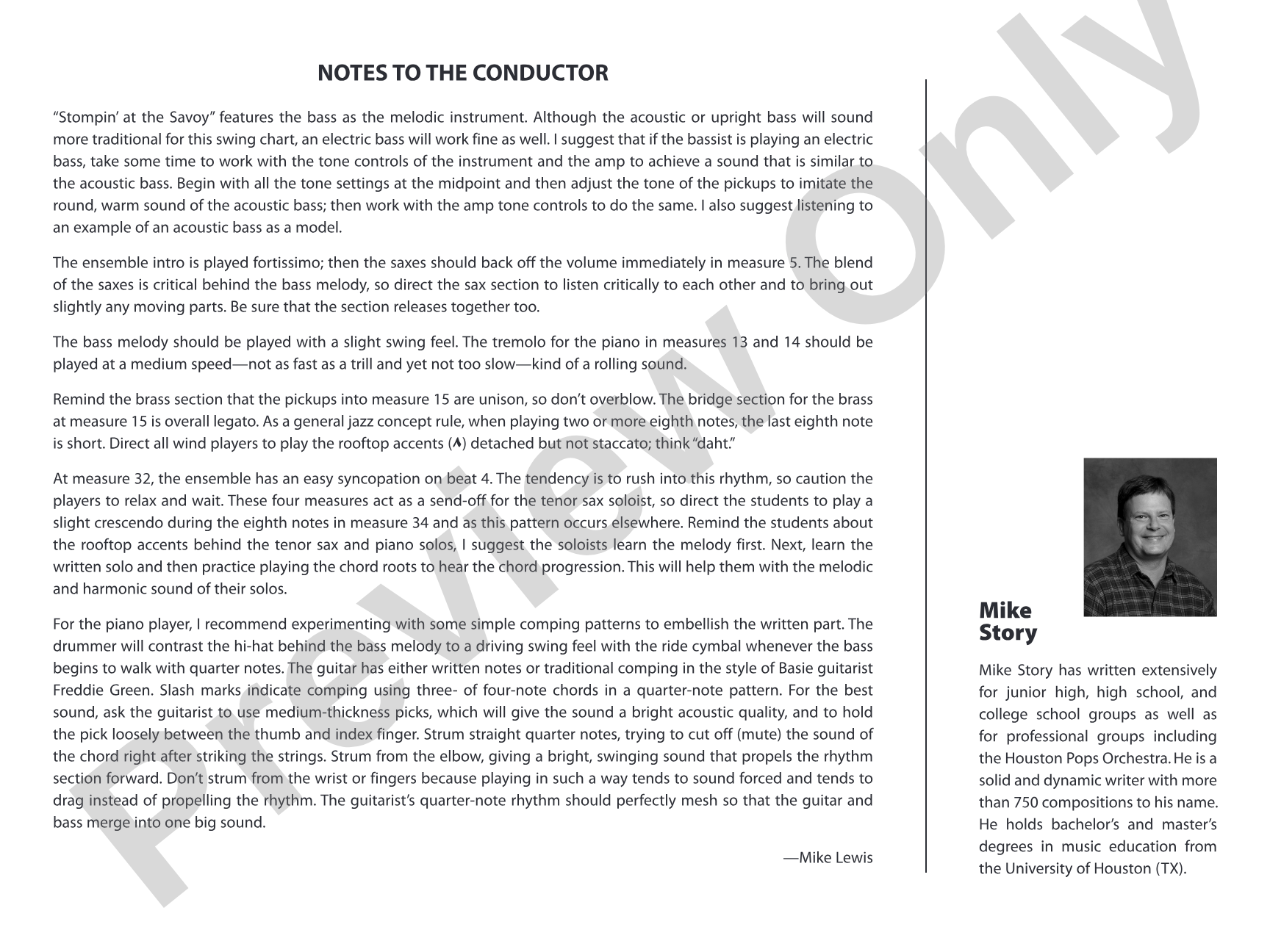
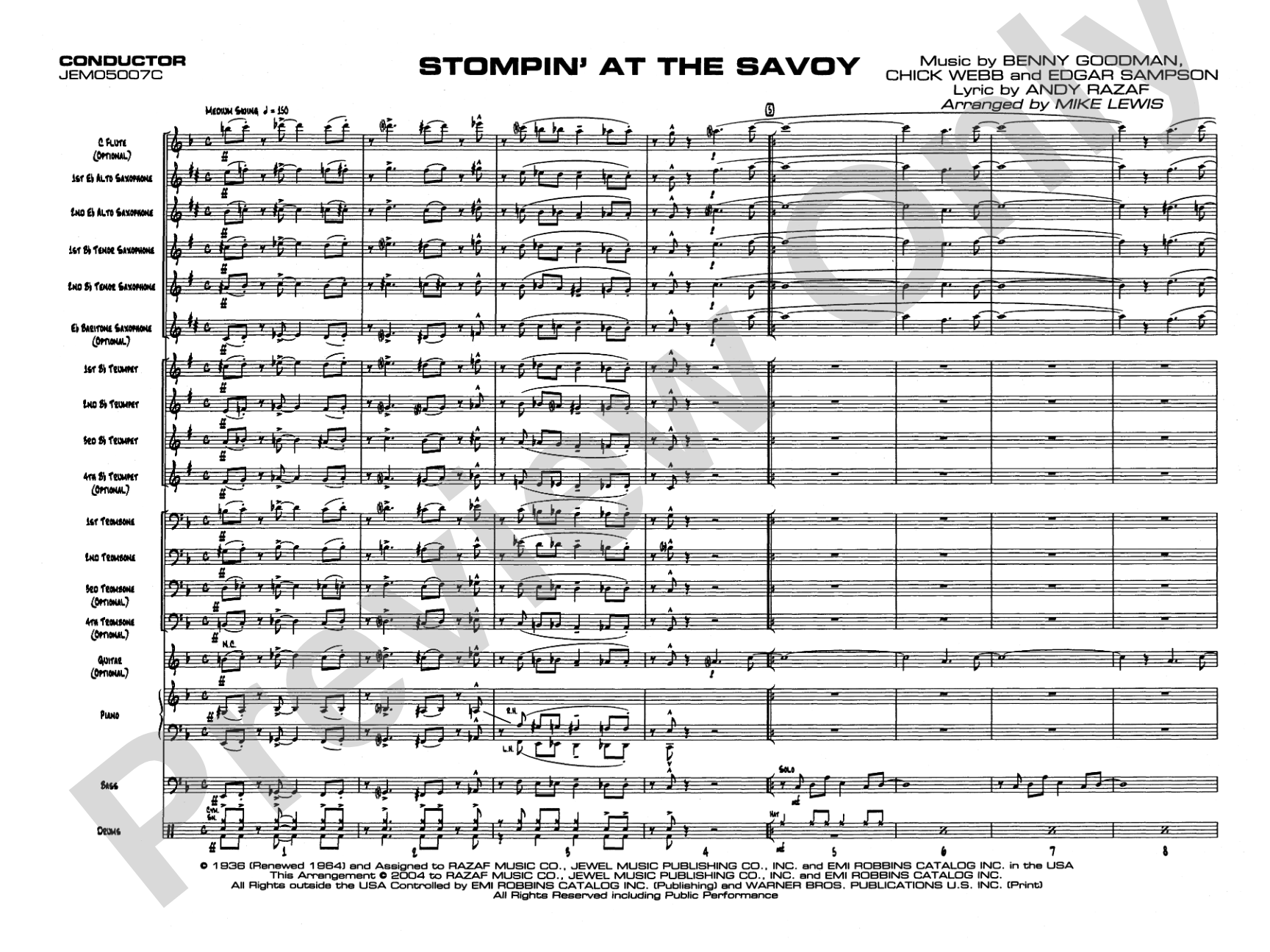
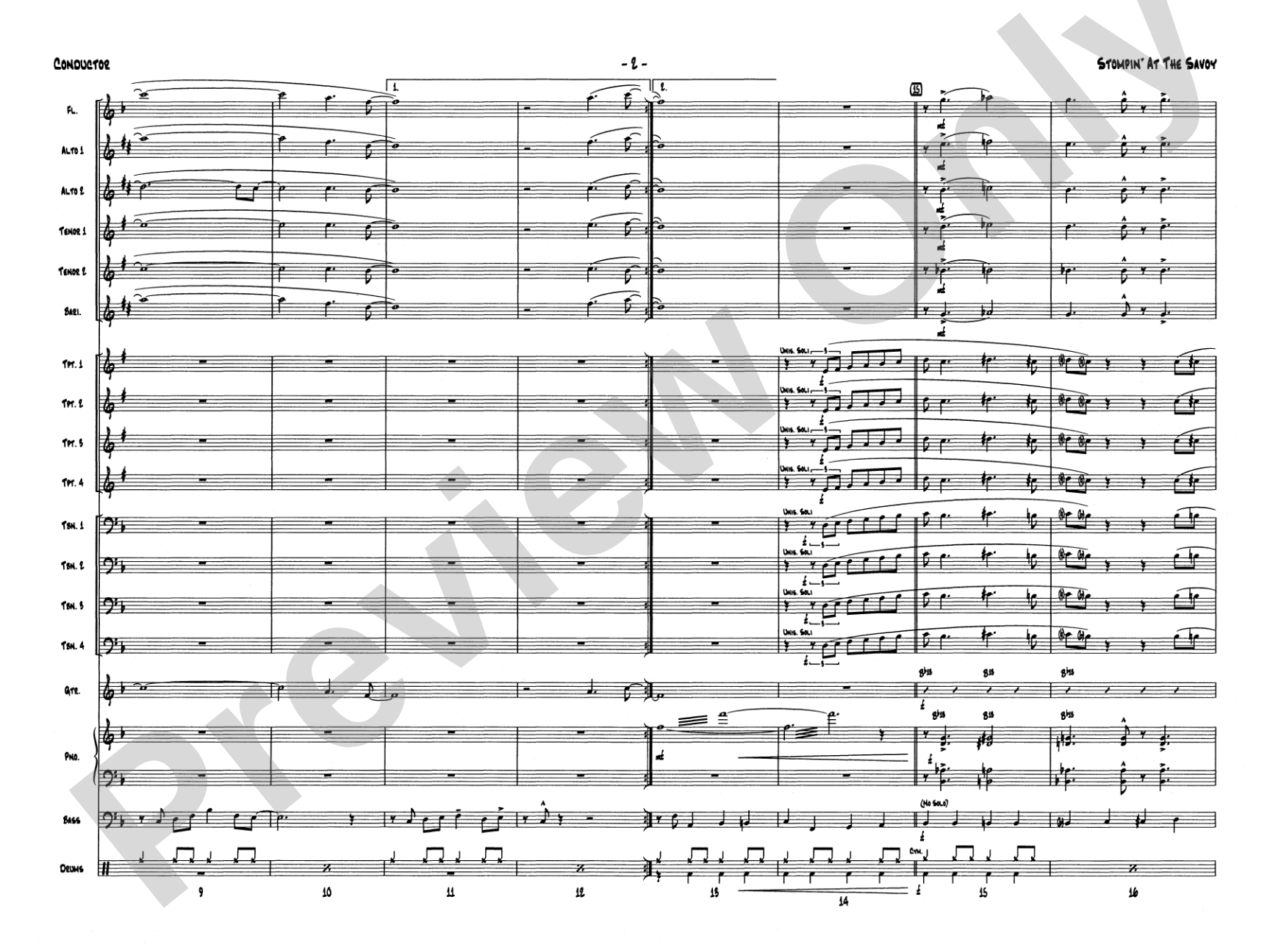
Feature your bass player! Arranger Mike Lewis has taken this classic Benny Goodman swing tune and turned it into a unique melodic showcase for the bass. Mike provides solo space with written-out solos for 1st tenor sax and piano, and modest brass ranges. The chart swings easily and optional parts are included. Sounds great with electric or acoustic bass. Superb chart! (3:04)


Don't just read it, hear it, play along with it, and watch your students grow with it. In MakeMusic Cloud, Stompin' at the Savoy: Jazz Ensemble Conductor Score & Parts comes alive with professional accompaniment, adjustable tempo, and built-in practice tools that turn solo practice into real progress.
Open in the Player
Jump straight in and assign it today.
Start Your Free Trial
Open this title and explore the full library in minutes.
Sample Audio
1
Audio File
--:--
0:00
0:00
Sample Video
No sample videos found.
Additional Details
Series:
Young Jazz Ensemble
Publisher:
Alfred Music
Page Count:
90
SKU:
00-PK-0004436
More about this title
About the Composer: Benny Goodman
Benny Goodman (1909-1986) earned his place in jazz history as the "King of Swing," bringing big band jazz into mainstream concert halls and radio broadcasts during the 1930s and 1940s. A clarinet virtuoso and bandleader, Goodman championed both improvisation and tight ensemble discipline, creating a template for swing that remains foundational to jazz education today.
Goodman's legacy extends beyond performance. He broke racial barriers by integrating his bands at a time when that was genuinely controversial, and his recorded arrangements and compositions continue to teach musicians about swing style, section balance, and the art of the swing feel. "Stompin' at the Savoy" exemplifies his gift for writing tunes that are both immediately accessible and endlessly rewarding to play.
Why we love this
Mike Lewis has reframed this swing standard as a genuine bass feature, giving your section a chance to shine in a leadership role rather than staying locked in the rhythm section. The arrangement respects the original's energy while keeping brass ranges and overall technical demands at Grade 2, which means your whole ensemble can focus on swing feel and ensemble cohesion instead of fighting the charts.
What to expect
Rollicking and infectious, with the kind of forward-rolling groove that makes audiences want to move. The writing stays light and swinging throughout, never heavy or complicated, which lets the ensemble's joy in playing together come through clearly.
Who it's for
Jazz ensembles at the Grade 2 level looking for a high-energy standard that doesn't demand extreme range or rhythmic complexity from any section. Directors who want to spotlight a strong bass player while still teaching the full ensemble about swing style, section balance, and responsive accompaniment.
How to get the most out of it
- Center the groove on the bass line. Whether your bassist plays acoustic or electric, lock the timing with the drums so the ensemble hears one unified pulse; the written solos for tenor and piano will sit naturally on top of that foundation.
- Shape the bass solo dynamically. Even in a medium-easy chart, the bassist can vary vibrato, attack, and tone color across the written phrases to maintain listener interest through the feature.
- Balance the horn sections in tutti passages. With modest brass ranges, every player matters in voicing; check that saxes and trumpets aren't covering the harmonic movement the arrangement intends.
- Use the optional parts strategically. Doubling or removing optional instruments changes the texture and energy level, giving you flexibility for different performance spaces and ensemble sizes.
How to use it
This works beautifully as a mid-set energizer on a jazz concert, especially when paired with ballads or more complex arrangements that ask different things of the ensemble. It's also an excellent choice early in the school year for building confidence and establishing what swing feels like in a Grade 2 group.
Skills your students will build
- Swing eighth-note feel and front-and-back phrasing
- Responsive comping and rhythm section interaction
- Bass as melodic lead voice rather than purely harmonic foundation
- Section balance in tutti passages with moderate ranges
- Listening for and locking into a consistent groove