
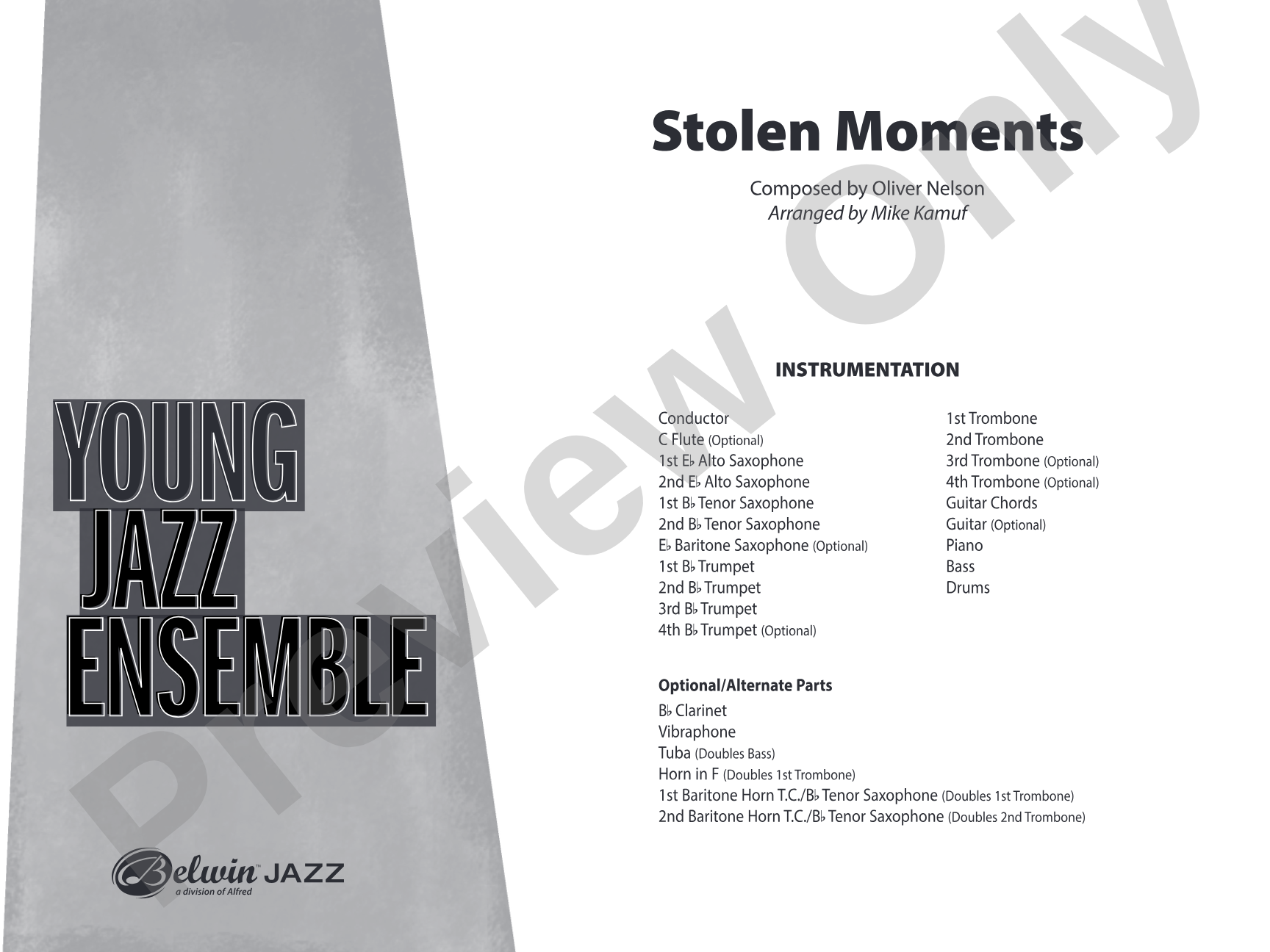
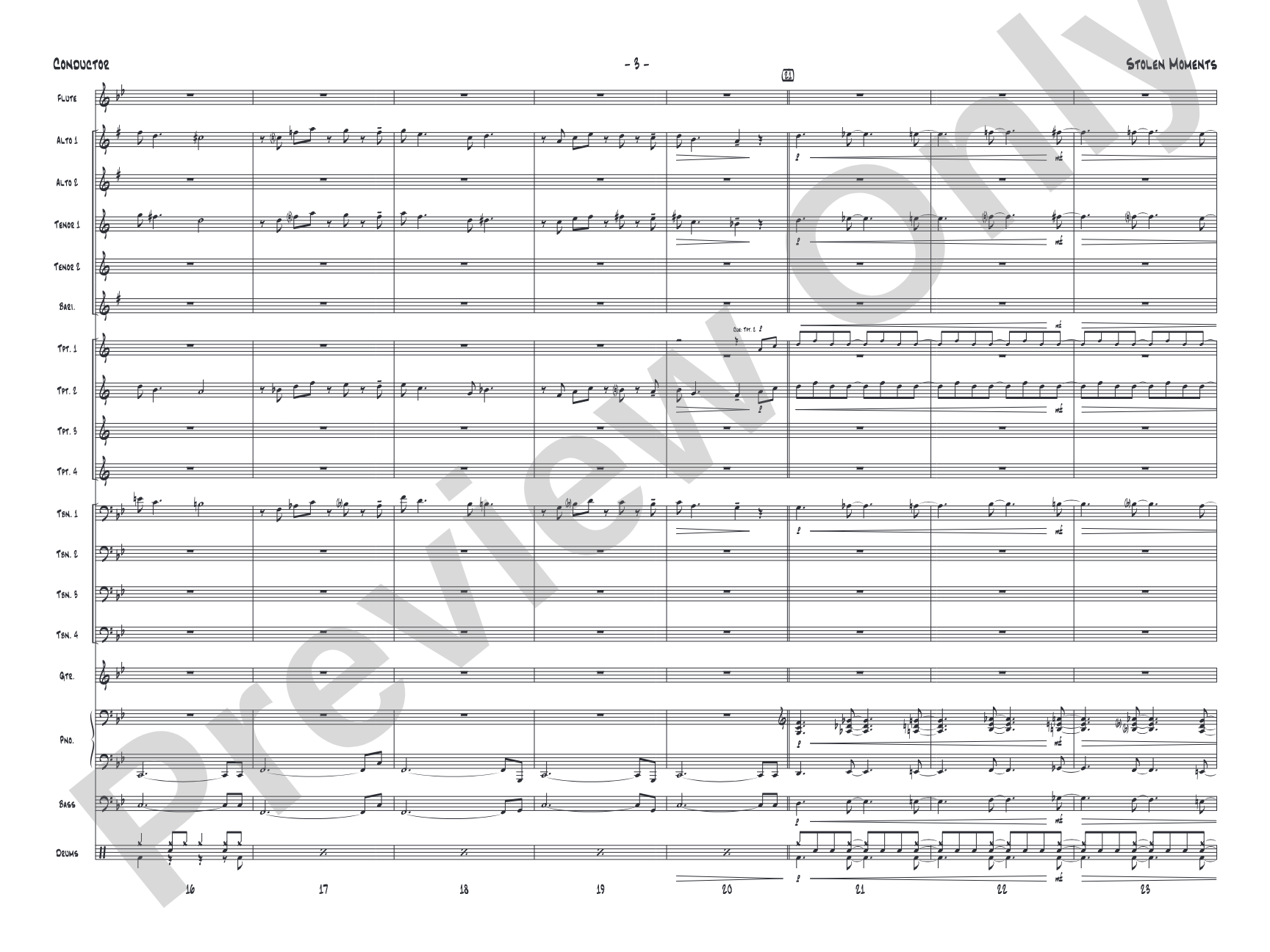
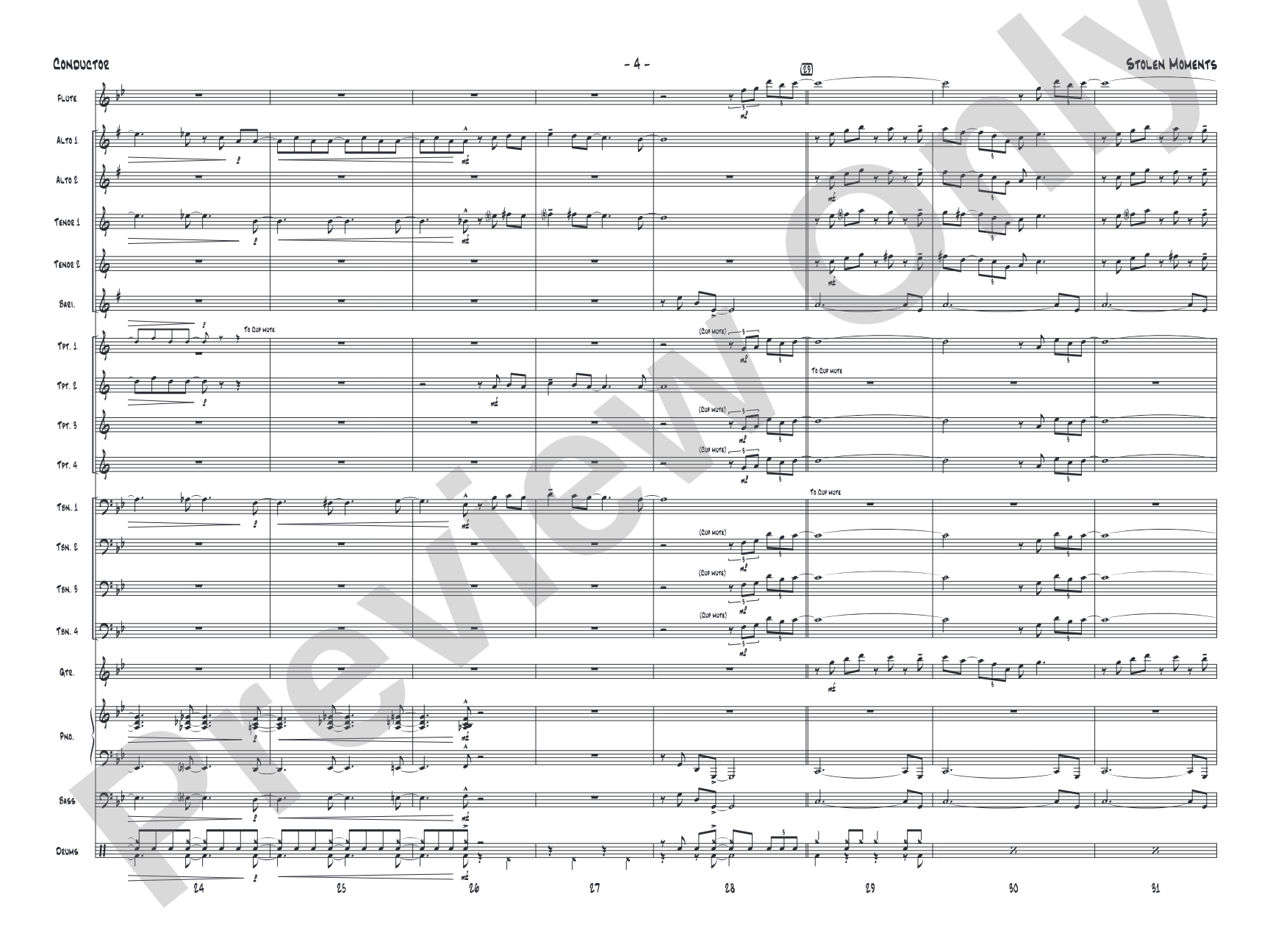
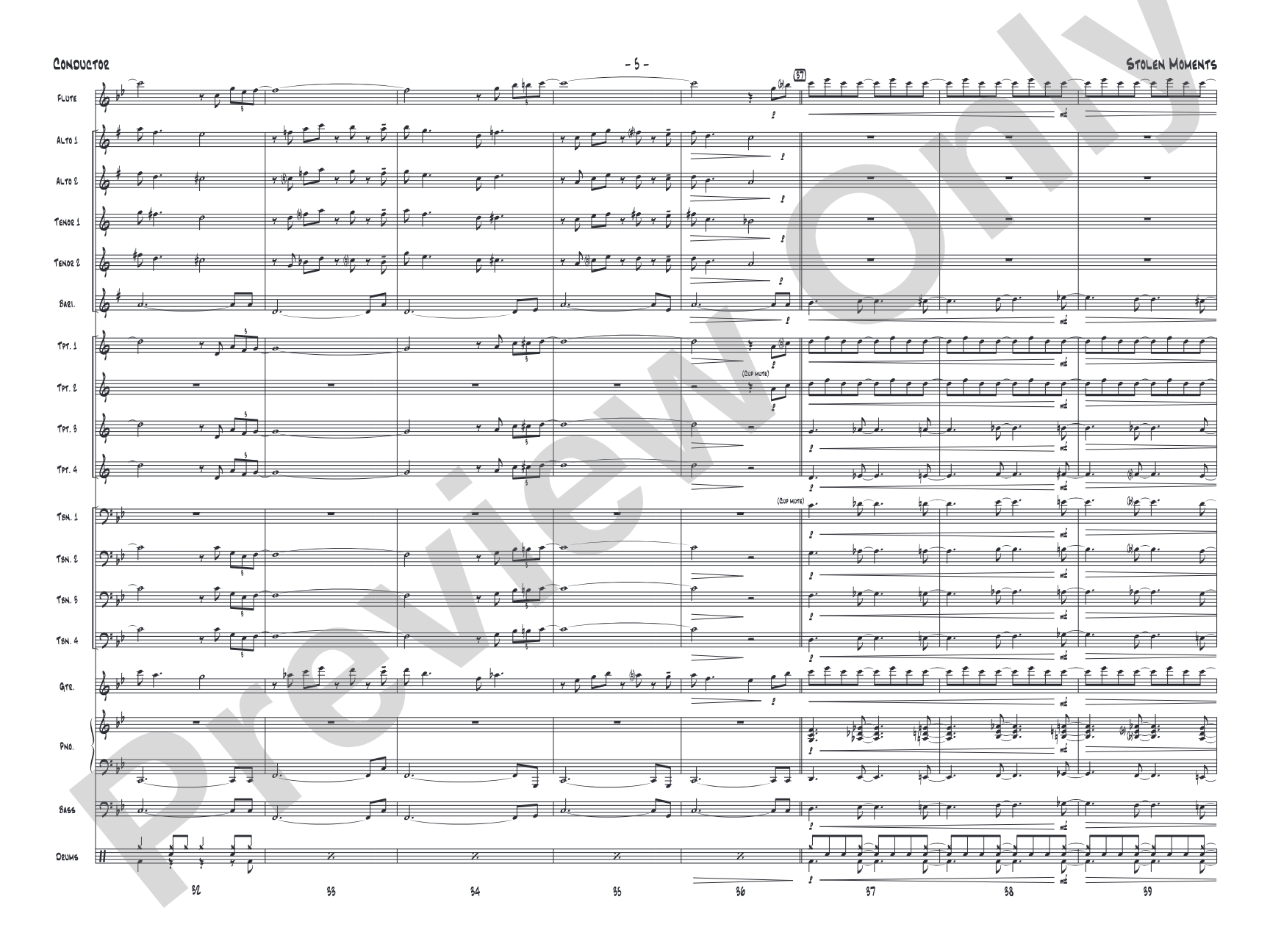
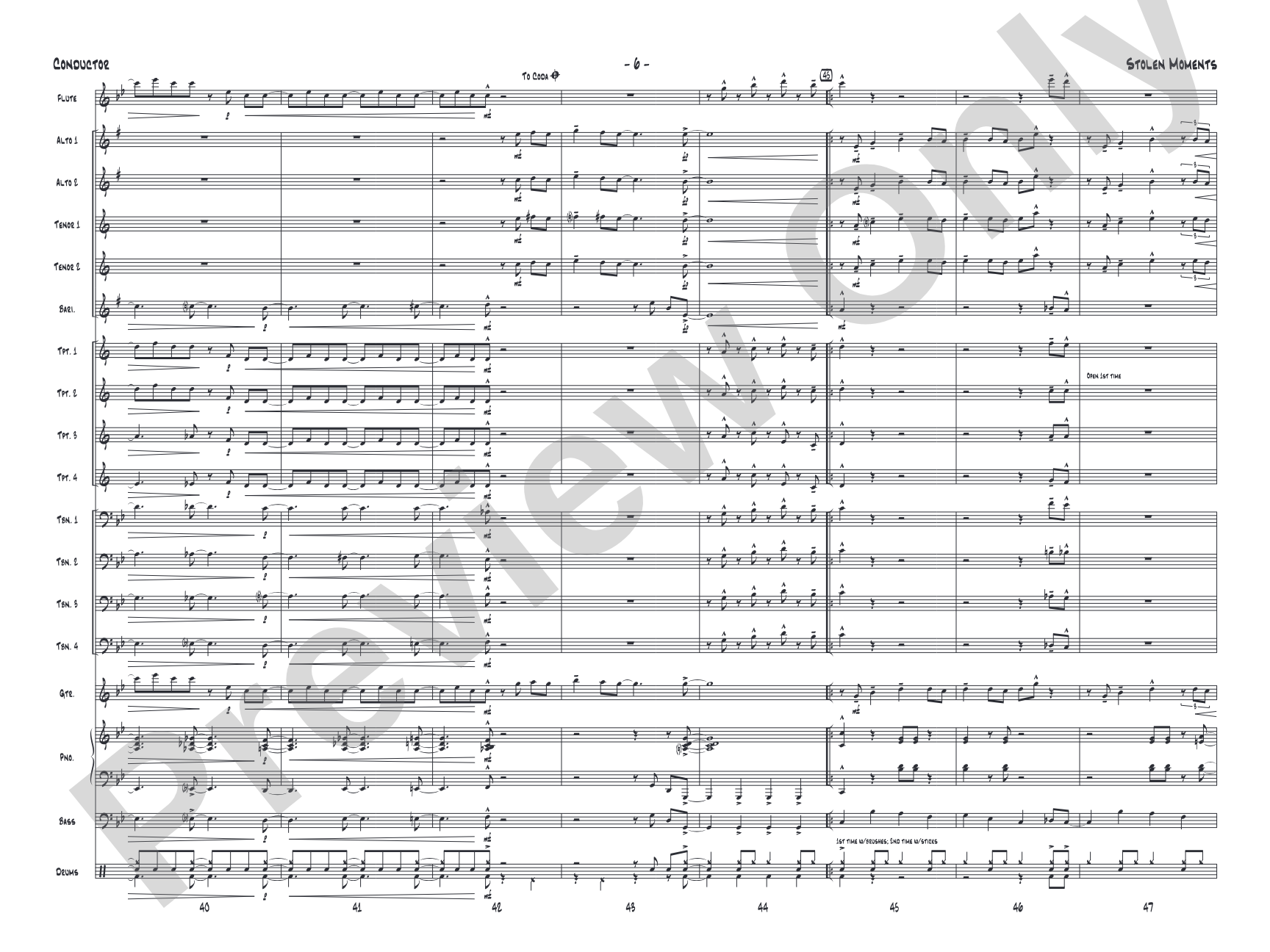
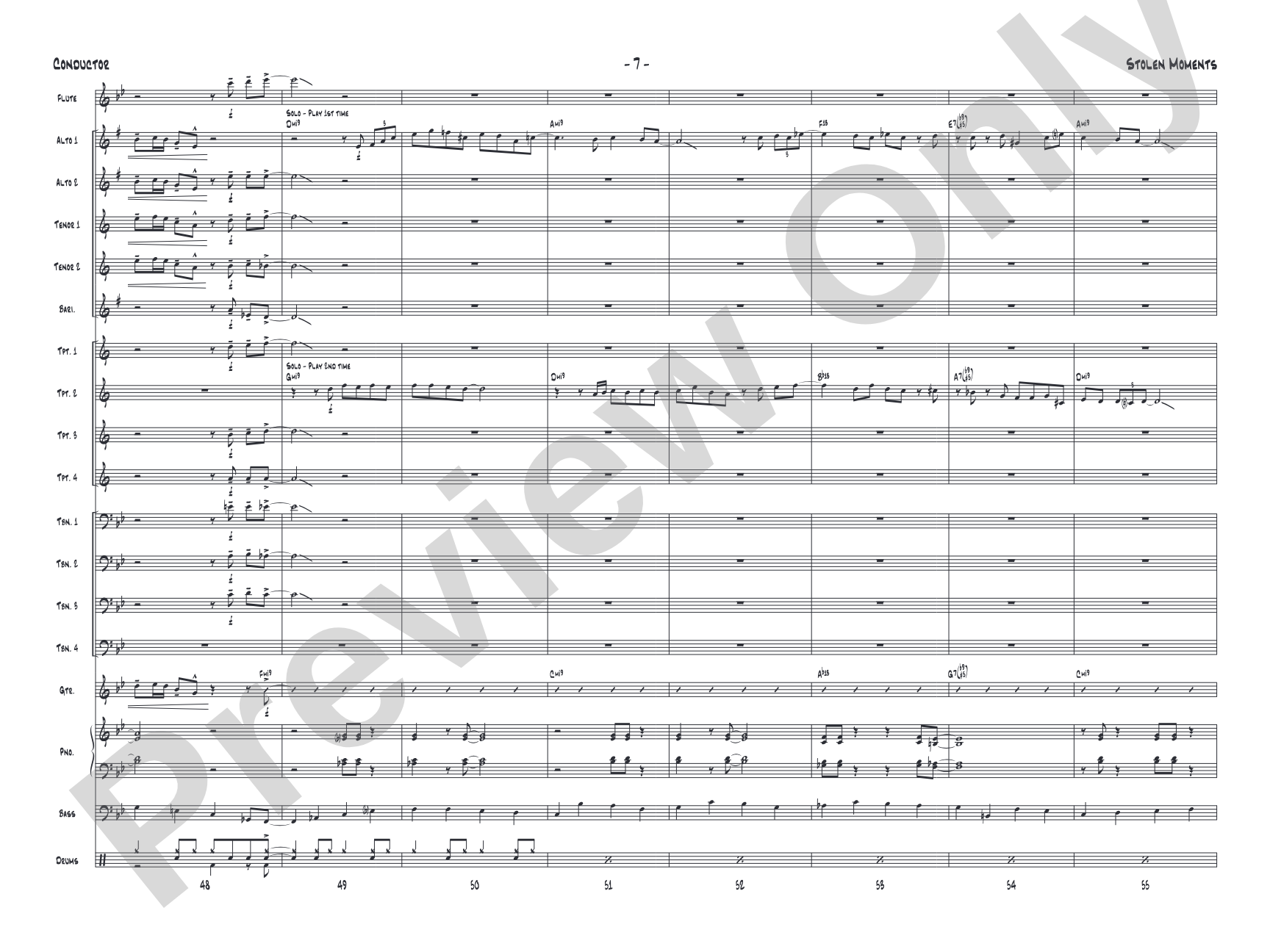
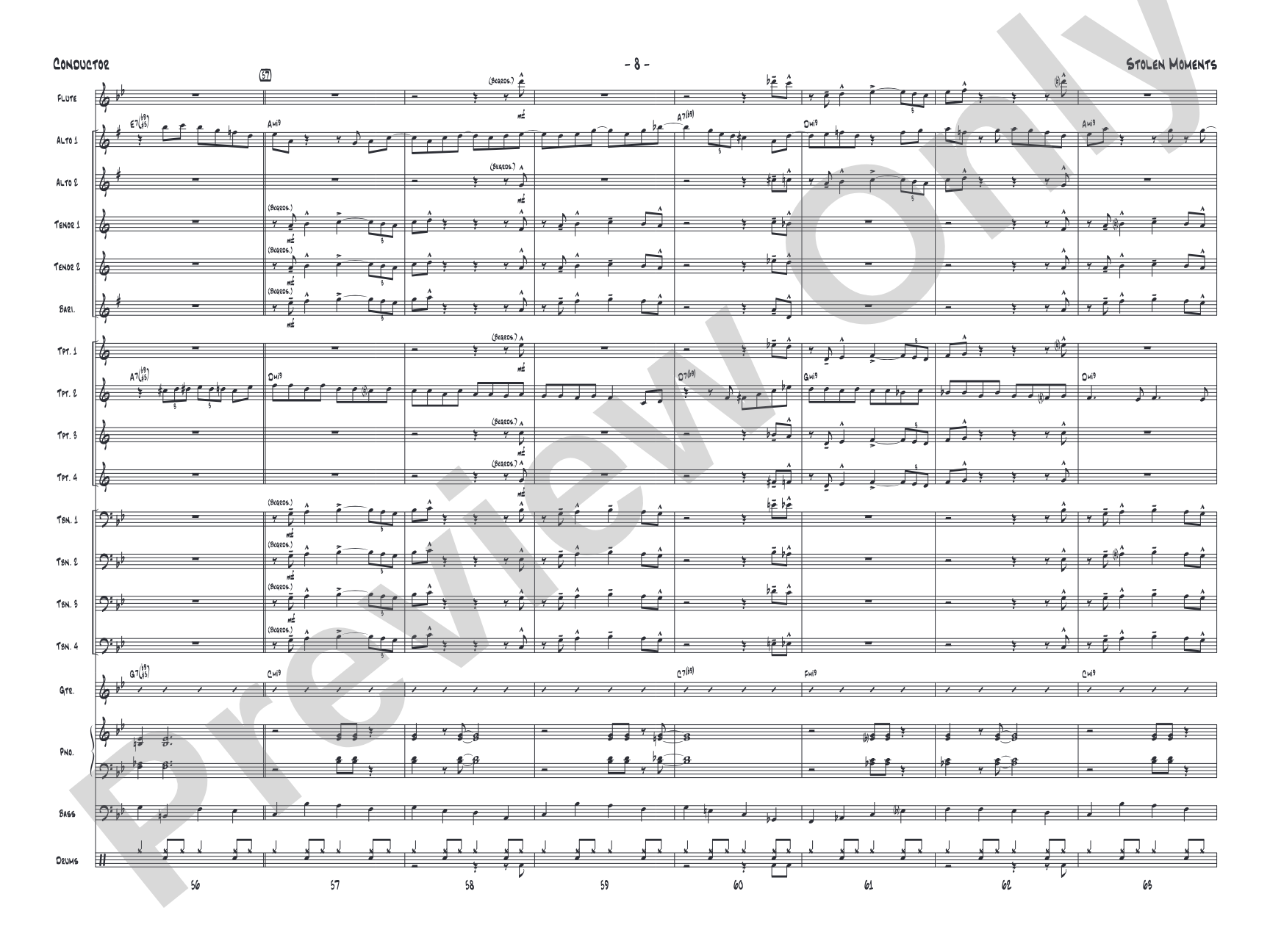
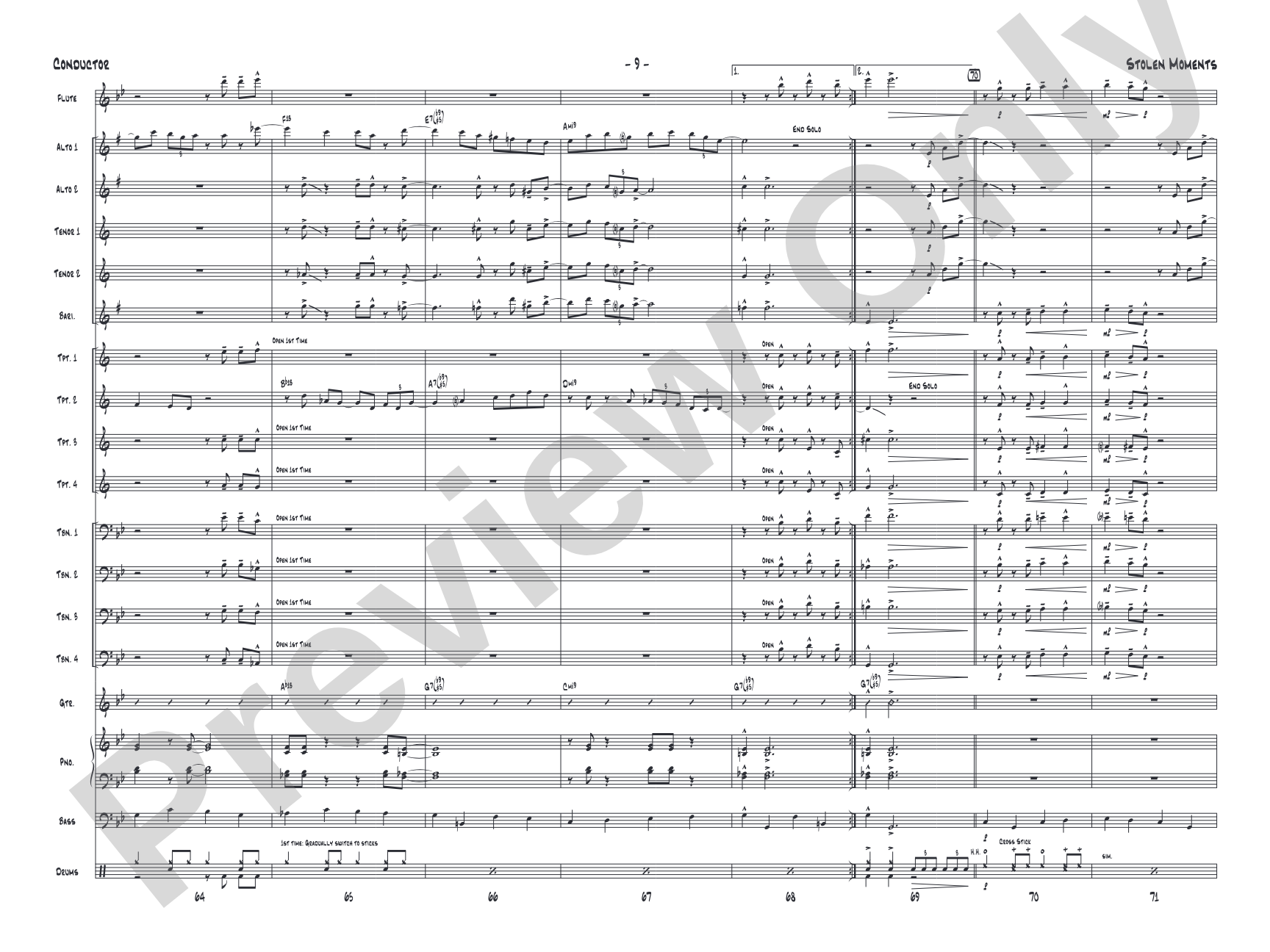
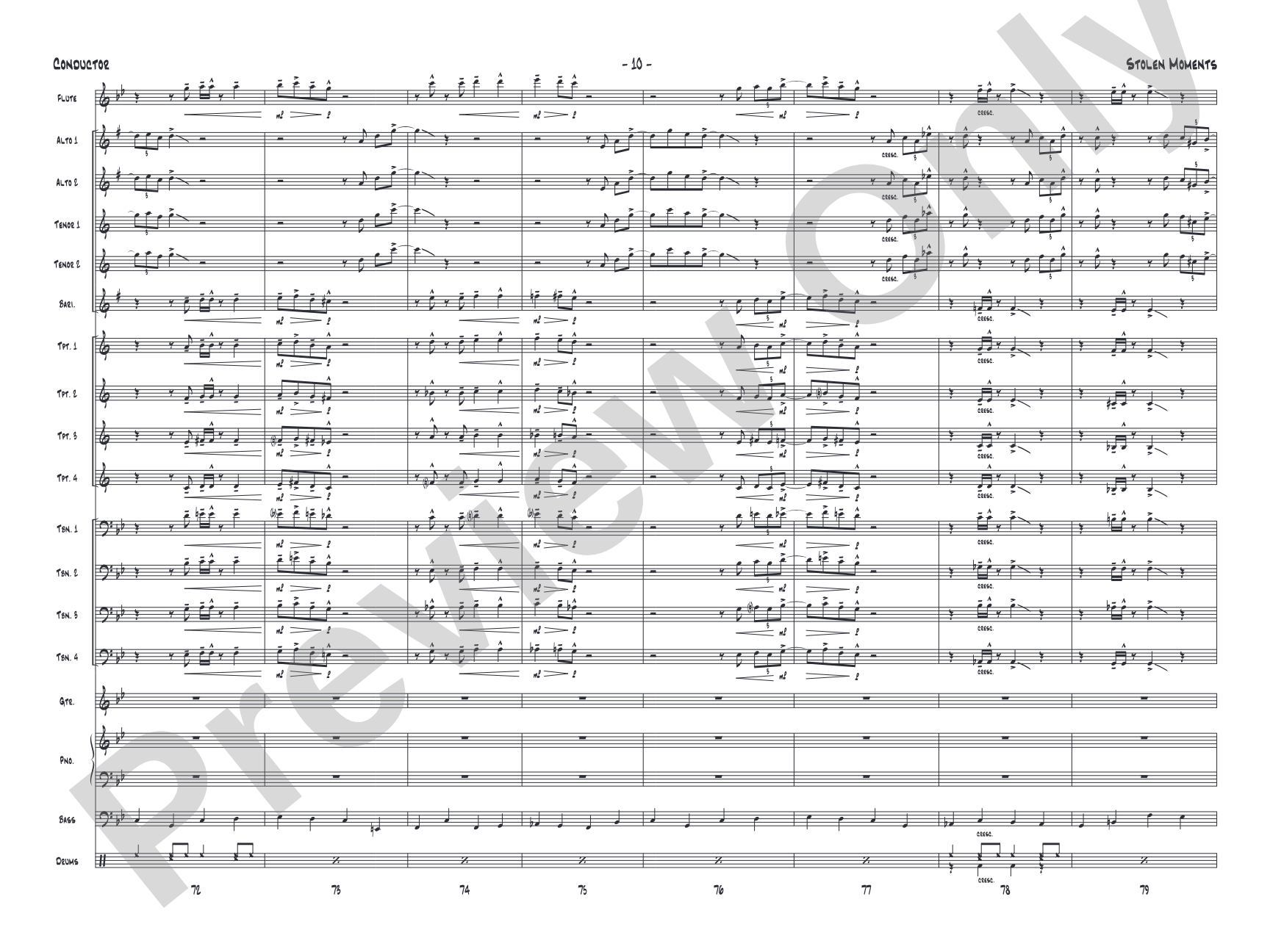
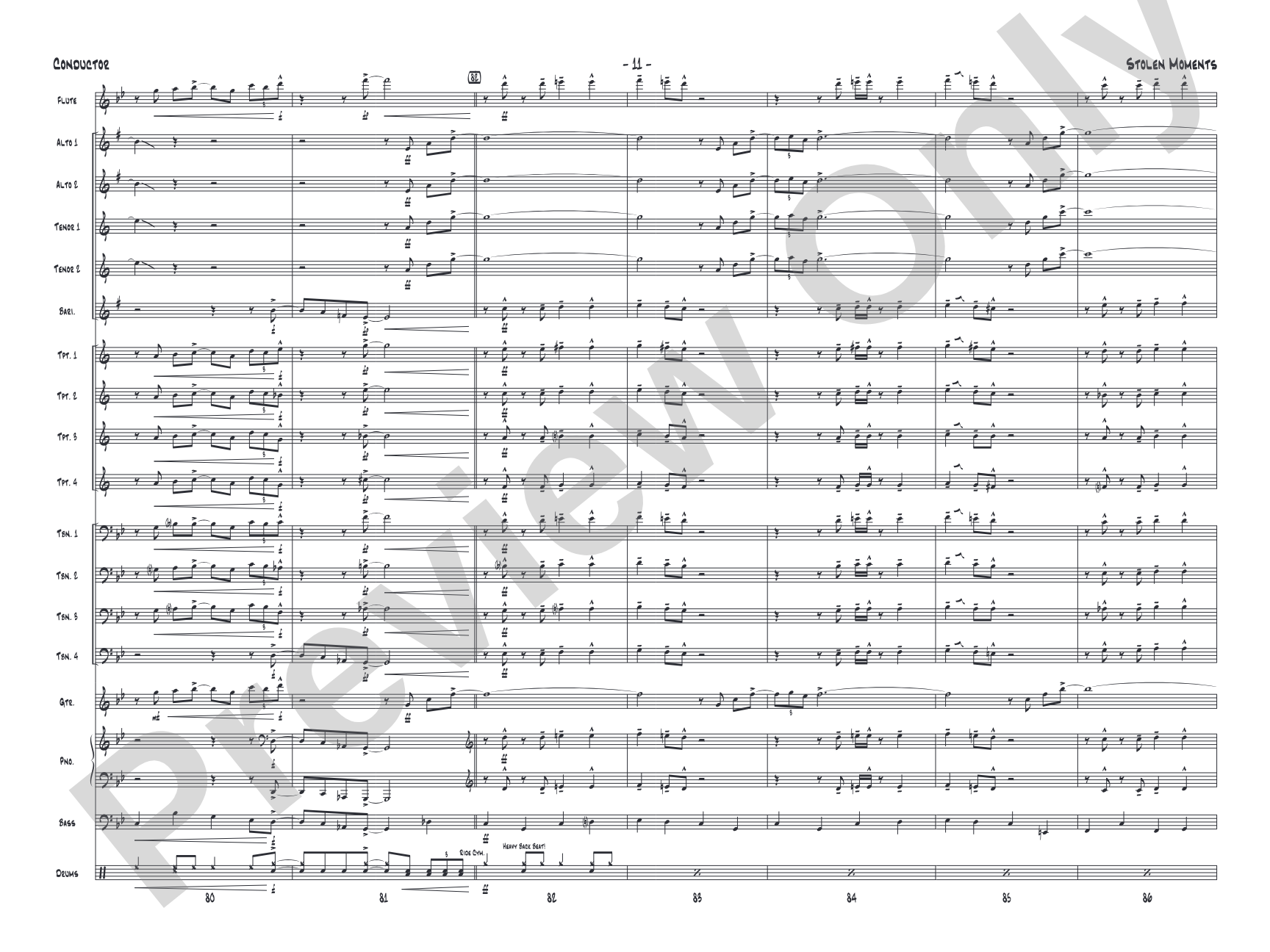
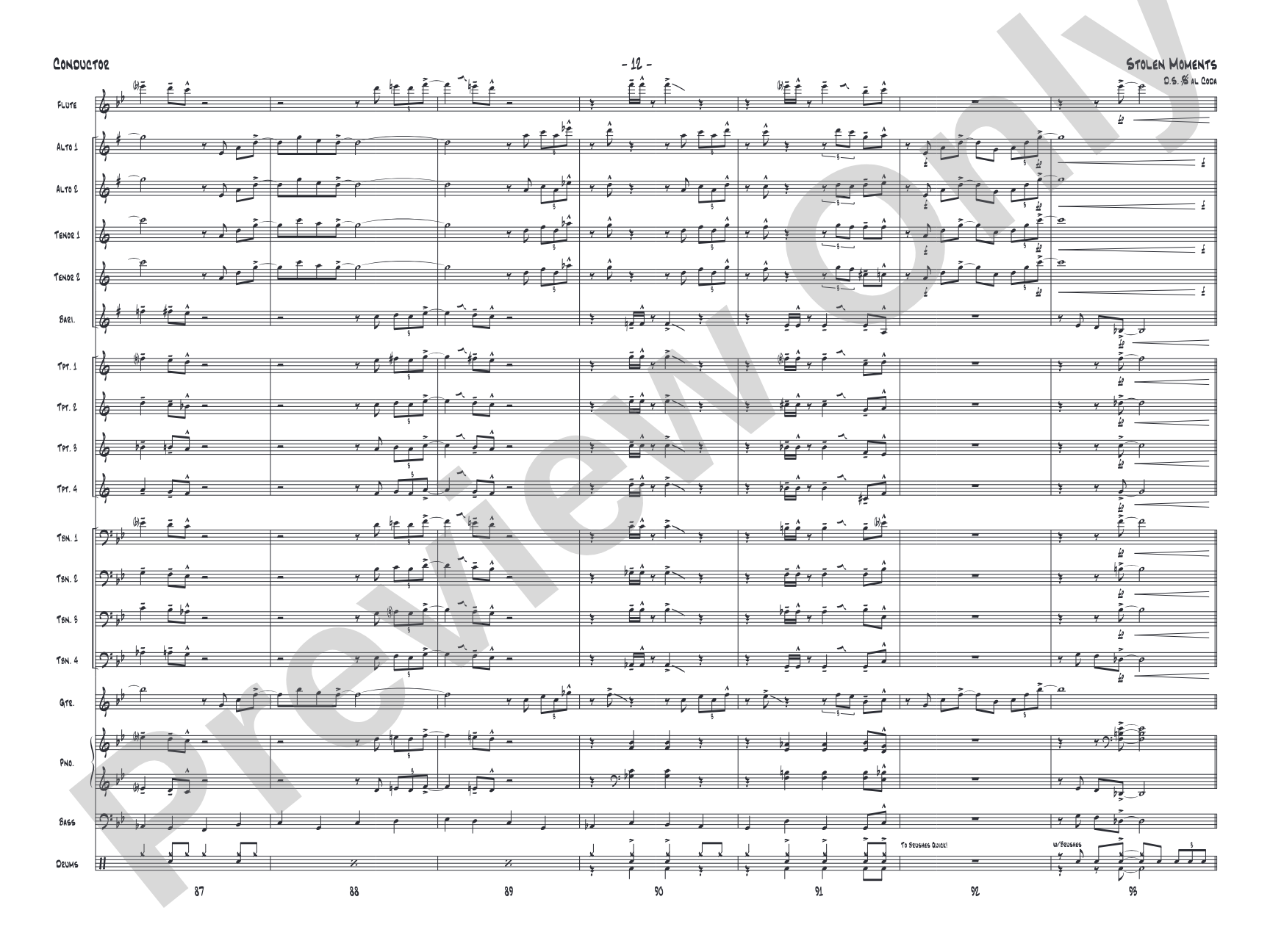
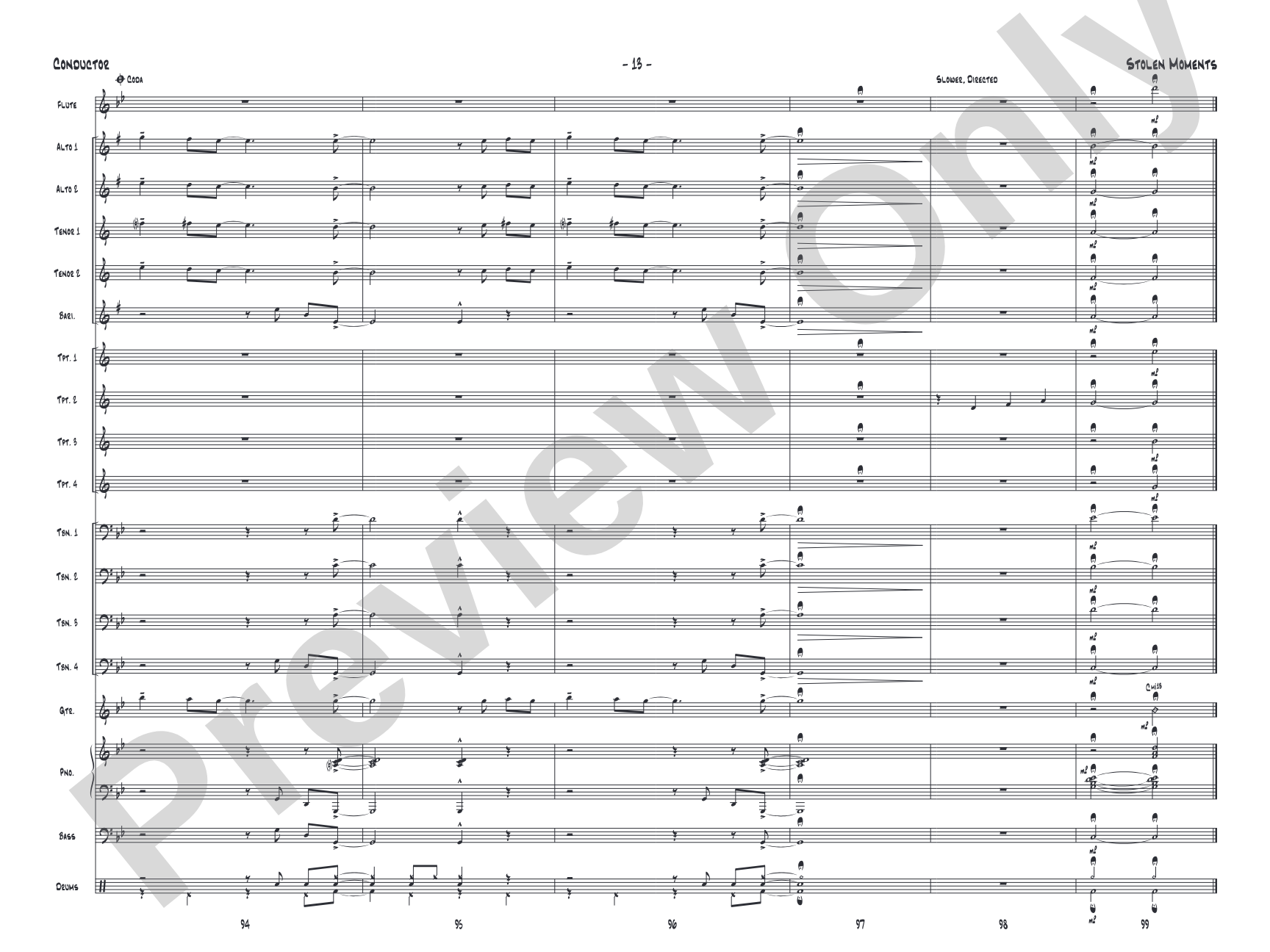

Stolen Moments: Jazz Ensemble Conductor Score & Parts
By Oliver Nelson / arr. Mike Kamuf
Grade: 2 (Medium Easy)
Item: 00-PK-0008297

$52.00
Pickup currently not available
Buy Extra Parts (Digital PDF Download)
| Product | Price | Quantity |
|---|---|---|
| Stolen Moments: Score | $10.00 | |
| Stolen Moments: E-flat Alto Saxophone | $3.00 | |
| Stolen Moments: 2nd E-flat Alto Saxophone | $3.00 | |
| Stolen Moments: B-flat Tenor Saxophone | $3.00 | |
| Stolen Moments: 2nd B-flat Tenor Saxophone | $3.00 | |
| Stolen Moments: E-flat Baritone Saxophone | $3.00 | |
| Stolen Moments: 1st B-flat Trumpet | $3.00 | |
| Stolen Moments: 2nd B-flat Trumpet | $3.00 | |
| Stolen Moments: 3rd B-flat Trumpet | $3.00 | |
| Stolen Moments: 4th B-flat Trumpet | $3.00 | |
| Stolen Moments: 1st Trombone | $3.00 | |
| Stolen Moments: 2nd Trombone | $3.00 | |
| Stolen Moments: 3rd Trombone | $3.00 | |
| Stolen Moments: 4th Trombone | $3.00 | |
| Stolen Moments: Guitar Chords | $3.00 | |
| Stolen Moments: Guitar | $3.00 | |
| Stolen Moments: Piano Accompaniment | $3.00 | |
| Stolen Moments: String Bass | $3.00 | |
| Stolen Moments: Drums | $3.00 | |
| Stolen Moments: Flute | $3.00 | |
| Stolen Moments: 1st B-flat Clarinet | $3.00 | |
| Stolen Moments: 1st F Horn | $3.00 | |
| Stolen Moments: Tuba | $3.00 | |
| Stolen Moments: Baritone T.C. | $3.00 | |
| Stolen Moments: 2nd Baritone T.C. | $3.00 | |
| Stolen Moments: Vibraphone | $3.00 |
Parts Added to Cart!
Description
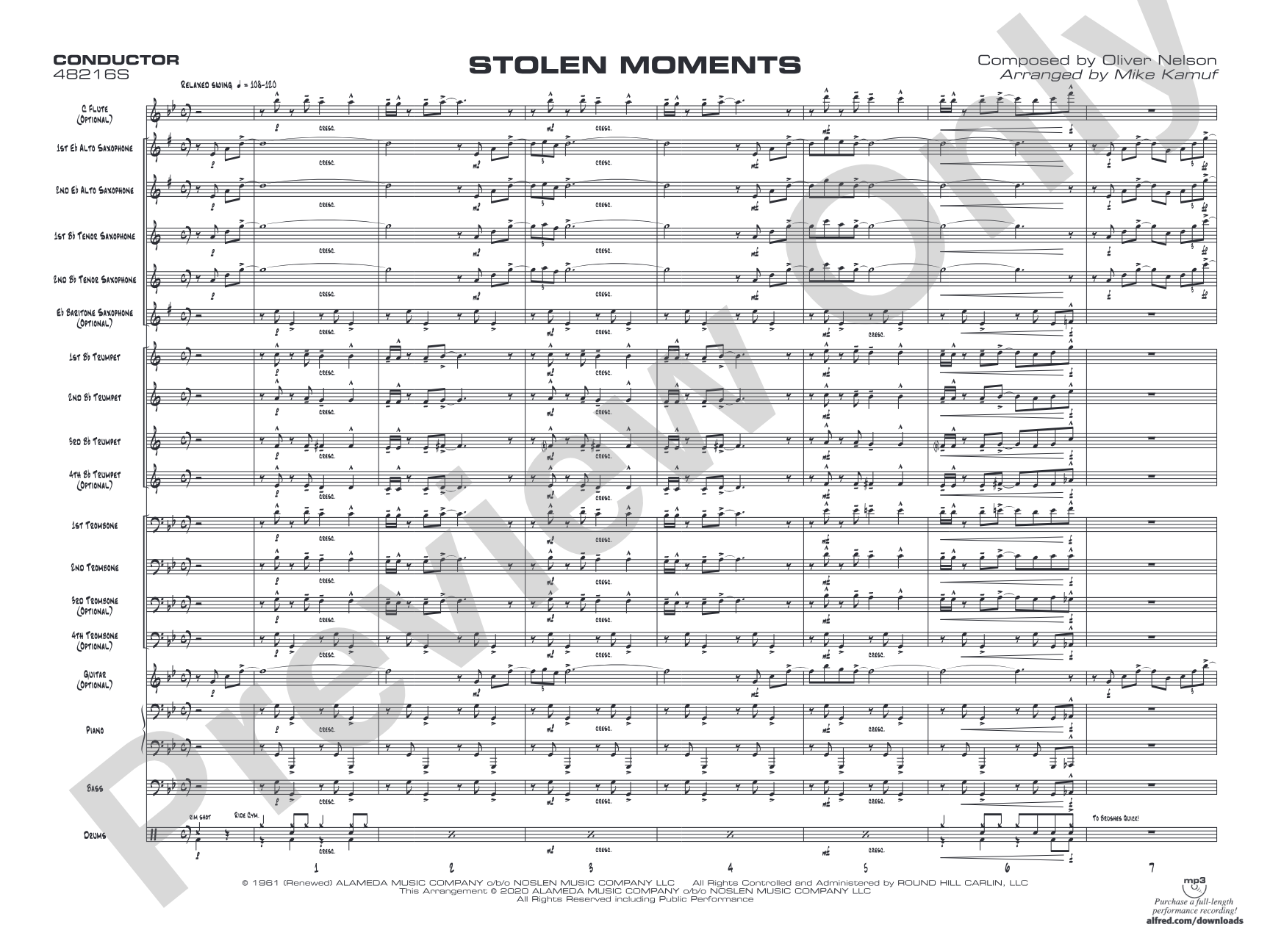
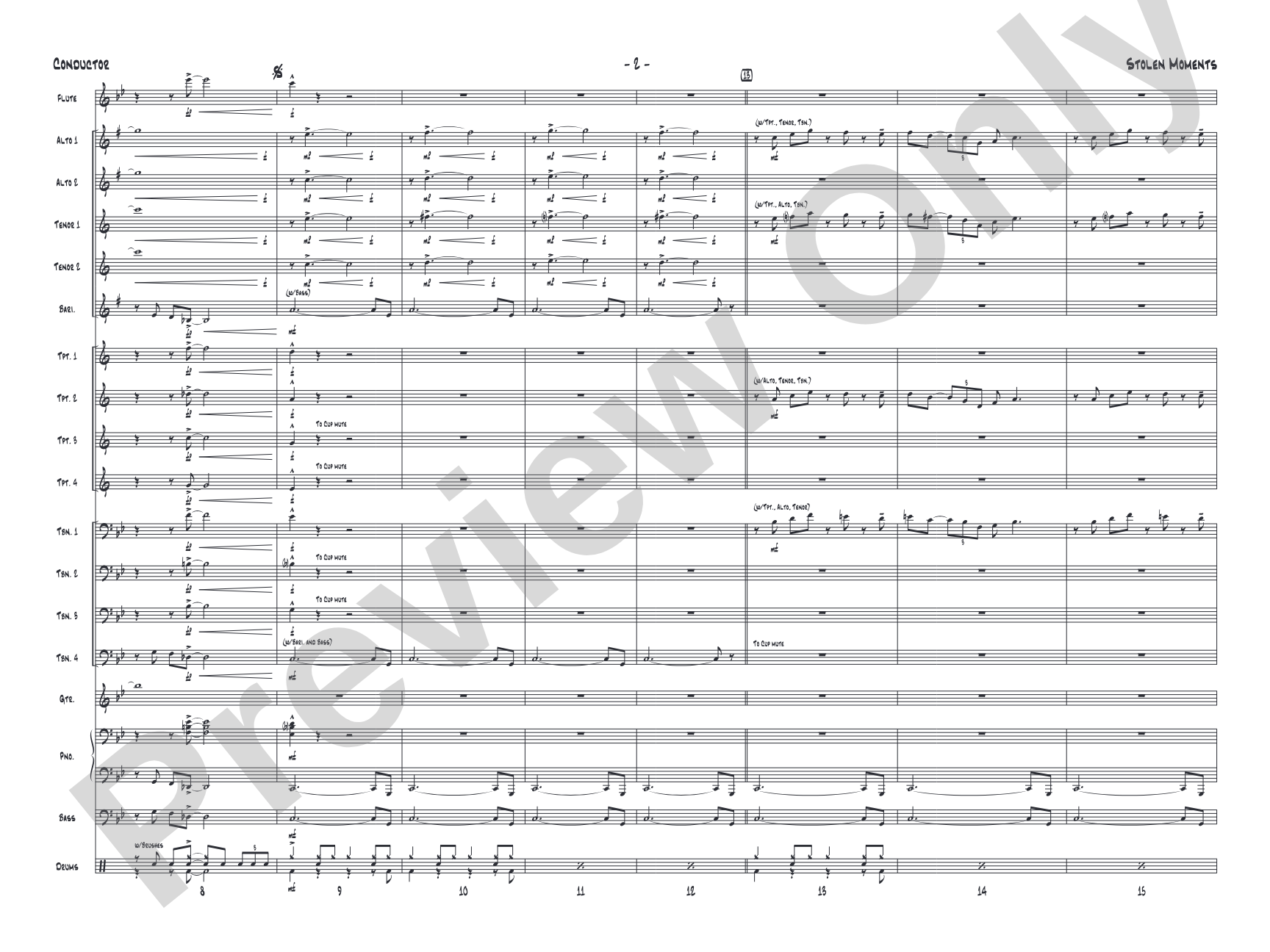
Stolen Moments arranged by Mike Kamuf is truly a classic jazz standard. An easy-going swing tempo at 110 BPM, written-out solos for alto and trumpet, and lead trumpet range is to written G on top of the staff. A fine chart for a young band. This title is available in MakeMusic Cloud. (5:51)


Don't just read it, hear it, play along with it, and watch your students grow with it. In MakeMusic Cloud, Stolen Moments: Jazz Ensemble Conductor Score & Parts comes alive with professional accompaniment, adjustable tempo, and built-in practice tools that turn solo practice into real progress.
Open in the Player
Jump straight in and assign it today.
Start Your Free Trial
Open this title and explore the full library in minutes.
Sample Audio
1
Audio File
--:--
0:00
0:00
Sample Video
Additional Details
Series:
Young Jazz Ensemble
Publisher:
Alfred Music
Page Count:
98
SKU:
00-PK-0008297
More about this title
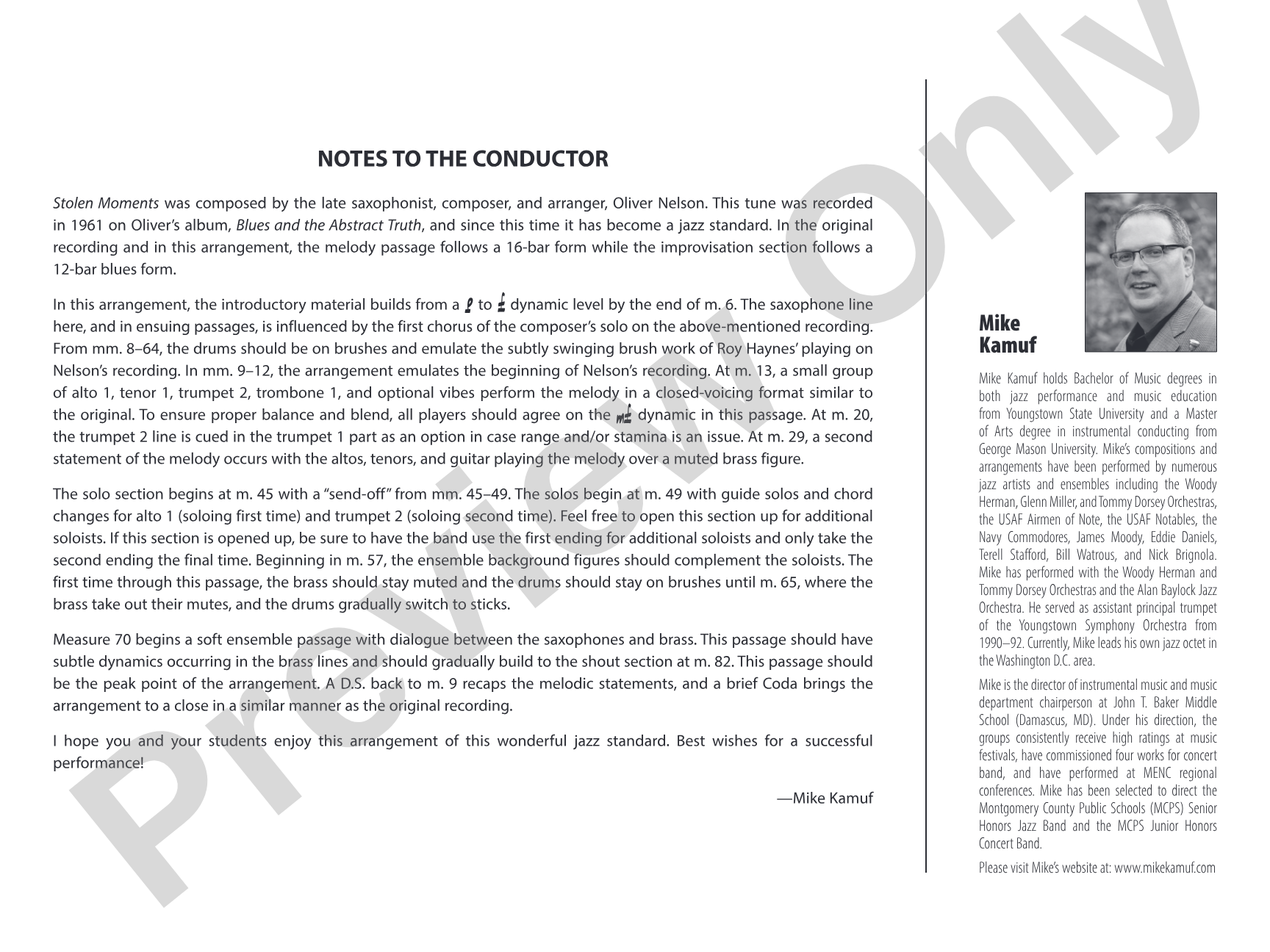
About the Composer: Oliver Nelson
Oliver Nelson (1932-1975) was a saxophonist, composer, and arranger who shaped the sound of modern jazz through his work as both a performer and bandleader. His compositions and arrangements bridged hard bop, soul jazz, and contemporary orchestral approaches, earning him recognition as one of the most prolific and influential voices in 1960s jazz. Nelson's gift for memorable melodies and accessible harmonies made his music widely performed across educational and professional settings.
Why we love this
Kamuf's arrangement respects Nelson's elegant compositional voice while keeping the band's technical demands reasonable. The written solos provide essential scaffolding for young improvisers, and at 110 BPM the swing feels natural without rushing. This is a chart that builds confidence in jazz phrasing without overwhelming a developing ensemble.
What to expect
Sophisticated and unhurried. The piece settles into its swing groove with the ease of experienced musicians enjoying a conversation. There's warmth in the harmonies and a gentle forward motion that feels both relaxed and intentional.
Who it's for
Jazz ensemble directors working with young or developing players who need accessible repertoire that doesn't compromise musical quality. Bands ready to move beyond purely functional swing tunes and engage with genuine jazz composition benefit most from the craft evident in Nelson's writing.
How to get the most out of it
- Shape the melody with subtle dynamics rather than aggressive accents. Nelson's writing breathes, so let the brass and reeds find their natural weight in the ensemble texture.
- Lock the rhythm section into a relaxed swing feel. The groove at this tempo should feel effortless; pushing too hard will tighten the sound and drain the piece's easy elegance.
- Have soloists practice the written passages multiple times before attempting variation. Understanding Nelson's original line deeply will lead to more informed and musical improvisation.
- Balance the lead trumpet carefully. The written G on top of the staff sits high enough to cut through; the solo voice should be heard without the rest of the band pulling back awkwardly.
How to use it
Pair this with a higher-energy chart or blues shuffle to show contrasting approaches to the jazz idiom. It works beautifully as a bridge piece in a concert, offering directors a moment to reset the room's energy while keeping the audience engaged with recognizable jazz vocabulary.
Skills your students will build
- Swing eighth-note feel and phrasing at moderate tempo
- Reading and executing written solo lines in a jazz context
- Ensemble balance in a four-part brass and reeds texture
- Foundational jazz articulation and tone production
- Understanding of head-solo-head form in jazz arranging