
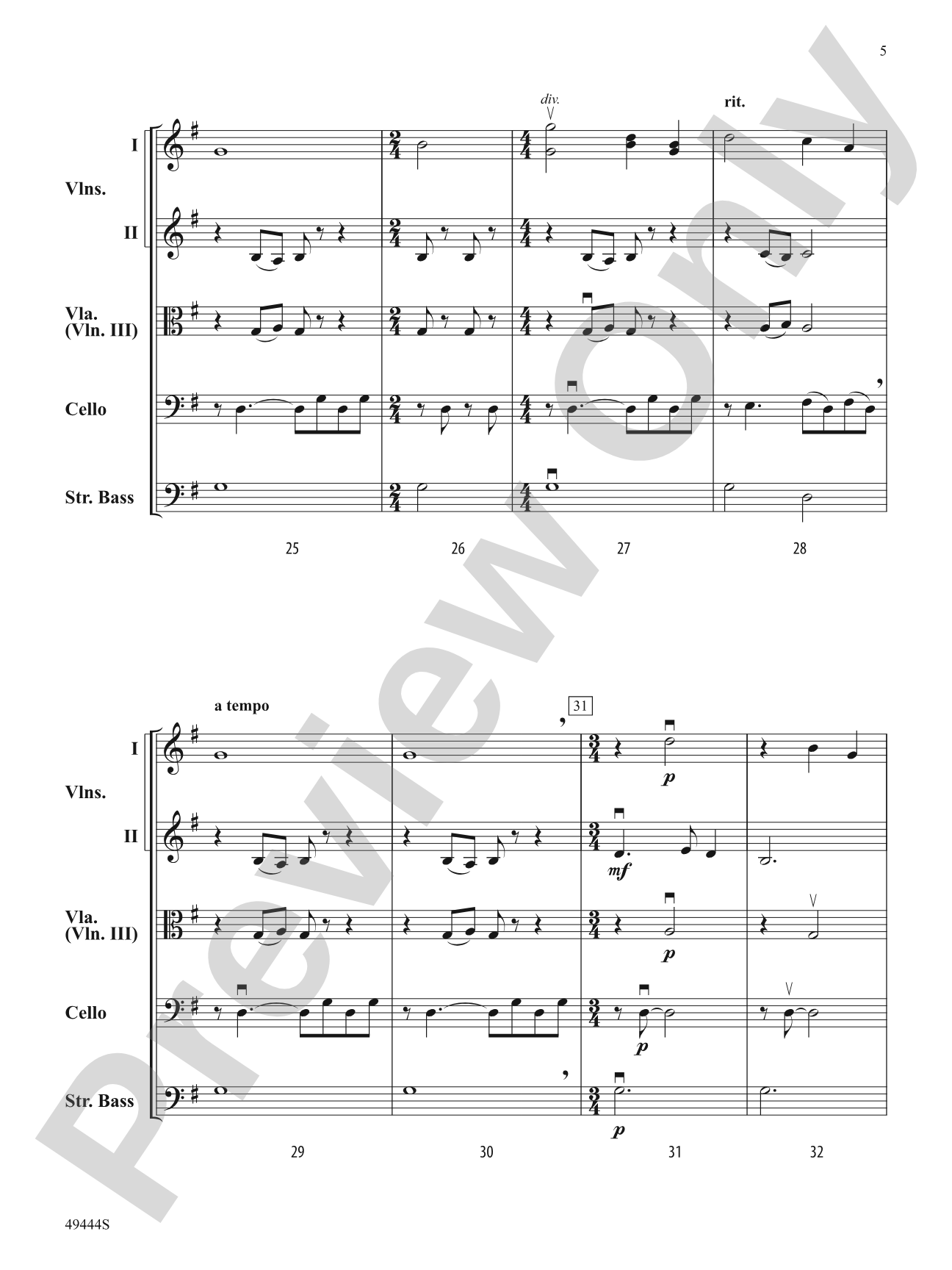
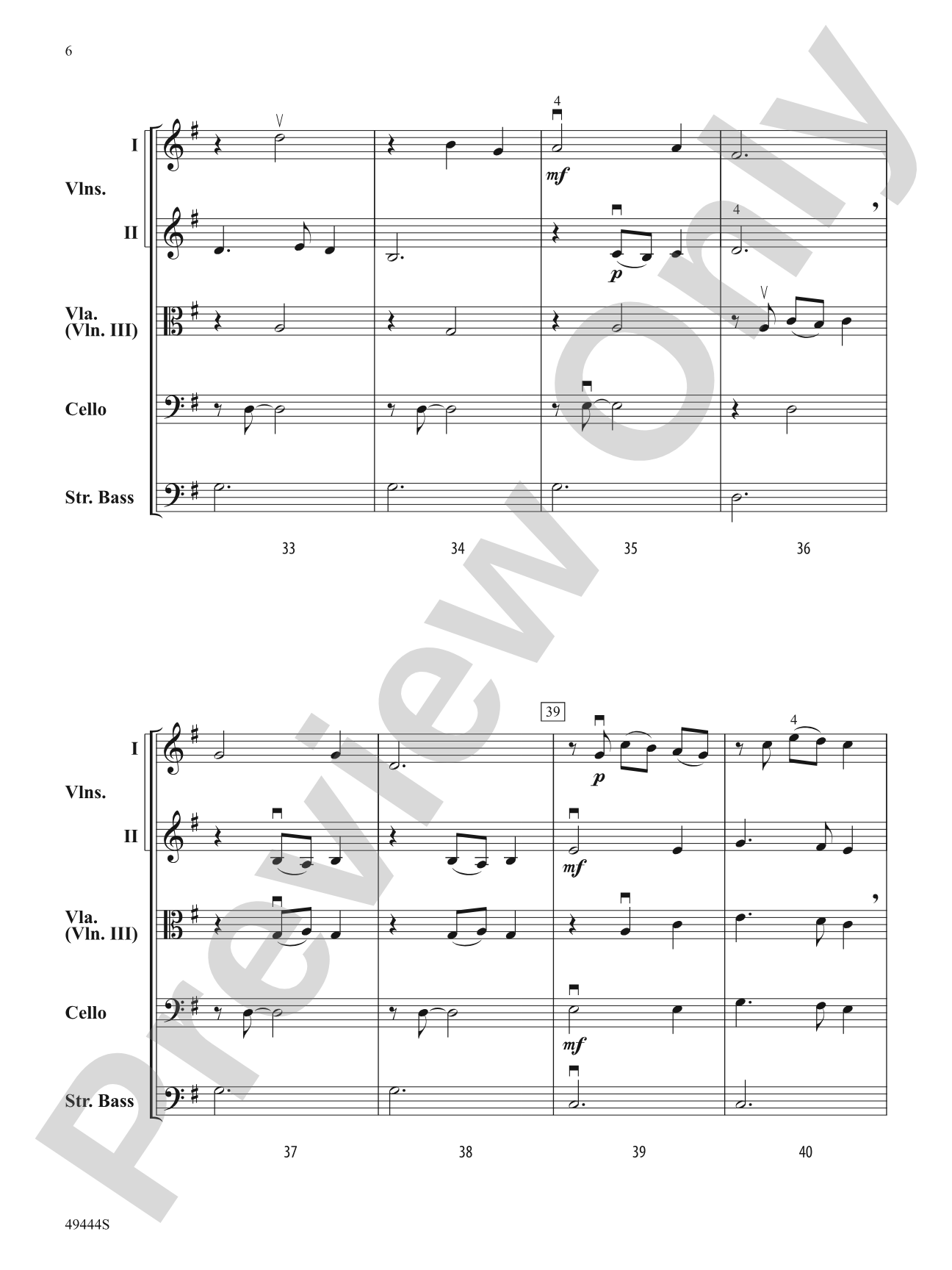
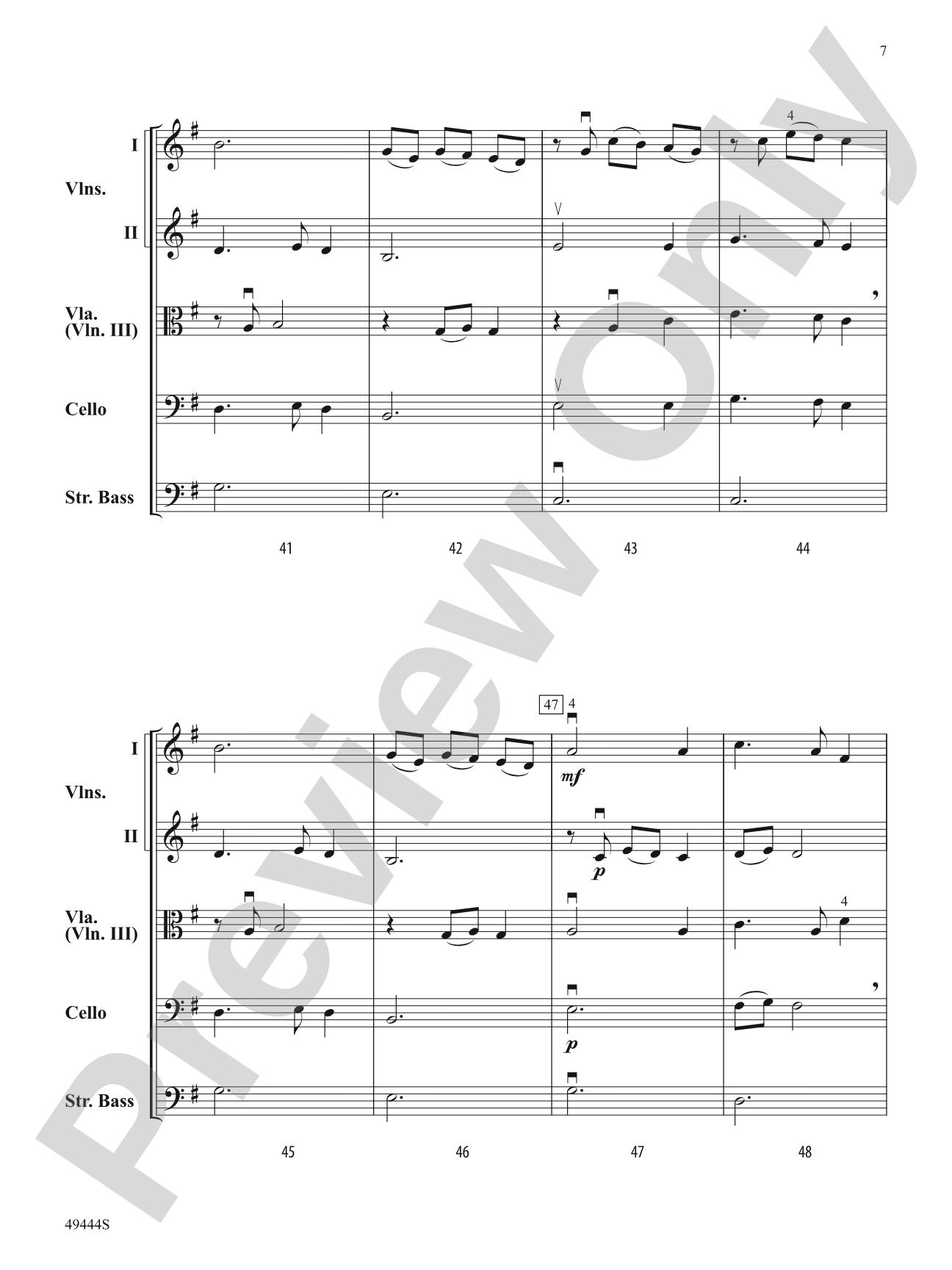
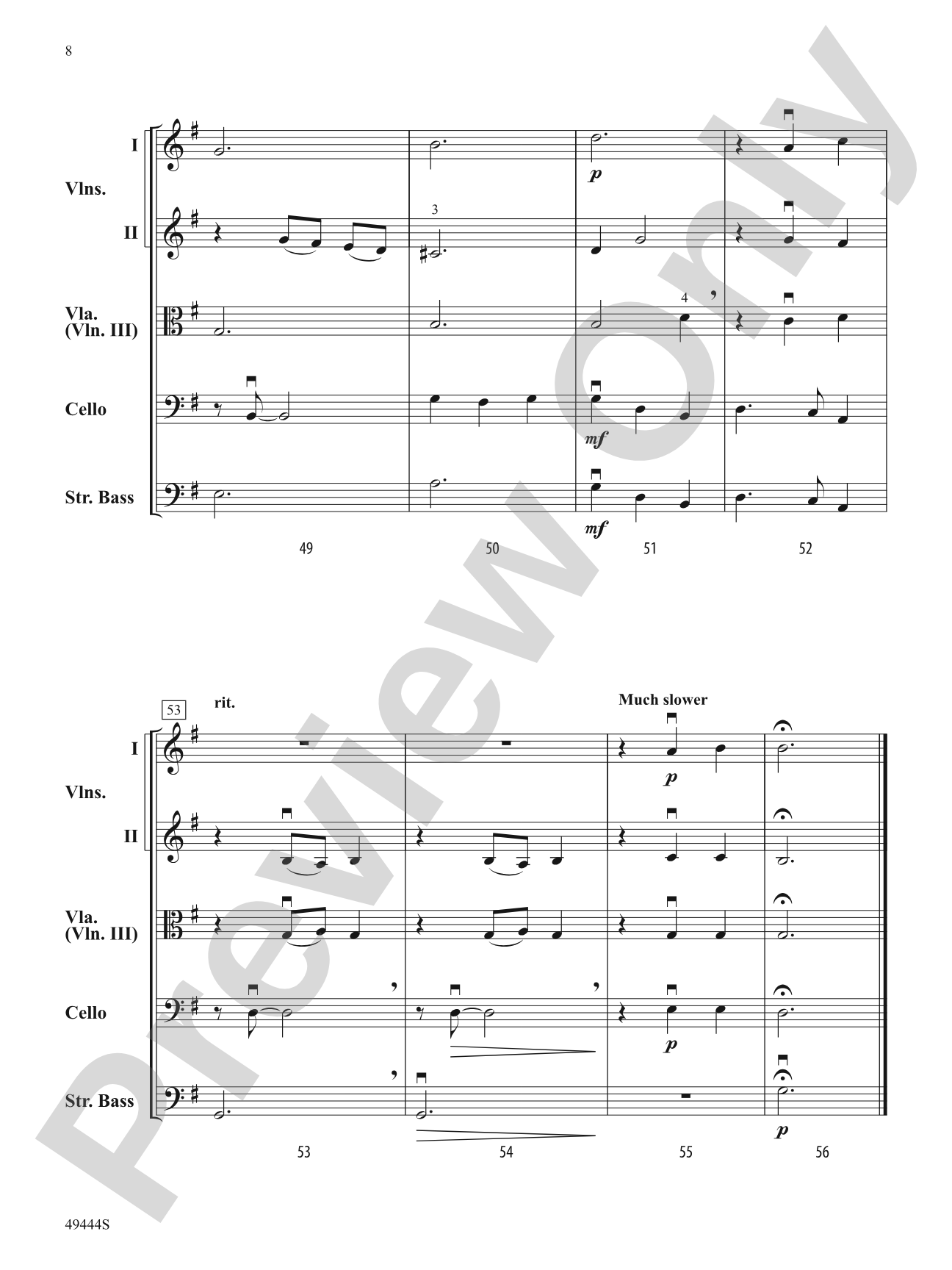

Stille Nacht: Score
By Franz Gruber / arr. Douglas E. Wagner
Grade: 2
Item: 00-PR-0007025
$9.00
Pickup currently not available
Description
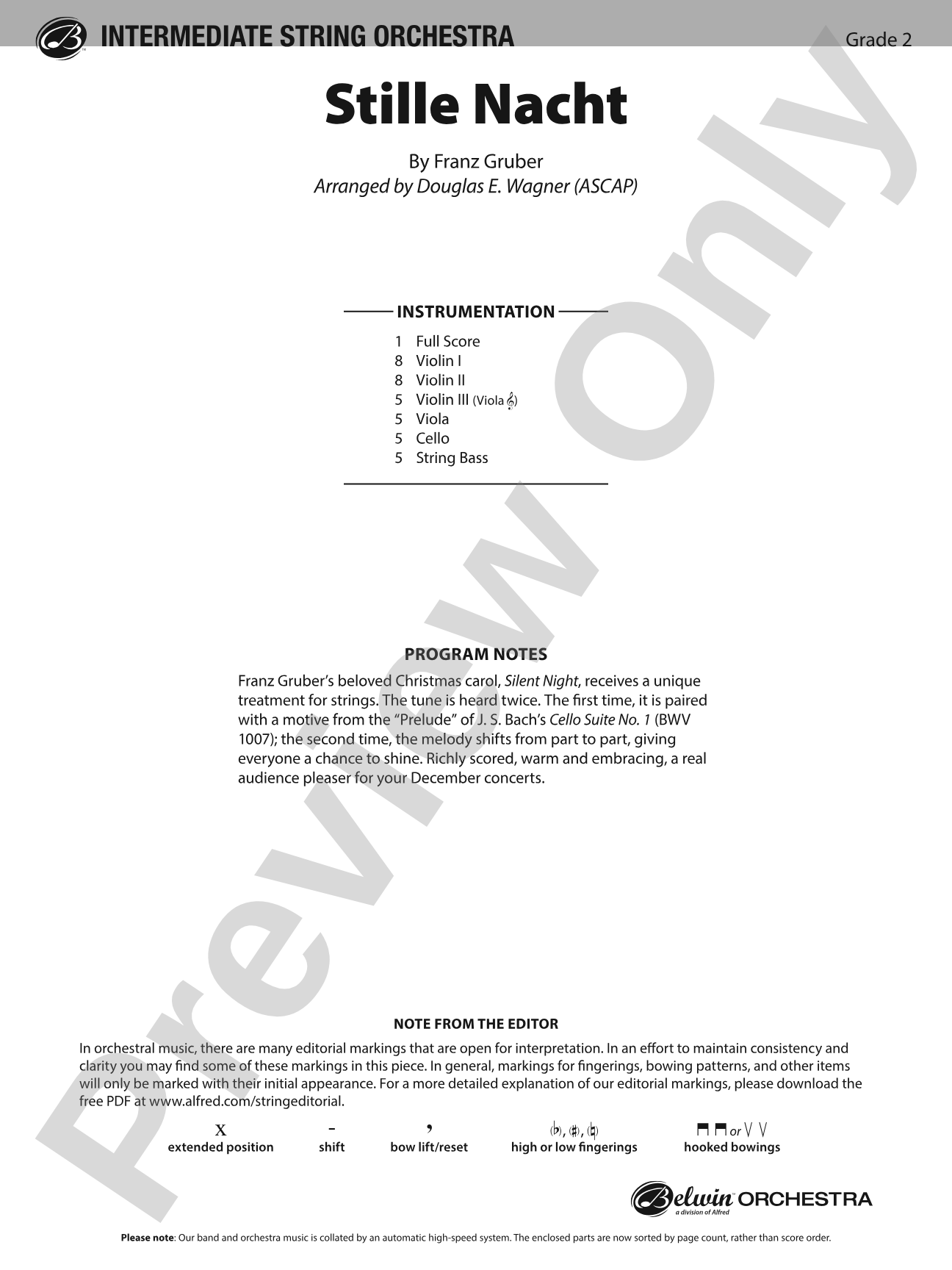
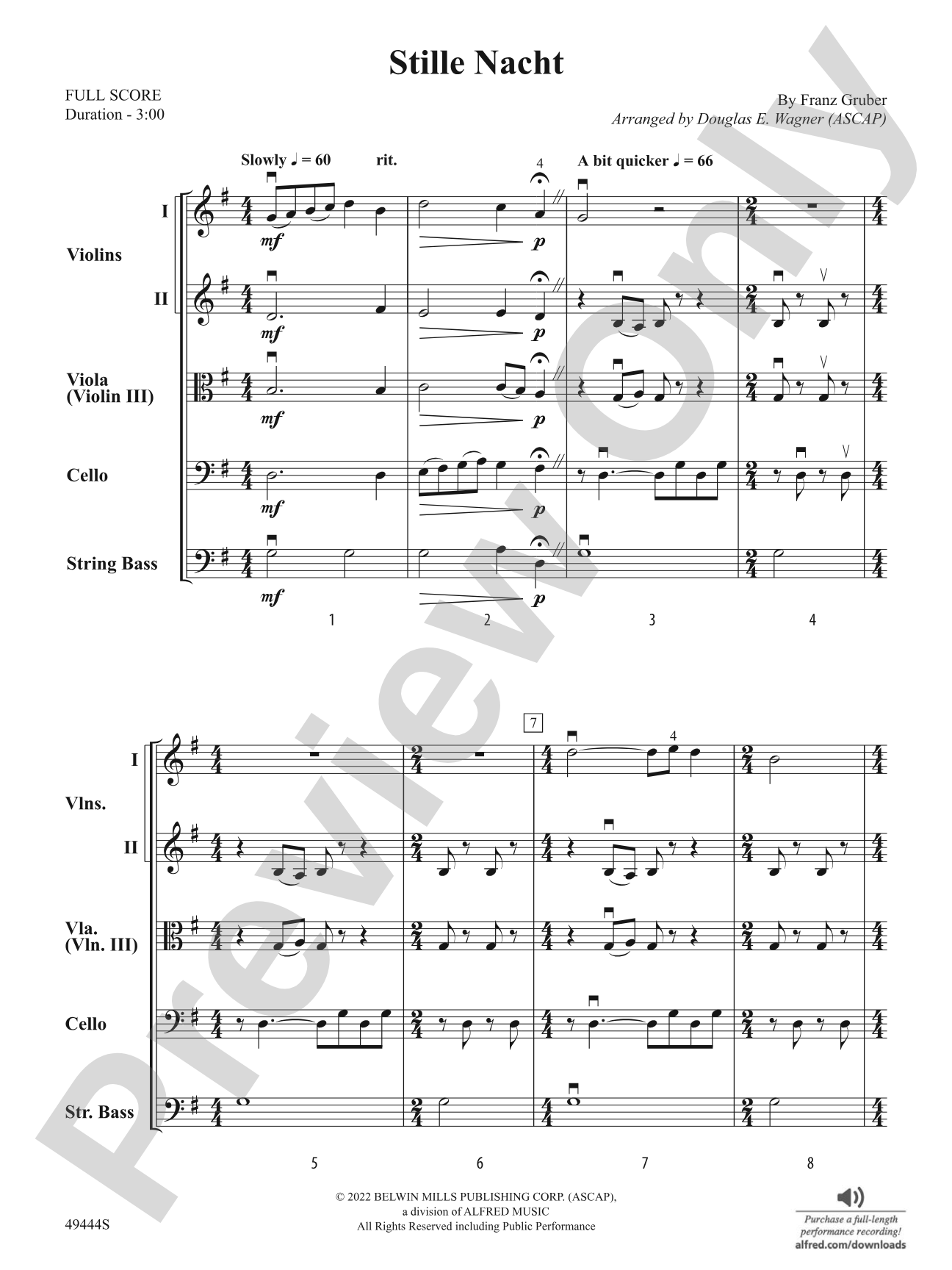
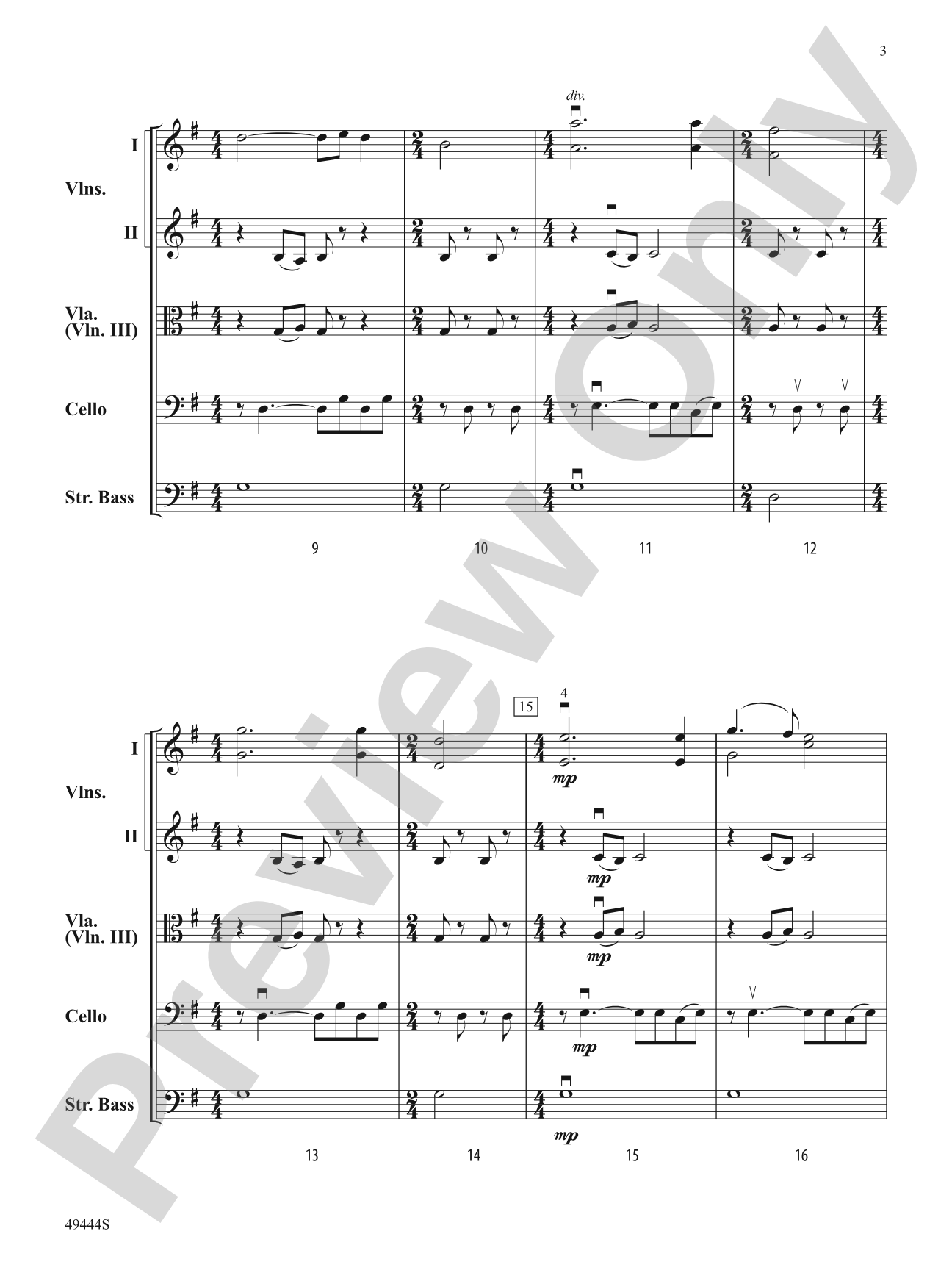
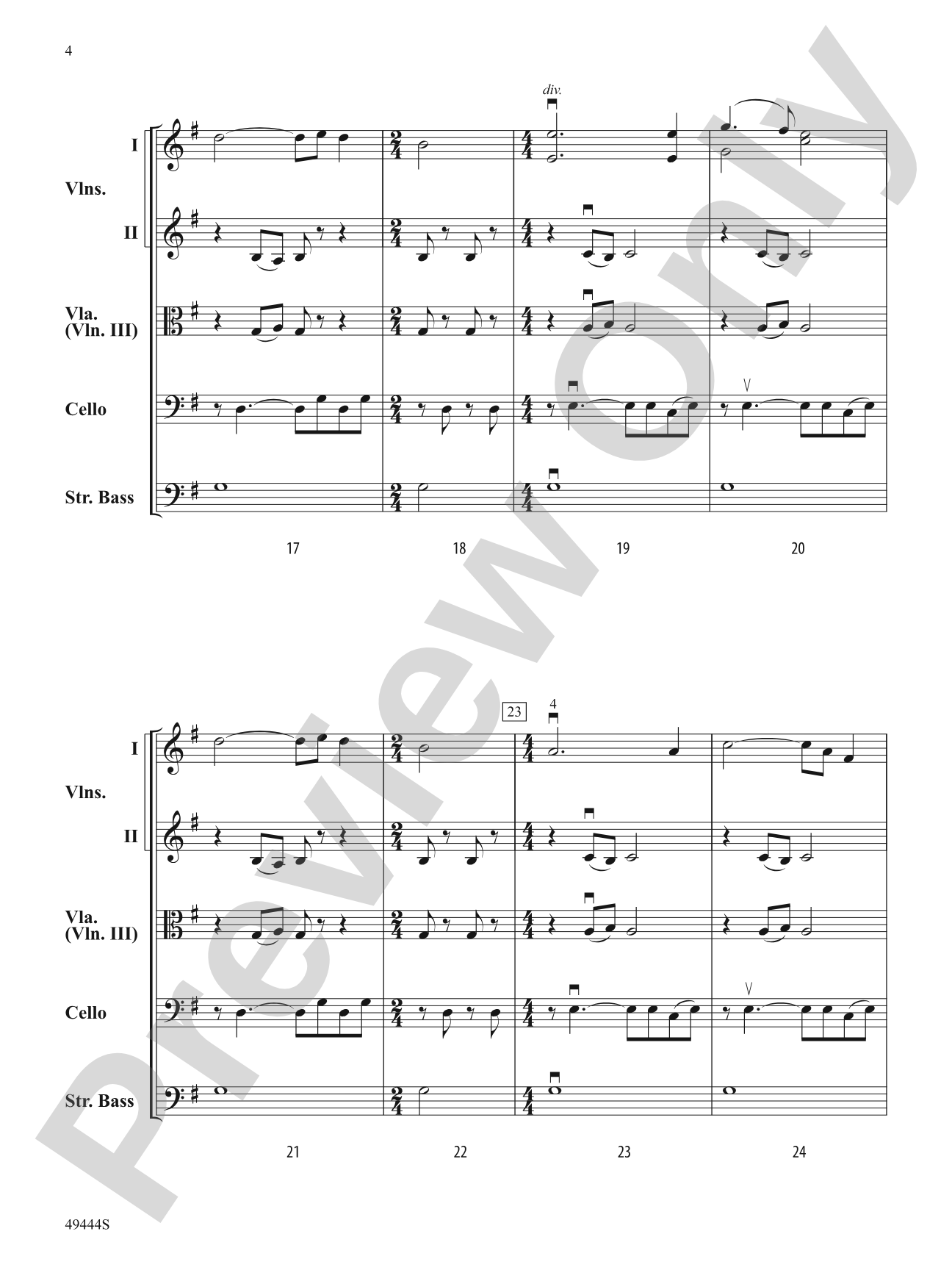
Franz Gruber's beloved Christmas carol, "Silent Night," receives a unique treatment for strings. The tune is heard twice. The first time, it is paired with a motive from the Prelude of J. S. Bach's Cello Suite No. 1 (BWV 1007); the second time, the melody shifts from part to part, giving everyone a chance to shine. Richly scored, warm and embracing, a real audience pleaser for your December concerts. (3:00) This title is available in MakeMusic Cloud.


Don't just read it, hear it, play along with it, and watch your students grow with it. In MakeMusic Cloud, Stille Nacht: Score comes alive with professional accompaniment, adjustable tempo, and built-in practice tools that turn solo practice into real progress.
Open in the Player
Jump straight in and assign it today.
Start Your Free Trial
Open this title and explore the full library in minutes.
Sample Audio
1
Audio File
--:--
0:00
0:00
Sample Video
Additional Details
Series:
Belwin Intermediate String Orchestra
Publisher:
Alfred Music
SKU:
00-PR-0007025
More about this title
About the Composer: Franz Gruber
Franz Gruber (1787-1863) was an Austrian organist and composer whose modest output belies his enormous influence on Christmas music worldwide. In 1818, Gruber composed the melody for "Stille Nacht" (Silent Night) to accompany a poem by Joseph Mohr, creating what would become one of the most recognizable melodies in Western music. Despite his limited formal training, Gruber's gift for crafting simple, singable, and deeply expressive melodies secured his place in music history.
Gruber spent most of his career as a schoolmaster and organist in the Salzburg region of Austria. His melodic sensibility reflects the folk traditions and hymn writing of his era, favoring accessibility and emotional directness over compositional complexity. Music educators continue to return to his work precisely because it demonstrates how profound beauty emerges from clarity and restraint.
Why we love this
Douglas E. Wagner's arrangement respects the carol's intimacy while giving it orchestral richness that feels earned rather than overdone. The interweaving of Bach's Cello Suite prelude with the familiar melody is sophisticated without becoming precious, and the strategic distribution of the tune across the entire string section keeps every player engaged and gives your ensemble genuine moments to lead.
What to expect
Contemplative and hushed at first, then gently expansive as the arrangement unfolds. The Bach-influenced counterpoint adds harmonic depth and refinement, while the passing of the melody from section to section creates a sense of communal expression rather than soloistic display. Three minutes of genuine musical warmth.
Who it's for
String orchestras at the intermediate level who want substantial repertoire that audiences recognize and appreciate without sacrificing musical substance. Directors seeking a December concert piece that balances holiday appeal with genuine artistic merit will find this an immediate fit for ensembles with Grade 2 technical facility.
How to get the most out of it
- Balance the Bach motive carefully against the carol melody in the first statement so both lines remain audible; the motive should support rather than compete with the tune.
- Shape each statement of the melody with long, singing phrases; avoid rhythmic stiffness by allowing gentle rubato in the lyrical passages.
- When the tune moves between parts in the second presentation, ensure smooth handoffs by having each new section enter with confidence and clear tone quality.
- Use consistent vibrato across the string sections to maintain warmth and blend, particularly in the homophonic moments where sustained harmony supports the melody.
How to use it
Open a December concert with this to establish an elegant, reflective mood before moving to lighter holiday fare, or anchor the program's closing moments with it as a quieter alternative to more energetic finales. It pairs well alongside other Bach-influenced arrangements or traditional carol settings, and works equally effectively as a standalone concert opener.
Skills your students will build
- Balancing multiple melodic lines within a single texture
- Sustaining warm, singing tone quality in sustained passages
- Executing smooth part-to-part handoffs of a primary melody
- Responding to subtle dynamic and tempo shadings in lyrical material
- Maintaining harmonic blend in rich, chromatic scoring