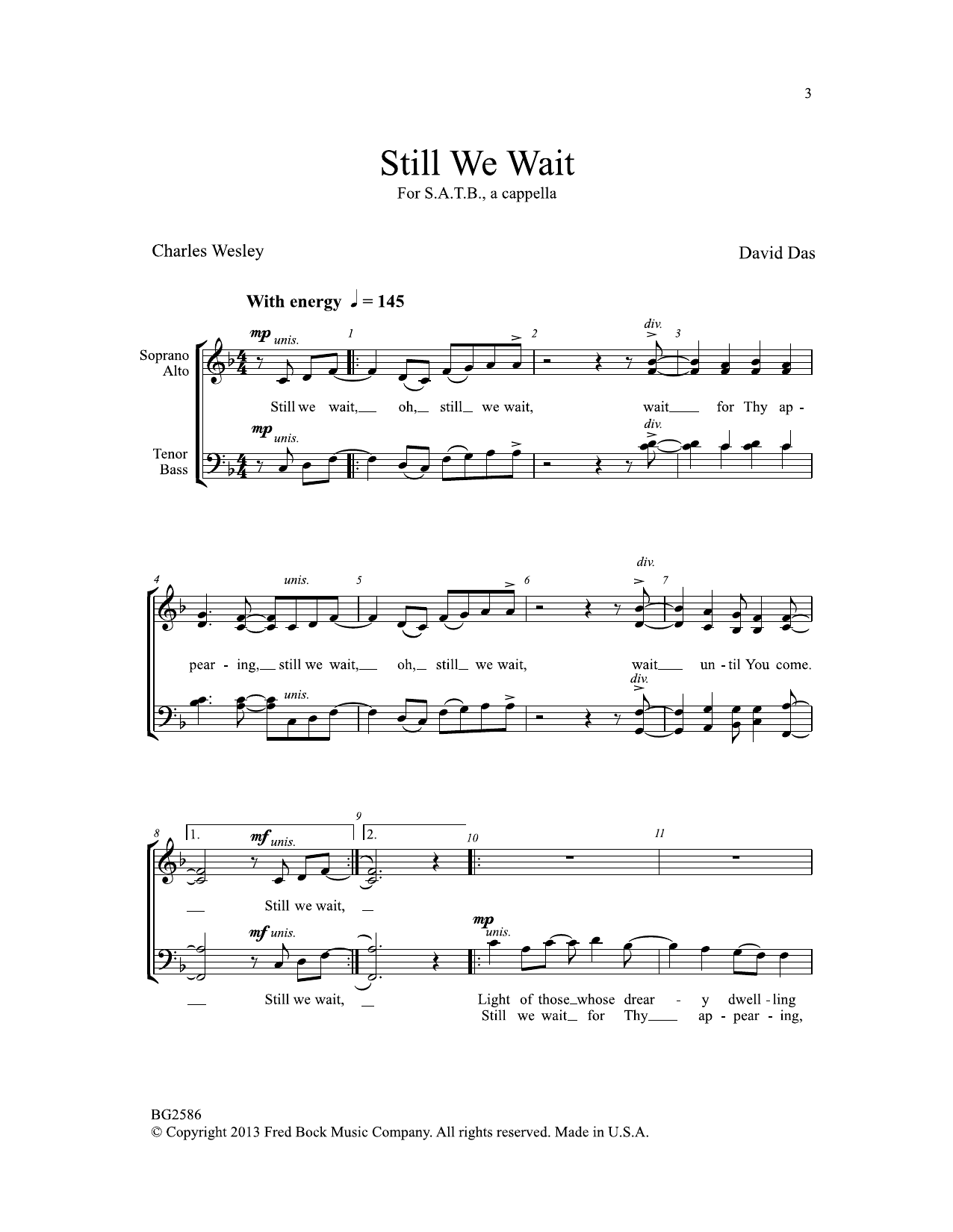
Still We Wait Sheet Music Preview

Still We Wait: SATB Choral Octavo

By David Das / By Charles Wesley

Item: 35-DS00450668

Digital Download
$3.05
Description

Still We Wait: SATB Choral Octavo isn't in MakeMusic Cloud just yet...but it could be. Let us know you'd like to see it, and you'll help shape what comes next. In the meantime, start a free trial and dive into thousands of interactive titles your students can play along with today.

Sample Audio
No sample audio found.
Sample Video
Additional Details
Publisher: Hal Leonard
Page Count: 6
SKU: 35-DS00450668

More about this title

Why we love this

David Das writes for the voice with genuine understanding of what choirs can accomplish without instrumental support. The harmonic language feels contemporary yet rooted in sacred tradition, and the text setting never sacrifices clarity for complexity.

What to expect

A meditation on waiting and faith that unfolds with quiet dignity. The piece holds emotional restraint; its power comes from harmonic truth and lyrical simplicity rather than dramatic sweep.

Who it's for

Choirs with solid voice leading skills and singers who are comfortable sustaining pitch without instrumental reference. This works equally well for concert settings and worship contexts.

How to get the most out of it

  • Establish the pulse early in rehearsal and maintain it without accompaniment. A cappella singing exposes any rhythmic wavering, so drilling the opening entrance together pays immediate dividends.
  • Balance the parts by having singers listen to the harmonies around them rather than only their own line. Blend emerges from awareness, not volume.
  • Treat the Wesley text with deliberate pacing. The weight of "Still we wait" asks for space between phrases rather than seamless legato.

How to use it

Place this alongside other a cappella sacred works to create a focused liturgical or thematic concert section. Its 6 pages fit naturally into programs exploring contemporary treatments of hymn texts.

Skills your students will build

  • A cappella intonation and part independence
  • Phrase shaping within sacred idiom
  • Harmonic listening and blend in four-part writing
  • Text interpretation aligned with musical gesture

You May Also Like