
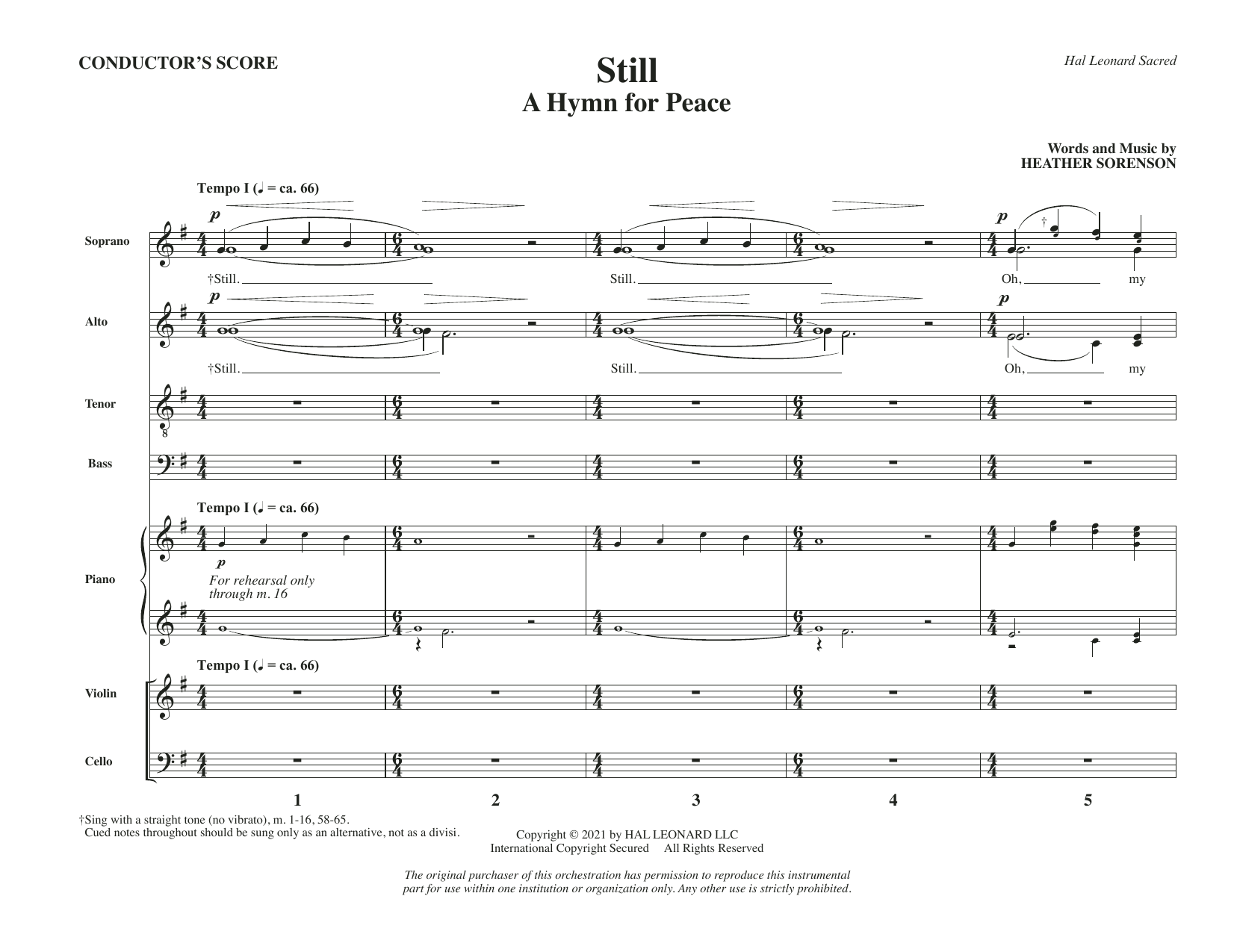

Still (A Hymn For Peace): Choral Instrumental Pak
By Heather Sorenson
Item: 35-PK00486487
$15.00
Pickup currently not available
Buy Extra Parts (Digital PDF Download)
Parts Added to Cart!
Description
Fragile and precious, this sacred tone poem is a prayer for peace and a plea for healing of the heart. The soundscape of the anthem rises from a single tone, opening to reveal glimmering splashes of choral color. As the words become more impassioned, the octavo surrenders to a flowing piano episode that matches its intensity. This petition for calm begins to quiet as the anthem winds down, allowing the prayer to end in hushed chords of assurance. Score and Parts (vn, vc) available as a digital download.


Still (A Hymn For Peace): Choral Instrumental Pak isn't in MakeMusic Cloud just yet...but it could be. Let us know you'd like to see it, and you'll help shape what comes next. In the meantime, start a free trial and dive into thousands of interactive titles your students can play along with today.
Request This Title
Tell us you want it.
Start Your Free Trial
Explore everything that's ready to play right now.
Sample Audio
No sample audio found.
Sample Video
No sample videos found.
Additional Details
Publisher:
Hal Leonard
SKU:
35-PK00486487
More about this title
About the Composer: Heather Sorenson

Heather Sorenson has built a reputation as a composer and arranger whose works span sacred and secular idioms with equal fluency. Based in Dallas, she has attracted commissions from major institutions including Texas A&M University and Carnegie Hall, where her oratorio EXODUS premiered, while her pieces continue to see regular performance in churches, schools, and concert halls worldwide. Her early training as a pianist shaped her compositional voice, particularly evident in her sensitive writing for keyboard and ensemble.
Education and mentorship have remained central to Sorenson's work throughout her career. She has taught music at all elementary levels, held a faculty position at Baylor University, and regularly leads workshops and master classes in composition and piano pedagogy at universities and worship conferences across the country. Beyond her composing and teaching, she actively conducts guest appearances at churches and frequently organizes benefit concerts for causes she champions.
Why we love this
Sorenson constructs this anthem around a profound musical economy: everything unfolds from a single sustained tone, a restraint that makes each moment feel deliberate and earned. The interplay between choir and piano creates genuine emotional arc, moving from whispered vulnerability to passion and back again without a single wasted gesture. Programming this gives your ensemble the chance to explore dynamic subtlety and tonal control across the full range of vocal expression.
What to expect
The soundscape unfolds like watching candlelight gradually illuminate a room. Textures are spare and luminous, with the choir's color emerging gradually from stillness. As intensity builds, the music breathes with human longing; the final descent restores quiet without ever feeling rushed or hollow.
Who it's for
This work serves choirs seeking meaningful sacred repertoire that emphasizes musical restraint and emotional authenticity. It works well for ensembles comfortable with contemporary harmonic language and willing to invest rehearsal time in nuance and control.
How to get the most out of it
- Begin with absolute stillness on that opening unison pitch. The power of the work depends on the listener understanding that this single tone is sacred space, not merely a starting point. Spend rehearsal time finding the exact vowel shape and breath support that sustains it without wavering.
- Release the piano's flowing episode with precision. Coordinate choir cutoffs with the pianist so that the transition feels like a natural current rather than a moment of rupture. Mark these gestures clearly in your conducting so the ensemble understands the piano is now the primary voice.
- Shape the final hushed chords as if they are being offered rather than performed. This requires discipline from singers accustomed to projecting; invite them to think about the prayer ending not with a statement but with a gentle closing of hands.
How to use it
This anthem finds its place in services centered on peace, healing, or contemplative prayer, particularly effective as a closing statement in worship. It also serves as a sophisticated opener for concert programs where you want to establish intimacy before building energy with other selections. The modest instrumentation (strings and piano) makes it accessible for churches and smaller ensembles while maintaining professional polish.
Skills your students will build
- Sustaining pitch with consistent vowel formation and breath support
- Shifting dynamic levels in response to harmonic and textural change
- Coordinating with instrumental partners using visual and aural cues
- Shaping musical phrases through restraint rather than projection
- Distinguishing between solo and ensemble passages in contemporary choral writing