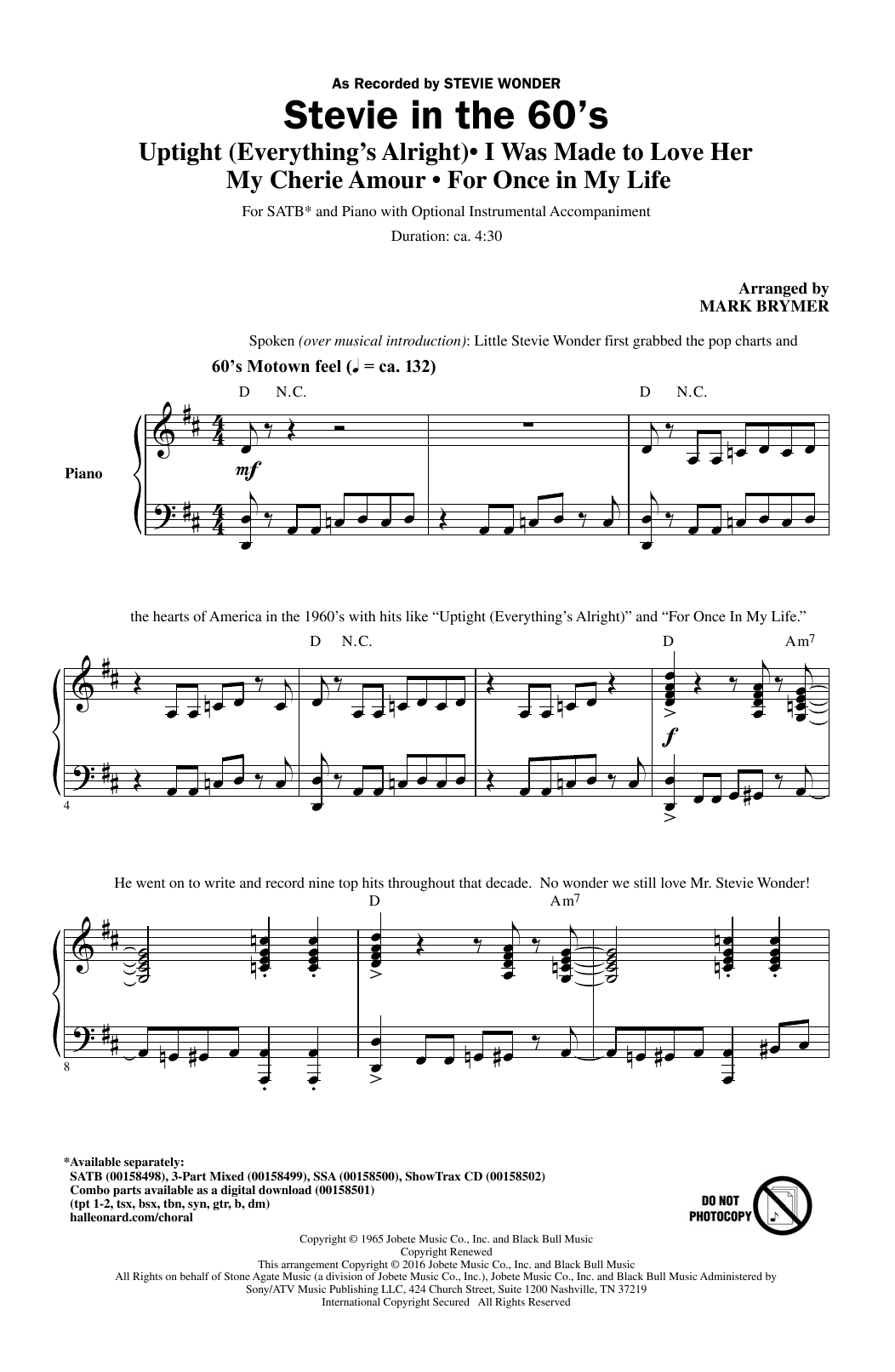
Stevie Wonder emerged as a prodigy in the 1960s, recording his first album at age twelve and immediately establishing himself as an innovator across multiple instruments. His harmonic sophistication, rhythmic ingenuity, and ability to blend soul, pop, and R&B set new standards for what popular music could achieve artistically. Wonder's influence on contemporary music education stems from his fearless approach to melody, his rich harmonic vocabulary, and his gift for writing songs that connect emotionally across generations.
As both a performer and composer, Wonder demonstrates how deep musicianship and accessibility coexist. His 1960s catalog particularly rewards choral study because the songs balance singable melodies with sophisticated chord progressions and rhythmic complexities that challenge young singers to think beyond surface-level performance.